




Ken Gollob
@kengollob.bsky.social
Immunologist working with cancer and infectious disease research. Helping show what research is good for!
Reposted by Ken Gollob

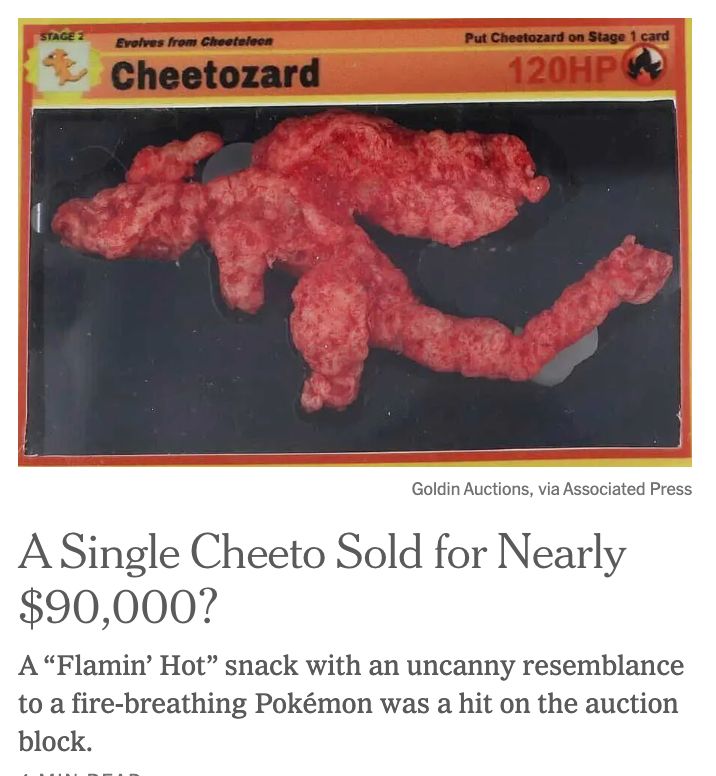
Interesting! @nytimes.com still hasn’t covered any of the Stand Up for Science protests today, but they made sure to put this important news front and center online. Powerful reporting…
March 8, 2025 at 5:59 AM
Interesting! @nytimes.com still hasn’t covered any of the Stand Up for Science protests today, but they made sure to put this important news front and center online. Powerful reporting…
Some recent research from my lab in Hospital Albert Einstein - Center for Research in Immuno-oncology in Sao Paulo, Brazil. Insights to immune markers influencing melanoma patients' responses to neoadjuvant immunotherapy. #MelanomaResearch #Immunotherapy #MedicalResearch
www.cell.com/heliyon/full...
www.cell.com/heliyon/full...

Immune mechanisms and predictive biomarkers related to neoadjuvant immunotherapy response in stage III melanoma
The treatment for stage III melanoma has advanced significantly, nevertheless, a substantial
proportion of patients experience relapse. Neoadjuvant immune checkpoint blockade
has emerged as a promisin...
www.cell.com
February 6, 2025 at 2:48 PM
Some recent research from my lab in Hospital Albert Einstein - Center for Research in Immuno-oncology in Sao Paulo, Brazil. Insights to immune markers influencing melanoma patients' responses to neoadjuvant immunotherapy. #MelanomaResearch #Immunotherapy #MedicalResearch
www.cell.com/heliyon/full...
www.cell.com/heliyon/full...
Our work defining immune cells and blood markers associated with treatment failure in cutaneous leishmaniasis highlights the possible role of MAIT cells and inflammatory networks in failure. Thanks to my partner @waldutra.bsky.social and our collaborators!
academic.oup.com/jid/advance-...
academic.oup.com/jid/advance-...

Circulating Soluble Factors and T-Cell Subsets as Immunological Predictors of Therapy Response in Human Cutaneous Leishmaniasis
Human cutaneous leishmaniasis, caused by Leishmania braziliensis, poses treatment challenges. We investigated immunological determinants affecting therapy
academic.oup.com
February 6, 2025 at 11:52 AM
Our work defining immune cells and blood markers associated with treatment failure in cutaneous leishmaniasis highlights the possible role of MAIT cells and inflammatory networks in failure. Thanks to my partner @waldutra.bsky.social and our collaborators!
academic.oup.com/jid/advance-...
academic.oup.com/jid/advance-...
The CDC and NIH-NIAID will be key players in helping identify and prevent a possible jump to humans of this serious potential pathogen. Let’s support our scientists working on the front lines of public health! They need our support and the government’s support. #CDC www.nytimes.com/2025/02/05/h...

Cows Have Been Infected With a Second Form of Bird Flu
A new version of the virus is widespread in wild birds but had not previously been detected in cows.
www.nytimes.com
February 6, 2025 at 11:41 AM
The CDC and NIH-NIAID will be key players in helping identify and prevent a possible jump to humans of this serious potential pathogen. Let’s support our scientists working on the front lines of public health! They need our support and the government’s support. #CDC www.nytimes.com/2025/02/05/h...