



Laura Katz
@lauraakatz.bsky.social
Studies all those ‘darn exceptions’
Reposted by Laura Katz

Baldwin-Brown et al. confined pigeon lice to color-mismatched hosts for ca. 60 generations, and tracked genomic changes, revealing parallel phenotypic adaptation in color via largely non-overlapping loci.
🔗 doi.org/10.1093/gbe/evaf083
#genome #pigeon #lice
🔗 doi.org/10.1093/gbe/evaf083
#genome #pigeon #lice

May 26, 2025 at 8:27 AM
Baldwin-Brown et al. confined pigeon lice to color-mismatched hosts for ca. 60 generations, and tracked genomic changes, revealing parallel phenotypic adaptation in color via largely non-overlapping loci.
🔗 doi.org/10.1093/gbe/evaf083
#genome #pigeon #lice
🔗 doi.org/10.1093/gbe/evaf083
#genome #pigeon #lice
Reposted by Laura Katz
The June cover of Genome Biology and Evolution features the work of @mirimerenciano.bsky.social @sianalarue.bsky.social et al., who explore the relationships between transposable elements and aging in a new Review article.
🔗 doi.org/10.1093/gbe/evaf088
🖌️ Merenciano et al.
#genome #TEsky
🔗 doi.org/10.1093/gbe/evaf088
🖌️ Merenciano et al.
#genome #TEsky

June 3, 2025 at 4:08 PM
The June cover of Genome Biology and Evolution features the work of @mirimerenciano.bsky.social @sianalarue.bsky.social et al., who explore the relationships between transposable elements and aging in a new Review article.
🔗 doi.org/10.1093/gbe/evaf088
🖌️ Merenciano et al.
#genome #TEsky
🔗 doi.org/10.1093/gbe/evaf088
🖌️ Merenciano et al.
#genome #TEsky
Reposted by Laura Katz
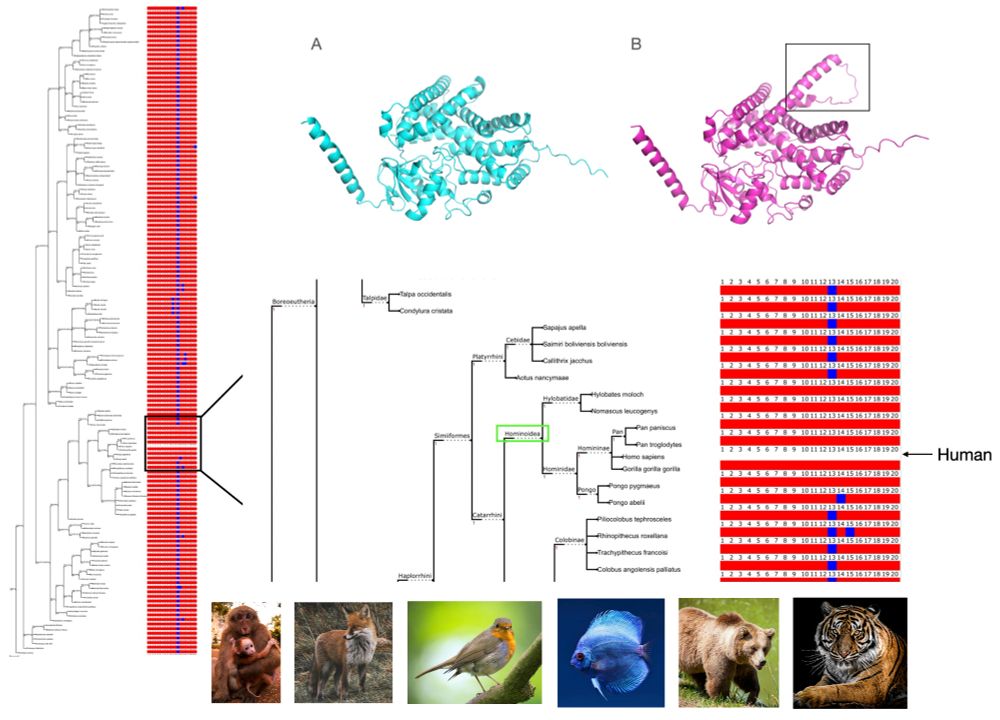
@celineh2ooo.bsky.social and @stevensalzberg.bsky.social compared 3,493 vertebrate genomes to identify 342 gains of introns in human genes, tracing their origins and identifying cases of intronization as a mechanism of intron emergence.
🔗 doi.org/10.1093/gbe/evaf091
#genome #evolution #introns
🔗 doi.org/10.1093/gbe/evaf091
#genome #evolution #introns
June 4, 2025 at 1:13 PM
@celineh2ooo.bsky.social and @stevensalzberg.bsky.social compared 3,493 vertebrate genomes to identify 342 gains of introns in human genes, tracing their origins and identifying cases of intronization as a mechanism of intron emergence.
🔗 doi.org/10.1093/gbe/evaf091
#genome #evolution #introns
🔗 doi.org/10.1093/gbe/evaf091
#genome #evolution #introns
Reposted by Laura Katz

Our structural core gene pipeline Unicode is now published at GBE
📄 doi.org/10.1093/gbe/...
Please also check out @dongwookkim.bsky.social’s
🧵 bsky.app/profile/dong...
📄 doi.org/10.1093/gbe/...
Please also check out @dongwookkim.bsky.social’s
🧵 bsky.app/profile/dong...
June 3, 2025 at 5:19 PM
Our structural core gene pipeline Unicode is now published at GBE
📄 doi.org/10.1093/gbe/...
Please also check out @dongwookkim.bsky.social’s
🧵 bsky.app/profile/dong...
📄 doi.org/10.1093/gbe/...
Please also check out @dongwookkim.bsky.social’s
🧵 bsky.app/profile/dong...
Very excited that Pedro Andrade has joined the Genome Biology and Evolution team, publishing this nice highlight on nonvisual opsins: academic.oup.com/gbe/article/...
Follow his work
@genomebiolevol.bsky.social
Follow his work
@genomebiolevol.bsky.social

Highlight: More Than Meets the Eye—Nonvisual Opsins Are Crucial for Light-Sensing in Vertebrates
The evolution of eyes, through the co-option of photosensitive proteins known as opsins, represents a major innovation that expanded the ecological and com
academic.oup.com
May 15, 2025 at 10:00 PM
Very excited that Pedro Andrade has joined the Genome Biology and Evolution team, publishing this nice highlight on nonvisual opsins: academic.oup.com/gbe/article/...
Follow his work
@genomebiolevol.bsky.social
Follow his work
@genomebiolevol.bsky.social
Reposted by Laura Katz
Genome and phenotypic analyses support domestication of Aspergillus sojae from A. parasiticus for soy production. A. sojae shows reduced diversity, loss of aflatoxin genes, and traits suited to miso-like salt conditions.
Link: doi.org/10.1093/gbe/...
#soy #fungi #domestication
Link: doi.org/10.1093/gbe/...
#soy #fungi #domestication

Population Genomics of Aspergillus sojae is Shaped by the Food Environment
Abstract. Traditional fermented foods often contain specialized microorganisms adapted to their unique environments. For example, the filamentous mold Aspe
doi.org
April 24, 2025 at 10:04 PM
Genome and phenotypic analyses support domestication of Aspergillus sojae from A. parasiticus for soy production. A. sojae shows reduced diversity, loss of aflatoxin genes, and traits suited to miso-like salt conditions.
Link: doi.org/10.1093/gbe/...
#soy #fungi #domestication
Link: doi.org/10.1093/gbe/...
#soy #fungi #domestication
Reposted by Laura Katz

Horizontal Transfer of Bacterial Operons into Eukaryote Genomes #protists #protistsonsky academic.oup.com/gbe/article/...

academic.oup.com
April 28, 2025 at 7:01 AM
Horizontal Transfer of Bacterial Operons into Eukaryote Genomes #protists #protistsonsky academic.oup.com/gbe/article/...
Reposted by Laura Katz
New research by
@tylervkent.bsky.social @samurscicop.bsky.social & D. Matute analysed 131 genomes of the globally invasive Aedes aegypti, and found high genomic resilience despite historical eradication attempts for this globally invasive vector.
🔗 doi.org/10.1093/gbe/...
#genome #mosquitoes
@tylervkent.bsky.social @samurscicop.bsky.social & D. Matute analysed 131 genomes of the globally invasive Aedes aegypti, and found high genomic resilience despite historical eradication attempts for this globally invasive vector.
🔗 doi.org/10.1093/gbe/...
#genome #mosquitoes
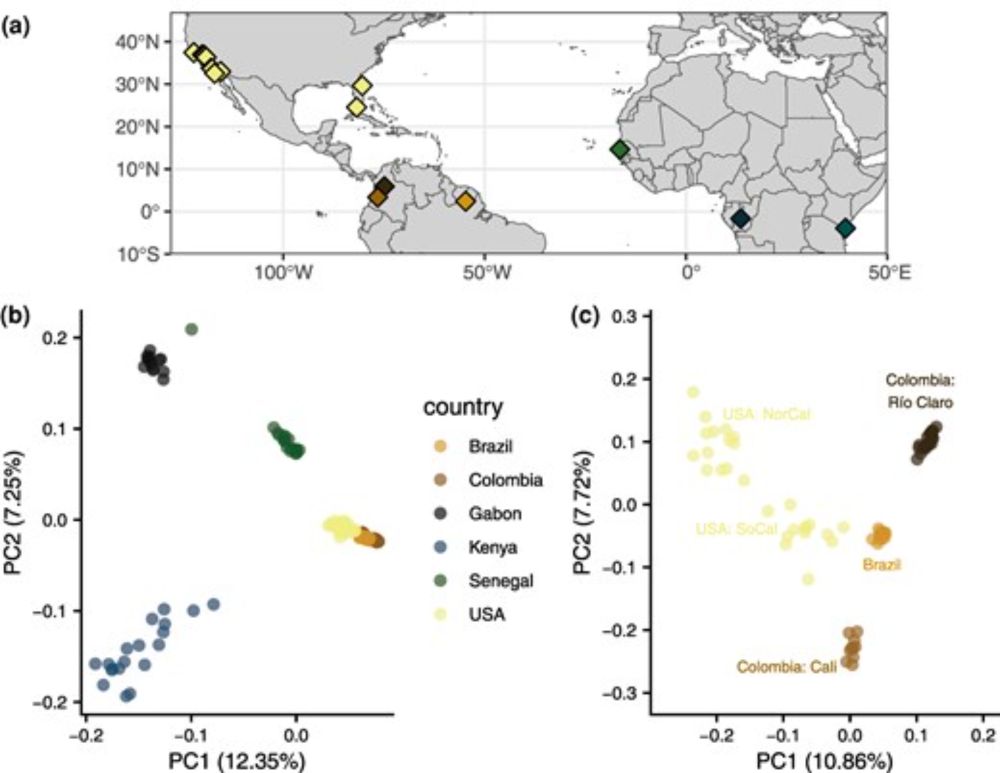
Demographic History, Genetic Load, and the Efficacy of Selection in the Globally Invasive Mosquito Aedes aegypti
Abstract. Aedes aegypti is the main vector species of yellow fever, dengue, Zika, and chikungunya. The species is originally from Africa but has experience
doi.org
April 29, 2025 at 2:36 PM
New research by
@tylervkent.bsky.social @samurscicop.bsky.social & D. Matute analysed 131 genomes of the globally invasive Aedes aegypti, and found high genomic resilience despite historical eradication attempts for this globally invasive vector.
🔗 doi.org/10.1093/gbe/...
#genome #mosquitoes
@tylervkent.bsky.social @samurscicop.bsky.social & D. Matute analysed 131 genomes of the globally invasive Aedes aegypti, and found high genomic resilience despite historical eradication attempts for this globally invasive vector.
🔗 doi.org/10.1093/gbe/...
#genome #mosquitoes
Reposted by Laura Katz
@phessenauer.bsky.social et al. find that moisture drives adaptation in the pathogens that cause Dutch elm disease, dothistroma needle blight, and Swiss needle cast, revealing convergent evolution in response to precipitation and humidity.
🔗 doi.org/10.1093/gbe/evaf069
#genome #evolution #fungi
🔗 doi.org/10.1093/gbe/evaf069
#genome #evolution #fungi

Genomic Exploration of Climate-driven Evolution and Evolutionary Convergence in Forest Pathogens
Abstract. Climate significantly influences the distribution, composition, and diversity of fungal communities, impacting the growth, spread, and virulence
doi.org
May 13, 2025 at 8:13 AM
@phessenauer.bsky.social et al. find that moisture drives adaptation in the pathogens that cause Dutch elm disease, dothistroma needle blight, and Swiss needle cast, revealing convergent evolution in response to precipitation and humidity.
🔗 doi.org/10.1093/gbe/evaf069
#genome #evolution #fungi
🔗 doi.org/10.1093/gbe/evaf069
#genome #evolution #fungi
Reposted by Laura Katz
The May cover of Genome Biology and Evolution features the work of Romero & de Souza, who compared the genomes of lizards and the tuatara to study the evolution of non-visual opsin genes.
🔗 doi.org/10.1093/gbe/evaf058
🖌️ Eugenia Amado
#genome #opsins #vision #lizards #evolution
🔗 doi.org/10.1093/gbe/evaf058
🖌️ Eugenia Amado
#genome #opsins #vision #lizards #evolution

May 12, 2025 at 2:21 PM
The May cover of Genome Biology and Evolution features the work of Romero & de Souza, who compared the genomes of lizards and the tuatara to study the evolution of non-visual opsin genes.
🔗 doi.org/10.1093/gbe/evaf058
🖌️ Eugenia Amado
#genome #opsins #vision #lizards #evolution
🔗 doi.org/10.1093/gbe/evaf058
🖌️ Eugenia Amado
#genome #opsins #vision #lizards #evolution
Reposted by Laura Katz

📖 SMBE journals on Bluesky
Interested in learning the latest advances in evolutionary biology, genomics, and molecular biology? Follow the SMBE sister journals MBE and GBE here on Bluesky and get updates on new articles coming out.
MBE: @molbioevol.bsky.social
GBE: @genomebiolevol.bsky.social
Interested in learning the latest advances in evolutionary biology, genomics, and molecular biology? Follow the SMBE sister journals MBE and GBE here on Bluesky and get updates on new articles coming out.
MBE: @molbioevol.bsky.social
GBE: @genomebiolevol.bsky.social
April 18, 2025 at 7:32 AM
📖 SMBE journals on Bluesky
Interested in learning the latest advances in evolutionary biology, genomics, and molecular biology? Follow the SMBE sister journals MBE and GBE here on Bluesky and get updates on new articles coming out.
MBE: @molbioevol.bsky.social
GBE: @genomebiolevol.bsky.social
Interested in learning the latest advances in evolutionary biology, genomics, and molecular biology? Follow the SMBE sister journals MBE and GBE here on Bluesky and get updates on new articles coming out.
MBE: @molbioevol.bsky.social
GBE: @genomebiolevol.bsky.social
Reposted by Laura Katz
Research by Ghione & Dean uses 268 mammal genomes to test if the number of androgen/estrogen response elements scales with sexual size dimorphism, finding this relationship for small-bodied taxa (Chiroptera and Rodentia) but not larger groups.
🔗 doi.org/10.1093/gbe/...
#genome #mammals
🔗 doi.org/10.1093/gbe/...
#genome #mammals

Sexual Size Dimorphism Correlates With the Number of Androgen Response Elements in Mammals, But Only in Small-Bodied Species
Abstract. Sexual size dimorphism is common throughout the animal kingdom, but its evolution and development remain difficult to explain given most of the g
doi.org
April 26, 2025 at 6:31 PM
Research by Ghione & Dean uses 268 mammal genomes to test if the number of androgen/estrogen response elements scales with sexual size dimorphism, finding this relationship for small-bodied taxa (Chiroptera and Rodentia) but not larger groups.
🔗 doi.org/10.1093/gbe/...
#genome #mammals
🔗 doi.org/10.1093/gbe/...
#genome #mammals
Reposted by Laura Katz

Excited to see the final version of this paper with @samurscicop.bsky.social and Daniel Matute out in @genomebiolevol.bsky.social!
We took a dive into the complicated demographic history of Aedes aegypti mosquitoes and its impact on the distribution of genetic diversity
doi.org/10.1093/gbe/...
We took a dive into the complicated demographic history of Aedes aegypti mosquitoes and its impact on the distribution of genetic diversity
doi.org/10.1093/gbe/...

Demographic history, genetic load, and the efficacy of selection in the globally invasive mosquito Aedes aegypti
Abstract. Aedes aegypti is the main vector species of yellow fever, dengue, Zika and chikungunya. The species is originally from Africa but has experienced
doi.org
April 7, 2025 at 7:53 PM
Excited to see the final version of this paper with @samurscicop.bsky.social and Daniel Matute out in @genomebiolevol.bsky.social!
We took a dive into the complicated demographic history of Aedes aegypti mosquitoes and its impact on the distribution of genetic diversity
doi.org/10.1093/gbe/...
We took a dive into the complicated demographic history of Aedes aegypti mosquitoes and its impact on the distribution of genetic diversity
doi.org/10.1093/gbe/...
Reposted by Laura Katz
Bacterial operons may persist in eukaryotes (e.g. fungi) after horizontal gene transfer, according to Kogay et al. Operon-derived gene pairs suggest initial neutral retention and later functional integration or degeneration.
🔗 doi.org/10.1093/gbe/...
#NewPaperAlert #genome #evolution #fungi
🔗 doi.org/10.1093/gbe/...
#NewPaperAlert #genome #evolution #fungi
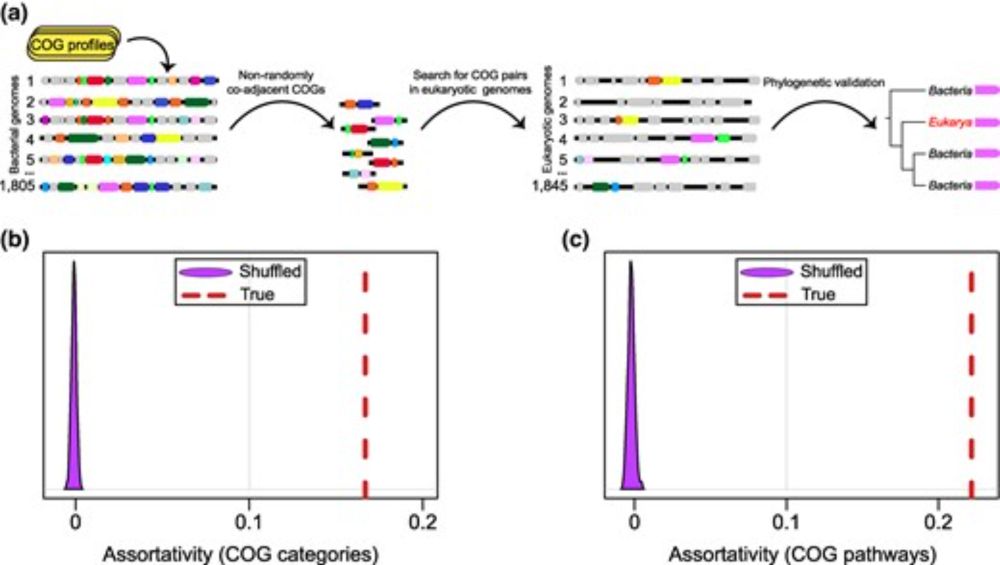
Horizontal Transfer of Bacterial Operons into Eukaryote Genomes
Abstract. In prokaryotes, functionally linked genes are typically clustered into operons, which are transcribed into a single mRNA, providing for the coreg
doi.org
April 15, 2025 at 10:02 PM
Bacterial operons may persist in eukaryotes (e.g. fungi) after horizontal gene transfer, according to Kogay et al. Operon-derived gene pairs suggest initial neutral retention and later functional integration or degeneration.
🔗 doi.org/10.1093/gbe/...
#NewPaperAlert #genome #evolution #fungi
🔗 doi.org/10.1093/gbe/...
#NewPaperAlert #genome #evolution #fungi
Reposted by Laura Katz
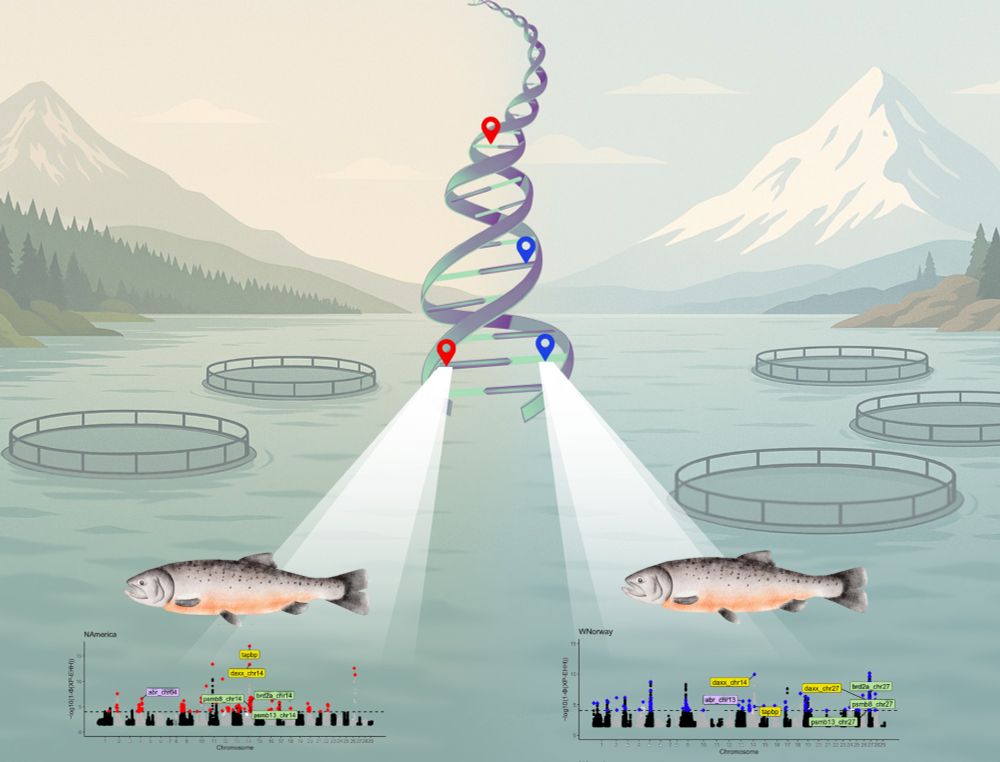
Buso et al. studied parallel selection in two domestic lineages of Atlantic salmon. Shared sweeps in MHC genes suggest combined long-term balancing selection and recent domestication selection.
🔗 doi.org/10.1093/gbe/...
✏️ P. Buso @marie-saitou.bsky.social
#evobio #molbio
🔗 doi.org/10.1093/gbe/...
✏️ P. Buso @marie-saitou.bsky.social
#evobio #molbio
April 21, 2025 at 1:11 PM
Buso et al. studied parallel selection in two domestic lineages of Atlantic salmon. Shared sweeps in MHC genes suggest combined long-term balancing selection and recent domestication selection.
🔗 doi.org/10.1093/gbe/...
✏️ P. Buso @marie-saitou.bsky.social
#evobio #molbio
🔗 doi.org/10.1093/gbe/...
✏️ P. Buso @marie-saitou.bsky.social
#evobio #molbio
Reposted by Laura Katz
Ancona et al. investigated transposable elements in the Apennine Yellow-Bellied Toad: TEs are more active in male gonads, while TE-silencing pathways increase in ovaries. These findings challenge a simple "genomic arms race" model of host-TE evolution.
🔗 doi.org/10.1093/gbe/...
#evobio #genomics
🔗 doi.org/10.1093/gbe/...
#evobio #genomics

Evolutionary Dynamics of Transposable Element Activity and Regulation in the Apennine Yellow-Bellied Toad (Bombina pachypus)
Abstract. Transposable elements (TEs) expansion and accumulation represent one of the main drivers of genomic gigantism. Different host genome silencing me
doi.org
April 22, 2025 at 4:29 AM
Ancona et al. investigated transposable elements in the Apennine Yellow-Bellied Toad: TEs are more active in male gonads, while TE-silencing pathways increase in ovaries. These findings challenge a simple "genomic arms race" model of host-TE evolution.
🔗 doi.org/10.1093/gbe/...
#evobio #genomics
🔗 doi.org/10.1093/gbe/...
#evobio #genomics
Reposted by Laura Katz
🤝 At GBE, we are committed to simplifying the initial submission of manuscripts.
Check our Instructions for Authors page to learn more: academic.oup.com/gbe/pages/Ge...
Check our Instructions for Authors page to learn more: academic.oup.com/gbe/pages/Ge...

April 14, 2025 at 9:07 AM
🤝 At GBE, we are committed to simplifying the initial submission of manuscripts.
Check our Instructions for Authors page to learn more: academic.oup.com/gbe/pages/Ge...
Check our Instructions for Authors page to learn more: academic.oup.com/gbe/pages/Ge...
Reposted by Laura Katz
Comparative transcriptomics of nematodes C. elegans and Brugia malayi supports Ohno’s hypothesis of X-linked genes showing upregulation following Y degeneration, which depends on the dosage-sensitive gene content of proto-X.
🔗 doi.org/10.1093/gbe/...
#NewPaperAlert #genome #evolution #celegans
🔗 doi.org/10.1093/gbe/...
#NewPaperAlert #genome #evolution #celegans

Repeated Evolution of Transcript Dosage Compensation of Independently Formed Nematode Neo-X Chromosomes
Abstract. Ohno proposed that, during the origin of X/Y sex chromosomes from a pair of autosomes, X-linked genes must double their per-allele expressions to
doi.org
April 14, 2025 at 10:36 PM
Comparative transcriptomics of nematodes C. elegans and Brugia malayi supports Ohno’s hypothesis of X-linked genes showing upregulation following Y degeneration, which depends on the dosage-sensitive gene content of proto-X.
🔗 doi.org/10.1093/gbe/...
#NewPaperAlert #genome #evolution #celegans
🔗 doi.org/10.1093/gbe/...
#NewPaperAlert #genome #evolution #celegans
Reposted by Laura Katz
New paper by Howell et al. infers the demographic history of Boston Harbor’s white-footed mice, demonstrating that integrating multiple summaries of genome-wide variation enhances the temporal resolution of population history.
🔗 doi.org/10.1093/gbe/...
#NewPaperAlert #genome #mice #demography
🔗 doi.org/10.1093/gbe/...
#NewPaperAlert #genome #mice #demography

Population History Across Timescales in an Urban Archipelago
Abstract. Contemporary patterns of genetic variation reflect the cumulative history of a population. Population splitting, migration, and changes in popula
doi.org
April 16, 2025 at 10:24 AM
New paper by Howell et al. infers the demographic history of Boston Harbor’s white-footed mice, demonstrating that integrating multiple summaries of genome-wide variation enhances the temporal resolution of population history.
🔗 doi.org/10.1093/gbe/...
#NewPaperAlert #genome #mice #demography
🔗 doi.org/10.1093/gbe/...
#NewPaperAlert #genome #mice #demography
Reposted by Laura Katz
Do signaling pathways evolve in a predictable order? Picolo et al. studied 47 pathways across 315 animal species, finding little evidence for a universal link between gene age and pathway position - this suggests stochastic pathway evolution.
🔗 doi.org/10.1093/gbe/...
#NewPaperAlert #evolution
🔗 doi.org/10.1093/gbe/...
#NewPaperAlert #evolution

Genes Encoding Intracellular Signaling Proteins in Animals Originated Along with Metazoa and Chordata: Chance or Necessity?
Abstract. In this work, we investigate whether the construction of signaling pathways during evolution follows a deterministic law through a study of the e
doi.org
April 17, 2025 at 4:58 PM
Do signaling pathways evolve in a predictable order? Picolo et al. studied 47 pathways across 315 animal species, finding little evidence for a universal link between gene age and pathway position - this suggests stochastic pathway evolution.
🔗 doi.org/10.1093/gbe/...
#NewPaperAlert #evolution
🔗 doi.org/10.1093/gbe/...
#NewPaperAlert #evolution
Reposted by Laura Katz
How do plants from different environments handle temperature extremes? Andrew et al. studied 20 Australian species and found conserved gene expression responses to heat and cold (with biome-specific differences).
🔗 doi.org/10.1093/gbe/...
#NewPaperAlert #plants #stress
🔗 doi.org/10.1093/gbe/...
#NewPaperAlert #plants #stress

Transcriptomic Temperature Stress Responses Show Differentiation Between Biomes for Diverse Plants
Abstract. Plants are foundational to terrestrial ecosystems, and because they are sessile, they are particularly reliant on physiological plasticity to res
doi.org
April 17, 2025 at 5:08 PM
How do plants from different environments handle temperature extremes? Andrew et al. studied 20 Australian species and found conserved gene expression responses to heat and cold (with biome-specific differences).
🔗 doi.org/10.1093/gbe/...
#NewPaperAlert #plants #stress
🔗 doi.org/10.1093/gbe/...
#NewPaperAlert #plants #stress
Reposted by Laura Katz

Happy to share that our paper "Analyses of Transposable Elements in Arbuscular Mycorrhizal Fungi Support Evolutionary Parallels With Filamentous Plant Pathogens" is out.
academic.oup.com/gbe/article/...
academic.oup.com/gbe/article/...
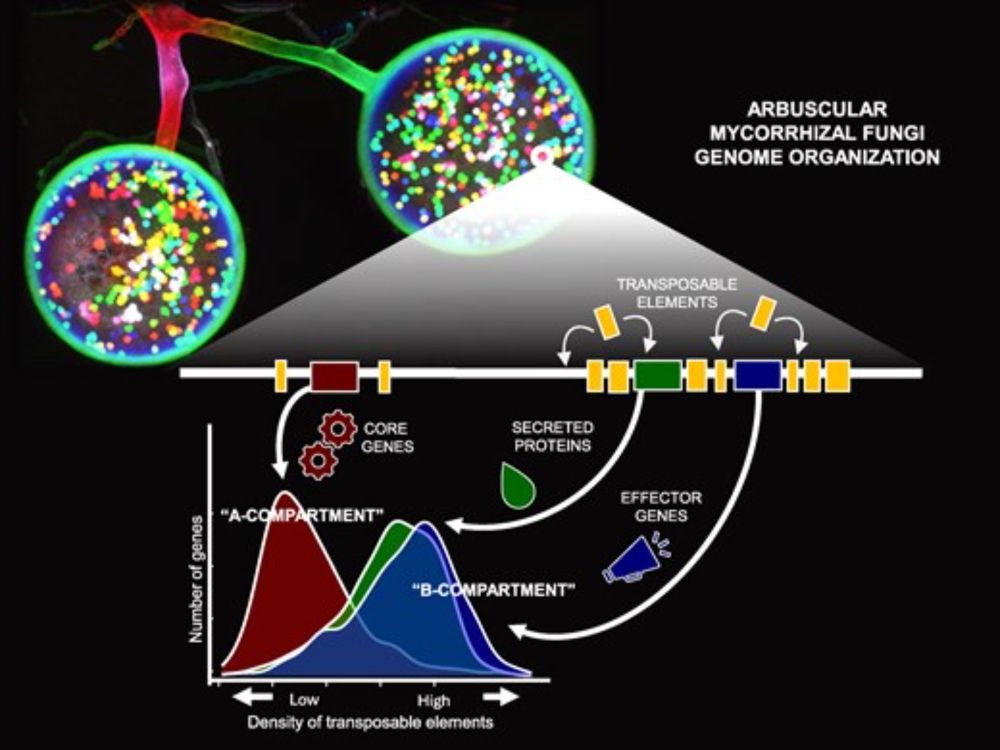
Analyses of Transposable Elements in Arbuscular Mycorrhizal Fungi Support Evolutionary Parallels With Filamentous Plant Pathogens
Abstract. Transposable elements are repetitive DNA sequences that excise or create copies that are inserted elsewhere in the genome. Their expansion shapes
academic.oup.com
April 1, 2025 at 9:55 PM
Happy to share that our paper "Analyses of Transposable Elements in Arbuscular Mycorrhizal Fungi Support Evolutionary Parallels With Filamentous Plant Pathogens" is out.
academic.oup.com/gbe/article/...
academic.oup.com/gbe/article/...
Reposted by Laura Katz

April 18, 2025 at 8:53 PM
Reposted by Laura Katz
📝 The early bird deadline for registration in SMBE 2025 in Beijing is TOMORROW, April 20th! Make sure to register for our annual meeting, where we will discuss the latest advances and emerging themes in molecular biology and evolution.
More info: smbe2025.scimeeting.cn
#SMBE2025 #evobio #molbio
More info: smbe2025.scimeeting.cn
#SMBE2025 #evobio #molbio
SMBE 2025 - Annual Meeting of the Society for Molecular Biology & Evolution, 2025
2025年国际分子与生物进化,在线会议,会议直播平台,网络会议直播,美迪康会务通,学术会议管理系统,会议活动管理,注册签到管理,会场幻灯片传输转播,PPT传输,会议网络直播,电子壁报管理系统,医学会,会员管理系统
smbe2025.scimeeting.cn
April 19, 2025 at 11:07 AM
📝 The early bird deadline for registration in SMBE 2025 in Beijing is TOMORROW, April 20th! Make sure to register for our annual meeting, where we will discuss the latest advances and emerging themes in molecular biology and evolution.
More info: smbe2025.scimeeting.cn
#SMBE2025 #evobio #molbio
More info: smbe2025.scimeeting.cn
#SMBE2025 #evobio #molbio
Reposted by Laura Katz
Our April cover features the work of Teterina et al., who compared the genomes of various Caenorhabditis nematode species, including the hyper polymorphic C. brenneri.
Link: doi.org/10.1093/gbe/...
📷 Teterina et al.
#evolution #genetics
Link: doi.org/10.1093/gbe/...
📷 Teterina et al.
#evolution #genetics

April 9, 2025 at 3:39 PM
Our April cover features the work of Teterina et al., who compared the genomes of various Caenorhabditis nematode species, including the hyper polymorphic C. brenneri.
Link: doi.org/10.1093/gbe/...
📷 Teterina et al.
#evolution #genetics
Link: doi.org/10.1093/gbe/...
📷 Teterina et al.
#evolution #genetics