



Wouter Vanden Hove
@libranet.eu
Freelance Python Software Engineer.
Regels! Regels! Belgen willen meer regels. Baas! Baas! Leg mij meer regels op.
July 29, 2025 at 10:17 PM
Regels! Regels! Belgen willen meer regels. Baas! Baas! Leg mij meer regels op.
Some use-cases:
1) applying monkeypates to third-party executables
2) read .env-file at startup to your env-vars are automatically available in python/ipython-repl, notebooks, any python-based executable in your venv
3) Add bin-directory of your venv to your PATH without the need to activate.
1) applying monkeypates to third-party executables
2) read .env-file at startup to your env-vars are automatically available in python/ipython-repl, notebooks, any python-based executable in your venv
3) Add bin-directory of your venv to your PATH without the need to activate.
November 30, 2024 at 2:55 PM
Some use-cases:
1) applying monkeypates to third-party executables
2) read .env-file at startup to your env-vars are automatically available in python/ipython-repl, notebooks, any python-based executable in your venv
3) Add bin-directory of your venv to your PATH without the need to activate.
1) applying monkeypates to third-party executables
2) read .env-file at startup to your env-vars are automatically available in python/ipython-repl, notebooks, any python-based executable in your venv
3) Add bin-directory of your venv to your PATH without the need to activate.
sitecustomize.py
I use it in *every* project since 8 years.
Since last year I switched to a plugin-architecture using entrypoints.
see pypi.org/project/site...
More plugins at github.com/libranet
I use it in *every* project since 8 years.
Since last year I switched to a plugin-architecture using entrypoints.
see pypi.org/project/site...
More plugins at github.com/libranet
November 30, 2024 at 2:51 PM
sitecustomize.py
I use it in *every* project since 8 years.
Since last year I switched to a plugin-architecture using entrypoints.
see pypi.org/project/site...
More plugins at github.com/libranet
I use it in *every* project since 8 years.
Since last year I switched to a plugin-architecture using entrypoints.
see pypi.org/project/site...
More plugins at github.com/libranet
As an example, I install the virtualenv-package in its own virtualenv and configure it via "make install"
github.com/libranet/lib...
I always configure venv-based tools to never write to $HOME
I turn every (non-dev) venv into an isolated application directory. And it works great.
github.com/libranet/lib...
I always configure venv-based tools to never write to $HOME
I turn every (non-dev) venv into an isolated application directory. And it works great.
November 25, 2024 at 10:10 PM
As an example, I install the virtualenv-package in its own virtualenv and configure it via "make install"
github.com/libranet/lib...
I always configure venv-based tools to never write to $HOME
I turn every (non-dev) venv into an isolated application directory. And it works great.
github.com/libranet/lib...
I always configure venv-based tools to never write to $HOME
I turn every (non-dev) venv into an isolated application directory. And it works great.
It then becomes a nuisance to be forced to have an extra sub-directory that I need to workaround via 3 extra symlinks:
bin/ -> .venv/bin/
etc/
lib/ -> .venv/lib/
.env
.venv
pyvenv.cfg -> .venv/pyvenv.cfg
var/cache
var/log
var/tmp
bin/ -> .venv/bin/
etc/
lib/ -> .venv/lib/
.env
.venv
pyvenv.cfg -> .venv/pyvenv.cfg
var/cache
var/log
var/tmp
November 25, 2024 at 10:03 PM
It then becomes a nuisance to be forced to have an extra sub-directory that I need to workaround via 3 extra symlinks:
bin/ -> .venv/bin/
etc/
lib/ -> .venv/lib/
.env
.venv
pyvenv.cfg -> .venv/pyvenv.cfg
var/cache
var/log
var/tmp
bin/ -> .venv/bin/
etc/
lib/ -> .venv/lib/
.env
.venv
pyvenv.cfg -> .venv/pyvenv.cfg
var/cache
var/log
var/tmp
I have +100 python-based tools on my laptop, each in their own directory. venvs are nice, but for me as a power-user and my deployments, they are not enough.
Every venv I create has it own temporary directory and cache-directory at minimum:
bin/
etc/
lib/
.env
pyvenv.cfg
var/cache
var/log
var/tmp
Every venv I create has it own temporary directory and cache-directory at minimum:
bin/
etc/
lib/
.env
pyvenv.cfg
var/cache
var/log
var/tmp
November 25, 2024 at 10:01 PM
I have +100 python-based tools on my laptop, each in their own directory. venvs are nice, but for me as a power-user and my deployments, they are not enough.
Every venv I create has it own temporary directory and cache-directory at minimum:
bin/
etc/
lib/
.env
pyvenv.cfg
var/cache
var/log
var/tmp
Every venv I create has it own temporary directory and cache-directory at minimum:
bin/
etc/
lib/
.env
pyvenv.cfg
var/cache
var/log
var/tmp
As a power-user *I* want to manage deployment of the application-directory, which is a superset of pip-installing packages.
I don't see a problem with having some bash-scripts in a bin-subdirectory and commiting these to the repo,
and have a script to turn this folder into a virtualenv.
I don't see a problem with having some bash-scripts in a bin-subdirectory and commiting these to the repo,
and have a script to turn this folder into a virtualenv.
November 25, 2024 at 9:38 PM
As a power-user *I* want to manage deployment of the application-directory, which is a superset of pip-installing packages.
I don't see a problem with having some bash-scripts in a bin-subdirectory and commiting these to the repo,
and have a script to turn this folder into a virtualenv.
I don't see a problem with having some bash-scripts in a bin-subdirectory and commiting these to the repo,
and have a script to turn this folder into a virtualenv.
With uv having the momentum,
but also uv cannibalizing the hardcoded .venv-directory,
I'm afraid this will be the new de facto standard. And this will remove various use-cases I've seen in the wild, esp corporate settings. The /usr/local being one example.
but also uv cannibalizing the hardcoded .venv-directory,
I'm afraid this will be the new de facto standard. And this will remove various use-cases I've seen in the wild, esp corporate settings. The /usr/local being one example.
November 25, 2024 at 9:32 PM
With uv having the momentum,
but also uv cannibalizing the hardcoded .venv-directory,
I'm afraid this will be the new de facto standard. And this will remove various use-cases I've seen in the wild, esp corporate settings. The /usr/local being one example.
but also uv cannibalizing the hardcoded .venv-directory,
I'm afraid this will be the new de facto standard. And this will remove various use-cases I've seen in the wild, esp corporate settings. The /usr/local being one example.
A tool deleting files not managed by that tool, without warning or asking user-confirmation. That is at least not wanted behaviour.
"Virtualenv" or "python -m venv" do not have that behaviour.
"Virtualenv" or "python -m venv" do not have that behaviour.
November 25, 2024 at 8:50 PM
A tool deleting files not managed by that tool, without warning or asking user-confirmation. That is at least not wanted behaviour.
"Virtualenv" or "python -m venv" do not have that behaviour.
"Virtualenv" or "python -m venv" do not have that behaviour.
I currently work in a company that standardized on pip installing in
VIRTUAL_ENV=/usr/local
Not my choice, it works, and I can't change it for the time being.
When trying to switch to uv, it deleted all of /usr/local. Not my best day.
VIRTUAL_ENV=/usr/local
Not my choice, it works, and I can't change it for the time being.
When trying to switch to uv, it deleted all of /usr/local. Not my best day.
November 25, 2024 at 8:47 PM
I currently work in a company that standardized on pip installing in
VIRTUAL_ENV=/usr/local
Not my choice, it works, and I can't change it for the time being.
When trying to switch to uv, it deleted all of /usr/local. Not my best day.
VIRTUAL_ENV=/usr/local
Not my choice, it works, and I can't change it for the time being.
When trying to switch to uv, it deleted all of /usr/local. Not my best day.
The python virtual env should manage
- pyvenv.cfg
- lib/pythonx.y
- generated entrypoints in bin
And nothing else. Untill very recently this was the case.
- pyvenv.cfg
- lib/pythonx.y
- generated entrypoints in bin
And nothing else. Untill very recently this was the case.
November 25, 2024 at 8:36 PM
The python virtual env should manage
- pyvenv.cfg
- lib/pythonx.y
- generated entrypoints in bin
And nothing else. Untill very recently this was the case.
- pyvenv.cfg
- lib/pythonx.y
- generated entrypoints in bin
And nothing else. Untill very recently this was the case.
I agree to this for development.
But for using a package in production, I don't want to deploy to some hidden .venv and then be forced to use symlinks to have logical more sane, structure.
Only recently this become a problem with uv mindlessly deleting .venv-folders.
This is wrong behaviour.
But for using a package in production, I don't want to deploy to some hidden .venv and then be forced to use symlinks to have logical more sane, structure.
Only recently this become a problem with uv mindlessly deleting .venv-folders.
This is wrong behaviour.
November 25, 2024 at 8:23 PM
I agree to this for development.
But for using a package in production, I don't want to deploy to some hidden .venv and then be forced to use symlinks to have logical more sane, structure.
Only recently this become a problem with uv mindlessly deleting .venv-folders.
This is wrong behaviour.
But for using a package in production, I don't want to deploy to some hidden .venv and then be forced to use symlinks to have logical more sane, structure.
Only recently this become a problem with uv mindlessly deleting .venv-folders.
This is wrong behaviour.
Dissent among humans is probably not the real problem on X.
Nice overview (thanks to @lukasz.langa.pl by sharing on X)
www.youtube.com/watch?v=GZ5X...
Nice overview (thanks to @lukasz.langa.pl by sharing on X)
www.youtube.com/watch?v=GZ5X...

The Really Dark Truth About Bots
YouTube video by Benn Jordan
www.youtube.com
November 25, 2024 at 11:39 AM
Dissent among humans is probably not the real problem on X.
Nice overview (thanks to @lukasz.langa.pl by sharing on X)
www.youtube.com/watch?v=GZ5X...
Nice overview (thanks to @lukasz.langa.pl by sharing on X)
www.youtube.com/watch?v=GZ5X...
Jammer van de wisselvalligheid van dit filmpje. Zeer sterke argumenten afgewisseld met onjuistheden.
November 24, 2024 at 10:24 AM
Jammer van de wisselvalligheid van dit filmpje. Zeer sterke argumenten afgewisseld met onjuistheden.
I wish we had some grand visionaries like Jacques Delors to move the EU forward. Currently I don't see anyone fitting that description.
November 6, 2024 at 8:18 AM
I wish we had some grand visionaries like Jacques Delors to move the EU forward. Currently I don't see anyone fitting that description.
"Skeet" sounds much like "scheet" in Dutch, meaning fart.
November 5, 2024 at 8:09 PM
"Skeet" sounds much like "scheet" in Dutch, meaning fart.
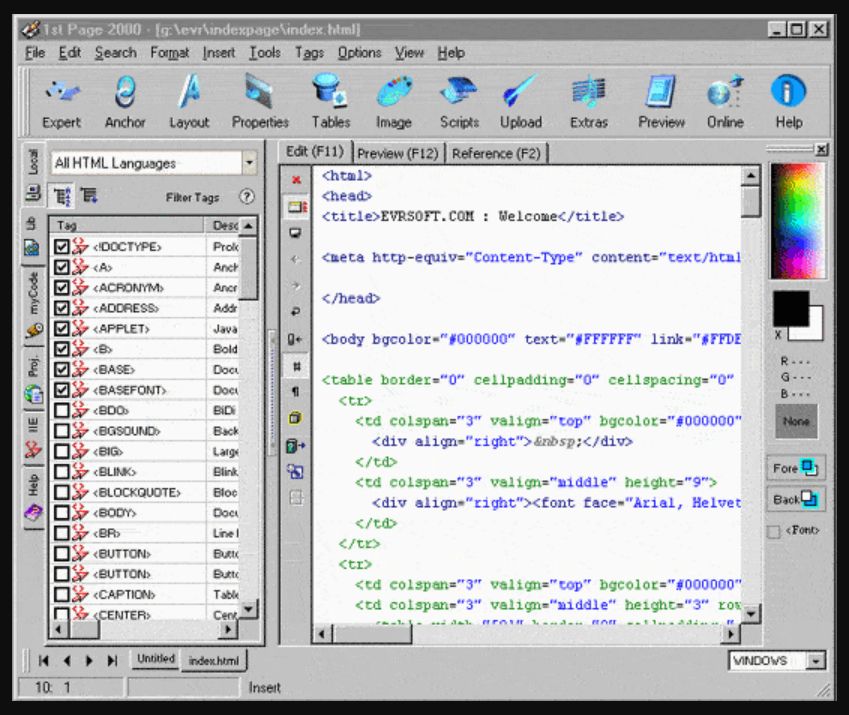
Found memories of "1st Page 2000" from Evrsoft, released in 1999. After 25y their original website is still online at
www.evrsoft.com/company.shtml
www.evrsoft.com/company.shtml
November 4, 2024 at 10:46 AM
Found memories of "1st Page 2000" from Evrsoft, released in 1999. After 25y their original website is still online at
www.evrsoft.com/company.shtml
www.evrsoft.com/company.shtml