




Marcus Ghosh
@marcusghosh.bsky.social
Computational neuroscientist.
Research Fellow @imperialcollegeldn.bsky.social and @imperial-ix.bsky.social
Funded by @schmidtsciences.bsky.social
Research Fellow @imperialcollegeldn.bsky.social and @imperial-ix.bsky.social
Funded by @schmidtsciences.bsky.social
Currently assembling a larger fleet 🚀
January 15, 2026 at 8:54 AM
Currently assembling a larger fleet 🚀
That’s exactly the right question!
What is the smallest / simplest model for your phenomenon of interest.
Some recent work, cited in the article, shows that very small models can be surprisingly powerful.
And often we may be far above the lower bound, which then hinders interpretability
What is the smallest / simplest model for your phenomenon of interest.
Some recent work, cited in the article, shows that very small models can be surprisingly powerful.
And often we may be far above the lower bound, which then hinders interpretability
December 24, 2025 at 10:20 AM
That’s exactly the right question!
What is the smallest / simplest model for your phenomenon of interest.
Some recent work, cited in the article, shows that very small models can be surprisingly powerful.
And often we may be far above the lower bound, which then hinders interpretability
What is the smallest / simplest model for your phenomenon of interest.
Some recent work, cited in the article, shows that very small models can be surprisingly powerful.
And often we may be far above the lower bound, which then hinders interpretability
2. Brains are massively complex, but if our goal is to understand them, then building scale models may not be the best approach.
In physics, many breakthroughs have come from abstracting away complexity, as this article highlights!
doi.org/10.1111/ejn....
In physics, many breakthroughs have come from abstracting away complexity, as this article highlights!
doi.org/10.1111/ejn....
doi.org
December 23, 2025 at 9:39 AM
2. Brains are massively complex, but if our goal is to understand them, then building scale models may not be the best approach.
In physics, many breakthroughs have come from abstracting away complexity, as this article highlights!
doi.org/10.1111/ejn....
In physics, many breakthroughs have come from abstracting away complexity, as this article highlights!
doi.org/10.1111/ejn....
Thanks for reading the article!
1. The multi-billion parameter model discussed in the article was developed by Meta but then fine-tuned by neuroscientists (for research).
This could become more common, or neuroscientists could start to train their own "foundation" models from scratch.
1. The multi-billion parameter model discussed in the article was developed by Meta but then fine-tuned by neuroscientists (for research).
This could become more common, or neuroscientists could start to train their own "foundation" models from scratch.
December 23, 2025 at 9:39 AM
Thanks for reading the article!
1. The multi-billion parameter model discussed in the article was developed by Meta but then fine-tuned by neuroscientists (for research).
This could become more common, or neuroscientists could start to train their own "foundation" models from scratch.
1. The multi-billion parameter model discussed in the article was developed by Meta but then fine-tuned by neuroscientists (for research).
This could become more common, or neuroscientists could start to train their own "foundation" models from scratch.
Actually, according to an eLife information session, eLife desk reject ~90% of submissions.
So the ones which do get reviewed tend to be high-quality!
Even if, like the paper @neural-reckoning.org is referring to, the reviewers don't agree with everything.
So the ones which do get reviewed tend to be high-quality!
Even if, like the paper @neural-reckoning.org is referring to, the reviewers don't agree with everything.
November 27, 2025 at 4:04 PM
Actually, according to an eLife information session, eLife desk reject ~90% of submissions.
So the ones which do get reviewed tend to be high-quality!
Even if, like the paper @neural-reckoning.org is referring to, the reviewers don't agree with everything.
So the ones which do get reviewed tend to be high-quality!
Even if, like the paper @neural-reckoning.org is referring to, the reviewers don't agree with everything.
Excited to read!
You may be interested in our recent work too!
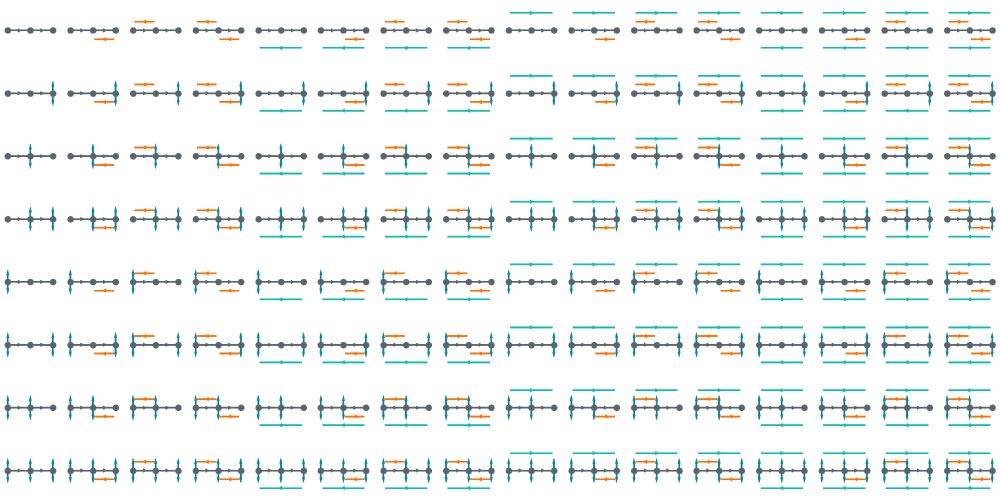
We define 128 RNN architectures then compare their behaviour and dynamics (using gradient-based metrics).
bsky.app/profile/marc...
You may be interested in our recent work too!
We define 128 RNN architectures then compare their behaviour and dynamics (using gradient-based metrics).
bsky.app/profile/marc...
How does the structure of a neural circuit shape its function?
@neuralreckoning.bsky.social & I explore this in our new preprint:
doi.org/10.1101/2025...
🤖🧠🧪
🧵1/9
@neuralreckoning.bsky.social & I explore this in our new preprint:
doi.org/10.1101/2025...
🤖🧠🧪
🧵1/9
November 25, 2025 at 9:00 AM
Excited to read!
You may be interested in our recent work too!
We define 128 RNN architectures then compare their behaviour and dynamics (using gradient-based metrics).
bsky.app/profile/marc...
You may be interested in our recent work too!
We define 128 RNN architectures then compare their behaviour and dynamics (using gradient-based metrics).
bsky.app/profile/marc...
For the two I've held at Imperial, applications will open summer 2026, for a September 2027 start.
* AI in Science (2 years) - www.imperial.ac.uk/ix-ai-in-sci...
* ICRF (4 years) - www.imperial.ac.uk/research-and...
* AI in Science (2 years) - www.imperial.ac.uk/ix-ai-in-sci...
* ICRF (4 years) - www.imperial.ac.uk/research-and...
November 24, 2025 at 4:37 PM
For the two I've held at Imperial, applications will open summer 2026, for a September 2027 start.
* AI in Science (2 years) - www.imperial.ac.uk/ix-ai-in-sci...
* ICRF (4 years) - www.imperial.ac.uk/research-and...
* AI in Science (2 years) - www.imperial.ac.uk/ix-ai-in-sci...
* ICRF (4 years) - www.imperial.ac.uk/research-and...
I'm always open to talking about postdoctoral fellowships!
I'm not quite ready to post my applications online, but am happy to share them privately.
Just DM or email me 🙂
I'm not quite ready to post my applications online, but am happy to share them privately.
Just DM or email me 🙂
November 24, 2025 at 3:37 PM
I'm always open to talking about postdoctoral fellowships!
I'm not quite ready to post my applications online, but am happy to share them privately.
Just DM or email me 🙂
I'm not quite ready to post my applications online, but am happy to share them privately.
Just DM or email me 🙂
@neural-reckoning.org and I defined a taxonomy of neural network architectures, which we exhaustively explored!
We think these models (pRNNs) are exciting for thinking about structure-function relations in artificial and biological neural networks.
bsky.app/profile/marc...
We think these models (pRNNs) are exciting for thinking about structure-function relations in artificial and biological neural networks.
bsky.app/profile/marc...
How does the structure of a neural circuit shape its function?
@neuralreckoning.bsky.social & I explore this in our new preprint:
doi.org/10.1101/2025...
🤖🧠🧪
🧵1/9
@neuralreckoning.bsky.social & I explore this in our new preprint:
doi.org/10.1101/2025...
🤖🧠🧪
🧵1/9
November 20, 2025 at 9:17 AM
@neural-reckoning.org and I defined a taxonomy of neural network architectures, which we exhaustively explored!
We think these models (pRNNs) are exciting for thinking about structure-function relations in artificial and biological neural networks.
bsky.app/profile/marc...
We think these models (pRNNs) are exciting for thinking about structure-function relations in artificial and biological neural networks.
bsky.app/profile/marc...
Congratulations!
Hopefully see you somewhere in Europe soon!
Hopefully see you somewhere in Europe soon!
November 19, 2025 at 1:11 PM
Congratulations!
Hopefully see you somewhere in Europe soon!
Hopefully see you somewhere in Europe soon!