



@martha-newson.bsky.social
This isn’t a moral debate — it’s a call for curiosity and harm reduction.
If drugs are part of the fan experience for some, ignoring it won’t make it safer.
Let’s talk evidence, not stigma.
📖 Full paper: journals.sagepub.com/doi/10.1177/...
If drugs are part of the fan experience for some, ignoring it won’t make it safer.
Let’s talk evidence, not stigma.
📖 Full paper: journals.sagepub.com/doi/10.1177/...

Sage Journals: Discover world-class research
Subscription and open access journals from Sage, the world's leading independent academic publisher.
journals.sagepub.com
October 21, 2025 at 10:44 AM
This isn’t a moral debate — it’s a call for curiosity and harm reduction.
If drugs are part of the fan experience for some, ignoring it won’t make it safer.
Let’s talk evidence, not stigma.
📖 Full paper: journals.sagepub.com/doi/10.1177/...
If drugs are part of the fan experience for some, ignoring it won’t make it safer.
Let’s talk evidence, not stigma.
📖 Full paper: journals.sagepub.com/doi/10.1177/...
So why the silence?
Is it because football fans in the UK have long been under media & policing scrutiny, while American fandom is treated as more commercial, polished, and contained?
Is it because football fans in the UK have long been under media & policing scrutiny, while American fandom is treated as more commercial, polished, and contained?
October 21, 2025 at 10:44 AM
So why the silence?
Is it because football fans in the UK have long been under media & policing scrutiny, while American fandom is treated as more commercial, polished, and contained?
Is it because football fans in the UK have long been under media & policing scrutiny, while American fandom is treated as more commercial, polished, and contained?
US: 22% fans reported using drugs at a game, and 76% saw others take drugs.
But unlike the UK, drug use didn’t vary by sport — basketball, baseball, hockey fans behaving similarly.
But unlike the UK, drug use didn’t vary by sport — basketball, baseball, hockey fans behaving similarly.
October 21, 2025 at 10:44 AM
US: 22% fans reported using drugs at a game, and 76% saw others take drugs.
But unlike the UK, drug use didn’t vary by sport — basketball, baseball, hockey fans behaving similarly.
But unlike the UK, drug use didn’t vary by sport — basketball, baseball, hockey fans behaving similarly.
UK: 6.5% of fans said they’d taken drugs at a game in the past year. ⚽ 60% had seen others doing so. Cocaine use among football & rugby fans was twice the national average and greater than in cricket.
October 21, 2025 at 10:44 AM
UK: 6.5% of fans said they’d taken drugs at a game in the past year. ⚽ 60% had seen others doing so. Cocaine use among football & rugby fans was twice the national average and greater than in cricket.
Local rivalries can ripple out to affect cohesion at the national level.
Raises big questions for ethnicity, religion, class, politics & beyond.
Huge thanks to @MBilgehanAytac & Linus Peitz — and to Türkiye for hosting this study!
www.sciencedirect.com/science/arti...
Raises big questions for ethnicity, religion, class, politics & beyond.
Huge thanks to @MBilgehanAytac & Linus Peitz — and to Türkiye for hosting this study!
www.sciencedirect.com/science/arti...

Club representation in the national team: Effects on identity fusion and intra-vs intergroup attitudes
Identity fusion describes a psychological state in which personal and social identities are deeply aligned, fostering strong bonds with a group and in…
www.sciencedirect.com
September 29, 2025 at 9:46 PM
Local rivalries can ripple out to affect cohesion at the national level.
Raises big questions for ethnicity, religion, class, politics & beyond.
Huge thanks to @MBilgehanAytac & Linus Peitz — and to Türkiye for hosting this study!
www.sciencedirect.com/science/arti...
Raises big questions for ethnicity, religion, class, politics & beyond.
Huge thanks to @MBilgehanAytac & Linus Peitz — and to Türkiye for hosting this study!
www.sciencedirect.com/science/arti...
Participants saw Turkish national team line-ups with more or fewer players from their own vs. rival clubs.
- National bonding dropped when rival clubs were overrepresented
-Stronger national bonding → more prosociality
- More rivals on the team reduced prosociality
- National bonding dropped when rival clubs were overrepresented
-Stronger national bonding → more prosociality
- More rivals on the team reduced prosociality
September 29, 2025 at 9:46 PM
Participants saw Turkish national team line-ups with more or fewer players from their own vs. rival clubs.
- National bonding dropped when rival clubs were overrepresented
-Stronger national bonding → more prosociality
- More rivals on the team reduced prosociality
- National bonding dropped when rival clubs were overrepresented
-Stronger national bonding → more prosociality
- More rivals on the team reduced prosociality
Whether it’s gang violence or helping a stranger, group bonding shapes action.
Time to reframe how we understand social ties in criminogenic & prosocial contexts. Read the article: link.springer.com/article/10.1...
Time to reframe how we understand social ties in criminogenic & prosocial contexts. Read the article: link.springer.com/article/10.1...
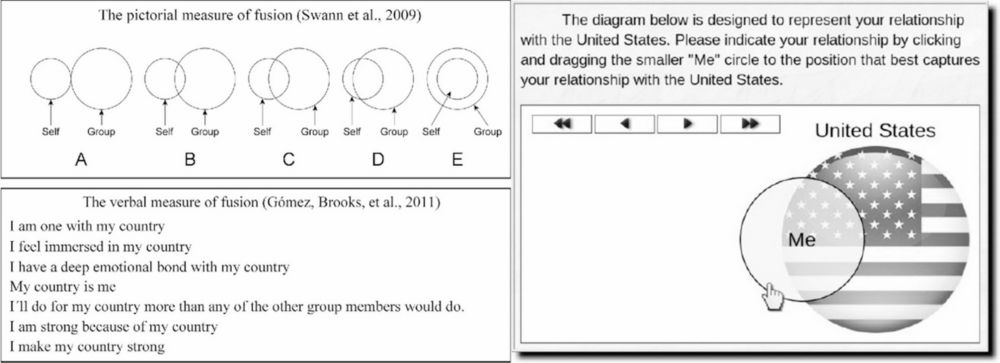
Fusing concept to theory: identity fusion’s potential role in crime research - Theory and Society
Developing theories, evidence, and methods that could help to reduce crime is foundational to crime research. Here we present an interdisciplinary framework that can shed light on old theories and ope...
link.springer.com
August 5, 2025 at 8:21 PM
Whether it’s gang violence or helping a stranger, group bonding shapes action.
Time to reframe how we understand social ties in criminogenic & prosocial contexts. Read the article: link.springer.com/article/10.1...
Time to reframe how we understand social ties in criminogenic & prosocial contexts. Read the article: link.springer.com/article/10.1...
Our framework bridges criminology, psychology, sociology, and anthropology.
We call for more dialogue: crime science needs fusion theory—and fusion research needs crime scholars to tackle moral & social harms.
We call for more dialogue: crime science needs fusion theory—and fusion research needs crime scholars to tackle moral & social harms.
August 5, 2025 at 8:21 PM
Our framework bridges criminology, psychology, sociology, and anthropology.
We call for more dialogue: crime science needs fusion theory—and fusion research needs crime scholars to tackle moral & social harms.
We call for more dialogue: crime science needs fusion theory—and fusion research needs crime scholars to tackle moral & social harms.
Fusion isn't "bad" or "good". It's powerful. People fused to their group may commit crimes for it—or make deep sacrifices for others. This has huge implications for how we study & prevent crime. 🧠
August 5, 2025 at 8:21 PM
Fusion isn't "bad" or "good". It's powerful. People fused to their group may commit crimes for it—or make deep sacrifices for others. This has huge implications for how we study & prevent crime. 🧠
Time and outstanding staff are needed for both; invest in strong community programmes and supporting staff. Full article: onlinelibrary.wiley.com/doi/pdf/10.1...

Sports‐Based Interventions Fostering Positive Identity Formation in Prison: Insights From the Twinning Project
For the formerly incarcerated, transitioning from criminal to law-abiding identities is particularly challenging, especially for those from highly stigmatised groups who are often excluded from mains...
onlinelibrary.wiley.com
June 24, 2025 at 9:24 AM
Time and outstanding staff are needed for both; invest in strong community programmes and supporting staff. Full article: onlinelibrary.wiley.com/doi/pdf/10.1...
🤝Attachment to coaches → immediate bonding & sustained group identification
Whilst both strengthen social bonds, they work differently over time.
Our findings highlight the power of community interventions for building positive social identities in prison.
Whilst both strengthen social bonds, they work differently over time.
Our findings highlight the power of community interventions for building positive social identities in prison.
June 24, 2025 at 9:24 AM
🤝Attachment to coaches → immediate bonding & sustained group identification
Whilst both strengthen social bonds, they work differently over time.
Our findings highlight the power of community interventions for building positive social identities in prison.
Whilst both strengthen social bonds, they work differently over time.
Our findings highlight the power of community interventions for building positive social identities in prison.
A focus on shared depth might be what it takes to close the empathy gap.
Full article here: bpspsychub.onlinelibrary.wiley.com/doi/10.1111/...
Full article here: bpspsychub.onlinelibrary.wiley.com/doi/10.1111/...

<em>British Journal of Social Psychology</em> | Wiley Online Library
The stigma of incarceration contributes to the global reoffending crisis and remains a barrier to reintegration into receiving communities. Recent research suggests that the key to solving this probl...
bpspsychub.onlinelibrary.wiley.com
May 6, 2025 at 12:48 PM
A focus on shared depth might be what it takes to close the empathy gap.
Full article here: bpspsychub.onlinelibrary.wiley.com/doi/10.1111/...
Full article here: bpspsychub.onlinelibrary.wiley.com/doi/10.1111/...
It's not about the specific story you tell. It's about helping others feel that you’ve been changed by something—and ideally, that they have too.
Shared transformation, not shared trauma, is the real glue.
Shared transformation, not shared trauma, is the real glue.
May 6, 2025 at 12:48 PM
It's not about the specific story you tell. It's about helping others feel that you’ve been changed by something—and ideally, that they have too.
Shared transformation, not shared trauma, is the real glue.
Shared transformation, not shared trauma, is the real glue.
In a final study, analyses showed that it's less about WHAT happened—football, prison, death—but that something deeply transformative occurred internally, and both people recognised it.
That sense of shared transformation was enough to bridge differences—even criminal history.
That sense of shared transformation was enough to bridge differences—even criminal history.
May 6, 2025 at 12:48 PM
In a final study, analyses showed that it's less about WHAT happened—football, prison, death—but that something deeply transformative occurred internally, and both people recognised it.
That sense of shared transformation was enough to bridge differences—even criminal history.
That sense of shared transformation was enough to bridge differences—even criminal history.
In both countries, identity fusion (a deep sense of connection) predicted whether people were willing to hire someone who’d been to prison. But what triggered that fusion was culturally shaped. Sport in the emotionally repressed UK; bereavement (and overt feelings?!) in the US
May 6, 2025 at 12:48 PM
In both countries, identity fusion (a deep sense of connection) predicted whether people were willing to hire someone who’d been to prison. But what triggered that fusion was culturally shaped. Sport in the emotionally repressed UK; bereavement (and overt feelings?!) in the US
Across four studies, we found...
🇬🇧 Brits who saw football as transformative felt more bonded with prisoners who were also football fans—especially when they'd endured tough defeats.
🇺🇸 In the US, it was personal loss & adversity (like death) that did the bonding work.
🇬🇧 Brits who saw football as transformative felt more bonded with prisoners who were also football fans—especially when they'd endured tough defeats.
🇺🇸 In the US, it was personal loss & adversity (like death) that did the bonding work.
May 6, 2025 at 12:48 PM
Across four studies, we found...
🇬🇧 Brits who saw football as transformative felt more bonded with prisoners who were also football fans—especially when they'd endured tough defeats.
🇺🇸 In the US, it was personal loss & adversity (like death) that did the bonding work.
🇬🇧 Brits who saw football as transformative felt more bonded with prisoners who were also football fans—especially when they'd endured tough defeats.
🇺🇸 In the US, it was personal loss & adversity (like death) that did the bonding work.