



Mattan S. Ben-Shachar
@mattansb.msbstats.info
Statistics lecturer | Freelance statistical consultant & research analyst | #rstats dev @easystats.github.io
home.msbstats.info
(He/Him)
home.msbstats.info
(He/Him)
Meanwhile, Antarctica:
a man with his eyes closed looks at the camera
ALT: a man with his eyes closed looks at the camera
media.tenor.com
January 15, 2026 at 6:30 AM
Meanwhile, Antarctica:
Or compute 90% CIs for one sided tests at alpha=0.05 or whatever.
But the broader point is that CIs carry more information than even 8 different p-values. So in class I first taught the sig tests and then pivoted to @thenewstats.bsky.social's new-stats view of CIs as a more generalistic approach.
But the broader point is that CIs carry more information than even 8 different p-values. So in class I first taught the sig tests and then pivoted to @thenewstats.bsky.social's new-stats view of CIs as a more generalistic approach.
January 13, 2026 at 10:39 AM
Or compute 90% CIs for one sided tests at alpha=0.05 or whatever.
But the broader point is that CIs carry more information than even 8 different p-values. So in class I first taught the sig tests and then pivoted to @thenewstats.bsky.social's new-stats view of CIs as a more generalistic approach.
But the broader point is that CIs carry more information than even 8 different p-values. So in class I first taught the sig tests and then pivoted to @thenewstats.bsky.social's new-stats view of CIs as a more generalistic approach.
Reposted by Mattan S. Ben-Shachar
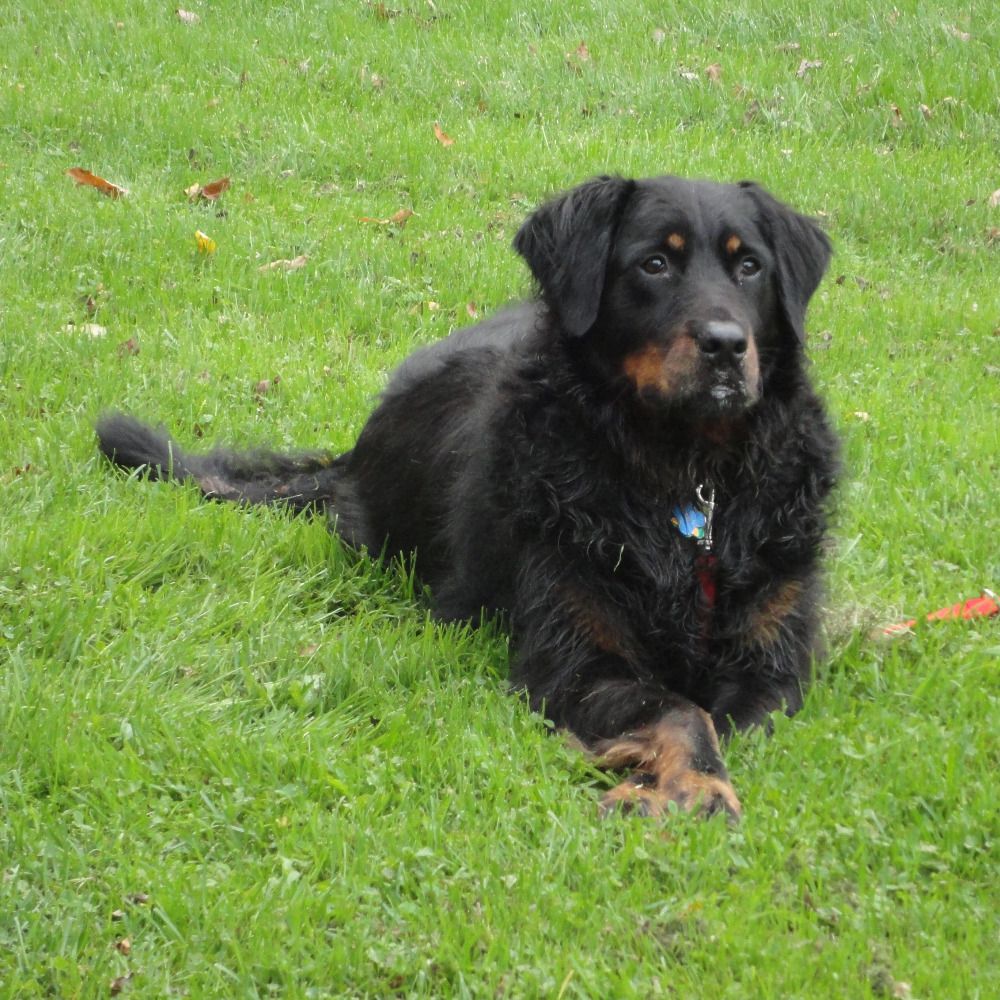
Nice. Related to a WIP with @jdushoff.bsky.social : bbolker.github.io/powertargets... : basically, extending power analyses to see which bin we'll fall in (I do agree that CIs are better!)

January 12, 2026 at 9:30 PM
Nice. Related to a WIP with @jdushoff.bsky.social : bbolker.github.io/powertargets... : basically, extending power analyses to see which bin we'll fall in (I do agree that CIs are better!)
Oh, this is cool!
January 12, 2026 at 9:39 PM
Oh, this is cool!
Really the bottom one is somewhat informative - it is at least larger than the negative SESOI (non-inferior).
January 12, 2026 at 9:06 PM
Really the bottom one is somewhat informative - it is at least larger than the negative SESOI (non-inferior).
The only correct reaction
January 11, 2026 at 4:41 PM
The only correct reaction
It took some time, but he's got more of that academic stamina than I do, and he got it across the finish line!
Go read that paper!
Go read that paper!
Our paper is finally out in Cognition! 🎉
We introduce the "CLIP task"—a computerized paradigm for measuring numerical bias in adults: when number and physical size both matter, do you spontaneously rely more on numbers or on physical size?
We introduce the "CLIP task"—a computerized paradigm for measuring numerical bias in adults: when number and physical size both matter, do you spontaneously rely more on numbers or on physical size?

January 11, 2026 at 4:30 PM
It took some time, but he's got more of that academic stamina than I do, and he got it across the finish line!
Go read that paper!
Go read that paper!
Anyway, around this time @hochmanshachar.bsky.social - a true peer and friend - had some thoughts about expanding on this work. And boy did he - he brought all his knowledge about cognitive numerosity and his stellar multilevel Bayesian computation models into the mix - and he ran with it!
January 11, 2026 at 4:30 PM
Anyway, around this time @hochmanshachar.bsky.social - a true peer and friend - had some thoughts about expanding on this work. And boy did he - he brought all his knowledge about cognitive numerosity and his stellar multilevel Bayesian computation models into the mix - and he ran with it!
(And really, that's still what I do today - solve (other people's) puzzles, professionally! 🧩🍹)
January 11, 2026 at 4:30 PM
(And really, that's still what I do today - solve (other people's) puzzles, professionally! 🧩🍹)
I haven't read that paper in a while, but I am still so proud of that little thought I had - and the whole experience as a grad student was full of opportunities to try and solve such puzzles - which I enjoyed very much, even after it became clear I would not be perusing a post-doc etc.
January 11, 2026 at 4:30 PM
I haven't read that paper in a while, but I am still so proud of that little thought I had - and the whole experience as a grad student was full of opportunities to try and solve such puzzles - which I enjoyed very much, even after it became clear I would not be perusing a post-doc etc.
After the 6th rejection on this paper I was broken. Other such sour experiences with peer-review has made it clear to me that this academic business wasn't for me. I had resolved to let this work live on as on a preprint server, where you can still find it:
doi.org/10.31234/osf...
doi.org/10.31234/osf...
OSF
doi.org
January 11, 2026 at 4:30 PM
After the 6th rejection on this paper I was broken. Other such sour experiences with peer-review has made it clear to me that this academic business wasn't for me. I had resolved to let this work live on as on a preprint server, where you can still find it:
doi.org/10.31234/osf...
doi.org/10.31234/osf...
During my 1st year the paper was rejected twice.
Then the grad student I was working w/ graduated (the nerve!) and I became the lead on the paper.
Over then next year the paper was rejected 2 more times.
The following year - once more. I was now already in my 1st year of my doctoral studies.
Then the grad student I was working w/ graduated (the nerve!) and I became the lead on the paper.
Over then next year the paper was rejected 2 more times.
The following year - once more. I was now already in my 1st year of my doctoral studies.
January 11, 2026 at 4:30 PM
During my 1st year the paper was rejected twice.
Then the grad student I was working w/ graduated (the nerve!) and I became the lead on the paper.
Over then next year the paper was rejected 2 more times.
The following year - once more. I was now already in my 1st year of my doctoral studies.
Then the grad student I was working w/ graduated (the nerve!) and I became the lead on the paper.
Over then next year the paper was rejected 2 more times.
The following year - once more. I was now already in my 1st year of my doctoral studies.
I was sold on this whole cognitive psych thing - I ditched the idea of becoming a clinical psychologist and put all my effort on working in this lab.
By the time the paper was first sent to a journal I had applied to start my MA in experimental cognitive psych.
By the time the paper was first sent to a journal I had applied to start my MA in experimental cognitive psych.
January 11, 2026 at 4:30 PM
I was sold on this whole cognitive psych thing - I ditched the idea of becoming a clinical psychologist and put all my effort on working in this lab.
By the time the paper was first sent to a journal I had applied to start my MA in experimental cognitive psych.
By the time the paper was first sent to a journal I had applied to start my MA in experimental cognitive psych.
So I learned that 2-yellow is "good", but in the last step I was shown 2-red and 3-yellow, which to choose?
If I choose 2-red, I focused on the numerosity dimension!
This produced a very reliable measure that was ALSO related to better acuity in quantity discrimination - just like in children!
If I choose 2-red, I focused on the numerosity dimension!
This produced a very reliable measure that was ALSO related to better acuity in quantity discrimination - just like in children!


January 11, 2026 at 4:30 PM
So I learned that 2-yellow is "good", but in the last step I was shown 2-red and 3-yellow, which to choose?
If I choose 2-red, I focused on the numerosity dimension!
This produced a very reliable measure that was ALSO related to better acuity in quantity discrimination - just like in children!
If I choose 2-red, I focused on the numerosity dimension!
This produced a very reliable measure that was ALSO related to better acuity in quantity discrimination - just like in children!
Subjects learned which of two easily distinguishable stimuli earn them points: easily distinguishable on two dimensions: color (e.g., red vs yellow) and numerosity (e.g., 3 vs 2 dot-arrays). Very easy!
Then, in the last step, the dimensions are *switched* w/o warning and their choice is recorded.
Then, in the last step, the dimensions are *switched* w/o warning and their choice is recorded.

January 11, 2026 at 4:30 PM
Subjects learned which of two easily distinguishable stimuli earn them points: easily distinguishable on two dimensions: color (e.g., red vs yellow) and numerosity (e.g., 3 vs 2 dot-arrays). Very easy!
Then, in the last step, the dimensions are *switched* w/o warning and their choice is recorded.
Then, in the last step, the dimensions are *switched* w/o warning and their choice is recorded.
In children, SFON is measured through imitation games and numerically focused behavior is coded. We piloted some imitation games for adults, but those damn undergrads were too suspicious for it to produce any reliable individual differences.
Finally I had an idea - a super simple learning task!
Finally I had an idea - a super simple learning task!
January 11, 2026 at 4:30 PM
In children, SFON is measured through imitation games and numerically focused behavior is coded. We piloted some imitation games for adults, but those damn undergrads were too suspicious for it to produce any reliable individual differences.
Finally I had an idea - a super simple learning task!
Finally I had an idea - a super simple learning task!
The grad student I was working with was studying Spontaneous Focusing on Numerosity (SFON) in children - attending to the number aspect of objects w/o being prompted - and had found that it was related to better acuity in quantity discrimination.
But how can we measure SFON in adults?
But how can we measure SFON in adults?

January 11, 2026 at 4:30 PM
The grad student I was working with was studying Spontaneous Focusing on Numerosity (SFON) in children - attending to the number aspect of objects w/o being prompted - and had found that it was related to better acuity in quantity discrimination.
But how can we measure SFON in adults?
But how can we measure SFON in adults?
The year was 2012. I was a second yr anthro-socio-psych undergrad, with my eyes on being a clinical psychologist.
I was an RA in a cognitive-developmental lab because frankly I needed the recommendation letter to get into the grad program. But I was having a blast!
I was an RA in a cognitive-developmental lab because frankly I needed the recommendation letter to get into the grad program. But I was having a blast!
January 11, 2026 at 4:30 PM
The year was 2012. I was a second yr anthro-socio-psych undergrad, with my eyes on being a clinical psychologist.
I was an RA in a cognitive-developmental lab because frankly I needed the recommendation letter to get into the grad program. But I was having a blast!
I was an RA in a cognitive-developmental lab because frankly I needed the recommendation letter to get into the grad program. But I was having a blast!