



Michael Raddatz
@michaelraddatz.bsky.social
Cardiology fellow and physician-scientist at UCLA. Hematopoiesis, inflammation, and cardiovascular disease. Opinions mine.
www.maraddatz.com
www.maraddatz.com
7/
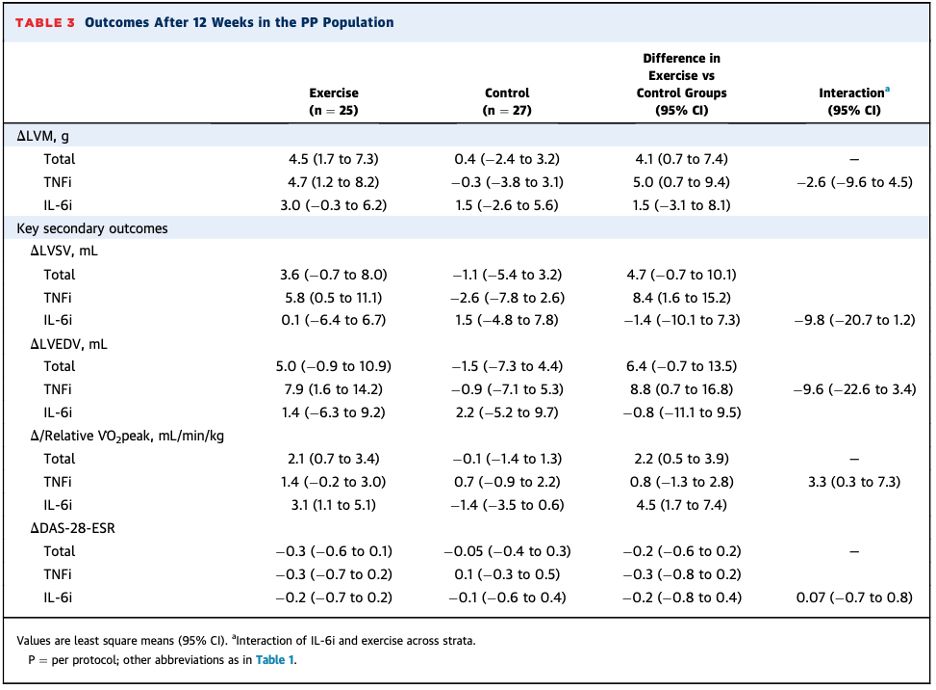
While the LV mass and stroke volume increases were only significant in the TNFi group, only the IL-6i group had a significant ⬆️ in relative VO2 peak. This is counterintuitive given the role of cardiac output in VO2, but may be explained by positive effects of IL-6i outside of cardiac remodeling.
While the LV mass and stroke volume increases were only significant in the TNFi group, only the IL-6i group had a significant ⬆️ in relative VO2 peak. This is counterintuitive given the role of cardiac output in VO2, but may be explained by positive effects of IL-6i outside of cardiac remodeling.
May 28, 2025 at 9:10 PM
7/
While the LV mass and stroke volume increases were only significant in the TNFi group, only the IL-6i group had a significant ⬆️ in relative VO2 peak. This is counterintuitive given the role of cardiac output in VO2, but may be explained by positive effects of IL-6i outside of cardiac remodeling.
While the LV mass and stroke volume increases were only significant in the TNFi group, only the IL-6i group had a significant ⬆️ in relative VO2 peak. This is counterintuitive given the role of cardiac output in VO2, but may be explained by positive effects of IL-6i outside of cardiac remodeling.
6/
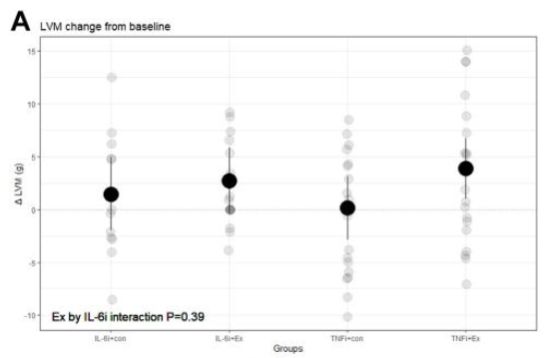
After 12 weeks of exercise, they underwent repeat testing. There was a physiologic ⬆️ in LV mass in the exercise group among those using a TNFi, but not among those using an IL-6i. This supports the authors’ hypothesis that IL-6 signaling is important for exercise adaptation in RA patients. 💭
After 12 weeks of exercise, they underwent repeat testing. There was a physiologic ⬆️ in LV mass in the exercise group among those using a TNFi, but not among those using an IL-6i. This supports the authors’ hypothesis that IL-6 signaling is important for exercise adaptation in RA patients. 💭
May 28, 2025 at 9:10 PM
6/
After 12 weeks of exercise, they underwent repeat testing. There was a physiologic ⬆️ in LV mass in the exercise group among those using a TNFi, but not among those using an IL-6i. This supports the authors’ hypothesis that IL-6 signaling is important for exercise adaptation in RA patients. 💭
After 12 weeks of exercise, they underwent repeat testing. There was a physiologic ⬆️ in LV mass in the exercise group among those using a TNFi, but not among those using an IL-6i. This supports the authors’ hypothesis that IL-6 signaling is important for exercise adaptation in RA patients. 💭
5/
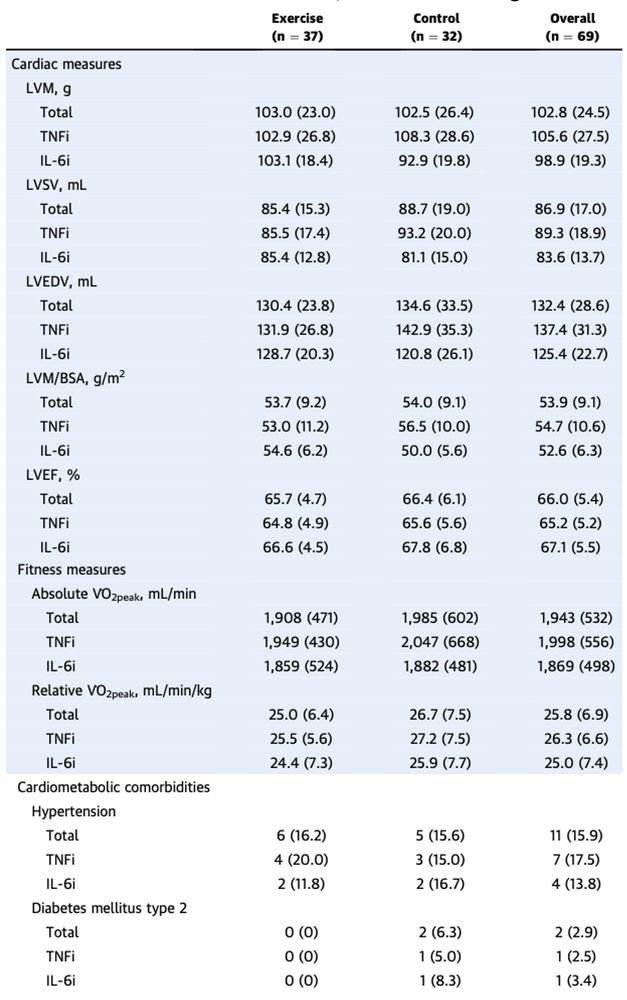
Prior to the exercise regimen, patients underwent cardiac MRI and metabolic testing. As seen here and further summarized in the full manuscript, patients had normal cardiac MRI metrics, low rates of cardiac comorbidities, and below average fitness as measured by VO2 peak. 😮💨
Prior to the exercise regimen, patients underwent cardiac MRI and metabolic testing. As seen here and further summarized in the full manuscript, patients had normal cardiac MRI metrics, low rates of cardiac comorbidities, and below average fitness as measured by VO2 peak. 😮💨
May 28, 2025 at 9:10 PM
5/
Prior to the exercise regimen, patients underwent cardiac MRI and metabolic testing. As seen here and further summarized in the full manuscript, patients had normal cardiac MRI metrics, low rates of cardiac comorbidities, and below average fitness as measured by VO2 peak. 😮💨
Prior to the exercise regimen, patients underwent cardiac MRI and metabolic testing. As seen here and further summarized in the full manuscript, patients had normal cardiac MRI metrics, low rates of cardiac comorbidities, and below average fitness as measured by VO2 peak. 😮💨
4/
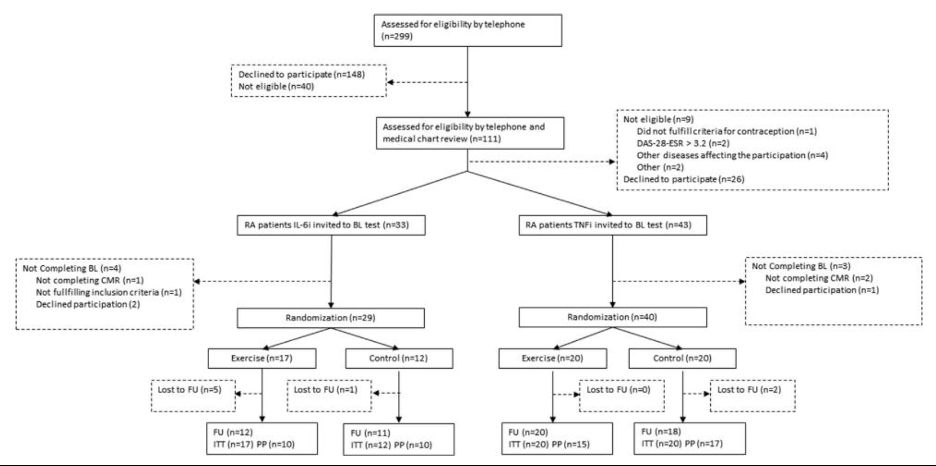
Patients were then randomized, with half of the patients undergoing supervised 45-minute exercise sessions on an ergometer bicycle three times a week in addition to their usual activity. 🚴📆
Patients were then randomized, with half of the patients undergoing supervised 45-minute exercise sessions on an ergometer bicycle three times a week in addition to their usual activity. 🚴📆
May 28, 2025 at 9:10 PM
4/
Patients were then randomized, with half of the patients undergoing supervised 45-minute exercise sessions on an ergometer bicycle three times a week in addition to their usual activity. 🚴📆
Patients were then randomized, with half of the patients undergoing supervised 45-minute exercise sessions on an ergometer bicycle three times a week in addition to their usual activity. 🚴📆
3/
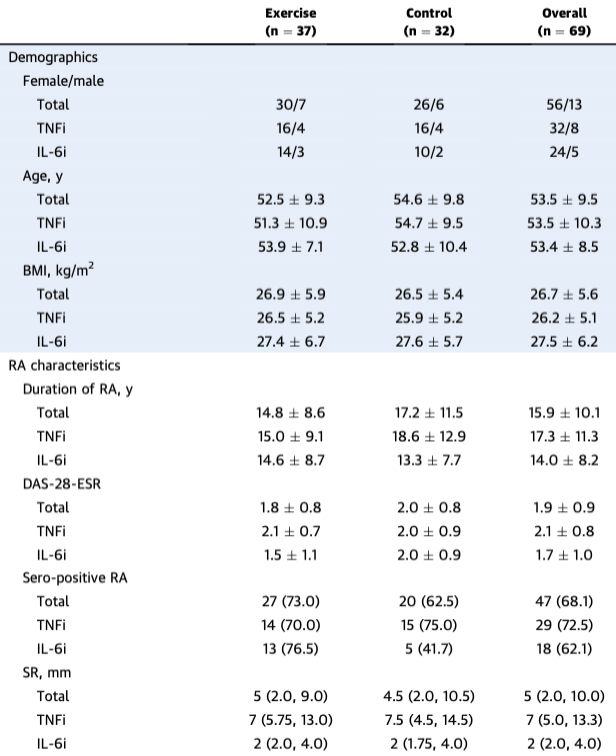
They enrolled pts 18-69 yrs old with RA stably treated with a TNFi or IL-6i for >4 months. Their RA had to be well-controlled ✅ measured by DAS28-ESR score & minimal corticosteroid use. Importantly, pts receiving IL-6i had more often & more frequently tried other prior biologics for RA control.
They enrolled pts 18-69 yrs old with RA stably treated with a TNFi or IL-6i for >4 months. Their RA had to be well-controlled ✅ measured by DAS28-ESR score & minimal corticosteroid use. Importantly, pts receiving IL-6i had more often & more frequently tried other prior biologics for RA control.
May 28, 2025 at 9:10 PM
3/
They enrolled pts 18-69 yrs old with RA stably treated with a TNFi or IL-6i for >4 months. Their RA had to be well-controlled ✅ measured by DAS28-ESR score & minimal corticosteroid use. Importantly, pts receiving IL-6i had more often & more frequently tried other prior biologics for RA control.
They enrolled pts 18-69 yrs old with RA stably treated with a TNFi or IL-6i for >4 months. Their RA had to be well-controlled ✅ measured by DAS28-ESR score & minimal corticosteroid use. Importantly, pts receiving IL-6i had more often & more frequently tried other prior biologics for RA control.
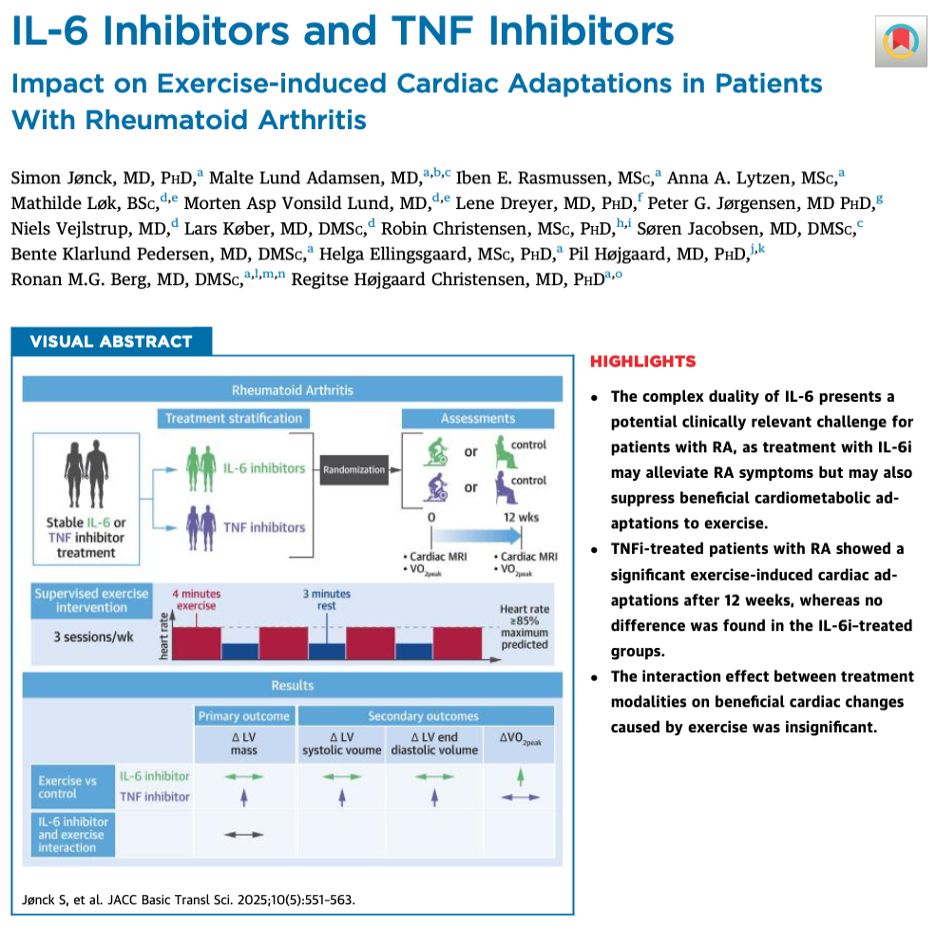
In this month’s issue of #JACCBTS, Jønck, et al. explore the effects of cytokine inhibitors on cardiovascular adaptability in rheumatoid arthritis (RA). Read below to see what they found! 🧵
1/9
@jaccjournals.bsky.social
1/9
@jaccjournals.bsky.social
May 28, 2025 at 9:10 PM
In this month’s issue of #JACCBTS, Jønck, et al. explore the effects of cytokine inhibitors on cardiovascular adaptability in rheumatoid arthritis (RA). Read below to see what they found! 🧵
1/9
@jaccjournals.bsky.social
1/9
@jaccjournals.bsky.social
10/10
In summary, diseased AVICs have mitochondrial dysfunction, and spermidine supplementation or DNMT1 inhibition might hold promise as therapeutics to reverse this process and treat valve calcification. Read the full paper in this month’s issue of #JACCBTS! www.sciencedirect.com/science/arti...
In summary, diseased AVICs have mitochondrial dysfunction, and spermidine supplementation or DNMT1 inhibition might hold promise as therapeutics to reverse this process and treat valve calcification. Read the full paper in this month’s issue of #JACCBTS! www.sciencedirect.com/science/arti...

March 24, 2025 at 3:35 PM
10/10
In summary, diseased AVICs have mitochondrial dysfunction, and spermidine supplementation or DNMT1 inhibition might hold promise as therapeutics to reverse this process and treat valve calcification. Read the full paper in this month’s issue of #JACCBTS! www.sciencedirect.com/science/arti...
In summary, diseased AVICs have mitochondrial dysfunction, and spermidine supplementation or DNMT1 inhibition might hold promise as therapeutics to reverse this process and treat valve calcification. Read the full paper in this month’s issue of #JACCBTS! www.sciencedirect.com/science/arti...
9/
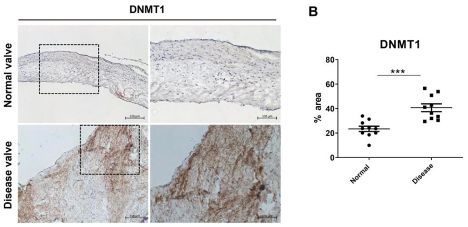
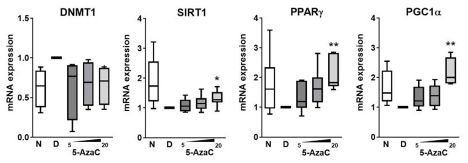
The authors finally attempted to treat this same pathway through DNMT1 inhibition. They show that DNMT1 is ⬆️ with disease in human valves, as anticipated. Use of a DNMT1 inhibitor (5-Azacytidine) in diseased human AVICs increases SIRT1, PPARG, and markers of mitochondrial biogenesis. 📈
The authors finally attempted to treat this same pathway through DNMT1 inhibition. They show that DNMT1 is ⬆️ with disease in human valves, as anticipated. Use of a DNMT1 inhibitor (5-Azacytidine) in diseased human AVICs increases SIRT1, PPARG, and markers of mitochondrial biogenesis. 📈
March 24, 2025 at 3:35 PM
9/
The authors finally attempted to treat this same pathway through DNMT1 inhibition. They show that DNMT1 is ⬆️ with disease in human valves, as anticipated. Use of a DNMT1 inhibitor (5-Azacytidine) in diseased human AVICs increases SIRT1, PPARG, and markers of mitochondrial biogenesis. 📈
The authors finally attempted to treat this same pathway through DNMT1 inhibition. They show that DNMT1 is ⬆️ with disease in human valves, as anticipated. Use of a DNMT1 inhibitor (5-Azacytidine) in diseased human AVICs increases SIRT1, PPARG, and markers of mitochondrial biogenesis. 📈
8/
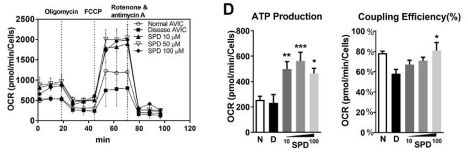
Returning to the initial mitochondrial phenotype, they show that spermidine improves mitochondrial function, even beyond healthy AVIC function. 🪃
Returning to the initial mitochondrial phenotype, they show that spermidine improves mitochondrial function, even beyond healthy AVIC function. 🪃
March 24, 2025 at 3:35 PM
8/
Returning to the initial mitochondrial phenotype, they show that spermidine improves mitochondrial function, even beyond healthy AVIC function. 🪃
Returning to the initial mitochondrial phenotype, they show that spermidine improves mitochondrial function, even beyond healthy AVIC function. 🪃
7/
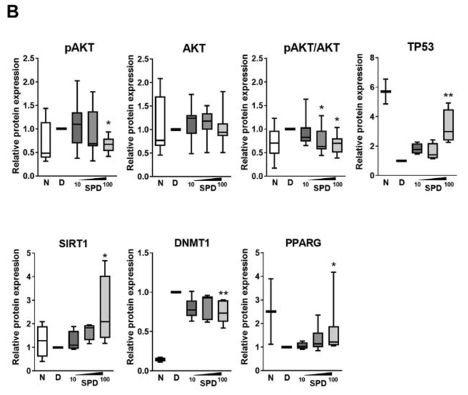
Back in the dish, they showed that spermidine induces the same molecular changes in AVICs. 🧫
Back in the dish, they showed that spermidine induces the same molecular changes in AVICs. 🧫
March 24, 2025 at 3:35 PM
7/
Back in the dish, they showed that spermidine induces the same molecular changes in AVICs. 🧫
Back in the dish, they showed that spermidine induces the same molecular changes in AVICs. 🧫
6/
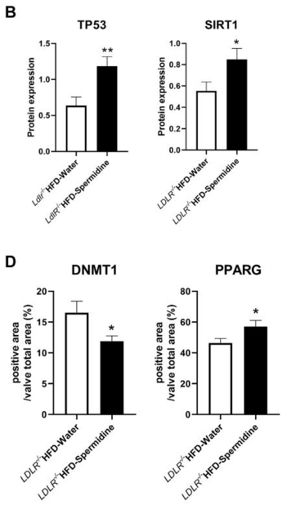
They confirmed the expression patterns of TP53 ⬆️, SIRT1 ⬆️, DNMT1 ⬇️, and PPARG ⬆️ directly in the AVs from mice treated with spermidine or water.
They confirmed the expression patterns of TP53 ⬆️, SIRT1 ⬆️, DNMT1 ⬇️, and PPARG ⬆️ directly in the AVs from mice treated with spermidine or water.
March 24, 2025 at 3:35 PM
6/
They confirmed the expression patterns of TP53 ⬆️, SIRT1 ⬆️, DNMT1 ⬇️, and PPARG ⬆️ directly in the AVs from mice treated with spermidine or water.
They confirmed the expression patterns of TP53 ⬆️, SIRT1 ⬆️, DNMT1 ⬇️, and PPARG ⬆️ directly in the AVs from mice treated with spermidine or water.
5/
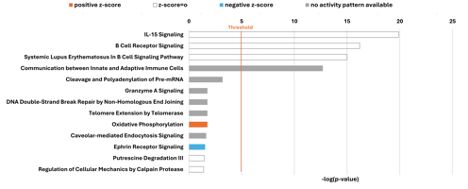
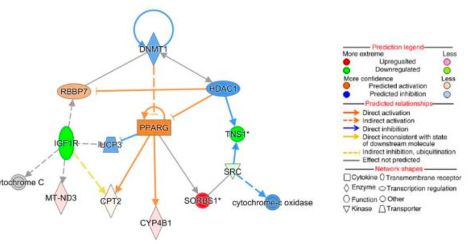
They next performed LC-MS proteomics on AVs from 🐭 with and without spermidine supplementation. They identified activation of the oxidative phosphorylation protein pathway. Further network analysis identified DNMT1 as a ⬇️ node, and PPARG, SIRT1 and TP53 as ⬆️ with spermidine.
They next performed LC-MS proteomics on AVs from 🐭 with and without spermidine supplementation. They identified activation of the oxidative phosphorylation protein pathway. Further network analysis identified DNMT1 as a ⬇️ node, and PPARG, SIRT1 and TP53 as ⬆️ with spermidine.
March 24, 2025 at 3:35 PM
5/
They next performed LC-MS proteomics on AVs from 🐭 with and without spermidine supplementation. They identified activation of the oxidative phosphorylation protein pathway. Further network analysis identified DNMT1 as a ⬇️ node, and PPARG, SIRT1 and TP53 as ⬆️ with spermidine.
They next performed LC-MS proteomics on AVs from 🐭 with and without spermidine supplementation. They identified activation of the oxidative phosphorylation protein pathway. Further network analysis identified DNMT1 as a ⬇️ node, and PPARG, SIRT1 and TP53 as ⬆️ with spermidine.
4/
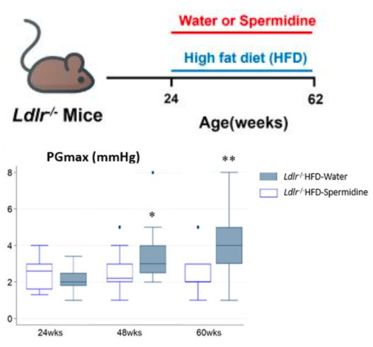
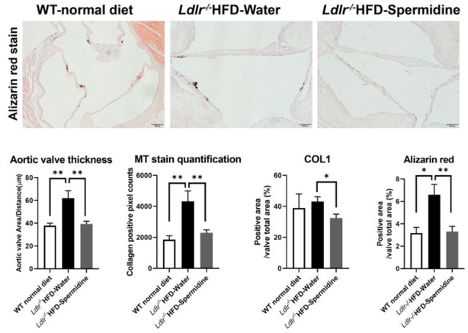
They translated this in vitro finding to an Ldlr-/- and high-fat diet (HFD)-fed 🐭 model of CAVD and found improved echocardiographic metrics of aortic stenosis (AV peak gradient) and ⬇️ valve calcification and fibrosis with spermidine treatment.
They translated this in vitro finding to an Ldlr-/- and high-fat diet (HFD)-fed 🐭 model of CAVD and found improved echocardiographic metrics of aortic stenosis (AV peak gradient) and ⬇️ valve calcification and fibrosis with spermidine treatment.
March 24, 2025 at 3:35 PM
4/
They translated this in vitro finding to an Ldlr-/- and high-fat diet (HFD)-fed 🐭 model of CAVD and found improved echocardiographic metrics of aortic stenosis (AV peak gradient) and ⬇️ valve calcification and fibrosis with spermidine treatment.
They translated this in vitro finding to an Ldlr-/- and high-fat diet (HFD)-fed 🐭 model of CAVD and found improved echocardiographic metrics of aortic stenosis (AV peak gradient) and ⬇️ valve calcification and fibrosis with spermidine treatment.
3/
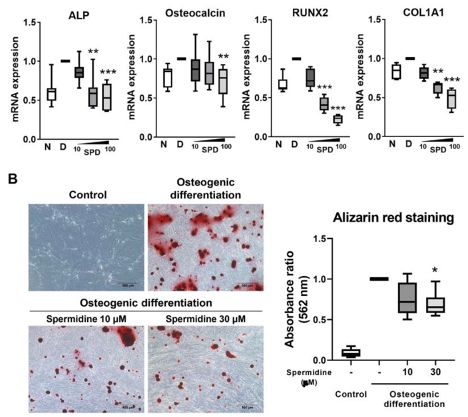
The authors hypothesized that spermidine could be used to augment mitochondrial function (💪 read more: pubmed.ncbi.nlm.nih.gov/29371440/). They first showed that spermidine ⬇️ expression of calcification-related genes, both in diseased AVICs and in osteogenic media. 🧫
The authors hypothesized that spermidine could be used to augment mitochondrial function (💪 read more: pubmed.ncbi.nlm.nih.gov/29371440/). They first showed that spermidine ⬇️ expression of calcification-related genes, both in diseased AVICs and in osteogenic media. 🧫
March 24, 2025 at 3:35 PM
3/
The authors hypothesized that spermidine could be used to augment mitochondrial function (💪 read more: pubmed.ncbi.nlm.nih.gov/29371440/). They first showed that spermidine ⬇️ expression of calcification-related genes, both in diseased AVICs and in osteogenic media. 🧫
The authors hypothesized that spermidine could be used to augment mitochondrial function (💪 read more: pubmed.ncbi.nlm.nih.gov/29371440/). They first showed that spermidine ⬇️ expression of calcification-related genes, both in diseased AVICs and in osteogenic media. 🧫
2/
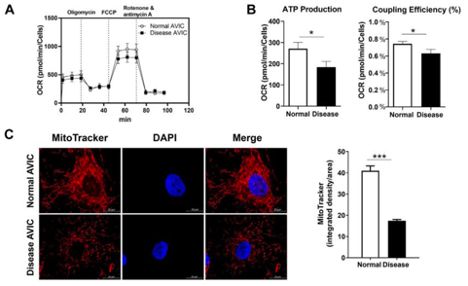
The authors use a model system of aortic valve interstitial cells (AVICs) isolated from humans with and without calcific aortic valve disease (CAVD). They show that mitochondrial respiration, ATP production, coupling efficiency, and mitochondrial mass are all ⬇️ in diseased AVICs. 🪫
The authors use a model system of aortic valve interstitial cells (AVICs) isolated from humans with and without calcific aortic valve disease (CAVD). They show that mitochondrial respiration, ATP production, coupling efficiency, and mitochondrial mass are all ⬇️ in diseased AVICs. 🪫
March 24, 2025 at 3:35 PM
2/
The authors use a model system of aortic valve interstitial cells (AVICs) isolated from humans with and without calcific aortic valve disease (CAVD). They show that mitochondrial respiration, ATP production, coupling efficiency, and mitochondrial mass are all ⬇️ in diseased AVICs. 🪫
The authors use a model system of aortic valve interstitial cells (AVICs) isolated from humans with and without calcific aortic valve disease (CAVD). They show that mitochondrial respiration, ATP production, coupling efficiency, and mitochondrial mass are all ⬇️ in diseased AVICs. 🪫
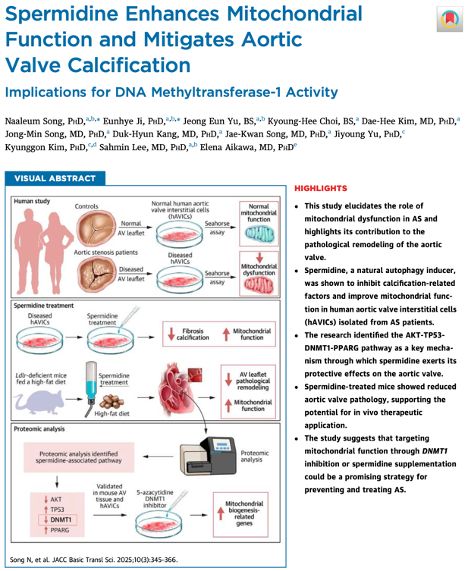
In these uncertain times, celebrating novel science is one way to stay grounded and hopeful. In this month’s issue of #JACCBTS, Song, et al. investigate mitochondrial function in aortic valve calcification. Join me to see what they found! 🧵
1/10
@jaccjournals.bsky.social
1/10
@jaccjournals.bsky.social
March 24, 2025 at 3:35 PM
In these uncertain times, celebrating novel science is one way to stay grounded and hopeful. In this month’s issue of #JACCBTS, Song, et al. investigate mitochondrial function in aortic valve calcification. Join me to see what they found! 🧵
1/10
@jaccjournals.bsky.social
1/10
@jaccjournals.bsky.social
9/9
In summary, CRP-rich plasma from Long COVID patients ⬆️ platelet activation, and platelet activation correlates with the severity of 🫁 damage. Platelet activation is reversible with aspirin or P2Y12. Read the paper in this month’s issue of #JACCBTS! doi.org/10.1016/j.ja...
In summary, CRP-rich plasma from Long COVID patients ⬆️ platelet activation, and platelet activation correlates with the severity of 🫁 damage. Platelet activation is reversible with aspirin or P2Y12. Read the paper in this month’s issue of #JACCBTS! doi.org/10.1016/j.ja...

January 27, 2025 at 11:44 PM
9/9
In summary, CRP-rich plasma from Long COVID patients ⬆️ platelet activation, and platelet activation correlates with the severity of 🫁 damage. Platelet activation is reversible with aspirin or P2Y12. Read the paper in this month’s issue of #JACCBTS! doi.org/10.1016/j.ja...
In summary, CRP-rich plasma from Long COVID patients ⬆️ platelet activation, and platelet activation correlates with the severity of 🫁 damage. Platelet activation is reversible with aspirin or P2Y12. Read the paper in this month’s issue of #JACCBTS! doi.org/10.1016/j.ja...
8/
Aspirin or a P2Y12-inhibitor also reversed the platelet activation effects of Long COVID plasma, suggesting that these readily available treatments could be useful in this disorder.
Aspirin or a P2Y12-inhibitor also reversed the platelet activation effects of Long COVID plasma, suggesting that these readily available treatments could be useful in this disorder.

January 27, 2025 at 11:44 PM
8/
Aspirin or a P2Y12-inhibitor also reversed the platelet activation effects of Long COVID plasma, suggesting that these readily available treatments could be useful in this disorder.
Aspirin or a P2Y12-inhibitor also reversed the platelet activation effects of Long COVID plasma, suggesting that these readily available treatments could be useful in this disorder.
7/
The authors showed that platelet activation was further potentiated by IL-6 in the presence of CRP, thus they attempted to inhibit 🛑 platelet activation through CRP and IL-6. Platelet activation was reversed with FcgRi or tocilizumab, inhibiting CRP and IL-6, respectively.
The authors showed that platelet activation was further potentiated by IL-6 in the presence of CRP, thus they attempted to inhibit 🛑 platelet activation through CRP and IL-6. Platelet activation was reversed with FcgRi or tocilizumab, inhibiting CRP and IL-6, respectively.

January 27, 2025 at 11:44 PM
7/
The authors showed that platelet activation was further potentiated by IL-6 in the presence of CRP, thus they attempted to inhibit 🛑 platelet activation through CRP and IL-6. Platelet activation was reversed with FcgRi or tocilizumab, inhibiting CRP and IL-6, respectively.
The authors showed that platelet activation was further potentiated by IL-6 in the presence of CRP, thus they attempted to inhibit 🛑 platelet activation through CRP and IL-6. Platelet activation was reversed with FcgRi or tocilizumab, inhibiting CRP and IL-6, respectively.
6/
They hypothesized that circulating factors were priming platelets in Long COVID patients and treated platelets from healthy subjects with different types of plasma. Indeed, Long COVID plasma ⬆️ P-selectin expression and PGAs in otherwise healthy platelets.
They hypothesized that circulating factors were priming platelets in Long COVID patients and treated platelets from healthy subjects with different types of plasma. Indeed, Long COVID plasma ⬆️ P-selectin expression and PGAs in otherwise healthy platelets.

January 27, 2025 at 11:44 PM
6/
They hypothesized that circulating factors were priming platelets in Long COVID patients and treated platelets from healthy subjects with different types of plasma. Indeed, Long COVID plasma ⬆️ P-selectin expression and PGAs in otherwise healthy platelets.
They hypothesized that circulating factors were priming platelets in Long COVID patients and treated platelets from healthy subjects with different types of plasma. Indeed, Long COVID plasma ⬆️ P-selectin expression and PGAs in otherwise healthy platelets.
5/
PGA and PMA also correlated with parenchymal lung damage in these patients. 🫁
PGA and PMA also correlated with parenchymal lung damage in these patients. 🫁

January 27, 2025 at 11:44 PM
5/
PGA and PMA also correlated with parenchymal lung damage in these patients. 🫁
PGA and PMA also correlated with parenchymal lung damage in these patients. 🫁
4/
Compared to both COVID recovered patients and healthy subjects, Long COVID patients had ⬆️ measures of platelet activation, including platelet-granulocyte aggregates (PGA) and platelet-monocyte aggregates (PMA).
Compared to both COVID recovered patients and healthy subjects, Long COVID patients had ⬆️ measures of platelet activation, including platelet-granulocyte aggregates (PGA) and platelet-monocyte aggregates (PMA).

January 27, 2025 at 11:44 PM
4/
Compared to both COVID recovered patients and healthy subjects, Long COVID patients had ⬆️ measures of platelet activation, including platelet-granulocyte aggregates (PGA) and platelet-monocyte aggregates (PMA).
Compared to both COVID recovered patients and healthy subjects, Long COVID patients had ⬆️ measures of platelet activation, including platelet-granulocyte aggregates (PGA) and platelet-monocyte aggregates (PMA).
3/
Across patient groups, those with Long COVID and Acute COVID had ⬆️ CRP compared to recovered patients. Acutely infected patients also had ⬆️ IL-6, D-Dimer, and fibrinogen, which were not elevated in Long COVID.
Across patient groups, those with Long COVID and Acute COVID had ⬆️ CRP compared to recovered patients. Acutely infected patients also had ⬆️ IL-6, D-Dimer, and fibrinogen, which were not elevated in Long COVID.

January 27, 2025 at 11:44 PM
3/
Across patient groups, those with Long COVID and Acute COVID had ⬆️ CRP compared to recovered patients. Acutely infected patients also had ⬆️ IL-6, D-Dimer, and fibrinogen, which were not elevated in Long COVID.
Across patient groups, those with Long COVID and Acute COVID had ⬆️ CRP compared to recovered patients. Acutely infected patients also had ⬆️ IL-6, D-Dimer, and fibrinogen, which were not elevated in Long COVID.
In this month’s issue of #JACCBTS, Brambilla, et al. explore the role of platelet function in long COVID. Read below ⬇️ to see what they found! 🧵
1/n
@jeffhsumd.bsky.social @jaccjournals.bsky.social @vascularimmuno.bsky.social @jeanwassenaar.bsky.social
1/n
@jeffhsumd.bsky.social @jaccjournals.bsky.social @vascularimmuno.bsky.social @jeanwassenaar.bsky.social

January 27, 2025 at 11:44 PM
In this month’s issue of #JACCBTS, Brambilla, et al. explore the role of platelet function in long COVID. Read below ⬇️ to see what they found! 🧵
1/n
@jeffhsumd.bsky.social @jaccjournals.bsky.social @vascularimmuno.bsky.social @jeanwassenaar.bsky.social
1/n
@jeffhsumd.bsky.social @jaccjournals.bsky.social @vascularimmuno.bsky.social @jeanwassenaar.bsky.social