



Miguel de Celis
@migueldc1.bsky.social
Excited to share that I’ve been awarded a research grant from @eco-aeet.bsky.social ! 🌱
Looking forward to developing this project to evaluate the bacterial community assembly in the rhizosphere.
Thanks to AEET for the support! 🌿
Looking forward to developing this project to evaluate the bacterial community assembly in the rhizosphere.
Thanks to AEET for the support! 🌿
October 15, 2025 at 8:47 AM
Excited to share that I’ve been awarded a research grant from @eco-aeet.bsky.social ! 🌱
Looking forward to developing this project to evaluate the bacterial community assembly in the rhizosphere.
Thanks to AEET for the support! 🌿
Looking forward to developing this project to evaluate the bacterial community assembly in the rhizosphere.
Thanks to AEET for the support! 🌿
Reposted by Miguel de Celis

Very happy to share that @migueldc1.bsky.social, a lab postdoc and JdC researcher, has been awarded an @eco-aeet.bsky.social grant to study microbial community assembly in the rhizosphere. Great news!!!🎉🎉🎉
www.aeet.org/es/convocato...
www.aeet.org/es/convocato...
Asociación Española de Ecología Terrestre
www.aeet.org
October 15, 2025 at 8:15 AM
Very happy to share that @migueldc1.bsky.social, a lab postdoc and JdC researcher, has been awarded an @eco-aeet.bsky.social grant to study microbial community assembly in the rhizosphere. Great news!!!🎉🎉🎉
www.aeet.org/es/convocato...
www.aeet.org/es/convocato...
Reposted by Miguel de Celis
Our new paper from the MICROWILD consortium is published in ISME Comms, led by MJ Fernández-Alonso and @migueldc1.bsky.social
academic.oup.com/ismecommun/a...
academic.oup.com/ismecommun/a...

Native edaphoclimatic regions shape soil communities of crop wild progenitors
Abstract. Unveiling the soil biological communities ecologically associated with crop wild progenitors (CWPs) in their habitats of origin is essential for
academic.oup.com
October 13, 2025 at 9:21 AM
Our new paper from the MICROWILD consortium is published in ISME Comms, led by MJ Fernández-Alonso and @migueldc1.bsky.social
academic.oup.com/ismecommun/a...
academic.oup.com/ismecommun/a...
Reposted by Miguel de Celis
La historia de una idea revolucionaria que transformó su tierra yerma en una explosión de vida y abundancia sin precedentes.
Y una lección a aplicar en todo el mundo. Podemos traer la vida de vuelta si elegimos restaurar la naturaleza.
Una maravilla que debería ver todo el mundo.👇
Y una lección a aplicar en todo el mundo. Podemos traer la vida de vuelta si elegimos restaurar la naturaleza.
Una maravilla que debería ver todo el mundo.👇
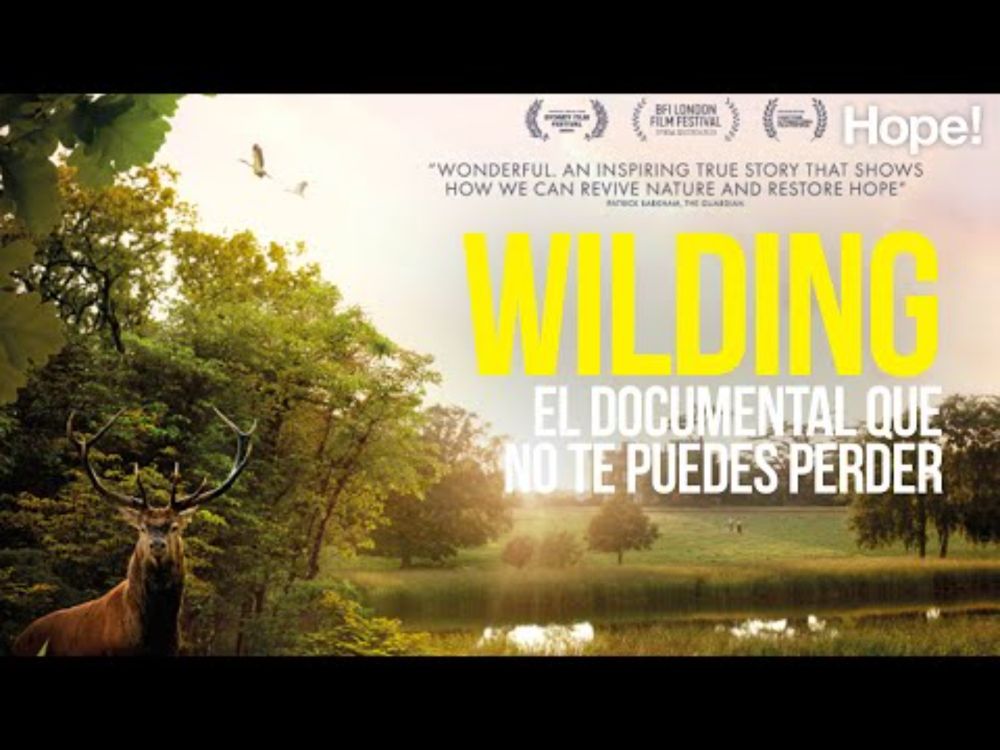
Cómo el rewilding transformó su tierra. De erial a explosión de vida.
YouTube video by Hope
youtu.be
March 19, 2025 at 6:10 PM
La historia de una idea revolucionaria que transformó su tierra yerma en una explosión de vida y abundancia sin precedentes.
Y una lección a aplicar en todo el mundo. Podemos traer la vida de vuelta si elegimos restaurar la naturaleza.
Una maravilla que debería ver todo el mundo.👇
Y una lección a aplicar en todo el mundo. Podemos traer la vida de vuelta si elegimos restaurar la naturaleza.
Una maravilla que debería ver todo el mundo.👇
Reposted by Miguel de Celis

In the literature of domestication and microbiomes there seems to be the expectation that: domestication should lead to the loss of microbiome diversity and host-control. Alejandra Hernandez-Teran and I were both skeptical of both, so we decided to see what we know so far (1/6)
shorturl.at/FHY9H
shorturl.at/FHY9H

Plant domestication does not reduce diversity in root microbiomes
Domestication has profoundly shaped human civilization and the genetic makeup of numerous plant and animal species. While the effects of plant domestication at the genetic and phenotypic levels are well-documented, its impact on plant microbiome remains less understood. Root microbiomes play crucial roles in nutrient acquisition, pathogen defense, and biotic stress tolerance, yet the influence of domestication on their diversity and assembly is still debated. Two primary hypotheses have been proposed: 1) the reduction in microbial diversity resulting from the domestication process, and 2) the diminished ability of host plants to control their microbiomes. To evaluate these hypotheses, we conducted a meta-analysis of multiple crops, comparing the root microbiomes of domesticated plants and their wild relatives. Our results indicate that the effects of domestication are species-specific and context-dependent, with most domesticated plants exhibiting increased microbial diversity and more structured communities, while others show no significant change. Overall, this study provides evidence that plant domestication does not lead to a uniform reduction in microbial diversity or a consistently diminished ability of plants to influence their microbiomes. Based on these findings, we discuss new perspectives and the need for future studies incorporating native soils and host genetic variation in such experiments, analyzing not only diversity but also microbiome function, and considering how root morphology might affect microbiome recruitment. Finally, we highlight the need for research on the potential adaptive or maladaptive consequences that introgression between wild and domesticated plants could have from a microbiome perspective. ### Competing Interest Statement The authors have declared no competing interest.
doi.org
January 18, 2025 at 1:44 AM
In the literature of domestication and microbiomes there seems to be the expectation that: domestication should lead to the loss of microbiome diversity and host-control. Alejandra Hernandez-Teran and I were both skeptical of both, so we decided to see what we know so far (1/6)
shorturl.at/FHY9H
shorturl.at/FHY9H