



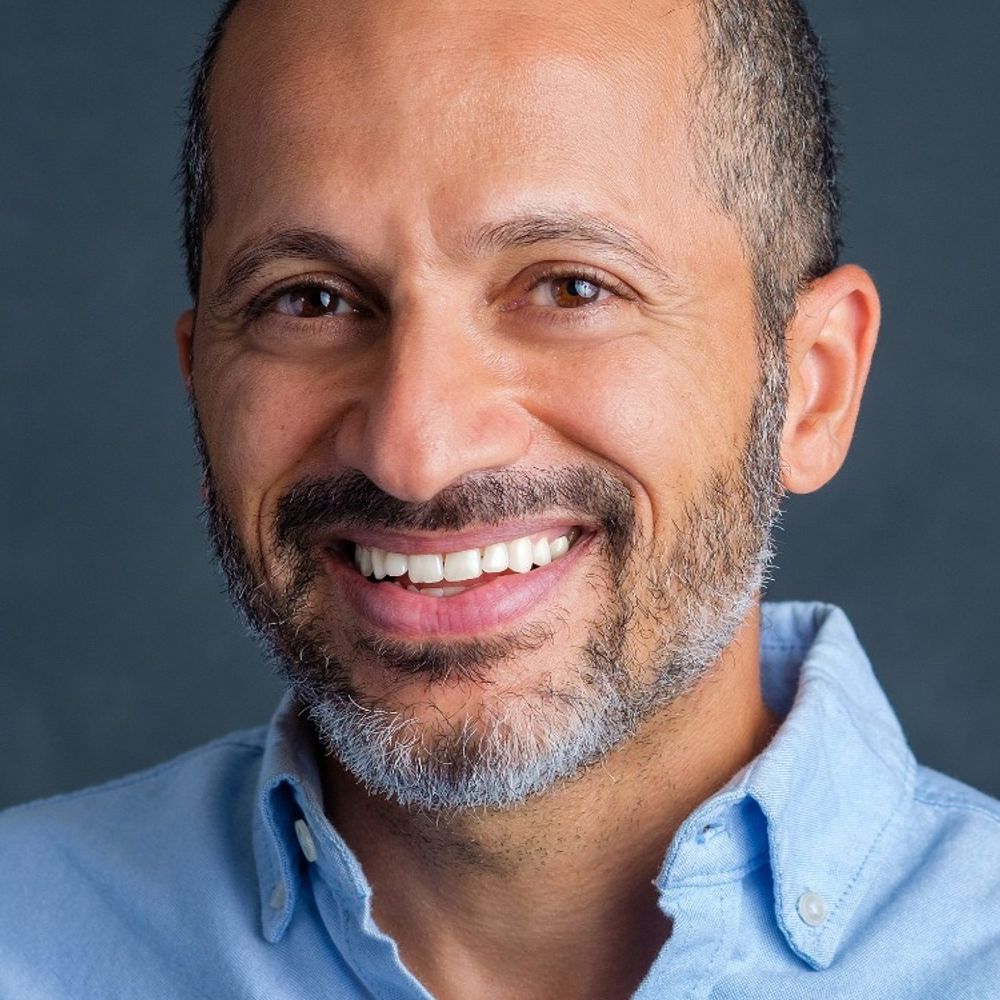
Michael Inzlicht
@minzlicht.bsky.social
Professor (michaelinzlicht.com), Podcaster (www.fourbeers.com), Writer (www.speakandregret.michaelinzlicht.com)
AI can automate motivational interviewing, but transforming desires requires sustained engagement, not single conversations. We're now testing this with longer interactions.
Paper:
sciencedirect.com/science/arti... /6
Paper:
sciencedirect.com/science/arti... /6

From Extrinsic to Intrinsic Motivation: Testing an AI-powered Motivational Interviewing System to Foster Prosocial Motivation
Scalable interventions promoting sustained behavioral change are crucial for addressing societal issues, yet traditional approaches often require inte…
sciencedirect.com
November 28, 2025 at 1:32 AM
AI can automate motivational interviewing, but transforming desires requires sustained engagement, not single conversations. We're now testing this with longer interactions.
Paper:
sciencedirect.com/science/arti... /6
Paper:
sciencedirect.com/science/arti... /6
In a preregistered trial with 237 participants, it successfully increased motivational readiness, but only for 24 hours. Then effects disappeared and never influenced actual prosocial behavior. /5
November 28, 2025 at 1:32 AM
In a preregistered trial with 237 participants, it successfully increased motivational readiness, but only for 24 hours. Then effects disappeared and never influenced actual prosocial behavior. /5
Conrado built Intrinsic AI, a GPT-4 chatbot that conducts motivational interviewing to help people internalize their goals. The idea: transform "I should" into "I want to." /4
November 28, 2025 at 1:32 AM
Conrado built Intrinsic AI, a GPT-4 chatbot that conducts motivational interviewing to help people internalize their goals. The idea: transform "I should" into "I want to." /4
Conventional wisdom says successful people have strong self-control. But recent evidence shows something else: People high in trait self-control use self-control less frequently, perhaps because they experience fewer temptations to begin with. /3
November 28, 2025 at 1:32 AM
Conventional wisdom says successful people have strong self-control. But recent evidence shows something else: People high in trait self-control use self-control less frequently, perhaps because they experience fewer temptations to begin with. /3
The self-help industry will generate $50 billion this year, yet most interventions fail within weeks. Why? We think it's because we've been focusing on the wrong mechanism. /2
November 28, 2025 at 1:32 AM
The self-help industry will generate $50 billion this year, yet most interventions fail within weeks. Why? We think it's because we've been focusing on the wrong mechanism. /2
The intervention is brief, scalable, and doesn't require overhauling existing programs. Worth reading if you work in mental health, education, or student services. Paper in Psychological Medicine. /5
www.cambridge.org/core/journal...
www.cambridge.org/core/journal...
Inform and do no harm: Nocebo education reduces false self-diagnosis caused by mental health awareness | Psychological Medicine | Cambridge Core
Inform and do no harm: Nocebo education reduces false self-diagnosis caused by mental health awareness - Volume 55
www.cambridge.org
November 11, 2025 at 12:14 AM
The intervention is brief, scalable, and doesn't require overhauling existing programs. Worth reading if you work in mental health, education, or student services. Paper in Psychological Medicine. /5
www.cambridge.org/core/journal...
www.cambridge.org/core/journal...
The results: false self-diagnosis was cut in half immediately and eliminated entirely at one-week follow-up. A practical way to balance awareness—informing people while minimizing unintended harms. /4
November 11, 2025 at 12:14 AM
The results: false self-diagnosis was cut in half immediately and eliminated entirely at one-week follow-up. A practical way to balance awareness—informing people while minimizing unintended harms. /4
But Dasha developed a solution: brief "nocebo education" that teaches how negative expectations can make us misinterpret normal experiences as disorder symptoms. Just 10 minutes added to the workshop. /3
November 11, 2025 at 12:14 AM
But Dasha developed a solution: brief "nocebo education" that teaches how negative expectations can make us misinterpret normal experiences as disorder symptoms. Just 10 minutes added to the workshop. /3
We tested this with ADHD awareness. 215 healthy young adults attended a workshop. Result: false self-diagnosis doubled afterward, despite no changes in actual symptoms. These beliefs persisted for at least a week. /2
November 11, 2025 at 12:14 AM
We tested this with ADHD awareness. 215 healthy young adults attended a workshop. Result: false self-diagnosis doubled afterward, despite no changes in actual symptoms. These beliefs persisted for at least a week. /2
So while we eagerly align with high-effort norms, we resist low-effort norms that threaten our self-image.
Huge congrats to Emily on this paper, now in press at JEP: General.
Paper: osf.io/9ygq4/ /end
Huge congrats to Emily on this paper, now in press at JEP: General.
Paper: osf.io/9ygq4/ /end
OSF
osf.io
November 5, 2025 at 12:54 AM
So while we eagerly align with high-effort norms, we resist low-effort norms that threaten our self-image.
Huge congrats to Emily on this paper, now in press at JEP: General.
Paper: osf.io/9ygq4/ /end
Huge congrats to Emily on this paper, now in press at JEP: General.
Paper: osf.io/9ygq4/ /end
This challenges how we think about social influence. We assume people conform to whatever norm they observe, high effort or low effort.
But effort is moralized. We use it to signal competence and moral character. /4
But effort is moralized. We use it to signal competence and moral character. /4
November 5, 2025 at 12:54 AM
This challenges how we think about social influence. We assume people conform to whatever norm they observe, high effort or low effort.
But effort is moralized. We use it to signal competence and moral character. /4
But effort is moralized. We use it to signal competence and moral character. /4
But when people learn that others are slacking off? They don't follow suit. They keep exerting effort.
Even when we made low effort more acceptable, people still resisted the low-effort norm. /3
Even when we made low effort more acceptable, people still resisted the low-effort norm. /3
November 5, 2025 at 12:54 AM
But when people learn that others are slacking off? They don't follow suit. They keep exerting effort.
Even when we made low effort more acceptable, people still resisted the low-effort norm. /3
Even when we made low effort more acceptable, people still resisted the low-effort norm. /3
Across 12 studies (N=2,084), we found a striking asymmetry: when people learn that others consistently choose harder tasks, they step up and work harder too. /2
November 5, 2025 at 12:54 AM
Across 12 studies (N=2,084), we found a striking asymmetry: when people learn that others consistently choose harder tasks, they step up and work harder too. /2
Reposted by Michael Inzlicht
It would be wrong to say I'm against the idea of cognitive fatigue having an entirely metabolic basis (it's a simpler explanation!), but there are empirical and theoretical hurdles these theories must address before they're (re)adopted as working hypotheses. We don't need a sequel to ego-depletion
October 19, 2025 at 10:06 PM
It would be wrong to say I'm against the idea of cognitive fatigue having an entirely metabolic basis (it's a simpler explanation!), but there are empirical and theoretical hurdles these theories must address before they're (re)adopted as working hypotheses. We don't need a sequel to ego-depletion