



NeoBiota
@neobiota.pensoft.net
Open-access, peer-reviewed journal for research on biological invasions.
Published by @pensoft.net. Powered by ARPHA Platform.
Website: https://neobiota.pensoft.net/
Published by @pensoft.net. Powered by ARPHA Platform.
Website: https://neobiota.pensoft.net/
Small-bodied native and non-native characoid fishes wage a ‘small war’ in Brazilian reservoirs, with trophic roles and niche overlap shifting dramatically between neighbouring systems and seasons.
🔗 doi.org/10.3897/neob...
🔗 doi.org/10.3897/neob...

November 26, 2025 at 8:10 AM
Small-bodied native and non-native characoid fishes wage a ‘small war’ in Brazilian reservoirs, with trophic roles and niche overlap shifting dramatically between neighbouring systems and seasons.
🔗 doi.org/10.3897/neob...
🔗 doi.org/10.3897/neob...
Researcher introduce WatchListR, a tool for developing watch-lists of invasive species to inform biosecurity decision-making.
🔗 doi.org/10.3897/neob...
🔗 doi.org/10.3897/neob...

November 24, 2025 at 6:39 AM
Researcher introduce WatchListR, a tool for developing watch-lists of invasive species to inform biosecurity decision-making.
🔗 doi.org/10.3897/neob...
🔗 doi.org/10.3897/neob...
New atlas of 96 invasive plant species shows they now occur in every mainland Portuguese municipality, with coastal, urban-adjacent areas emerging as invasion hotspots.
🔗 doi.org/10.3897/neob...
🔗 doi.org/10.3897/neob...

November 21, 2025 at 10:58 AM
New atlas of 96 invasive plant species shows they now occur in every mainland Portuguese municipality, with coastal, urban-adjacent areas emerging as invasion hotspots.
🔗 doi.org/10.3897/neob...
🔗 doi.org/10.3897/neob...
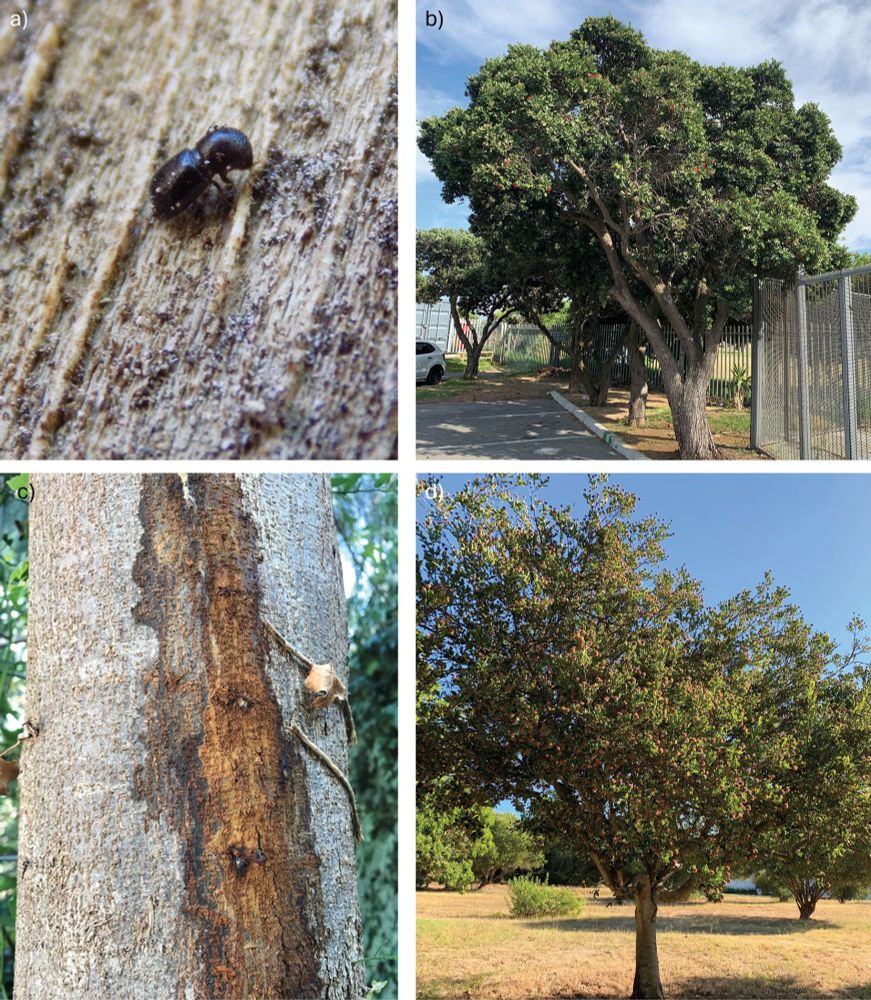
A new protocol helps cities plant trees more safely by using science-based criteria to avoid invasive species and pest-prone trees, protecting ecosystems and supporting sustainable urban greening.
🔗 doi.org/10.3897/neob...
🔗 doi.org/10.3897/neob...
November 21, 2025 at 6:58 AM
A new protocol helps cities plant trees more safely by using science-based criteria to avoid invasive species and pest-prone trees, protecting ecosystems and supporting sustainable urban greening.
🔗 doi.org/10.3897/neob...
🔗 doi.org/10.3897/neob...
The spread of invasive sand dropseed in Hungarian sand steppes is already shrinking habitat for specialist Balkan wall lizards while woody encroachment simultaneously boosts generalist Eastern green lizard.
🔗 doi.org/10.3897/neob...
🔗 doi.org/10.3897/neob...

November 20, 2025 at 2:57 PM
The spread of invasive sand dropseed in Hungarian sand steppes is already shrinking habitat for specialist Balkan wall lizards while woody encroachment simultaneously boosts generalist Eastern green lizard.
🔗 doi.org/10.3897/neob...
🔗 doi.org/10.3897/neob...
We're at #EntSoc25 in Portland, Oregon, where NeoBiota author Dr Claire Rutledge stopped by our booth (715) to say hello!
@entsocamerica.bsky.social
@entsocamerica.bsky.social

November 11, 2025 at 7:16 AM
We're at #EntSoc25 in Portland, Oregon, where NeoBiota author Dr Claire Rutledge stopped by our booth (715) to say hello!
@entsocamerica.bsky.social
@entsocamerica.bsky.social
Climate niche analysis predicts 2,554 potential new alien vascular plant species could invade the Arctic, emphasising urgent need for biosecurity and monitoring under climate change.
🔗 doi.org/10.3897/neob...
@liverpooluni.bsky.social
🔗 doi.org/10.3897/neob...
@liverpooluni.bsky.social

November 10, 2025 at 6:55 AM
Climate niche analysis predicts 2,554 potential new alien vascular plant species could invade the Arctic, emphasising urgent need for biosecurity and monitoring under climate change.
🔗 doi.org/10.3897/neob...
@liverpooluni.bsky.social
🔗 doi.org/10.3897/neob...
@liverpooluni.bsky.social
Global species distribution models and dispersal simulations predict the invasive spotted lanternfly’s expanding range, highlighting urgent management needs to protect viticulture and agriculture, especially in Europe and North America.
🔗 doi.org/10.3897/neob...
🔗 doi.org/10.3897/neob...

November 6, 2025 at 7:40 AM
Global species distribution models and dispersal simulations predict the invasive spotted lanternfly’s expanding range, highlighting urgent management needs to protect viticulture and agriculture, especially in Europe and North America.
🔗 doi.org/10.3897/neob...
🔗 doi.org/10.3897/neob...
Advanced molecular techniques identified several invasive invertebrate species associated with the discarded oyster shells, which act as a substrate for colonisation and potential vectors for biological invasions.
🔗 doi.org/10.3897/neob...
🔗 doi.org/10.3897/neob...

November 5, 2025 at 11:27 AM
Advanced molecular techniques identified several invasive invertebrate species associated with the discarded oyster shells, which act as a substrate for colonisation and potential vectors for biological invasions.
🔗 doi.org/10.3897/neob...
🔗 doi.org/10.3897/neob...
"Invasive rodents are hard to count, so I used hierarchical statistical models to estimate numbers directly from removal data. This provides a tool for on-the-ground management, with examples on coypus in France and muskrats in the Netherlands." - @oaggimenez.bsky.social
🔗 doi.org/10.3897/neob...
🔗 doi.org/10.3897/neob...

November 5, 2025 at 7:48 AM
"Invasive rodents are hard to count, so I used hierarchical statistical models to estimate numbers directly from removal data. This provides a tool for on-the-ground management, with examples on coypus in France and muskrats in the Netherlands." - @oaggimenez.bsky.social
🔗 doi.org/10.3897/neob...
🔗 doi.org/10.3897/neob...
The Brazilian Biological Invasion Platform celebrates six years of compiling and sharing georeferenced records for over 300 non-native marine species, advancing science, management, and public engagement for biodiversity conservation in Brazil.
🔗 doi.org/10.3897/neob...
🔗 doi.org/10.3897/neob...

November 4, 2025 at 8:04 AM
The Brazilian Biological Invasion Platform celebrates six years of compiling and sharing georeferenced records for over 300 non-native marine species, advancing science, management, and public engagement for biodiversity conservation in Brazil.
🔗 doi.org/10.3897/neob...
🔗 doi.org/10.3897/neob...
First records of 𝐻𝑎𝑙𝑦𝑜𝑚𝑜𝑟𝑝ℎ𝑎 ℎ𝑎𝑙𝑦𝑠 egg parasitoids in Hungary reveal native and exotic species, including Trissolcus japonicus, offering new insights for biological control of this invasive pest in Europe.
🔗 doi.org/10.3897/neob...
🔗 doi.org/10.3897/neob...

November 3, 2025 at 1:11 PM
First records of 𝐻𝑎𝑙𝑦𝑜𝑚𝑜𝑟𝑝ℎ𝑎 ℎ𝑎𝑙𝑦𝑠 egg parasitoids in Hungary reveal native and exotic species, including Trissolcus japonicus, offering new insights for biological control of this invasive pest in Europe.
🔗 doi.org/10.3897/neob...
🔗 doi.org/10.3897/neob...
Belgium has seen a surge in introduced non-indigenous species in its marine and brackish waters since the 90s, revealing major gaps in monitoring and data alignment despite EU policy, and highlighting the urgent need for better-coordinated management and data integration.
🔗 doi.org/10.3897/neob...
🔗 doi.org/10.3897/neob...

November 3, 2025 at 8:51 AM
Belgium has seen a surge in introduced non-indigenous species in its marine and brackish waters since the 90s, revealing major gaps in monitoring and data alignment despite EU policy, and highlighting the urgent need for better-coordinated management and data integration.
🔗 doi.org/10.3897/neob...
🔗 doi.org/10.3897/neob...
Drones equipped with thermal cameras are an effective tool for assessing the relative density of invasive Javan deer in the challenging landscapes of New Caledonia.
🔗 doi.org/10.3897/neob...
🔗 doi.org/10.3897/neob...

October 24, 2025 at 12:39 PM
Drones equipped with thermal cameras are an effective tool for assessing the relative density of invasive Javan deer in the challenging landscapes of New Caledonia.
🔗 doi.org/10.3897/neob...
🔗 doi.org/10.3897/neob...
Environmental DNA sampling combined with droplet digital PCR enables non-invasive, sensitive detection of the invasive parasite 𝐹𝑎𝑠𝑐𝑖𝑜𝑙𝑜𝑖𝑑𝑒𝑠 𝑚𝑎𝑔𝑛𝑎 and its snail host 𝐺𝑎𝑙𝑏𝑎 𝑡𝑟𝑢𝑛𝑐𝑎𝑡𝑢𝑙𝑎 in Italian wetlands.
🔗 doi.org/10.3897/neob...
🔗 doi.org/10.3897/neob...

October 24, 2025 at 11:33 AM
Environmental DNA sampling combined with droplet digital PCR enables non-invasive, sensitive detection of the invasive parasite 𝐹𝑎𝑠𝑐𝑖𝑜𝑙𝑜𝑖𝑑𝑒𝑠 𝑚𝑎𝑔𝑛𝑎 and its snail host 𝐺𝑎𝑙𝑏𝑎 𝑡𝑟𝑢𝑛𝑐𝑎𝑡𝑢𝑙𝑎 in Italian wetlands.
🔗 doi.org/10.3897/neob...
🔗 doi.org/10.3897/neob...
#LivingData2025, here we come! Lots of discussions on #invasivespecies at this huge forum so if you're interested in publishing your research outputs in an #openaccess journal with solid metrics and competitive APCs, talk to or representatives at the @pensoft.net stand!


October 24, 2025 at 9:28 AM
#LivingData2025, here we come! Lots of discussions on #invasivespecies at this huge forum so if you're interested in publishing your research outputs in an #openaccess journal with solid metrics and competitive APCs, talk to or representatives at the @pensoft.net stand!
Alien plant invasion in Victoria, Australia, is driven by similar abiotic and human-related factors across woody and herbaceous growth forms, but these groups display distinct spatial patterns and relationships with native vegetation cover.
🔗 doi.org/10.3897/neob...
🔗 doi.org/10.3897/neob...

October 24, 2025 at 6:26 AM
Alien plant invasion in Victoria, Australia, is driven by similar abiotic and human-related factors across woody and herbaceous growth forms, but these groups display distinct spatial patterns and relationships with native vegetation cover.
🔗 doi.org/10.3897/neob...
🔗 doi.org/10.3897/neob...
Analysis of Canadian Food Inspection Agency monitoring data for crop seed lots imported from the USA has revealed that monitoring, risk assessment, and adaptive regulations are required to help safeguard agriculture and biodiversity without hindering trade.
🔗 doi.org/10.3897/neob...
🔗 doi.org/10.3897/neob...

October 23, 2025 at 8:03 AM
Analysis of Canadian Food Inspection Agency monitoring data for crop seed lots imported from the USA has revealed that monitoring, risk assessment, and adaptive regulations are required to help safeguard agriculture and biodiversity without hindering trade.
🔗 doi.org/10.3897/neob...
🔗 doi.org/10.3897/neob...
An assessment of the invasiveness of 𝑃ℎ𝑦𝑚𝑎𝑐𝑡𝑖𝑠 𝑝𝑎𝑝𝑖𝑙𝑙𝑜𝑠𝑎, a recently introduced sea anemone on the Portuguese intertidal coast, suggests it should be classified as an invasive species with the potential to significantly impact benthic communities.
🔗 doi.org/10.3897/neob...
🔗 doi.org/10.3897/neob...

October 22, 2025 at 6:36 AM
An assessment of the invasiveness of 𝑃ℎ𝑦𝑚𝑎𝑐𝑡𝑖𝑠 𝑝𝑎𝑝𝑖𝑙𝑙𝑜𝑠𝑎, a recently introduced sea anemone on the Portuguese intertidal coast, suggests it should be classified as an invasive species with the potential to significantly impact benthic communities.
🔗 doi.org/10.3897/neob...
🔗 doi.org/10.3897/neob...
Researchers call for population control actions and ecological monitoring following the first record of non-native 𝑆𝑞𝑢𝑎𝑙𝑖𝑢𝑠 hybrids in the Iberian Peninsula's Ave River.
🔗 doi.org/10.3897/neob...
🔗 doi.org/10.3897/neob...

October 20, 2025 at 8:29 AM
Researchers call for population control actions and ecological monitoring following the first record of non-native 𝑆𝑞𝑢𝑎𝑙𝑖𝑢𝑠 hybrids in the Iberian Peninsula's Ave River.
🔗 doi.org/10.3897/neob...
🔗 doi.org/10.3897/neob...
Africa’s marine protected areas host numerous invasive species, and tapping into global databases and citizen science tools like iNaturalist offers a powerful, low-cost way to track and manage these underwater invasions for the first time.
🔗 doi.org/10.3897/neob...
🔗 doi.org/10.3897/neob...

October 20, 2025 at 5:58 AM
Africa’s marine protected areas host numerous invasive species, and tapping into global databases and citizen science tools like iNaturalist offers a powerful, low-cost way to track and manage these underwater invasions for the first time.
🔗 doi.org/10.3897/neob...
🔗 doi.org/10.3897/neob...
The LIFE INVASAQUA project successfully trained over 2,900 participants and engaged 246,000 people across Spain and Portugal to combat aquatic invasive species through education and transnational collaboration.
🔗 doi.org/10.3897/neob...
🔗 doi.org/10.3897/neob...

October 17, 2025 at 8:04 AM
The LIFE INVASAQUA project successfully trained over 2,900 participants and engaged 246,000 people across Spain and Portugal to combat aquatic invasive species through education and transnational collaboration.
🔗 doi.org/10.3897/neob...
🔗 doi.org/10.3897/neob...
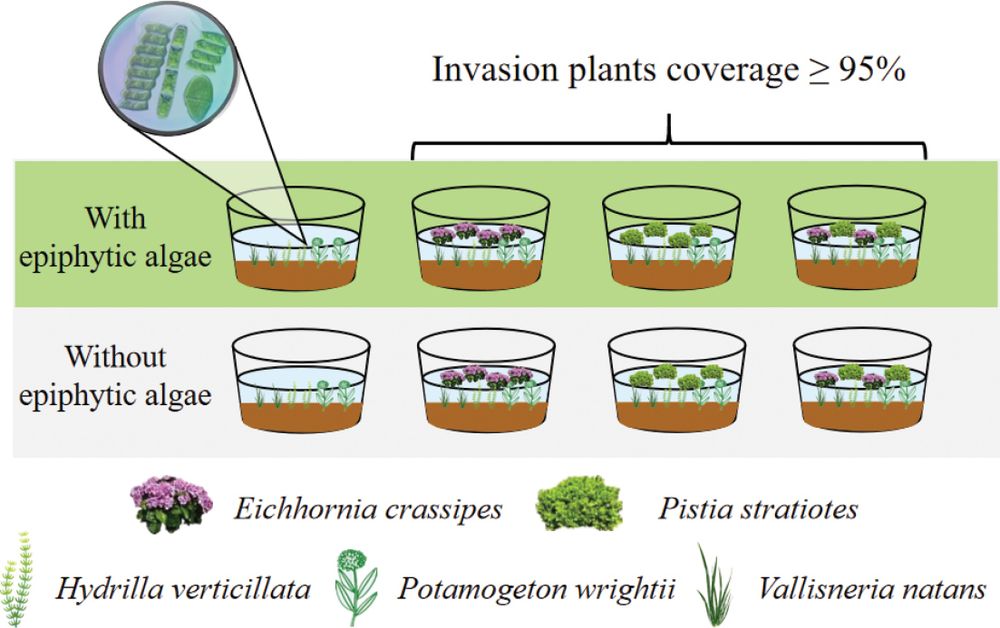
Epiphytic algae have been found to mitigate the inhibitory effects of two aquatic invasive plants on a native submerged plant community.
🔗 doi.org/10.3897/neob...
🔗 doi.org/10.3897/neob...
October 14, 2025 at 11:46 AM
Epiphytic algae have been found to mitigate the inhibitory effects of two aquatic invasive plants on a native submerged plant community.
🔗 doi.org/10.3897/neob...
🔗 doi.org/10.3897/neob...
Pooled eDNA sampling effectively maps the northernmost African clawed frog invasion, enabling fast, cost-efficient cross-border detection and management. Coordinated action is required along the French-Belgian border.
🔗 doi.org/10.3897/neob...
@teuneverts.bsky.social @inbo.be
🔗 doi.org/10.3897/neob...
@teuneverts.bsky.social @inbo.be

October 14, 2025 at 8:51 AM
Pooled eDNA sampling effectively maps the northernmost African clawed frog invasion, enabling fast, cost-efficient cross-border detection and management. Coordinated action is required along the French-Belgian border.
🔗 doi.org/10.3897/neob...
@teuneverts.bsky.social @inbo.be
🔗 doi.org/10.3897/neob...
@teuneverts.bsky.social @inbo.be
It's always a pleasure to meet our authors at conferences around the world! Here's Ana Nunes (@analuisanunes.bsky.social) at the @pensoft.net booth at #IUCNcongress in Abu Dhabi.

October 13, 2025 at 10:10 AM
It's always a pleasure to meet our authors at conferences around the world! Here's Ana Nunes (@analuisanunes.bsky.social) at the @pensoft.net booth at #IUCNcongress in Abu Dhabi.