


Nextdata
@nextdata.bsky.social
We’re building a world where data can be owned independently, shared intentionally, and managed responsibly.
🔗: www.nextdata.com
🔗: www.nextdata.com
You’ll hear from real users, see a live walkthrough, and get a chance to ask questions.
If you’re focused on simplifying data delivery, reducing overhead, or making data work for both humans and AI, join us.
👇
If you’re focused on simplifying data delivery, reducing overhead, or making data work for both humans and AI, join us.
👇
April 10, 2025 at 5:25 PM
You’ll hear from real users, see a live walkthrough, and get a chance to ask questions.
If you’re focused on simplifying data delivery, reducing overhead, or making data work for both humans and AI, join us.
👇
If you’re focused on simplifying data delivery, reducing overhead, or making data work for both humans and AI, join us.
👇
Join us to see:
💡 How autonomous data products actually work
🕹️ What makes them self-orchestrating and self-governing
📉 How enterprise teams are already simplifying delivery, cutting cost, and scaling safely
🤖 What this means for agents, analytics, and beyond
💡 How autonomous data products actually work
🕹️ What makes them self-orchestrating and self-governing
📉 How enterprise teams are already simplifying delivery, cutting cost, and scaling safely
🤖 What this means for agents, analytics, and beyond
April 10, 2025 at 5:25 PM
Join us to see:
💡 How autonomous data products actually work
🕹️ What makes them self-orchestrating and self-governing
📉 How enterprise teams are already simplifying delivery, cutting cost, and scaling safely
🤖 What this means for agents, analytics, and beyond
💡 How autonomous data products actually work
🕹️ What makes them self-orchestrating and self-governing
📉 How enterprise teams are already simplifying delivery, cutting cost, and scaling safely
🤖 What this means for agents, analytics, and beyond
On April 22, Nextdata founder and CEO, @zhamak.bsky.social, will unveil Nextdata OS, the first operating platform for autonomous data products.
This isn’t another tool. It’s a new operating model for delivering trusted data.
This isn’t another tool. It’s a new operating model for delivering trusted data.
April 10, 2025 at 5:24 PM
On April 22, Nextdata founder and CEO, @zhamak.bsky.social, will unveil Nextdata OS, the first operating platform for autonomous data products.
This isn’t another tool. It’s a new operating model for delivering trusted data.
This isn’t another tool. It’s a new operating model for delivering trusted data.
Need more #MeshRAG? Join us on Jan 16th at 8:30 AM PT for "MeshRAG: Scalable Data Management for GenAI," a 1-hr webinar hosted by @nextdata.bsky.social very own Jörg Schad!
🎟️Get your tickets here: bit.ly/4h0OCyI
🎟️Get your tickets here: bit.ly/4h0OCyI
[WEBINAR]: MeshRAG: Scalable Data Management for GenAI
Learn how to ensure the safety, quality and governance of data for your GenAI RAG applications with Nextdata's Jörg Schad!
bit.ly
January 2, 2025 at 8:06 PM
Need more #MeshRAG? Join us on Jan 16th at 8:30 AM PT for "MeshRAG: Scalable Data Management for GenAI," a 1-hr webinar hosted by @nextdata.bsky.social very own Jörg Schad!
🎟️Get your tickets here: bit.ly/4h0OCyI
🎟️Get your tickets here: bit.ly/4h0OCyI
Enterprises need solutions that bridge the gap between new #GenAI use cases and traditional ML, ensuring robust, compliant, and scalable AI deployments.
Check out our blog on scaling RAG pipelines with MeshRAG here: bit.ly/4h0OP4Y
Check out our blog on scaling RAG pipelines with MeshRAG here: bit.ly/4h0OP4Y

Introducing MeshRAG - unified data management for big data and GenAI
Data Mesh implementation simplifies the RAG use case.
bit.ly
January 2, 2025 at 8:05 PM
Enterprises need solutions that bridge the gap between new #GenAI use cases and traditional ML, ensuring robust, compliant, and scalable AI deployments.
Check out our blog on scaling RAG pipelines with MeshRAG here: bit.ly/4h0OP4Y
Check out our blog on scaling RAG pipelines with MeshRAG here: bit.ly/4h0OP4Y
⏱️ Latency & Data Freshness
Real-time apps like recommender systems need fresh data for relevant suggestions. In enterprises, syncing embeddings is tough—delays mean outdated recommendations, hurting user experience & trust in the system.
Real-time apps like recommender systems need fresh data for relevant suggestions. In enterprises, syncing embeddings is tough—delays mean outdated recommendations, hurting user experience & trust in the system.
January 2, 2025 at 8:02 PM
⏱️ Latency & Data Freshness
Real-time apps like recommender systems need fresh data for relevant suggestions. In enterprises, syncing embeddings is tough—delays mean outdated recommendations, hurting user experience & trust in the system.
Real-time apps like recommender systems need fresh data for relevant suggestions. In enterprises, syncing embeddings is tough—delays mean outdated recommendations, hurting user experience & trust in the system.
📈 Scalability & Performance
Managing vast #data & real-time use cases means efficiently updating millions of #embeddings for accurate recommendations. Without robust data management, pipelines bottleneck—leading to slow performance & frustrated users.
Managing vast #data & real-time use cases means efficiently updating millions of #embeddings for accurate recommendations. Without robust data management, pipelines bottleneck—leading to slow performance & frustrated users.
January 2, 2025 at 8:02 PM
📈 Scalability & Performance
Managing vast #data & real-time use cases means efficiently updating millions of #embeddings for accurate recommendations. Without robust data management, pipelines bottleneck—leading to slow performance & frustrated users.
Managing vast #data & real-time use cases means efficiently updating millions of #embeddings for accurate recommendations. Without robust data management, pipelines bottleneck—leading to slow performance & frustrated users.
Maintaining low latency and high responsiveness is crucial for stakeholders on data science and ML teams.
When implementing a RAG app, platform teams must consider the following:
When implementing a RAG app, platform teams must consider the following:
January 2, 2025 at 8:02 PM
Maintaining low latency and high responsiveness is crucial for stakeholders on data science and ML teams.
When implementing a RAG app, platform teams must consider the following:
When implementing a RAG app, platform teams must consider the following:
(6/6) Read the full write-up and share your thoughts! 🧠
We’d love to hear what data trends you’re tracking for 2025👇
🔗: bit.ly/40ewMCZ
We’d love to hear what data trends you’re tracking for 2025👇
🔗: bit.ly/40ewMCZ
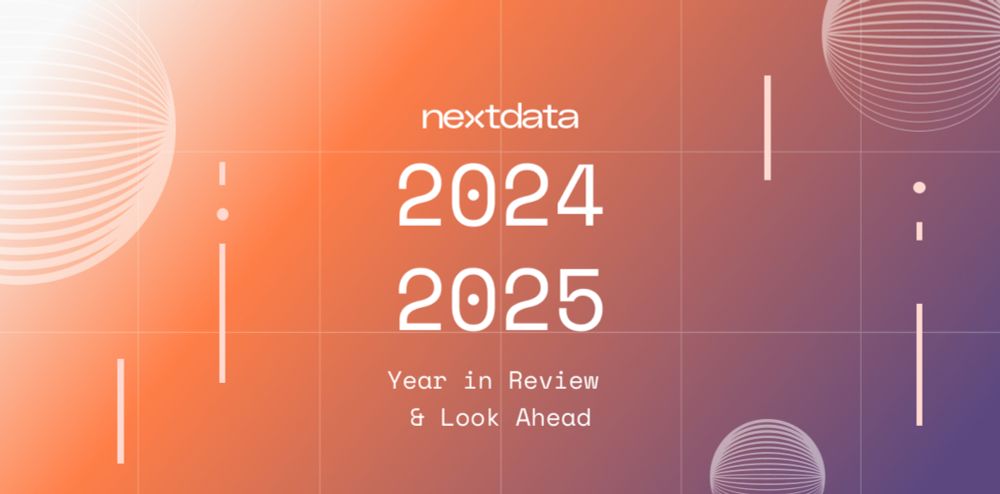
Wrapping up 2024 and looking ahead to 2025 in data management
2024’s data trends reshaped the landscape: GenAI's rise and the evolving data stack. Insights from Zhamak Dehghani signal 2025's focus: platform innovations.
bit.ly
December 30, 2024 at 5:19 PM
(6/6) Read the full write-up and share your thoughts! 🧠
We’d love to hear what data trends you’re tracking for 2025👇
🔗: bit.ly/40ewMCZ
We’d love to hear what data trends you’re tracking for 2025👇
🔗: bit.ly/40ewMCZ
(5/6) What’s Ahead for 2025?
Trends to watch and how simplifying data infrastructure can unlock new opportunities for teams🌟
Trends to watch and how simplifying data infrastructure can unlock new opportunities for teams🌟
December 30, 2024 at 5:18 PM
(5/6) What’s Ahead for 2025?
Trends to watch and how simplifying data infrastructure can unlock new opportunities for teams🌟
Trends to watch and how simplifying data infrastructure can unlock new opportunities for teams🌟
(4/6) Budget Pressures & DIY Platforms
Economic shifts drove DIY platforms—but at what cost?
We explore the pitfalls & how companies are re-prioritizing investments💡
Economic shifts drove DIY platforms—but at what cost?
We explore the pitfalls & how companies are re-prioritizing investments💡
December 30, 2024 at 5:18 PM
(4/6) Budget Pressures & DIY Platforms
Economic shifts drove DIY platforms—but at what cost?
We explore the pitfalls & how companies are re-prioritizing investments💡
Economic shifts drove DIY platforms—but at what cost?
We explore the pitfalls & how companies are re-prioritizing investments💡
(3/6) Modern Data Stack Realities
The modular promise vs. fragmented reality.
⏳ How can the "hourglass model" restore balance and efficiency in 2025?
The modular promise vs. fragmented reality.
⏳ How can the "hourglass model" restore balance and efficiency in 2025?
December 30, 2024 at 5:18 PM
(3/6) Modern Data Stack Realities
The modular promise vs. fragmented reality.
⏳ How can the "hourglass model" restore balance and efficiency in 2025?
The modular promise vs. fragmented reality.
⏳ How can the "hourglass model" restore balance and efficiency in 2025?
2/6) Generative AI’s Impact
Why did GenAI surge in 2024?
🔹 Challenges in data platforms
🔹 The need for scalable AI workflows
What’s next to fully realize its potential? 🤔
Why did GenAI surge in 2024?
🔹 Challenges in data platforms
🔹 The need for scalable AI workflows
What’s next to fully realize its potential? 🤔
December 30, 2024 at 5:16 PM
2/6) Generative AI’s Impact
Why did GenAI surge in 2024?
🔹 Challenges in data platforms
🔹 The need for scalable AI workflows
What’s next to fully realize its potential? 🤔
Why did GenAI surge in 2024?
🔹 Challenges in data platforms
🔹 The need for scalable AI workflows
What’s next to fully realize its potential? 🤔
Scaling RAG applications in large enterprises requires more than just the right tech stack—it demands strategic data management, robust infrastructure, and seamless collaboration across teams.
Learn more about it here: bit.ly/3BZapb8
Learn more about it here: bit.ly/3BZapb8

Introducing Mesh RAG - unified data management for big data and GenAI
bit.ly
December 27, 2024 at 9:38 PM
Scaling RAG applications in large enterprises requires more than just the right tech stack—it demands strategic data management, robust infrastructure, and seamless collaboration across teams.
Learn more about it here: bit.ly/3BZapb8
Learn more about it here: bit.ly/3BZapb8
🔒 Governance & Compliance
Handling sensitive data (ex. PII) requires strict governance. In the example of a streaming service, ensuring all user data used in RAG pipelines complies with regulations adds another layer of complexity. Any misstep can lead to legal issues and a loss of trust.
Handling sensitive data (ex. PII) requires strict governance. In the example of a streaming service, ensuring all user data used in RAG pipelines complies with regulations adds another layer of complexity. Any misstep can lead to legal issues and a loss of trust.
December 27, 2024 at 9:36 PM
🔒 Governance & Compliance
Handling sensitive data (ex. PII) requires strict governance. In the example of a streaming service, ensuring all user data used in RAG pipelines complies with regulations adds another layer of complexity. Any misstep can lead to legal issues and a loss of trust.
Handling sensitive data (ex. PII) requires strict governance. In the example of a streaming service, ensuring all user data used in RAG pipelines complies with regulations adds another layer of complexity. Any misstep can lead to legal issues and a loss of trust.
📊 Inconsistent Data Quality:
The output of a model is only as good as the data it consumes. This has been the case in traditional ML & still holds true for LLMs. If data is duplicated across multiple domains with inconsistencies between them, the LLMs output can be skewed, reducing their efficacy.
The output of a model is only as good as the data it consumes. This has been the case in traditional ML & still holds true for LLMs. If data is duplicated across multiple domains with inconsistencies between them, the LLMs output can be skewed, reducing their efficacy.
December 27, 2024 at 9:35 PM
📊 Inconsistent Data Quality:
The output of a model is only as good as the data it consumes. This has been the case in traditional ML & still holds true for LLMs. If data is duplicated across multiple domains with inconsistencies between them, the LLMs output can be skewed, reducing their efficacy.
The output of a model is only as good as the data it consumes. This has been the case in traditional ML & still holds true for LLMs. If data is duplicated across multiple domains with inconsistencies between them, the LLMs output can be skewed, reducing their efficacy.
⚙️ Complex Infrastructure: Enterprises often juggle legacy systems alongside a modern data stack. Imagine integrating old on-prem databases with Snowflake for your RAG pipeline. It’s already difficult when scope is limited and becomes a nightmare to scale.
December 27, 2024 at 9:34 PM
⚙️ Complex Infrastructure: Enterprises often juggle legacy systems alongside a modern data stack. Imagine integrating old on-prem databases with Snowflake for your RAG pipeline. It’s already difficult when scope is limited and becomes a nightmare to scale.
🔍 Data Silos & Fragmentation: Enterprise data teams often face scattered data across domains like marketing, customer experience, & product, each using different formats. This fragmentation complicates creating unified embeddings, leading to inconsistent and unreliable outputs.
December 27, 2024 at 9:31 PM
🔍 Data Silos & Fragmentation: Enterprise data teams often face scattered data across domains like marketing, customer experience, & product, each using different formats. This fragmentation complicates creating unified embeddings, leading to inconsistent and unreliable outputs.
This leaves enterprises with complex data stacks and multiple pipelines in a bind when attempting to deploy it in a single domain, let alone scale it across an organization. Many popular approaches to RAG neglect the following for enterprise use cases:
December 27, 2024 at 9:28 PM
This leaves enterprises with complex data stacks and multiple pipelines in a bind when attempting to deploy it in a single domain, let alone scale it across an organization. Many popular approaches to RAG neglect the following for enterprise use cases: