


@oceansinitiative.org
And in solidarity, we can never give up trying to stop and reverse the biodiversity crisis. Until a species is extinct, we’re not giving up on reversing population declines and protecting and restoring habitats. Onward! 🌊💙
December 18, 2025 at 11:08 PM
And in solidarity, we can never give up trying to stop and reverse the biodiversity crisis. Until a species is extinct, we’re not giving up on reversing population declines and protecting and restoring habitats. Onward! 🌊💙
Traveling with fish-eating killer whales provides a refuge from the mammal-eating killer whales. The dolphins may be searching for the herring that the Chinook salmon are eating. This also highlights the potential for pathogen transfer across species! academic.oup.com/bioscience/a...

Broadening disease surveillance to include wild dolphins and killer whales: novel components of One Health
Abstract. We describe a minimally invasive pilot study to characterize the microbiota of exhaled breath from wild Pacific white-sided dolphins. Samples wer
academic.oup.com
December 13, 2025 at 12:14 AM
Traveling with fish-eating killer whales provides a refuge from the mammal-eating killer whales. The dolphins may be searching for the herring that the Chinook salmon are eating. This also highlights the potential for pathogen transfer across species! academic.oup.com/bioscience/a...
Our Executive Director is quoted in this @nytimes.com article about the study. Some interesting interpretations from dolphin and killer whale researchers www.nytimes.com/2025/12/11/s...

Killer Whales Find an ‘Unlikely Friend’ in Dolphins
www.nytimes.com
December 13, 2025 at 12:06 AM
Our Executive Director is quoted in this @nytimes.com article about the study. Some interesting interpretations from dolphin and killer whale researchers www.nytimes.com/2025/12/11/s...
So pretty. That’d be a new species for me!
November 25, 2025 at 11:37 PM
So pretty. That’d be a new species for me!
Agree entirely, with the “if I can find it” caveat. I recently saw one where the cited titles were wrong (including the author’s own self-citations), & half the DOIs pointed to the wrong paper. The errors screamed AI reformatting gone wrong, & made me question the entire study.
November 25, 2025 at 11:00 PM
Agree entirely, with the “if I can find it” caveat. I recently saw one where the cited titles were wrong (including the author’s own self-citations), & half the DOIs pointed to the wrong paper. The errors screamed AI reformatting gone wrong, & made me question the entire study.
But it’s going to take a while to start calling Lags “Aethalodelphis”! Lags4ever! 🐬💙
November 22, 2025 at 7:59 PM
But it’s going to take a while to start calling Lags “Aethalodelphis”! Lags4ever! 🐬💙
Great job, Dr @erinashe.bsky.social! The #onehealth framing shows how the health of salmon, dolphins, orcas, people, and our shared environment are truly interconnected!
November 22, 2025 at 7:58 PM
Great job, Dr @erinashe.bsky.social! The #onehealth framing shows how the health of salmon, dolphins, orcas, people, and our shared environment are truly interconnected!
Reposted
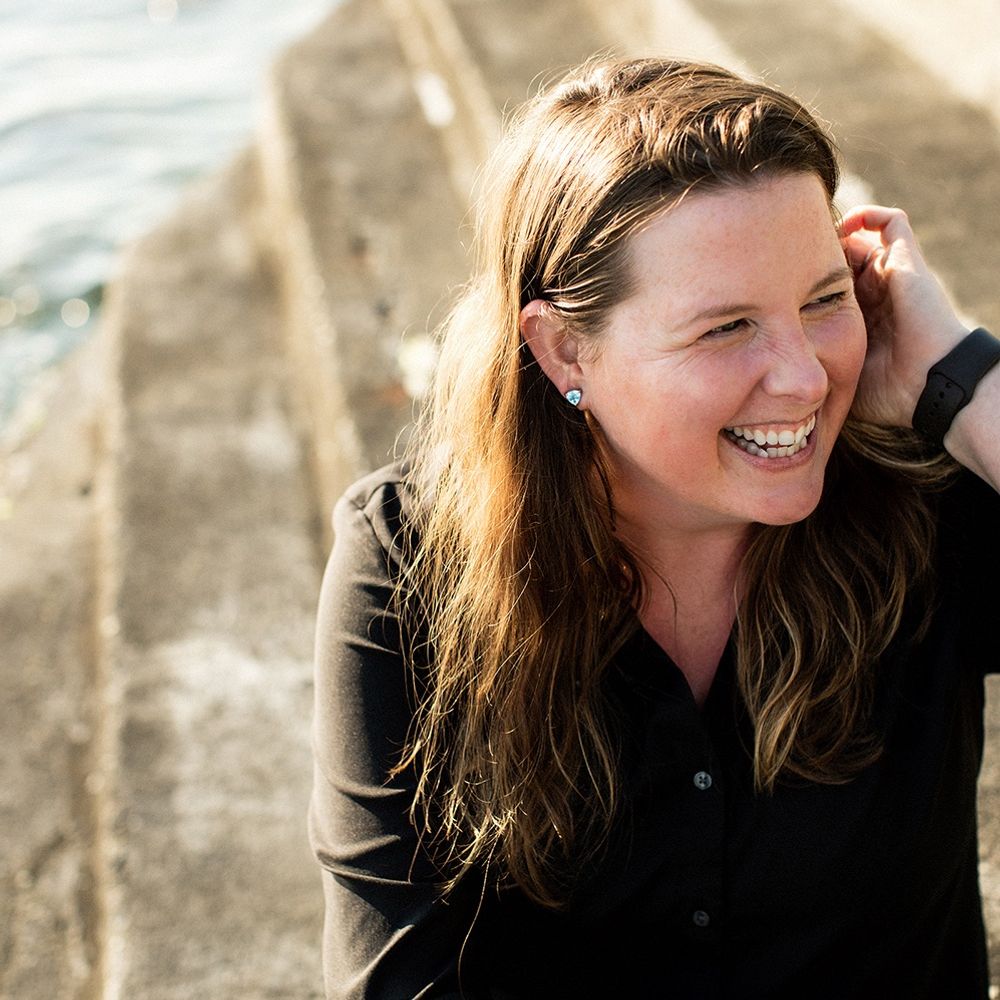
Our paper in Bioscience shows that dolphins carry pathogens that could affect multiple species, plus antimicrobial-resistant bacteria. academic.oup.com/bioscience/a...
📷 Ryan Tidman
📷 Ryan Tidman
Validate User
academic.oup.com
November 22, 2025 at 7:52 PM
Our paper in Bioscience shows that dolphins carry pathogens that could affect multiple species, plus antimicrobial-resistant bacteria. academic.oup.com/bioscience/a...
📷 Ryan Tidman
📷 Ryan Tidman
This is lovely! 💙
November 22, 2025 at 7:53 PM
This is lovely! 💙
To anyone second-guessing a decision to euthanize, please know that the alternative, suffocation, is an agonizing way for a whale or dolphin to die. May this event help build broader support for welfare considerations surrounding marine mammal bycatch in fishing gear.
November 17, 2025 at 9:10 PM
To anyone second-guessing a decision to euthanize, please know that the alternative, suffocation, is an agonizing way for a whale or dolphin to die. May this event help build broader support for welfare considerations surrounding marine mammal bycatch in fishing gear.
Our fave from @uniofstandrews.bsky.social days is How to be a Quantitative Ecologist: The ‘A to R’ of Green Mathematics and Statistics by Jason Matthiopoulos
It covers the basics, but sets the reader up for broader ecological modelling
onlinelibrary.wiley.com/doi/book/10....
It covers the basics, but sets the reader up for broader ecological modelling
onlinelibrary.wiley.com/doi/book/10....

How to be a Quantitative Ecologist
How to be a Quantitative Ecologist: The 'A to R' of Green Mathematics and Statistics Ecological research is becoming increasingly quantitative, yet students often opt out of courses in mathematics and statistics, unwittingly limiting their ability to carry out research in the future. This textbook provides a practical introduction to quantitative ecology for students and practitioners who have realised that they need this opportunity. The text is addressed to readers who haven't used mathematics since school, who were perhaps more confused than enlightened by their undergraduate lectures in statistics and who have never used a computer for much more than word processing and data entry. From this starting point, it slowly but surely instils an understanding of mathematics, statistics and programming, sufficient for initiating research in ecology. The book's practical value is enhanced by extensive use of biological examples and the computer language R for graphics, programming and data analysis. Key Features: Provides a complete introduction to mathematics statistics and computing for ecologists. Presents a wealth of ecological examples demonstrating the applied relevance of abstract mathematical concepts, showing how a little technique can go a long way in answering interesting ecological questions. Covers elementary topics, including the rules of algebra, logarithms, geometry, calculus, descriptive statistics, probability, hypothesis testing and linear regression. Explores more advanced topics including fractals, non-linear dynamical systems, likelihood and Bayesian estimation, generalised linear, mixed and additive models, and multivariate statistics. R boxes provide step-by-step recipes for implementing the graphical and numerical techniques outlined in each section. How to be a Quantitative Ecologist provides a comprehensive introduction to mathematics, statistics and computing and is the ideal textbook for late undergraduate and postgraduate courses in environmental biology. "With a book like this, there is no excuse for people to be afraid of maths, and to be ignorant of what it can do."—Professor Tim Benton, Faculty of Biological Sciences, University of Leeds, UK
onlinelibrary.wiley.com
November 11, 2025 at 5:43 PM
Our fave from @uniofstandrews.bsky.social days is How to be a Quantitative Ecologist: The ‘A to R’ of Green Mathematics and Statistics by Jason Matthiopoulos
It covers the basics, but sets the reader up for broader ecological modelling
onlinelibrary.wiley.com/doi/book/10....
It covers the basics, but sets the reader up for broader ecological modelling
onlinelibrary.wiley.com/doi/book/10....