



Oceans Research Institute
@oceansresearch.bsky.social
Oceans Research provides innovative & dynamic research relevant to the management & conservation of Southern Africa's sharks & marine mammals.
You’ve left a lasting impression on our team, and we’re incredibly proud of how far you’ve come.
Safe travels, and remember: you’ll always be part of the Oceans family 🌊
Safe travels, and remember: you’ll always be part of the Oceans family 🌊
December 14, 2025 at 8:35 PM
You’ve left a lasting impression on our team, and we’re incredibly proud of how far you’ve come.
Safe travels, and remember: you’ll always be part of the Oceans family 🌊
Safe travels, and remember: you’ll always be part of the Oceans family 🌊
It’s been a privilege to watch your confidence build and your passion for the ocean deepen.
Thank you for the energy you shared, the laughs you brought, and the genuine care you showed for the work we do and for each other.
Thank you for the energy you shared, the laughs you brought, and the genuine care you showed for the work we do and for each other.
December 14, 2025 at 8:35 PM
It’s been a privilege to watch your confidence build and your passion for the ocean deepen.
Thank you for the energy you shared, the laughs you brought, and the genuine care you showed for the work we do and for each other.
Thank you for the energy you shared, the laughs you brought, and the genuine care you showed for the work we do and for each other.
It also strengthens our individual ID work — when we know a shark’s sex, we can match sightings more accurately and track individuals over time.
All from a single underwater glimpse. 📹✨
All from a single underwater glimpse. 📹✨
December 10, 2025 at 7:20 PM
It also strengthens our individual ID work — when we know a shark’s sex, we can match sightings more accurately and track individuals over time.
All from a single underwater glimpse. 📹✨
All from a single underwater glimpse. 📹✨
And why is this fundamental piece of information so important?
Knowing the sex helps us build a clearer picture of the population: whether an area is male- or female-dominated, how different sexes use habitats, and whether there are shifts in breeding or migration patterns.
Knowing the sex helps us build a clearer picture of the population: whether an area is male- or female-dominated, how different sexes use habitats, and whether there are shifts in breeding or migration patterns.
December 10, 2025 at 7:20 PM
And why is this fundamental piece of information so important?
Knowing the sex helps us build a clearer picture of the population: whether an area is male- or female-dominated, how different sexes use habitats, and whether there are shifts in breeding or migration patterns.
Knowing the sex helps us build a clearer picture of the population: whether an area is male- or female-dominated, how different sexes use habitats, and whether there are shifts in breeding or migration patterns.
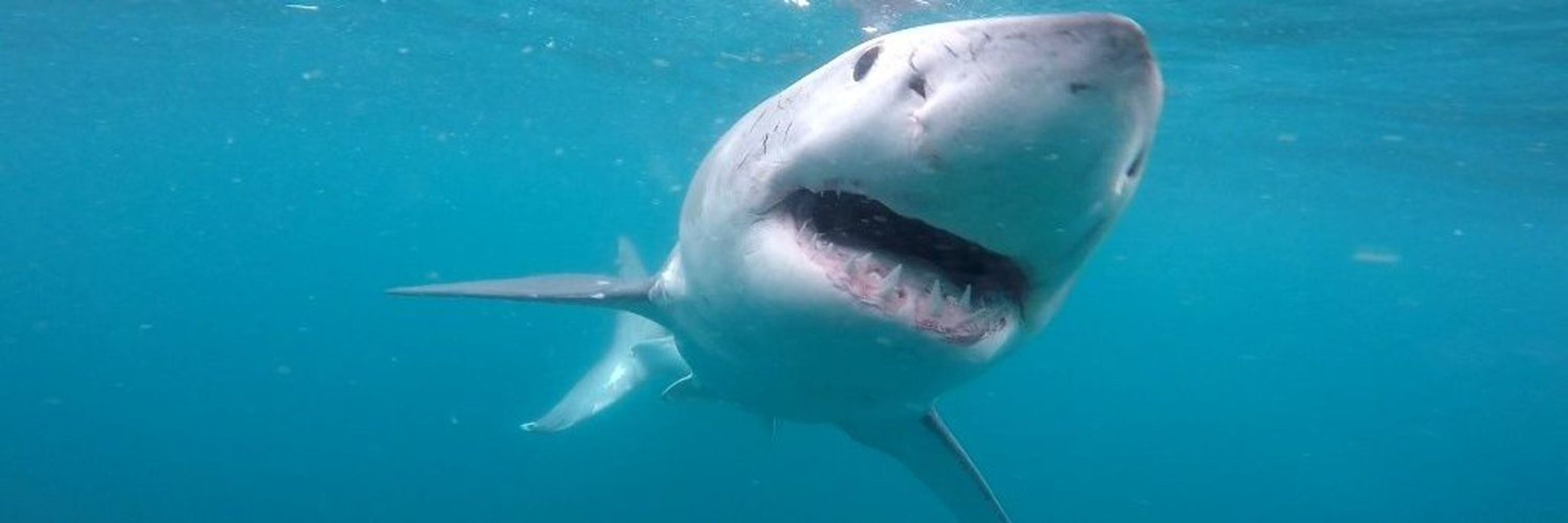
Out in the field, we can’t exactly ask a great white to roll over so we can check for claspers or a cloaca. So we get creative. Using a long metal pole with a GoPro attached, we safely film underneath the shark while keeping both our crew and the animal protected.
December 10, 2025 at 7:20 PM
Out in the field, we can’t exactly ask a great white to roll over so we can check for claspers or a cloaca. So we get creative. Using a long metal pole with a GoPro attached, we safely film underneath the shark while keeping both our crew and the animal protected.
It also strengthens our individual ID work — when we know a shark’s sex, we can match sightings more accurately and track individuals over time.
All from a single underwater glimpse. 📹✨
All from a single underwater glimpse. 📹✨
December 10, 2025 at 7:17 PM
It also strengthens our individual ID work — when we know a shark’s sex, we can match sightings more accurately and track individuals over time.
All from a single underwater glimpse. 📹✨
All from a single underwater glimpse. 📹✨
And why is this fundamental piece of information so important?
Knowing the sex helps us build a clearer picture of the population: whether an area is male- or female-dominated, how different sexes use habitats, and whether there are shifts in breeding or migration patterns.
Knowing the sex helps us build a clearer picture of the population: whether an area is male- or female-dominated, how different sexes use habitats, and whether there are shifts in breeding or migration patterns.
December 10, 2025 at 7:17 PM
And why is this fundamental piece of information so important?
Knowing the sex helps us build a clearer picture of the population: whether an area is male- or female-dominated, how different sexes use habitats, and whether there are shifts in breeding or migration patterns.
Knowing the sex helps us build a clearer picture of the population: whether an area is male- or female-dominated, how different sexes use habitats, and whether there are shifts in breeding or migration patterns.
Out in the field, we can’t exactly ask a great white to roll over so we can check for claspers or a cloaca.
So we get creative. Using a long metal pole with a GoPro attached, we safely film underneath the shark while keeping both our crew and the animal protected.
So we get creative. Using a long metal pole with a GoPro attached, we safely film underneath the shark while keeping both our crew and the animal protected.
December 10, 2025 at 7:17 PM
Out in the field, we can’t exactly ask a great white to roll over so we can check for claspers or a cloaca.
So we get creative. Using a long metal pole with a GoPro attached, we safely film underneath the shark while keeping both our crew and the animal protected.
So we get creative. Using a long metal pole with a GoPro attached, we safely film underneath the shark while keeping both our crew and the animal protected.
Despite its unusual jaw shape, SA0089 continues to thrive, offering valuable insight into dolphin resilience.
Every encounter adds another chapter to its story and contributes to broader conservation efforts across our coastline.
Always a privilege to see you, SA0089. 🐬✨
Every encounter adds another chapter to its story and contributes to broader conservation efforts across our coastline.
Always a privilege to see you, SA0089. 🐬✨
December 8, 2025 at 9:33 PM
Despite its unusual jaw shape, SA0089 continues to thrive, offering valuable insight into dolphin resilience.
Every encounter adds another chapter to its story and contributes to broader conservation efforts across our coastline.
Always a privilege to see you, SA0089. 🐬✨
Every encounter adds another chapter to its story and contributes to broader conservation efforts across our coastline.
Always a privilege to see you, SA0089. 🐬✨
Using dorsal fin photo-ID, we confirmed it’s SA0089, an animal documented as far back as 2014.
These coastal dolphins are Near Threatened, and long-term re-sightings like this help researchers understand survival, site fidelity, and how individuals navigate life with unique injuries or deformities.
These coastal dolphins are Near Threatened, and long-term re-sightings like this help researchers understand survival, site fidelity, and how individuals navigate life with unique injuries or deformities.
December 8, 2025 at 9:33 PM
Using dorsal fin photo-ID, we confirmed it’s SA0089, an animal documented as far back as 2014.
These coastal dolphins are Near Threatened, and long-term re-sightings like this help researchers understand survival, site fidelity, and how individuals navigate life with unique injuries or deformities.
These coastal dolphins are Near Threatened, and long-term re-sightings like this help researchers understand survival, site fidelity, and how individuals navigate life with unique injuries or deformities.
Every catch helps us understand the fish communities that share Mossel Bay: who’s here, how big they are, and what that means for the ecosystem and the sharks we study.
Each fish is handled gently, measured quickly, and released safely. Good science = good ocean care. 💛
Each fish is handled gently, measured quickly, and released safely. Good science = good ocean care. 💛
December 4, 2025 at 8:10 PM
Every catch helps us understand the fish communities that share Mossel Bay: who’s here, how big they are, and what that means for the ecosystem and the sharks we study.
Each fish is handled gently, measured quickly, and released safely. Good science = good ocean care. 💛
Each fish is handled gently, measured quickly, and released safely. Good science = good ocean care. 💛
From breathtaking scenery to unforgettable cultural experiences, this journey has left a mark on all of us.
Here’s to learning beyond boundaries and memories that will last a lifetime. 🌍💛
Here’s to learning beyond boundaries and memories that will last a lifetime. 🌍💛
December 2, 2025 at 4:53 PM
From breathtaking scenery to unforgettable cultural experiences, this journey has left a mark on all of us.
Here’s to learning beyond boundaries and memories that will last a lifetime. 🌍💛
Here’s to learning beyond boundaries and memories that will last a lifetime. 🌍💛
It’s inspiring watching them adapt to South African waters and see the realities of hands-on marine science unfold in real time. Here’s to an incredible second half of their placement with us.
#OceansResearchInstitute #FlindersUniversity #MarineScience #FieldResearch 🌊🦈📚
#OceansResearchInstitute #FlindersUniversity #MarineScience #FieldResearch 🌊🦈📚
November 30, 2025 at 6:18 PM
It’s inspiring watching them adapt to South African waters and see the realities of hands-on marine science unfold in real time. Here’s to an incredible second half of their placement with us.
#OceansResearchInstitute #FlindersUniversity #MarineScience #FieldResearch 🌊🦈📚
#OceansResearchInstitute #FlindersUniversity #MarineScience #FieldResearch 🌊🦈📚
It’s one thing to hear about it — and a completely different experience to handle the animal yourself, tag it with an ORI conventional tag, and release it back into its natural habitat.
A memorable moment that definitely sparked some big conversations on board.
A memorable moment that definitely sparked some big conversations on board.
November 28, 2025 at 6:20 PM
It’s one thing to hear about it — and a completely different experience to handle the animal yourself, tag it with an ORI conventional tag, and release it back into its natural habitat.
A memorable moment that definitely sparked some big conversations on board.
A memorable moment that definitely sparked some big conversations on board.
It’s hands-on science, a bit of adventure, and a reminder of how dynamic our oceans really are.
November 26, 2025 at 5:20 PM
It’s hands-on science, a bit of adventure, and a reminder of how dynamic our oceans really are.
By comparing day vs. night sampling, our students learned how diel patterns influence fish behaviour, movement, and catch rates — an important skill for understanding marine biodiversity and designing effective research methods. 🌊🎣
November 26, 2025 at 5:20 PM
By comparing day vs. night sampling, our students learned how diel patterns influence fish behaviour, movement, and catch rates — an important skill for understanding marine biodiversity and designing effective research methods. 🌊🎣
Others rest or retreat, meaning the species you encounter at night can differ dramatically from what you see during the day.
November 26, 2025 at 5:20 PM
Others rest or retreat, meaning the species you encounter at night can differ dramatically from what you see during the day.