


Peter Godfrey-Smith
@petergs.bsky.social
Link to episode 1 of "Nature in Crisis," with a sample.
www.lrb.co.uk/podcasts-and...
www.lrb.co.uk/podcasts-and...

Podcast: Meehan Crist and Peter Godfrey-Smith · Nature in Crisis: ‘Silent Spring’ by Rachel Carson
www.lrb.co.uk
January 27, 2026 at 8:45 AM
Link to episode 1 of "Nature in Crisis," with a sample.
www.lrb.co.uk/podcasts-and...
www.lrb.co.uk/podcasts-and...
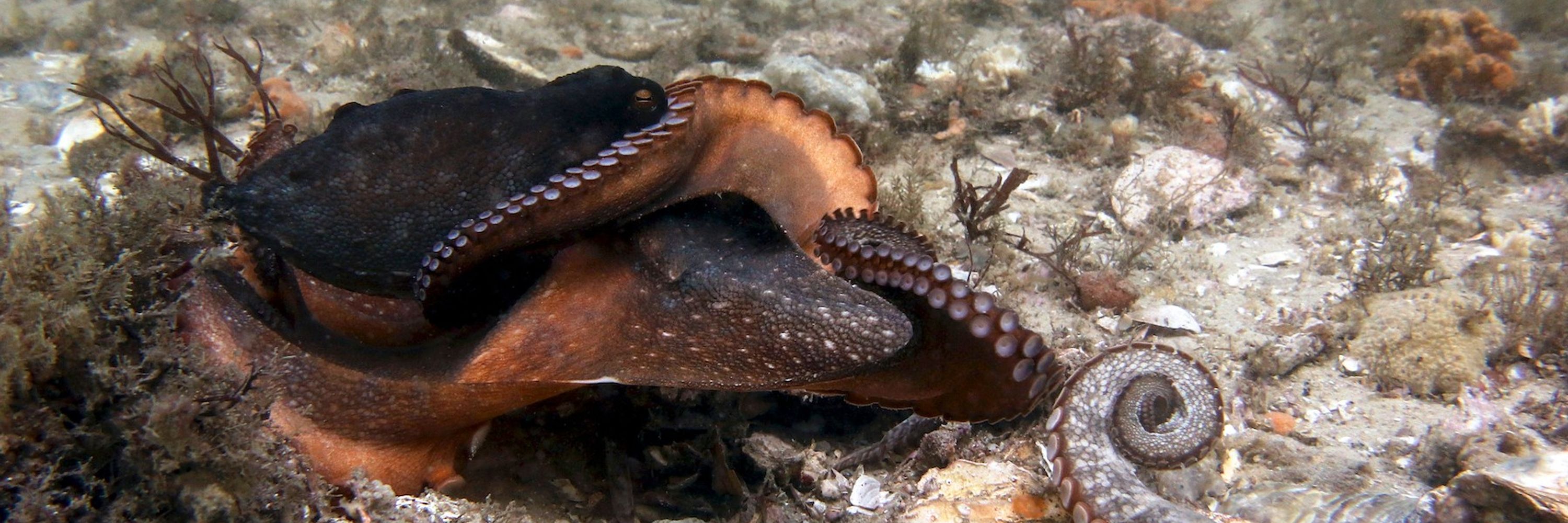
It's not AI or additive; just a matter telling the camera what to look for and what to dial back.
I am a 'natural light ideologue' - see this blog post.
metazoan.net/126-spun-of-...
(Below is also an image from another blog post – how an adjustment for 12 meters or so looks at the surface.)
I am a 'natural light ideologue' - see this blog post.
metazoan.net/126-spun-of-...
(Below is also an image from another blog post – how an adjustment for 12 meters or so looks at the surface.)


January 24, 2026 at 5:30 AM
It's not AI or additive; just a matter telling the camera what to look for and what to dial back.
I am a 'natural light ideologue' - see this blog post.
metazoan.net/126-spun-of-...
(Below is also an image from another blog post – how an adjustment for 12 meters or so looks at the surface.)
I am a 'natural light ideologue' - see this blog post.
metazoan.net/126-spun-of-...
(Below is also an image from another blog post – how an adjustment for 12 meters or so looks at the surface.)
But now I don't think that the shell movement was incidental. The 'pause' before the release makes it unlikely. We saw that pause often with very clear gatherings-and-throws in our later data.
Here's an excerpt of the video, just with the 'throw.' 3/
Here's an excerpt of the video, just with the 'throw.' 3/
January 22, 2026 at 4:38 AM
But now I don't think that the shell movement was incidental. The 'pause' before the release makes it unlikely. We saw that pause often with very clear gatherings-and-throws in our later data.
Here's an excerpt of the video, just with the 'throw.' 3/
Here's an excerpt of the video, just with the 'throw.' 3/
At the time, I worried that this might have been a case where one octopus blew a water jet at another and happened to project some shells as well.
I discussed the case way back, on my blog.
metazoan.net/10-a-new-oct...
(This case is not used in our 2022 paper on the topic.) 2/
I discussed the case way back, on my blog.
metazoan.net/10-a-new-oct...
(This case is not used in our 2022 paper on the topic.) 2/

January 22, 2026 at 4:38 AM
At the time, I worried that this might have been a case where one octopus blew a water jet at another and happened to project some shells as well.
I discussed the case way back, on my blog.
metazoan.net/10-a-new-oct...
(This case is not used in our 2022 paper on the topic.) 2/
I discussed the case way back, on my blog.
metazoan.net/10-a-new-oct...
(This case is not used in our 2022 paper on the topic.) 2/
... the tension between tenacity & innovation in science, and the relation between individual & group-level properties. Not Polanyian themes so much.
Thanks to Macario Mina for a nice review of TR2, which he calls "a guide for navigating stormy seas." 3/3
Thanks to Macario Mina for a nice review of TR2, which he calls "a guide for navigating stormy seas." 3/3
January 19, 2026 at 5:38 AM
... the tension between tenacity & innovation in science, and the relation between individual & group-level properties. Not Polanyian themes so much.
Thanks to Macario Mina for a nice review of TR2, which he calls "a guide for navigating stormy seas." 3/3
Thanks to Macario Mina for a nice review of TR2, which he calls "a guide for navigating stormy seas." 3/3
Others have also suggested Polanyi, thinking that Kuhn gets more credit than he should – and should have cited P in 'Structure.' Tsung-Yun Tzeng wrote to me in detail about this, & sent work by Struan Jacobs. I did have a look. To me, the most valuable Kuhnian ideas concern... 2/
January 19, 2026 at 5:38 AM
Others have also suggested Polanyi, thinking that Kuhn gets more credit than he should – and should have cited P in 'Structure.' Tsung-Yun Tzeng wrote to me in detail about this, & sent work by Struan Jacobs. I did have a look. To me, the most valuable Kuhnian ideas concern... 2/
The London lecture is available as a video and podcast as well as text - see my website at the top. For the video: youtube.com/watch?v=1TWy... 6/
https://youtube.com/watch?v=1TWy0xaCymI…
January 5, 2026 at 3:14 AM
The London lecture is available as a video and podcast as well as text - see my website at the top. For the video: youtube.com/watch?v=1TWy... 6/
Here I used an old (abandoned) paper by Tim Scanlon (1972). This part is just me; Ben shouldn't be assumed to agree (or disagree). Freedom of expression can be justified through its link to autonomy in belief formation. This is a basis for broad 1st-order tolerance & some 2nd-order intolerance. 5/
January 5, 2026 at 3:14 AM
Here I used an old (abandoned) paper by Tim Scanlon (1972). This part is just me; Ben shouldn't be assumed to agree (or disagree). Freedom of expression can be justified through its link to autonomy in belief formation. This is a basis for broad 1st-order tolerance & some 2nd-order intolerance. 5/
"Toleration of the intolerant" is not paradoxical when it's 2nd-order intolerance of those who are 1st-order intolerant. A complicated framework, but it helps. In the lecture I also defended broad 1st-order tolerance in the case of speech. 5/
January 5, 2026 at 3:14 AM
"Toleration of the intolerant" is not paradoxical when it's 2nd-order intolerance of those who are 1st-order intolerant. A complicated framework, but it helps. In the lecture I also defended broad 1st-order tolerance in the case of speech. 5/
This was the Karl Popper Memorial Lecture at LSE.
I'm applying to speech a framework developed with Ben Kerr for understanding tolerance in general, especially in relation to "toleration of the intolerant."
onlinelibrary.wiley.com/doi/abs/10.1...
Preprint: petergodfreysmith.com/wp-content/u... 4/
I'm applying to speech a framework developed with Ben Kerr for understanding tolerance in general, especially in relation to "toleration of the intolerant."
onlinelibrary.wiley.com/doi/abs/10.1...
Preprint: petergodfreysmith.com/wp-content/u... 4/

January 5, 2026 at 3:14 AM
This was the Karl Popper Memorial Lecture at LSE.
I'm applying to speech a framework developed with Ben Kerr for understanding tolerance in general, especially in relation to "toleration of the intolerant."
onlinelibrary.wiley.com/doi/abs/10.1...
Preprint: petergodfreysmith.com/wp-content/u... 4/
I'm applying to speech a framework developed with Ben Kerr for understanding tolerance in general, especially in relation to "toleration of the intolerant."
onlinelibrary.wiley.com/doi/abs/10.1...
Preprint: petergodfreysmith.com/wp-content/u... 4/
In the case of speech and elsewhere, we should understand tolerance using different levels: 1st-order tolerance (or intolerance) is directed at 'ordinary' behaviors; 2nd-order tolerance is tolerance of 1st-order policies, and so on. Different questions arise at each level. 3/

January 5, 2026 at 3:14 AM
In the case of speech and elsewhere, we should understand tolerance using different levels: 1st-order tolerance (or intolerance) is directed at 'ordinary' behaviors; 2nd-order tolerance is tolerance of 1st-order policies, and so on. Different questions arise at each level. 3/
What a dishevelled beauty. Does look nudi-esque. Or maybe a sea hare. (There is a 'shaggy sea hare,' but does not look too similar.)
January 1, 2026 at 4:48 AM
What a dishevelled beauty. Does look nudi-esque. Or maybe a sea hare. (There is a 'shaggy sea hare,' but does not look too similar.)
Thank you. Glad to hear it.

December 29, 2025 at 11:27 AM
Thank you. Glad to hear it.
A natural light photo from the post:

December 26, 2025 at 11:06 AM
A natural light photo from the post: