


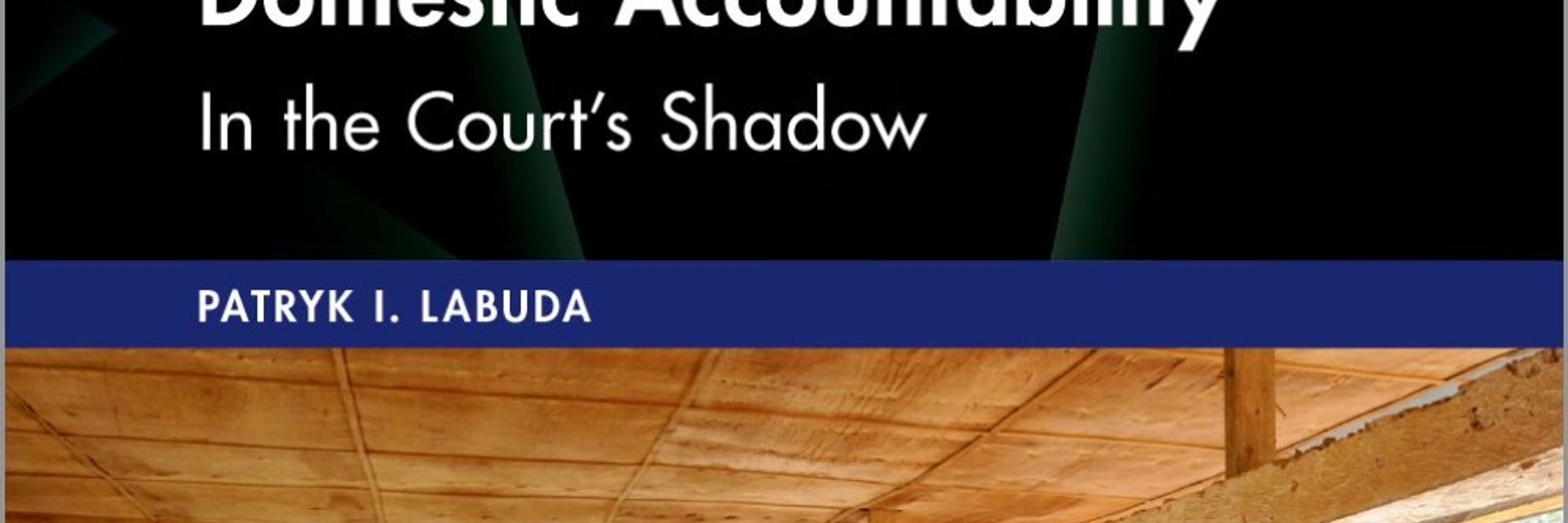

Patryk I. Labuda
@pilabuda.bsky.social
.
Prof int'l law & int'l relations, Central European University
.
www.patryklabuda.com
.
International law, peace and security, global history
.
Global South-East(ern Europe) relations
.
Formerly DRC, Sudans, Tunisia/Libya, Senegal
.
Prof int'l law & int'l relations, Central European University
.
www.patryklabuda.com
.
International law, peace and security, global history
.
Global South-East(ern Europe) relations
.
Formerly DRC, Sudans, Tunisia/Libya, Senegal
.
The Polish Academy of Science's Memocracy project (www.memocracy.eu) supported research for this article. Thanks also to the reviewers for all their helpful feedback - the article is much stronger for it.

Memocracy — The Challenge of Populist Memory Politics for Europe
The Challenge of Populist Memory Politics for Europe: Towards Effective Responses to Militant Legilsation of the Past
www.memocracy.eu
January 16, 2026 at 7:42 AM
The Polish Academy of Science's Memocracy project (www.memocracy.eu) supported research for this article. Thanks also to the reviewers for all their helpful feedback - the article is much stronger for it.
The article is part of a special issue coordinated by Thomas Fetzer and Ivan Nikolovski. Read their introduction: academic.oup.com/isagsq/artic...
Validate User
academic.oup.com
January 16, 2026 at 7:42 AM
The article is part of a special issue coordinated by Thomas Fetzer and Ivan Nikolovski. Read their introduction: academic.oup.com/isagsq/artic...
The article encourages further research into the interplay of norms, memory and diplomacy, for instance in Israel-Palestine.
January 16, 2026 at 7:42 AM
The article encourages further research into the interplay of norms, memory and diplomacy, for instance in Israel-Palestine.
For instance, most states echo Ukraine-centric memories of the Second World War. But divergent memories of colonialism have undermined efforts to hold Russia accountable.
January 16, 2026 at 7:42 AM
For instance, most states echo Ukraine-centric memories of the Second World War. But divergent memories of colonialism have undermined efforts to hold Russia accountable.
It turns out cross-regional memories intersect in complex ways, with coalitions straddling, confirming and belying South-North and West v. Rest boundaries.
January 16, 2026 at 7:42 AM
It turns out cross-regional memories intersect in complex ways, with coalitions straddling, confirming and belying South-North and West v. Rest boundaries.
I suggest that state positions partly echo 'global memory' of five events and processes: World War Two, the Cold War, imperialism, colonialism and genocide.
January 16, 2026 at 7:42 AM
I suggest that state positions partly echo 'global memory' of five events and processes: World War Two, the Cold War, imperialism, colonialism and genocide.
Drawing on diplomatic debates at the UN Security Council, General Assembly and ICJ after February 2022, I illustrate how competing memories of oppression, war and mass violence have shaped states' normative responses to Russia's invasion of Ukraine.
January 16, 2026 at 7:42 AM
Drawing on diplomatic debates at the UN Security Council, General Assembly and ICJ after February 2022, I illustrate how competing memories of oppression, war and mass violence have shaped states' normative responses to Russia's invasion of Ukraine.