



Professor Peter Strachan
@profstrachan.bsky.social
Reposted by Professor Peter Strachan

18/ Conclusions 4: Policy measures are needed to drive this transition, with solar PV, wind, batteries, and electrolysers as key technologies for the #Caribbean’s carbon neutrality by 2050 or earlier. Additional graphical results can be found in the Supplementary Material
December 23, 2024 at 1:53 PM
18/ Conclusions 4: Policy measures are needed to drive this transition, with solar PV, wind, batteries, and electrolysers as key technologies for the #Caribbean’s carbon neutrality by 2050 or earlier. Additional graphical results can be found in the Supplementary Material
Reposted by Professor Peter Strachan
17/ Conclusions 3: The #Caribbean can reduce reliance on fossil fuels by adopting low-cost solar energy, creating a Solar-to-X Economy ideal for tropical islands globally.
December 23, 2024 at 1:52 PM
17/ Conclusions 3: The #Caribbean can reduce reliance on fossil fuels by adopting low-cost solar energy, creating a Solar-to-X Economy ideal for tropical islands globally.
Reposted by Professor Peter Strachan
16/ Conclusions 2: Batteries support PV-battery hybrids & grid interconnection enhances flexibility, reduces costs & supports wind with limited PV. Sector coupling & PtX improve efficiency. Electric road transport with V2G adds flexibility & grid-connected renew paths are 1-10% cheaper.
December 23, 2024 at 1:52 PM
16/ Conclusions 2: Batteries support PV-battery hybrids & grid interconnection enhances flexibility, reduces costs & supports wind with limited PV. Sector coupling & PtX improve efficiency. Electric road transport with V2G adds flexibility & grid-connected renew paths are 1-10% cheaper.
Reposted by Professor Peter Strachan
15/ Conclusions 1: PV-battery hybrid solutions emerge as the most economical option for the #Caribbean, and the possibility of this hybrid configuration dominating the future energy system is also echoed in recent literature.
December 23, 2024 at 1:52 PM
15/ Conclusions 1: PV-battery hybrid solutions emerge as the most economical option for the #Caribbean, and the possibility of this hybrid configuration dominating the future energy system is also echoed in recent literature.
Reposted by Professor Peter Strachan
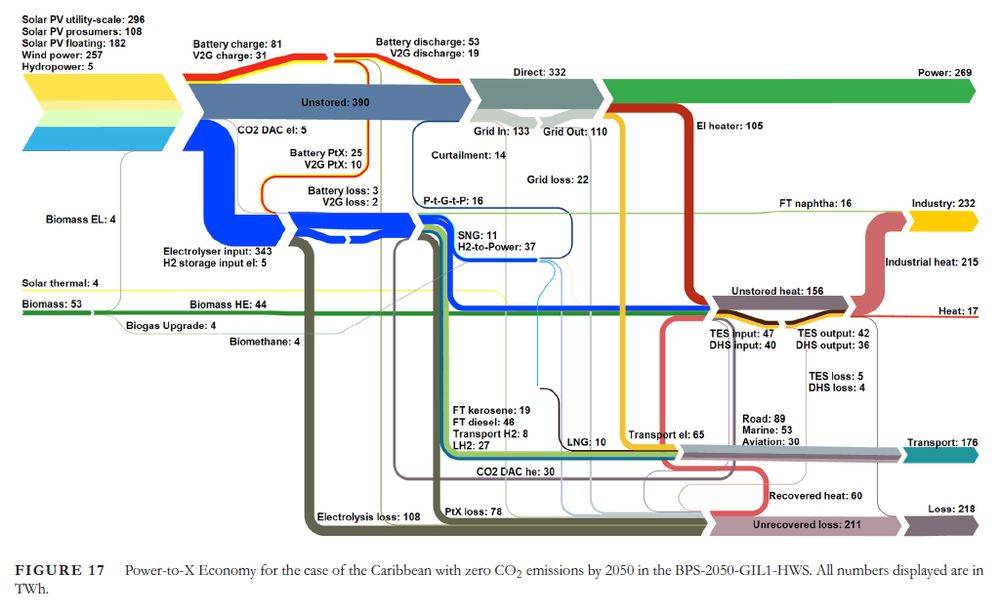
14/ The #PtXeconomy will emerge an important framework across the #Caribbean energy sectors, via direct and indirect electrification approaches. twitter.com/ChristianOnR...
December 23, 2024 at 1:51 PM
14/ The #PtXeconomy will emerge an important framework across the #Caribbean energy sectors, via direct and indirect electrification approaches. twitter.com/ChristianOnR...
Reposted by Professor Peter Strachan
13/ #Cuba generates 25% of the #Caribbean’s 863 TWh electricity, followed by #Haiti and the Dominican Republic at 17% each. The regional average price is 30 €/MWh, with four nodes below this. By 2050, e-hydrogen and e-FTL fuels will comprise 46% and 30% of the fuel supply, respectively.

December 23, 2024 at 1:51 PM
13/ #Cuba generates 25% of the #Caribbean’s 863 TWh electricity, followed by #Haiti and the Dominican Republic at 17% each. The regional average price is 30 €/MWh, with four nodes below this. By 2050, e-hydrogen and e-FTL fuels will comprise 46% and 30% of the fuel supply, respectively.
Reposted by Professor Peter Strachan
12/ Early defossilisation, illustrated in the BPSs, leads to early phase-out of fossil fuels, prioritises RE technologies and achieves 5-10% lower cumulative energy system CO2 emissions.

December 23, 2024 at 1:51 PM
12/ Early defossilisation, illustrated in the BPSs, leads to early phase-out of fossil fuels, prioritises RE technologies and achieves 5-10% lower cumulative energy system CO2 emissions.
Reposted by Professor Peter Strachan
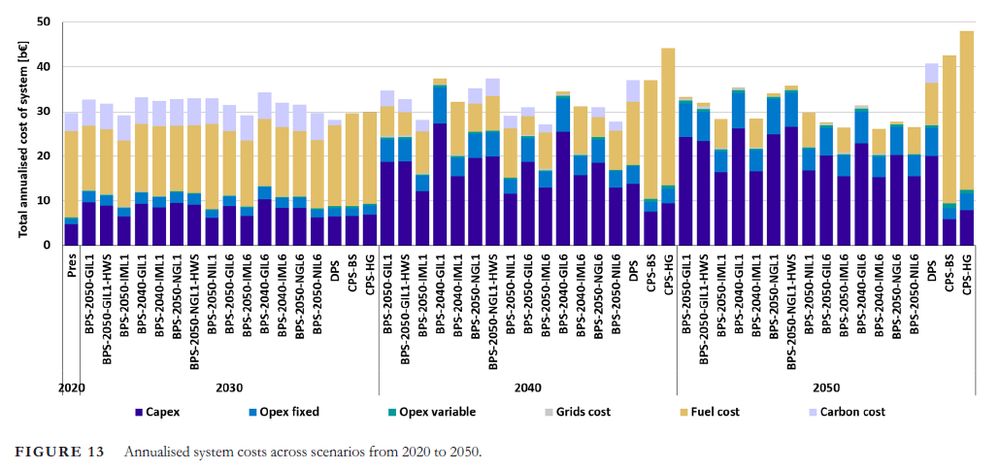
11/ Renewables-dominated paths have 7-24% lower cumulative costs as alternatives, with grid integration cutting costs by 1-10%. Accelerated transition paths cost 3-12% more as full defossilisation by 2050. Importing e-fuels lowers system costs by 7-16% & supports local resource use.
December 23, 2024 at 1:50 PM
11/ Renewables-dominated paths have 7-24% lower cumulative costs as alternatives, with grid integration cutting costs by 1-10%. Accelerated transition paths cost 3-12% more as full defossilisation by 2050. Importing e-fuels lowers system costs by 7-16% & supports local resource use.
Reposted by Professor Peter Strachan
10/ e-Fuels will be essential for defossilising the hard-to-abate demands. By 2050, sustainable fuels will contribute to replacing all fossil fuels.

December 23, 2024 at 1:50 PM
10/ e-Fuels will be essential for defossilising the hard-to-abate demands. By 2050, sustainable fuels will contribute to replacing all fossil fuels.
Reposted by Professor Peter Strachan
9/ Three electricity trade patterns are observed: With 1% onshore PV, CU and DO lead exports (90 TWh, 45 TWh), and HT is the top importer (80 TWh). Higher wind shares shift exports to CU (85 TWh), TCBB (70 TWh), PRV (35 TWh), and HT imports 110 TWh. The third pattern is with 6% onshore PV.

December 23, 2024 at 1:49 PM
9/ Three electricity trade patterns are observed: With 1% onshore PV, CU and DO lead exports (90 TWh, 45 TWh), and HT is the top importer (80 TWh). Higher wind shares shift exports to CU (85 TWh), TCBB (70 TWh), PRV (35 TWh), and HT imports 110 TWh. The third pattern is with 6% onshore PV.
Reposted by Professor Peter Strachan
8/ Grid utilisation correlates with dominant technology profiles, such as solar PV or wind power. Scenarios with 30% wind show higher grid utilisation, indicating a wind-grid correlation, while those with 12% wind power have lower utilisation, showing a PV-storage correlation.

December 23, 2024 at 1:49 PM
8/ Grid utilisation correlates with dominant technology profiles, such as solar PV or wind power. Scenarios with 30% wind show higher grid utilisation, indicating a wind-grid correlation, while those with 12% wind power have lower utilisation, showing a PV-storage correlation.
Reposted by Professor Peter Strachan
7/ The energy system includes electricity, heat, and gas storage. Batteries for prosumer and utility-scale use, along with V2G, are essential for daily solar PV storage.

December 23, 2024 at 1:48 PM
7/ The energy system includes electricity, heat, and gas storage. Batteries for prosumer and utility-scale use, along with V2G, are essential for daily solar PV storage.
Reposted by Professor Peter Strachan
5/ Background: Electricity is the main energy carrier in the #Caribbean, with sector electrification growing 3-8x faster in generation and 4-20x more installed capacity by 2050 compared to 2020.

December 23, 2024 at 1:48 PM
5/ Background: Electricity is the main energy carrier in the #Caribbean, with sector electrification growing 3-8x faster in generation and 4-20x more installed capacity by 2050 compared to 2020.
Reposted by Professor Peter Strachan
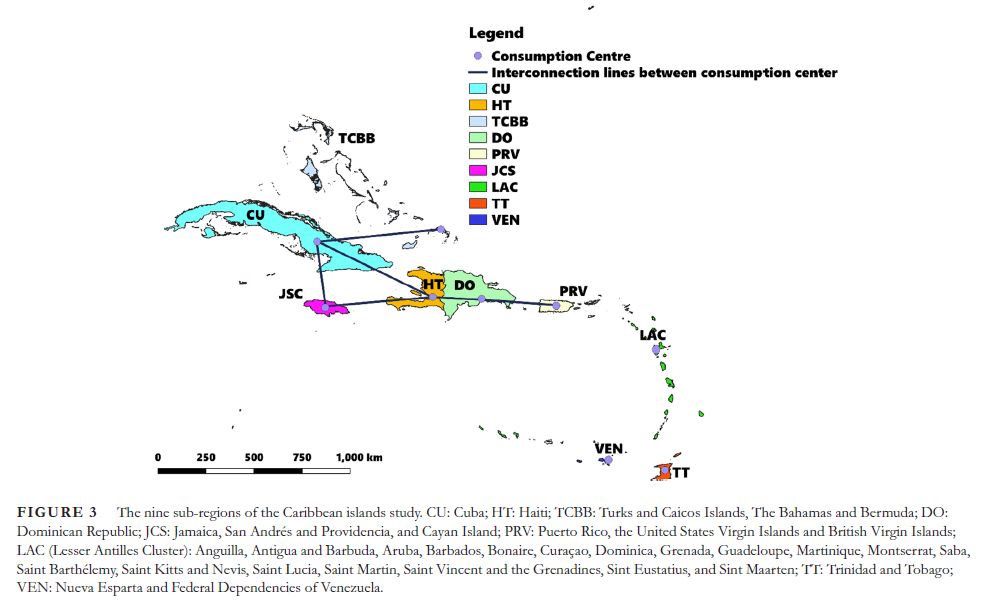
4/ Background: This study makes a pivotal contribution as the first to analyse the #Caribbean with this level of granularity, employing a 9-node aggregation approach to represent grid interconnections.
December 23, 2024 at 1:47 PM
4/ Background: This study makes a pivotal contribution as the first to analyse the #Caribbean with this level of granularity, employing a 9-node aggregation approach to represent grid interconnections.
Reposted by Professor Peter Strachan
2/ Novelties of the research: This study offers novel insights into the energy transition of archipelagic nations, enriching the global discourse on grid interconnection, early decarbonisation, and the strategic importance of e-fuel imports for land-constrained regions.

December 23, 2024 at 1:46 PM
2/ Novelties of the research: This study offers novel insights into the energy transition of archipelagic nations, enriching the global discourse on grid interconnection, early decarbonisation, and the strategic importance of e-fuel imports for land-constrained regions.