



Relearning Economics
@relearningecon.bsky.social
A system dynamicist specializing it's application for Macroeconomic Forecasting. I am the Chief Research Officer at Modern Macro Technologies
https://www.relearningeconomics.com
https://www.relearningeconomics.com
🚨 My new working paper out today
I propose a post-Keynesian, system-dynamics alternative to the New Keynesian DSGE model, one that produces business cycles and financial instability endogenously, without rational expectations or microfoundations.
dx.doi.org/10.2139/ssrn...
🧵1/8
I propose a post-Keynesian, system-dynamics alternative to the New Keynesian DSGE model, one that produces business cycles and financial instability endogenously, without rational expectations or microfoundations.
dx.doi.org/10.2139/ssrn...
🧵1/8

November 24, 2025 at 7:55 PM
🚨 My new working paper out today
I propose a post-Keynesian, system-dynamics alternative to the New Keynesian DSGE model, one that produces business cycles and financial instability endogenously, without rational expectations or microfoundations.
dx.doi.org/10.2139/ssrn...
🧵1/8
I propose a post-Keynesian, system-dynamics alternative to the New Keynesian DSGE model, one that produces business cycles and financial instability endogenously, without rational expectations or microfoundations.
dx.doi.org/10.2139/ssrn...
🧵1/8
But negative loops don't guarantee stability.
If the corrective action is delayed, because of slow information, slow adjustment, or rigid institutions, the system can overshoot or undershoot its target.
That creates oscillations.
🧵8/10
If the corrective action is delayed, because of slow information, slow adjustment, or rigid institutions, the system can overshoot or undershoot its target.
That creates oscillations.
🧵8/10

November 22, 2025 at 6:23 AM
But negative loops don't guarantee stability.
If the corrective action is delayed, because of slow information, slow adjustment, or rigid institutions, the system can overshoot or undershoot its target.
That creates oscillations.
🧵8/10
If the corrective action is delayed, because of slow information, slow adjustment, or rigid institutions, the system can overshoot or undershoot its target.
That creates oscillations.
🧵8/10
Negative (balancing) loops are goal-seeking.
They work to bring the system back toward some target or desired state.
If the system drifts away from that target, the negative loop kicks in to correct it.
🧵6/10
They work to bring the system back toward some target or desired state.
If the system drifts away from that target, the negative loop kicks in to correct it.
🧵6/10

November 22, 2025 at 6:23 AM
Negative (balancing) loops are goal-seeking.
They work to bring the system back toward some target or desired state.
If the system drifts away from that target, the negative loop kicks in to correct it.
🧵6/10
They work to bring the system back toward some target or desired state.
If the system drifts away from that target, the negative loop kicks in to correct it.
🧵6/10
Positive loops drive trends, economic expansions, speculative bubbles, and path dependency.
Left unchecked, they can push a system into unstable or undesirable states, the classic vicious or virtuous circle.
🧵5/10
Left unchecked, they can push a system into unstable or undesirable states, the classic vicious or virtuous circle.
🧵5/10

November 22, 2025 at 6:23 AM
Positive loops drive trends, economic expansions, speculative bubbles, and path dependency.
Left unchecked, they can push a system into unstable or undesirable states, the classic vicious or virtuous circle.
🧵5/10
Left unchecked, they can push a system into unstable or undesirable states, the classic vicious or virtuous circle.
🧵5/10
Positive (reinforcing) loops occur when a stock creates more of itself.
Examples:
• People create more people
• Money makes more money
• Capital equipment can produce more capital
• Knowledge accumulates into more knowledge
🧵4/10
Examples:
• People create more people
• Money makes more money
• Capital equipment can produce more capital
• Knowledge accumulates into more knowledge
🧵4/10

November 22, 2025 at 6:23 AM
Positive (reinforcing) loops occur when a stock creates more of itself.
Examples:
• People create more people
• Money makes more money
• Capital equipment can produce more capital
• Knowledge accumulates into more knowledge
🧵4/10
Examples:
• People create more people
• Money makes more money
• Capital equipment can produce more capital
• Knowledge accumulates into more knowledge
🧵4/10
There are two main types of feedback loops: positive and negative.
🧵3/10
🧵3/10

November 22, 2025 at 6:23 AM
There are two main types of feedback loops: positive and negative.
🧵3/10
🧵3/10
A system's stocks define its current state.
The information that flows back from these stocks (directly or indirectly) controls the system's flows, which then change the stocks again.
That circular causality is what creates loops.
🧵2/10
The information that flows back from these stocks (directly or indirectly) controls the system's flows, which then change the stocks again.
That circular causality is what creates loops.
🧵2/10

November 22, 2025 at 6:23 AM
A system's stocks define its current state.
The information that flows back from these stocks (directly or indirectly) controls the system's flows, which then change the stocks again.
That circular causality is what creates loops.
🧵2/10
The information that flows back from these stocks (directly or indirectly) controls the system's flows, which then change the stocks again.
That circular causality is what creates loops.
🧵2/10
In system dynamics, stocks and flows create a system's behaviour, but they don’t operate in isolation.
They sit inside webs of interacting feedback loops.
Feedback is simply information about what’s happening in the system’s stocks, fed back to influence its flows.
🧵1/10
They sit inside webs of interacting feedback loops.
Feedback is simply information about what’s happening in the system’s stocks, fed back to influence its flows.
🧵1/10

November 22, 2025 at 6:23 AM
In system dynamics, stocks and flows create a system's behaviour, but they don’t operate in isolation.
They sit inside webs of interacting feedback loops.
Feedback is simply information about what’s happening in the system’s stocks, fed back to influence its flows.
🧵1/10
They sit inside webs of interacting feedback loops.
Feedback is simply information about what’s happening in the system’s stocks, fed back to influence its flows.
🧵1/10
Here's an interesting little graph of corporate profits as created from the Levy-Kalecki Equation (Blue) and the NIPA (Red). It looks like the trend is upward since 2000.
(fred.stlouisfed.org/graph/?g=qKZG#0 )
(fred.stlouisfed.org/graph/?g=qKZG#0 )

November 21, 2025 at 8:06 AM
Here's an interesting little graph of corporate profits as created from the Levy-Kalecki Equation (Blue) and the NIPA (Red). It looks like the trend is upward since 2000.
(fred.stlouisfed.org/graph/?g=qKZG#0 )
(fred.stlouisfed.org/graph/?g=qKZG#0 )
"I sometimes think that economists use decimal points in their forecasts to prove they have a sense of humor."
-William E. Simon
Gazette-Times, Corvallis, OR (1975)
-William E. Simon
Gazette-Times, Corvallis, OR (1975)

November 20, 2025 at 6:08 PM
"I sometimes think that economists use decimal points in their forecasts to prove they have a sense of humor."
-William E. Simon
Gazette-Times, Corvallis, OR (1975)
-William E. Simon
Gazette-Times, Corvallis, OR (1975)
Adam Smith's concept of invisible hands working behind the scenes is, in the case of China, replaced by the thousand arm Buddha's extended and very visible hands"
-Keyu Jin
The New China Playbook: Beyond Socialism & Capitalism (2023)
-Keyu Jin
The New China Playbook: Beyond Socialism & Capitalism (2023)

November 20, 2025 at 9:33 AM
Adam Smith's concept of invisible hands working behind the scenes is, in the case of China, replaced by the thousand arm Buddha's extended and very visible hands"
-Keyu Jin
The New China Playbook: Beyond Socialism & Capitalism (2023)
-Keyu Jin
The New China Playbook: Beyond Socialism & Capitalism (2023)
"Everything reminds Milton Friedman of the money supply. Everything reminds me of sex, but I try to keep it out of my papers."
-Robert Solow
AEA Panel Discussion (1966)
-Robert Solow
AEA Panel Discussion (1966)

November 19, 2025 at 1:34 AM
"Everything reminds Milton Friedman of the money supply. Everything reminds me of sex, but I try to keep it out of my papers."
-Robert Solow
AEA Panel Discussion (1966)
-Robert Solow
AEA Panel Discussion (1966)
You'd think the field that studies money would have a solid grasp of how it works.
But mainstream economics still teaches that banks are intermediaries, loans come from savings, and governments can run out of money.
None of that sh#t holds up.
🧵1/12
But mainstream economics still teaches that banks are intermediaries, loans come from savings, and governments can run out of money.
None of that sh#t holds up.
🧵1/12

November 15, 2025 at 8:00 AM
You'd think the field that studies money would have a solid grasp of how it works.
But mainstream economics still teaches that banks are intermediaries, loans come from savings, and governments can run out of money.
None of that sh#t holds up.
🧵1/12
But mainstream economics still teaches that banks are intermediaries, loans come from savings, and governments can run out of money.
None of that sh#t holds up.
🧵1/12
Teaching undergrads rational expectations should count as academic malpractice.
Modeling with it is like designing a unicorn and then asking why real horses don’t have horns.
Might as well just start with the horse.
Modeling with it is like designing a unicorn and then asking why real horses don’t have horns.
Might as well just start with the horse.

September 21, 2025 at 3:33 AM
Teaching undergrads rational expectations should count as academic malpractice.
Modeling with it is like designing a unicorn and then asking why real horses don’t have horns.
Might as well just start with the horse.
Modeling with it is like designing a unicorn and then asking why real horses don’t have horns.
Might as well just start with the horse.
Mainstream macro blames crises on public debt or bad policy.
History tells a different story, The biggest crashes follow private debt booms , when households & firms load up on credit faster than incomes grow.
🧵1/8
History tells a different story, The biggest crashes follow private debt booms , when households & firms load up on credit faster than incomes grow.
🧵1/8

August 12, 2025 at 5:09 AM
Mainstream macro blames crises on public debt or bad policy.
History tells a different story, The biggest crashes follow private debt booms , when households & firms load up on credit faster than incomes grow.
🧵1/8
History tells a different story, The biggest crashes follow private debt booms , when households & firms load up on credit faster than incomes grow.
🧵1/8
An economist is an expert who will know tomorrow why the things he predicted yesterday didn't happen today."
-Lawrence J. Peter
-Lawrence J. Peter
July 2, 2025 at 5:17 AM
An economist is an expert who will know tomorrow why the things he predicted yesterday didn't happen today."
-Lawrence J. Peter
-Lawrence J. Peter
''The great tragedy of the global economic malaise is that it is caused by a shortage of something that is essentially costless to produce: money.''
-Steve Keen
-Steve Keen

June 27, 2025 at 5:57 PM
''The great tragedy of the global economic malaise is that it is caused by a shortage of something that is essentially costless to produce: money.''
-Steve Keen
-Steve Keen
“Such a secondary depression caused by an induced deflation should of course be prevented by appropriate monetary counter-measures. Though I am sometimes accused of having represented the deflationary cause of the business cycles as part of the curative process"
-Friedrich Hayek
-Friedrich Hayek
June 27, 2025 at 5:48 AM
“Such a secondary depression caused by an induced deflation should of course be prevented by appropriate monetary counter-measures. Though I am sometimes accused of having represented the deflationary cause of the business cycles as part of the curative process"
-Friedrich Hayek
-Friedrich Hayek
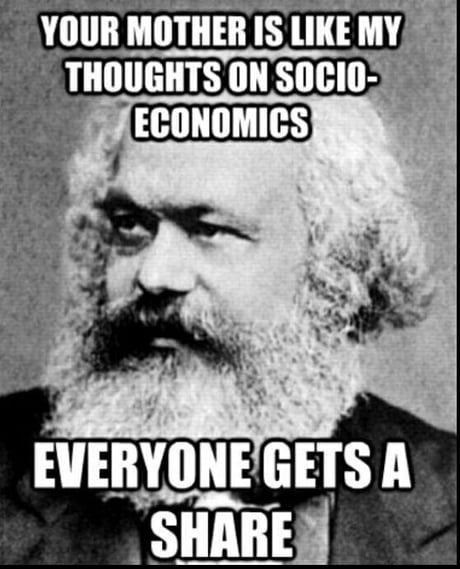
I'll probably get cancelled for this...🤷
June 26, 2025 at 11:51 PM
I'll probably get cancelled for this...🤷
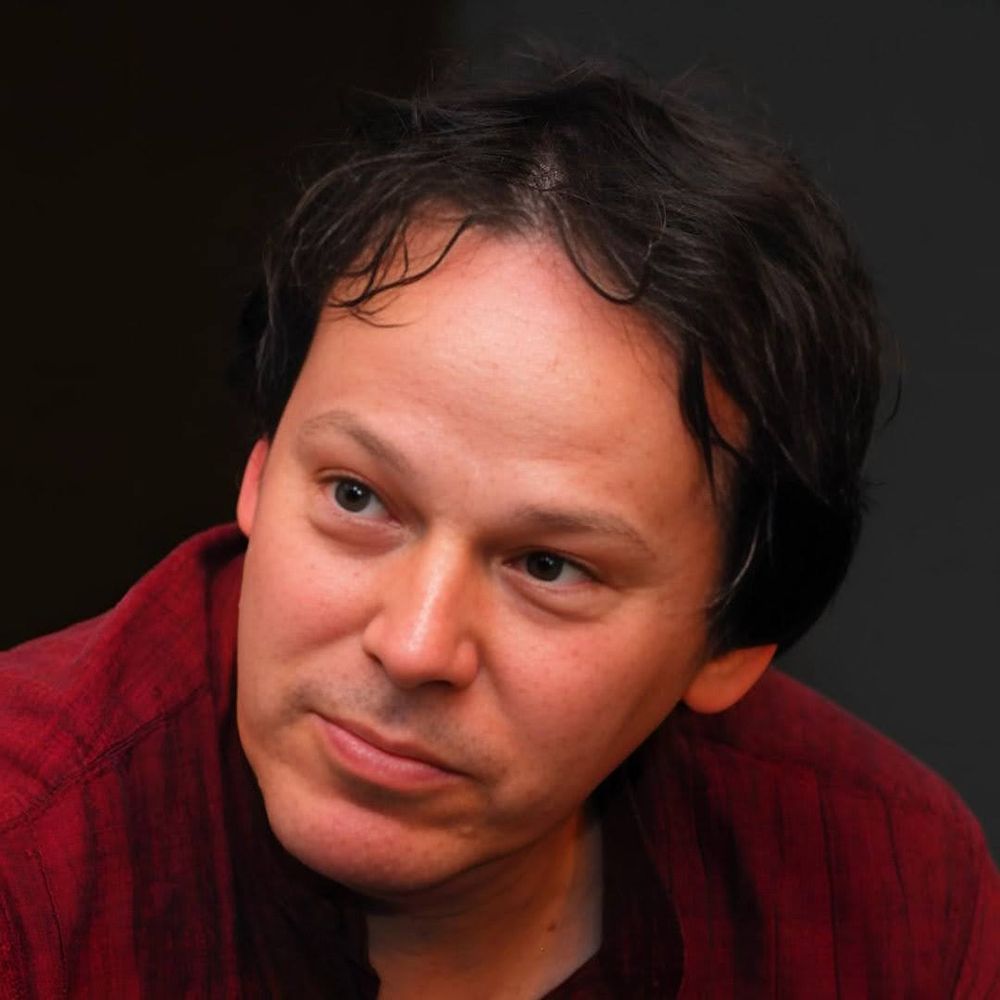
''Even a modest Basic Income program could become a stepping-stone toward the most profound transformation of all: to unlatch work from livelihood entirely.''
-David Graeber
-David Graeber
June 26, 2025 at 5:48 AM
''Even a modest Basic Income program could become a stepping-stone toward the most profound transformation of all: to unlatch work from livelihood entirely.''
-David Graeber
-David Graeber
"The decline of the West is not necessary or historically inevitable. It is the result of choosing policies dictated by its rentier interests."
-Michael Hudson
-Michael Hudson

June 25, 2025 at 3:01 PM
"The decline of the West is not necessary or historically inevitable. It is the result of choosing policies dictated by its rentier interests."
-Michael Hudson
-Michael Hudson
“Separate two of the most important issues regarding entitlements: the government’s financial ability to pay and our economy’s productive capacity to deliver promised real benefits.”
-Stephanie Kelton
-Stephanie Kelton

June 25, 2025 at 5:58 AM
“Separate two of the most important issues regarding entitlements: the government’s financial ability to pay and our economy’s productive capacity to deliver promised real benefits.”
-Stephanie Kelton
-Stephanie Kelton
"The myth that holds that the great corporation is the puppet of the market, the powerless servant of the consumer, is, in fact one of the devices by which its power is perpetuated."
-John Kenneth Galbraith
-John Kenneth Galbraith

June 24, 2025 at 4:19 PM
"The myth that holds that the great corporation is the puppet of the market, the powerless servant of the consumer, is, in fact one of the devices by which its power is perpetuated."
-John Kenneth Galbraith
-John Kenneth Galbraith
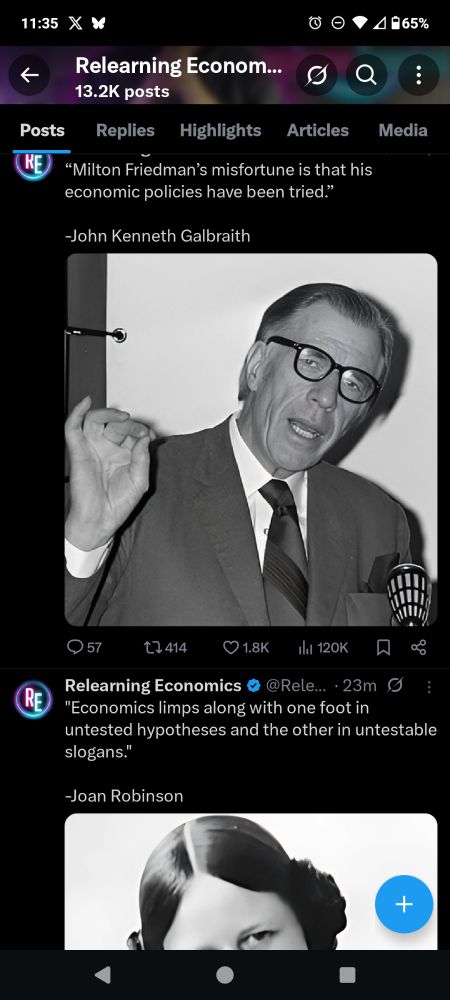
The vagueness is meant to make the reader think. These posts on Blue sky suck though because my account is shit small, but they pop on X.
June 24, 2025 at 6:37 AM
The vagueness is meant to make the reader think. These posts on Blue sky suck though because my account is shit small, but they pop on X.