



Rinus Rekkers
@rinusrekkers.bsky.social
Reposted by Rinus Rekkers
📷 This NASA/ESA #Hubble Space Telescope image reveals a vibrant star-forming region in the Small Magellanic Cloud, one of our Milky Way’s satellite galaxies🧪🔭
www.esa.int/ESA_Multimedia/Images/2025/04/Hubble_spots_stellar_sculptors_at_work_in_a_nearby_galaxy
@science.esa.int @stsci.edu
www.esa.int/ESA_Multimedia/Images/2025/04/Hubble_spots_stellar_sculptors_at_work_in_a_nearby_galaxy
@science.esa.int @stsci.edu

January 4, 2026 at 11:29 AM
📷 This NASA/ESA #Hubble Space Telescope image reveals a vibrant star-forming region in the Small Magellanic Cloud, one of our Milky Way’s satellite galaxies🧪🔭
www.esa.int/ESA_Multimedia/Images/2025/04/Hubble_spots_stellar_sculptors_at_work_in_a_nearby_galaxy
@science.esa.int @stsci.edu
www.esa.int/ESA_Multimedia/Images/2025/04/Hubble_spots_stellar_sculptors_at_work_in_a_nearby_galaxy
@science.esa.int @stsci.edu
Reposted by Rinus Rekkers

Let's start 2026 dancing! 🕺
This animation shows how Space Rider could fly to an orbital platform and deliver payloads using a robotic arm as well as retrieving other payloads to return them to Earth.
www.youtube.com/watch?v=mcJ6...
This animation shows how Space Rider could fly to an orbital platform and deliver payloads using a robotic arm as well as retrieving other payloads to return them to Earth.
www.youtube.com/watch?v=mcJ6...

Space Rider orbital ballet
YouTube video by ESA Extras
www.youtube.com
January 2, 2026 at 1:49 PM
Let's start 2026 dancing! 🕺
This animation shows how Space Rider could fly to an orbital platform and deliver payloads using a robotic arm as well as retrieving other payloads to return them to Earth.
www.youtube.com/watch?v=mcJ6...
This animation shows how Space Rider could fly to an orbital platform and deliver payloads using a robotic arm as well as retrieving other payloads to return them to Earth.
www.youtube.com/watch?v=mcJ6...
Reposted by Rinus Rekkers
📸 This NASA/ESA #Hubble Space Telescope image captures NGC 4449, a dwarf galaxy just 12.5 million light-years away from us that’s forming stars at an extraordinary rate 🧪🔭
www.esa.int/ESA_Multimed... @stsci.edu @science.esa.int
www.esa.int/ESA_Multimed... @stsci.edu @science.esa.int

January 2, 2026 at 12:04 PM
📸 This NASA/ESA #Hubble Space Telescope image captures NGC 4449, a dwarf galaxy just 12.5 million light-years away from us that’s forming stars at an extraordinary rate 🧪🔭
www.esa.int/ESA_Multimed... @stsci.edu @science.esa.int
www.esa.int/ESA_Multimed... @stsci.edu @science.esa.int
Reposted by Rinus Rekkers

Before we ring in the new year, let’s talk about the Ring Nebula. #NASAWebb observed this planetary nebula in 2022, showing its filamentary structure, hot gas, and arcs in great detail. The Ring Nebula is located approximately 2,500 light-years away.
Credit: ESA, NASA, CSA.
Credit: ESA, NASA, CSA.

December 30, 2025 at 6:14 PM
Before we ring in the new year, let’s talk about the Ring Nebula. #NASAWebb observed this planetary nebula in 2022, showing its filamentary structure, hot gas, and arcs in great detail. The Ring Nebula is located approximately 2,500 light-years away.
Credit: ESA, NASA, CSA.
Credit: ESA, NASA, CSA.
Reposted by Rinus Rekkers
This image of MACS 0416 from #NASAWebb and Hubble shows two galaxy clusters in the process of combining. Their mass magnifies the light from more distant background galaxies, helping astronomers identify distant supernovas and even individual stars: bit.ly/4qSNy5T 🔭

December 26, 2025 at 2:50 PM
This image of MACS 0416 from #NASAWebb and Hubble shows two galaxy clusters in the process of combining. Their mass magnifies the light from more distant background galaxies, helping astronomers identify distant supernovas and even individual stars: bit.ly/4qSNy5T 🔭
Reposted by Rinus Rekkers
🌟 Merry Christmas from a newborn star. Earlier this year the NASA/ESA/CSA #Webb Space Telescope took this stunning image of HH30, an edge-on protoplanetary disc. 🧪🔭
🔗 esa.int/Science_Exploration/Space_Science/Webb/Webb_investigates_a_dusty_and_dynamic_disc
🔗 esa.int/Science_Exploration/Space_Science/Webb/Webb_investigates_a_dusty_and_dynamic_disc

December 25, 2025 at 4:26 PM
🌟 Merry Christmas from a newborn star. Earlier this year the NASA/ESA/CSA #Webb Space Telescope took this stunning image of HH30, an edge-on protoplanetary disc. 🧪🔭
🔗 esa.int/Science_Exploration/Space_Science/Webb/Webb_investigates_a_dusty_and_dynamic_disc
🔗 esa.int/Science_Exploration/Space_Science/Webb/Webb_investigates_a_dusty_and_dynamic_disc
Reposted by Rinus Rekkers
Hubble has imaged the largest planet-forming disk ever seen! At 400 billion miles wide, it is roughly 40 times the diameter of our solar system. The disk is unexpectedly chaotic and turbulent, offering new insights into how planetary systems form: https://bit.ly/477sQ9b 🔭 🧪

December 23, 2025 at 2:07 PM
Hubble has imaged the largest planet-forming disk ever seen! At 400 billion miles wide, it is roughly 40 times the diameter of our solar system. The disk is unexpectedly chaotic and turbulent, offering new insights into how planetary systems form: https://bit.ly/477sQ9b 🔭 🧪
Reposted by Rinus Rekkers

🎄 Are your holiday decorations ready? Euclid has a cosmic garland to add: NGC 646.
The large barred spiral galaxy appears close to a smaller galaxy to the left, but they’re actually about 45 million light-years apart 👉 https://www.esa.int/ESA_Multimedia/Images/2025/12/Euclid_s_galaxy_garland
🔭
The large barred spiral galaxy appears close to a smaller galaxy to the left, but they’re actually about 45 million light-years apart 👉 https://www.esa.int/ESA_Multimedia/Images/2025/12/Euclid_s_galaxy_garland
🔭

December 22, 2025 at 1:10 PM
🎄 Are your holiday decorations ready? Euclid has a cosmic garland to add: NGC 646.
The large barred spiral galaxy appears close to a smaller galaxy to the left, but they’re actually about 45 million light-years apart 👉 https://www.esa.int/ESA_Multimedia/Images/2025/12/Euclid_s_galaxy_garland
🔭
The large barred spiral galaxy appears close to a smaller galaxy to the left, but they’re actually about 45 million light-years apart 👉 https://www.esa.int/ESA_Multimedia/Images/2025/12/Euclid_s_galaxy_garland
🔭
Reposted by Rinus Rekkers
📷 This NASA/ESA #Hubble Space Telescope image shows galaxies MCG-02-05-050a (left) and MCG-02-05-050, collectively called Arp 4. But this pairing is simply an unlikely visual coincidence... 🧪🔭
🔗 esahubble.org/images/potw2... @stsci.edu
🔗 esahubble.org/images/potw2... @stsci.edu

December 22, 2025 at 9:13 AM
📷 This NASA/ESA #Hubble Space Telescope image shows galaxies MCG-02-05-050a (left) and MCG-02-05-050, collectively called Arp 4. But this pairing is simply an unlikely visual coincidence... 🧪🔭
🔗 esahubble.org/images/potw2... @stsci.edu
🔗 esahubble.org/images/potw2... @stsci.edu
Reposted by Rinus Rekkers
Today is the December solstice at 15:03 GMT/16:03 CET.
This @eumetsat.int MTG‑I1 image from 19 December 2025, 06:00 GMT, shows Earth’s day–night terminator tilted near its annual maximum of about 23.5°.
This @eumetsat.int MTG‑I1 image from 19 December 2025, 06:00 GMT, shows Earth’s day–night terminator tilted near its annual maximum of about 23.5°.

December 21, 2025 at 11:26 AM
Today is the December solstice at 15:03 GMT/16:03 CET.
This @eumetsat.int MTG‑I1 image from 19 December 2025, 06:00 GMT, shows Earth’s day–night terminator tilted near its annual maximum of about 23.5°.
This @eumetsat.int MTG‑I1 image from 19 December 2025, 06:00 GMT, shows Earth’s day–night terminator tilted near its annual maximum of about 23.5°.
Reposted by Rinus Rekkers

Komeet 3I/Atlas die vandaag de Aarde passeert is pas de derde bekende interstellaire komeet en daarom erg instant voor komeetonderzoekers. Niet met het blote oog te zien, maar wel met een telescoop en mogelijk met de verrekijker.
www.rd.nl/artikel/1132...
www.rd.nl/artikel/1132...

Roemruchte komeet 3I/Atlas passeert aarde, en is te zien met een telescoop, verrekijker of via livestream
Kometenjagers kunnen hun verrekijker of telescoop alvast afstoffen. Vrijdag passeert komeet 3I/Atlas de aarde. Een livestream is er ook.
www.rd.nl
December 19, 2025 at 12:36 PM
Komeet 3I/Atlas die vandaag de Aarde passeert is pas de derde bekende interstellaire komeet en daarom erg instant voor komeetonderzoekers. Niet met het blote oog te zien, maar wel met een telescoop en mogelijk met de verrekijker.
www.rd.nl/artikel/1132...
www.rd.nl/artikel/1132...
Reposted by Rinus Rekkers
🆕 This NASA/ESA/CSA #Webb Space Telescope image shows the Westerlund 2 star cluster. 🧪🔭
🔗 esa.int/ESA_Multimedia/Images/2025/12/Webb_Dwarf_stars_in_a_glittering_sky
@science.esa.int @stsci.edu
🔗 esa.int/ESA_Multimedia/Images/2025/12/Webb_Dwarf_stars_in_a_glittering_sky
@science.esa.int @stsci.edu

December 19, 2025 at 9:15 AM
🆕 This NASA/ESA/CSA #Webb Space Telescope image shows the Westerlund 2 star cluster. 🧪🔭
🔗 esa.int/ESA_Multimedia/Images/2025/12/Webb_Dwarf_stars_in_a_glittering_sky
@science.esa.int @stsci.edu
🔗 esa.int/ESA_Multimedia/Images/2025/12/Webb_Dwarf_stars_in_a_glittering_sky
@science.esa.int @stsci.edu
Reposted by Rinus Rekkers
While we publish new images and stories almost around the clock, it is nice to take a step back and spend time on some of the most exciting moments of 2025.
Scroll through @esa.int's Highlights 2025 👇
esamultimedia.esa.int/docs/corpora...
Scroll through @esa.int's Highlights 2025 👇
esamultimedia.esa.int/docs/corpora...
December 18, 2025 at 2:27 PM
While we publish new images and stories almost around the clock, it is nice to take a step back and spend time on some of the most exciting moments of 2025.
Scroll through @esa.int's Highlights 2025 👇
esamultimedia.esa.int/docs/corpora...
Scroll through @esa.int's Highlights 2025 👇
esamultimedia.esa.int/docs/corpora...
Reposted by Rinus Rekkers

Enjoy this trip to NGC 1850, a cluster of stars in the Large Magellanic Cloud.
This cluster harbours the first small black hole outside of our galaxy to be discovered by looking at its gravitational influence on the path of the star orbiting it
Read more: https://www.eso.org/public/news/eso2116/ 🔭
This cluster harbours the first small black hole outside of our galaxy to be discovered by looking at its gravitational influence on the path of the star orbiting it
Read more: https://www.eso.org/public/news/eso2116/ 🔭
December 17, 2025 at 1:07 PM
Enjoy this trip to NGC 1850, a cluster of stars in the Large Magellanic Cloud.
This cluster harbours the first small black hole outside of our galaxy to be discovered by looking at its gravitational influence on the path of the star orbiting it
Read more: https://www.eso.org/public/news/eso2116/ 🔭
This cluster harbours the first small black hole outside of our galaxy to be discovered by looking at its gravitational influence on the path of the star orbiting it
Read more: https://www.eso.org/public/news/eso2116/ 🔭
Reposted by Rinus Rekkers

🚯 To clean up orbits around Earth, we first need to identify and approach individual pieces of space debris. 🛰️ Two companies from Luxembourg are developing the eyes 👀 for satellites to be able to do just that 👉 www.esa.int/ESA_Multimed...

December 10, 2025 at 11:44 AM
🚯 To clean up orbits around Earth, we first need to identify and approach individual pieces of space debris. 🛰️ Two companies from Luxembourg are developing the eyes 👀 for satellites to be able to do just that 👉 www.esa.int/ESA_Multimed...
Reposted by Rinus Rekkers
Another #NASAWebb record breaker: a supernova that existed only 730 million years after the big bang! Learn how Webb delivered the conclusive evidence when it followed up on a fleeting event known as a gamma-ray burst: https://bit.ly/3Y782ul 🔭 🧪

December 9, 2025 at 4:03 PM
Another #NASAWebb record breaker: a supernova that existed only 730 million years after the big bang! Learn how Webb delivered the conclusive evidence when it followed up on a fleeting event known as a gamma-ray burst: https://bit.ly/3Y782ul 🔭 🧪
Reposted by Rinus Rekkers
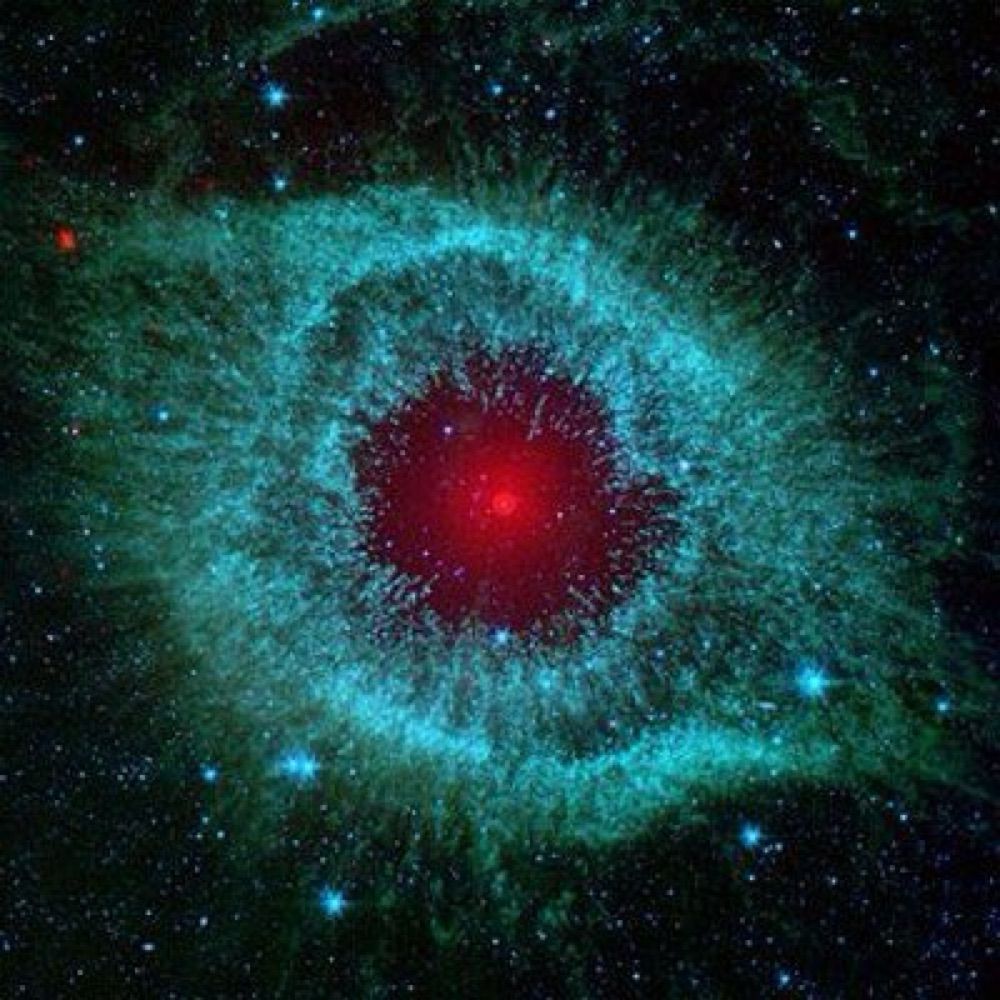
Veel meteoren bij Geminiden-sterrenregen in de nacht van 13 op 14 december
www.astronomie.nl/nieuws/veel-...
www.astronomie.nl/nieuws/veel-...

Veel meteoren bij Geminiden-sterrenregen in de nacht van 13 op 14 december
www.astronomie.nl
December 4, 2025 at 1:05 PM
Veel meteoren bij Geminiden-sterrenregen in de nacht van 13 op 14 december
www.astronomie.nl/nieuws/veel-...
www.astronomie.nl/nieuws/veel-...
Reposted by Rinus Rekkers
🌞🛰️Sun-watcher SOHO turns 30! 🎂
"SOHO has overcome nail-biting challenges to become one of the longest-operating space missions of all time" – Prof. @cmundell.esa.int , ESA Director of Science
👉 www.esa.int/Science_Expl...
🔭🧪
"SOHO has overcome nail-biting challenges to become one of the longest-operating space missions of all time" – Prof. @cmundell.esa.int , ESA Director of Science
👉 www.esa.int/Science_Expl...
🔭🧪
December 2, 2025 at 10:03 AM
🌞🛰️Sun-watcher SOHO turns 30! 🎂
"SOHO has overcome nail-biting challenges to become one of the longest-operating space missions of all time" – Prof. @cmundell.esa.int , ESA Director of Science
👉 www.esa.int/Science_Expl...
🔭🧪
"SOHO has overcome nail-biting challenges to become one of the longest-operating space missions of all time" – Prof. @cmundell.esa.int , ESA Director of Science
👉 www.esa.int/Science_Expl...
🔭🧪
Reposted by Rinus Rekkers
Star power! ✨ This 2023 #NASAWebb image shows globular cluster NGC 6440, a dense collection of old stars bound together by gravity. NGC 6440 is an intriguing environment to study because of its location near our galaxy’s central region. Credit: ESA, NASA & CSA, P. Freire. 🔭 🧪

November 28, 2025 at 3:02 PM
Star power! ✨ This 2023 #NASAWebb image shows globular cluster NGC 6440, a dense collection of old stars bound together by gravity. NGC 6440 is an intriguing environment to study because of its location near our galaxy’s central region. Credit: ESA, NASA & CSA, P. Freire. 🔭 🧪
Reposted by Rinus Rekkers
Saturn's moon #Enceladus is a top target for us in our #Voyage2050 long-term planning period.
No space agency has ever landed on Enceladus. And yet this moon has enormous potential for new science, particularly in the realm of habitability.
1/ #CM25 🔭
No space agency has ever landed on Enceladus. And yet this moon has enormous potential for new science, particularly in the realm of habitability.
1/ #CM25 🔭

November 21, 2025 at 1:11 PM
Saturn's moon #Enceladus is a top target for us in our #Voyage2050 long-term planning period.
No space agency has ever landed on Enceladus. And yet this moon has enormous potential for new science, particularly in the realm of habitability.
1/ #CM25 🔭
No space agency has ever landed on Enceladus. And yet this moon has enormous potential for new science, particularly in the realm of habitability.
1/ #CM25 🔭
Reposted by Rinus Rekkers
📷 This NASA/ESA #Hubble Space Telescope image shows a gigantic cloud of cold hydrogen gas called N159. It's one of the largest star-forming clouds in the Large Magellanic Cloud, neighbouring our galaxy. 🧪🔭
esahubble.org/images/potw2...
@science.esa.int @stsci.edu
esahubble.org/images/potw2...
@science.esa.int @stsci.edu

November 24, 2025 at 4:25 PM
📷 This NASA/ESA #Hubble Space Telescope image shows a gigantic cloud of cold hydrogen gas called N159. It's one of the largest star-forming clouds in the Large Magellanic Cloud, neighbouring our galaxy. 🧪🔭
esahubble.org/images/potw2...
@science.esa.int @stsci.edu
esahubble.org/images/potw2...
@science.esa.int @stsci.edu
Reposted by Rinus Rekkers
⭐️This is Goal 3: Strengthen European autonomy and resilience
Decisions made during #CM25 will advance our Strategy 2040, which focuses on five goals to show how important space is for European citizens.
www.youtube.com/watch?v=nVGe...
Decisions made during #CM25 will advance our Strategy 2040, which focuses on five goals to show how important space is for European citizens.
www.youtube.com/watch?v=nVGe...

Goal 3: Strengthen European Autonomy and Resilience
YouTube video by ESA Extras
www.youtube.com
November 21, 2025 at 2:22 PM
⭐️This is Goal 3: Strengthen European autonomy and resilience
Decisions made during #CM25 will advance our Strategy 2040, which focuses on five goals to show how important space is for European citizens.
www.youtube.com/watch?v=nVGe...
Decisions made during #CM25 will advance our Strategy 2040, which focuses on five goals to show how important space is for European citizens.
www.youtube.com/watch?v=nVGe...
Reposted by Rinus Rekkers
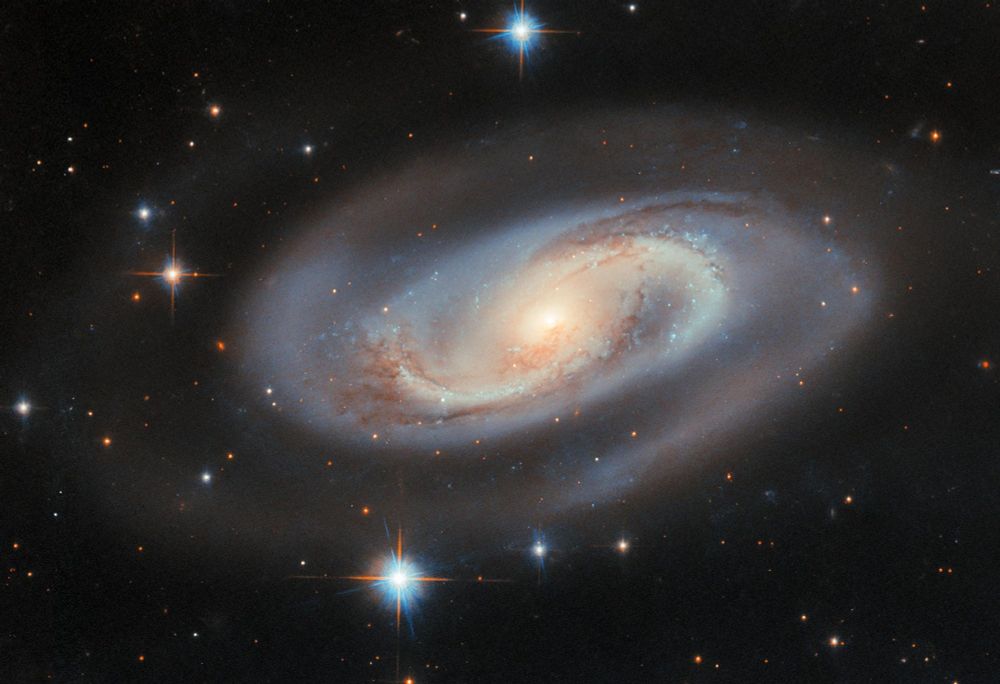
Stare into the depths of space with Hubble! At top- and bottom-center are two blue nearby stars. The enormous spiral galaxy UGC 11397 is 250 million light-years away. Many far more distant galaxies show up as orange and red dots. Credit: NASA, ESA. 🔭 🧪
November 21, 2025 at 2:46 PM
Stare into the depths of space with Hubble! At top- and bottom-center are two blue nearby stars. The enormous spiral galaxy UGC 11397 is 250 million light-years away. Many far more distant galaxies show up as orange and red dots. Credit: NASA, ESA. 🔭 🧪
Reposted by Rinus Rekkers
Comet 3I/ATLAS is only the third object ever identified as entering our solar system from elsewhere in the galaxy. NASA will host a live event at 3 p.m. EST, Wednesday, Nov. 19, to share imagery of the interstellar comet 3I/ATLAS collected by a number of the agency’s missions. 🔭 🧪

NASA Shares Interstellar Comet 3I/ATLAS Images - NASA+
Live event to share imagery of the interstellar comet 3I/ATLAS collected by a number of the agency's missions.
plus.nasa.gov
November 18, 2025 at 4:24 PM
Comet 3I/ATLAS is only the third object ever identified as entering our solar system from elsewhere in the galaxy. NASA will host a live event at 3 p.m. EST, Wednesday, Nov. 19, to share imagery of the interstellar comet 3I/ATLAS collected by a number of the agency’s missions. 🔭 🧪
Reposted by Rinus Rekkers
This #NASAWebb image features a cosmic creepy-crawly called NGC 6537—the Red Spider Nebula. Using its Near-InfraRed Camera, Webb has revealed never-before-seen details in this picturesque planetary nebula with a rich backdrop of thousands of stars. 🔭 🧪

Cosmic Creepy-Crawly NGC 6537 -- James Webb Space Telescope #shorts
This new James Webb Space Telescope image features a cosmic creepy-crawly called NGC 6537--the Red Spider Nebula. Using its Near-InfraRed Camera (NIRCam), Webb has revealed never-before-seen details in this picturesque planetary nebula with a rich backd...
youtube.com
November 17, 2025 at 5:10 PM
This #NASAWebb image features a cosmic creepy-crawly called NGC 6537—the Red Spider Nebula. Using its Near-InfraRed Camera, Webb has revealed never-before-seen details in this picturesque planetary nebula with a rich backdrop of thousands of stars. 🔭 🧪