


Roos Lab
@roos-lab.bsky.social
Wouter H. Roos, Professor, Chair of Molecular Biophysics lab @ Zernike Institute of the Rijksuniversiteit Groningen
Reposted by Roos Lab

Another academic year, another NWO Physics of Life newsletter!
Check it out 👇
nwobiophysics.nl/newsletters
> Interview with former chair Kristina Ganzinger (AMOLF) and our new chair Kristin Grußmayer @tudelfttnw.bsky.social
> Biosketch by Lisa Tran @utrechtuniversity.bsky.social
> and more..
Check it out 👇
nwobiophysics.nl/newsletters
> Interview with former chair Kristina Ganzinger (AMOLF) and our new chair Kristin Grußmayer @tudelfttnw.bsky.social
> Biosketch by Lisa Tran @utrechtuniversity.bsky.social
> and more..

September 4, 2025 at 2:55 PM
Another academic year, another NWO Physics of Life newsletter!
Check it out 👇
nwobiophysics.nl/newsletters
> Interview with former chair Kristina Ganzinger (AMOLF) and our new chair Kristin Grußmayer @tudelfttnw.bsky.social
> Biosketch by Lisa Tran @utrechtuniversity.bsky.social
> and more..
Check it out 👇
nwobiophysics.nl/newsletters
> Interview with former chair Kristina Ganzinger (AMOLF) and our new chair Kristin Grußmayer @tudelfttnw.bsky.social
> Biosketch by Lisa Tran @utrechtuniversity.bsky.social
> and more..
Reposted by Roos Lab
Join us for the European Researchers' Night 2025 in Forum Groningen 🙌
Everybody is welcome, whether you are a researcher, student or just interested in all kinds of science 🧪
Get your tickets now 🎟️
forum.nl/nl/agenda/eu...
Everybody is welcome, whether you are a researcher, student or just interested in all kinds of science 🧪
Get your tickets now 🎟️
forum.nl/nl/agenda/eu...
September 10, 2025 at 7:49 AM
Join us for the European Researchers' Night 2025 in Forum Groningen 🙌
Everybody is welcome, whether you are a researcher, student or just interested in all kinds of science 🧪
Get your tickets now 🎟️
forum.nl/nl/agenda/eu...
Everybody is welcome, whether you are a researcher, student or just interested in all kinds of science 🧪
Get your tickets now 🎟️
forum.nl/nl/agenda/eu...
Reposted by Roos Lab
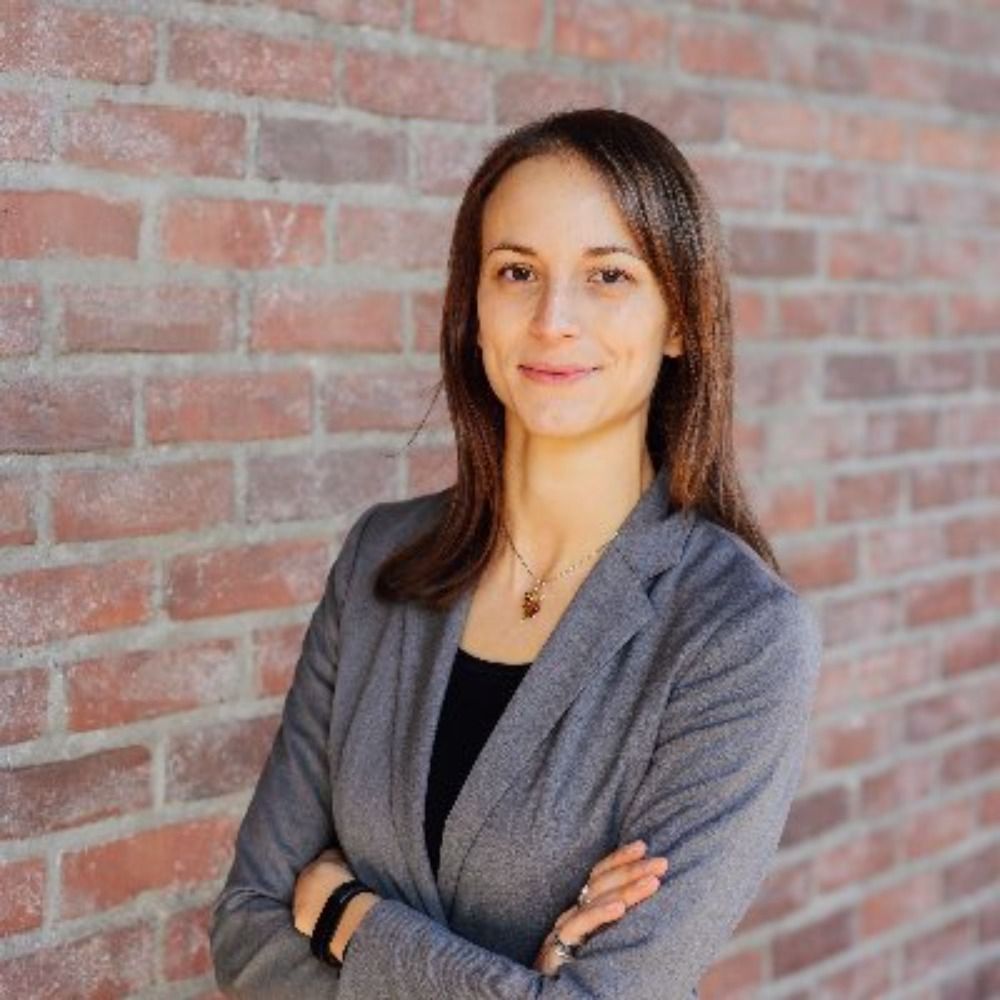
Great to have @thedneva.bsky.social here in Groningen presenting at the GBB symposium! Can't wait to see all that you can do with DNA origami!

September 12, 2025 at 12:13 PM
Great to have @thedneva.bsky.social here in Groningen presenting at the GBB symposium! Can't wait to see all that you can do with DNA origami!
September 12, 2025 at 2:57 PM
Vandaag is bekend gemaakt dat de #ERC een Advanced grant aan mij heeft toegekend. Heel mooi nieuws! Ik kijk ernaar uit om mijn onderzoek over "Label-free assembly of RNA-containing viruses" te beginnen.

June 17, 2025 at 8:49 PM
Vandaag is bekend gemaakt dat de #ERC een Advanced grant aan mij heeft toegekend. Heel mooi nieuws! Ik kijk ernaar uit om mijn onderzoek over "Label-free assembly of RNA-containing viruses" te beginnen.
Reposted by Roos Lab
Great news! Wouter Roos, Syuzanna Harutyunyan and Inga Kamp (FSE/@sciencenewsroom-ug.bsky.social) each receive an @erc.europa.eu Advanced grant of up to €2.5 million. Congratulations! 👏
Read more about the research the grants were awarded for 👇
www.rug.nl/news/2025/06...
Read more about the research the grants were awarded for 👇
www.rug.nl/news/2025/06...

June 17, 2025 at 10:28 AM
Great news! Wouter Roos, Syuzanna Harutyunyan and Inga Kamp (FSE/@sciencenewsroom-ug.bsky.social) each receive an @erc.europa.eu Advanced grant of up to €2.5 million. Congratulations! 👏
Read more about the research the grants were awarded for 👇
www.rug.nl/news/2025/06...
Read more about the research the grants were awarded for 👇
www.rug.nl/news/2025/06...
Reposted by Roos Lab

€721 million in @erc.europa.eu Advanced Grants has been awarded to 281 leading researchers across Europe.
From AI to cancer prevention and space exploration, we are investing in Europe’s most cutting-edge science.
Europe remains committed to excellence and global talent. ↓
From AI to cancer prevention and space exploration, we are investing in Europe’s most cutting-edge science.
Europe remains committed to excellence and global talent. ↓

June 17, 2025 at 2:37 PM
€721 million in @erc.europa.eu Advanced Grants has been awarded to 281 leading researchers across Europe.
From AI to cancer prevention and space exploration, we are investing in Europe’s most cutting-edge science.
Europe remains committed to excellence and global talent. ↓
From AI to cancer prevention and space exploration, we are investing in Europe’s most cutting-edge science.
Europe remains committed to excellence and global talent. ↓
Just back from the final MOSBRI meeting at Institut Pasteur in Paris.
www.mosbri.eu/events/confe...
Great organisation and great meeting again! The EU should continue funding these important INFRAIA projects!
www.mosbri.eu/events/confe...
Great organisation and great meeting again! The EU should continue funding these important INFRAIA projects!
June 15, 2025 at 7:07 PM
Just back from the final MOSBRI meeting at Institut Pasteur in Paris.
www.mosbri.eu/events/confe...
Great organisation and great meeting again! The EU should continue funding these important INFRAIA projects!
www.mosbri.eu/events/confe...
Great organisation and great meeting again! The EU should continue funding these important INFRAIA projects!
New results: We used HS-AFM to visualize in real-time secondary nucleation on amyloid fibers that play a role huntington's disease. This collaborative work with the Patrick van der Wel lab was just published in JACS. doi.org/10.1021/jacs...

Direct Observation of Secondary Nucleation in Huntingtin Amyloid Formation by High-Speed Atomic Force Microscopy
Amyloid fibril formation is a hallmark of various neurodegenerative diseases such as Huntington’s (HD), Alzheimer’s, and Parkinson’s disease. The protein aggregation process involves slow nucleation events followed by rapid growth and elongation of formed fibrils. Understanding the pathways of amyloid formation is key to development of novel therapeutic agents that can interfere with the pathogenic protein misfolding events. Recent studies of aggregation by polypeptides from Alzheimer’s and Huntington’s disease have identified the importance of a poorly understood secondary nucleation process that may even be the dominant source of protein aggregate formation. Here, we focus on the polyglutamine-expansion disorder HD and employ mechanistic and structural studies to study different aspects of secondary nucleation in the aggregation of huntingtin Exon 1 (HttEx1). Notably, we apply high-speed atomic force microscopy (HS-AFM) to directly observe the process on the single-particle level and in real time. Our observations show unique features of the amyloid formation dynamics in real time, including secondary nucleation, elongation, and the formation of large bundles of fibrils as a result of nucleated branching. We examine the role of HttEx1 flanking segments during the aggregation process, revealing that the N-terminal HttNT segment exhibits a clear primary nucleation-aggregation-enhancing ability; however, it does not seem to induce or affect the secondary nucleation process. The obtained results illuminate the complex aggregation process of HttEx1 and have implications for attempts to inhibit or modulate it for therapeutic purposes.
doi.org
June 13, 2025 at 1:40 PM
New results: We used HS-AFM to visualize in real-time secondary nucleation on amyloid fibers that play a role huntington's disease. This collaborative work with the Patrick van der Wel lab was just published in JACS. doi.org/10.1021/jacs...