




Daniel Burke, PhD
@sabaophd.bsky.social
PhD, MSc, MBS, BSc
Researcher focusing on the economics for a healthy society & green sustainable communities
ResearchGate: https://www.researchgate.net/profile/Daniel-Burke-12
Researcher focusing on the economics for a healthy society & green sustainable communities
ResearchGate: https://www.researchgate.net/profile/Daniel-Burke-12
• Many “native” island species arrived naturally via storms and driftwood.
• Marine species cross oceans via currents long before we call them “invasive.”
• Marine species cross oceans via currents long before we call them “invasive.”
November 22, 2025 at 9:04 PM
• Many “native” island species arrived naturally via storms and driftwood.
• Marine species cross oceans via currents long before we call them “invasive.”
• Marine species cross oceans via currents long before we call them “invasive.”
• Feral horses: can reduce wildfire fuel loads in parts of North America and compress soil.
• Gorse (NZ): now a “nurse plant” helping native forests regenerate.
• Prickly pear (E. Africa): drought-resistant forage in overgrazed, famine-prone areas.
• Gorse (NZ): now a “nurse plant” helping native forests regenerate.
• Prickly pear (E. Africa): drought-resistant forage in overgrazed, famine-prone areas.
November 22, 2025 at 9:04 PM
• Feral horses: can reduce wildfire fuel loads in parts of North America and compress soil.
• Gorse (NZ): now a “nurse plant” helping native forests regenerate.
• Prickly pear (E. Africa): drought-resistant forage in overgrazed, famine-prone areas.
• Gorse (NZ): now a “nurse plant” helping native forests regenerate.
• Prickly pear (E. Africa): drought-resistant forage in overgrazed, famine-prone areas.
• European honeybees: major pollinators where native pollinators have collapsed.
• Tamarisk: key nesting habitat for endangered southwestern willow flycatchers where native trees are gone.
• Red-eared sliders: one of the few remaining seed dispersers in degraded Asian wetlands.
• Tamarisk: key nesting habitat for endangered southwestern willow flycatchers where native trees are gone.
• Red-eared sliders: one of the few remaining seed dispersers in degraded Asian wetlands.
November 22, 2025 at 9:04 PM
• European honeybees: major pollinators where native pollinators have collapsed.
• Tamarisk: key nesting habitat for endangered southwestern willow flycatchers where native trees are gone.
• Red-eared sliders: one of the few remaining seed dispersers in degraded Asian wetlands.
• Tamarisk: key nesting habitat for endangered southwestern willow flycatchers where native trees are gone.
• Red-eared sliders: one of the few remaining seed dispersers in degraded Asian wetlands.
No one disputes invasive species drive biodiversity loss. Ecology is complex, and in many altered landscapes, introduced species now play stabilising roles. Sometimes removing them does more harm than good.
Invasive species can be harmful—but treating every case the same isn’t science, it’s dogma.
Invasive species can be harmful—but treating every case the same isn’t science, it’s dogma.
November 22, 2025 at 9:04 PM
No one disputes invasive species drive biodiversity loss. Ecology is complex, and in many altered landscapes, introduced species now play stabilising roles. Sometimes removing them does more harm than good.
Invasive species can be harmful—but treating every case the same isn’t science, it’s dogma.
Invasive species can be harmful—but treating every case the same isn’t science, it’s dogma.
After all, when is the bench mark we’re aiming for? 1500 AD? 5000 BC? Pre- the last glacier maximum?
November 18, 2025 at 9:18 PM
After all, when is the bench mark we’re aiming for? 1500 AD? 5000 BC? Pre- the last glacier maximum?
Should the European honeybee (white man’s flys) and earthworms be removed from North America?
Instead of villainising specific flora and fauna, we should work on ways to make the environment more resilient (perhaps even incorporating the “alien” species).
Instead of villainising specific flora and fauna, we should work on ways to make the environment more resilient (perhaps even incorporating the “alien” species).
November 18, 2025 at 9:18 PM
Should the European honeybee (white man’s flys) and earthworms be removed from North America?
Instead of villainising specific flora and fauna, we should work on ways to make the environment more resilient (perhaps even incorporating the “alien” species).
Instead of villainising specific flora and fauna, we should work on ways to make the environment more resilient (perhaps even incorporating the “alien” species).
But it can be argued that the rhododendrons are fulfilling a niche that was lost/never present - “their success is information of the ecosystem state; not their evil nature.”
The other key takeaway is the use of “invasive”, as the term is loaded with judgement/fear and to avoid being a eco-purist.
The other key takeaway is the use of “invasive”, as the term is loaded with judgement/fear and to avoid being a eco-purist.
November 18, 2025 at 9:18 PM
But it can be argued that the rhododendrons are fulfilling a niche that was lost/never present - “their success is information of the ecosystem state; not their evil nature.”
The other key takeaway is the use of “invasive”, as the term is loaded with judgement/fear and to avoid being a eco-purist.
The other key takeaway is the use of “invasive”, as the term is loaded with judgement/fear and to avoid being a eco-purist.
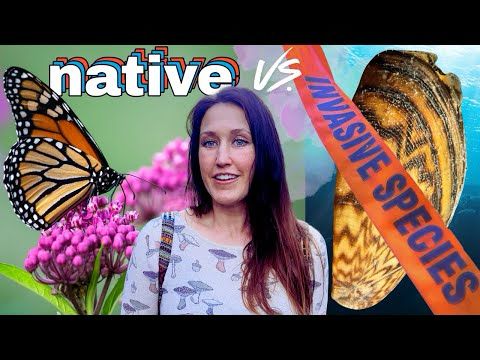
I WAS WRONG ABOUT EVERYTHING: A Biologist's Confession
YouTube video by WILD ATOMS
youtu.be
November 18, 2025 at 6:19 PM

Progress depends on five areas:
👉Innovation & R&D
👉 Better regulation & institutions
👉Credible markets for circular products
👉Public awareness
👉Equity in who bears costs and who benefits
A great read for anyone working at the intersection of sustainability, agriculture, and the bioeconomy!
👉Innovation & R&D
👉 Better regulation & institutions
👉Credible markets for circular products
👉Public awareness
👉Equity in who bears costs and who benefits
A great read for anyone working at the intersection of sustainability, agriculture, and the bioeconomy!
November 18, 2025 at 12:53 PM
Progress depends on five areas:
👉Innovation & R&D
👉 Better regulation & institutions
👉Credible markets for circular products
👉Public awareness
👉Equity in who bears costs and who benefits
A great read for anyone working at the intersection of sustainability, agriculture, and the bioeconomy!
👉Innovation & R&D
👉 Better regulation & institutions
👉Credible markets for circular products
👉Public awareness
👉Equity in who bears costs and who benefits
A great read for anyone working at the intersection of sustainability, agriculture, and the bioeconomy!
Key takeaways:
We need a social cost–benefit approach to determine realistic, sustainable levels of circularity and that linear systems persist due to market failures, policy gaps, and infrastructure lock-in.
We need a social cost–benefit approach to determine realistic, sustainable levels of circularity and that linear systems persist due to market failures, policy gaps, and infrastructure lock-in.
November 18, 2025 at 12:53 PM
Key takeaways:
We need a social cost–benefit approach to determine realistic, sustainable levels of circularity and that linear systems persist due to market failures, policy gaps, and infrastructure lock-in.
We need a social cost–benefit approach to determine realistic, sustainable levels of circularity and that linear systems persist due to market failures, policy gaps, and infrastructure lock-in.
The researchers show that economic incentives, market structures, and social behaviours often determine whether circular practices (e.g., recycling nutrients, reducing waste, or producing bio-based products) actually take hold.
November 18, 2025 at 12:53 PM
The researchers show that economic incentives, market structures, and social behaviours often determine whether circular practices (e.g., recycling nutrients, reducing waste, or producing bio-based products) actually take hold.