




Chise
@sailorrooscout.bsky.social
Senior Scientist | Vaccine Research & Development | NIH | NIAID | VRC | 🧬🧫🦠🔬💉🥼🥽 | 🏳️🌈 | @coralchimera.bsky.social 💍 | @phoenixnest.bsky.social & @multicolorbark.com & @likeapalette.com 🧵🪡
vaccinated were still 24% LESS LIKELY to die of any cause during the follow-up period. According to researchers, although vaccinated individuals in their study were generally older and tended to have more comorbidities (factors that would typically bias the association toward higher mortality in the


December 11, 2025 at 5:06 PM
vaccinated were still 24% LESS LIKELY to die of any cause during the follow-up period. According to researchers, although vaccinated individuals in their study were generally older and tended to have more comorbidities (factors that would typically bias the association toward higher mortality in the
incidence was 25% LOWER in those who had received an mRNA vaccine. Vaccinated individuals were 74% less likely to die in a hospital because of COVID-19 compared with those who weren't vaccinated. Even when those COVID-related hospital deaths were EXCLUDED from the analysis, individuals who'd been

December 11, 2025 at 5:05 PM
incidence was 25% LOWER in those who had received an mRNA vaccine. Vaccinated individuals were 74% less likely to die in a hospital because of COVID-19 compared with those who weren't vaccinated. Even when those COVID-related hospital deaths were EXCLUDED from the analysis, individuals who'd been
Overall mortality in unvaccinated individuals was roughly 50% HIGHER. The advantage held even after removing coronavirus-related deaths from the mix.
The study has been published in JAMA. YES, it is PEER-REVIEWED.
• jamanetwork.com/journals/jam...
🧪🧵⬇️
The study has been published in JAMA. YES, it is PEER-REVIEWED.
• jamanetwork.com/journals/jam...
🧪🧵⬇️


![Results
A total of 22767 546 vaccinated and 5932 443
unvaccinated individuals were followed up for a median
(IQR) of 45 (44-46) months. Vaccinated individuals were older than unvaccinated individuals (mean [SD] age, 38.0 [11.8] years vs 37.1 [11.4] years), more frequently women (11688 603 [51.3%] vs 2 876039 [48.5%]) and had more cardiometabolic comorbidities (2126 250 [9.3%] vs 464596 [7.8%]). During follow-up, 98 429 (0.4%) and 32 662 (0.6%) all-cause deaths occurred in the vaccinated and unvaccinated groups, respectively. Vaccinated individuals had a 74% lower risk of death from severe COVID-19 (weighted hazard ratio [wHR], 0.26 [95% CI, 0.22-0.30]) and a 25% lower risk of all-cause mortality (wHR, 0.75 [95% CI, 0.75-0.761), with a similar association observed when excluding severe COVID-19 death. Sensitivity analysis revealed that vaccinated individuals consistently had a lower risk of death, regardless of the cause. Mortality was 29% lower within 6 months following COVID-19 vaccination (relative incidence, 0.71 [95% CI,
0.69-0.731).
Conclusions and Relevance
In this national cohort study of 28 million individuals, the results found no increased risk of 4-year all-cause mortality in individuals aged 18 to 59 years vaccinated against COVID-19, further supporting the safety of the mRNA vaccines that are widely used worldwide.](https://cdn.bsky.app/img/feed_thumbnail/plain/did:plc:llgfbjvsqkaicezsf7mzjxr3/bafkreif44wwepcmgxifxw65og5zwlam52jninuuxqclixetudn2oi57yyy@jpeg)
December 11, 2025 at 5:02 PM
Overall mortality in unvaccinated individuals was roughly 50% HIGHER. The advantage held even after removing coronavirus-related deaths from the mix.
The study has been published in JAMA. YES, it is PEER-REVIEWED.
• jamanetwork.com/journals/jam...
🧪🧵⬇️
The study has been published in JAMA. YES, it is PEER-REVIEWED.
• jamanetwork.com/journals/jam...
🧪🧵⬇️
a form developed from tumor lysate -inactive cancer cells from actual tumors- to mimic the complex mixture of proteins in human cancers. The vaccine was shown to protect against a number of different types: 88% of mice from pancreatic cancer, 75% from breast cancer, and 69% from melanoma. The

December 9, 2025 at 5:13 PM
a form developed from tumor lysate -inactive cancer cells from actual tumors- to mimic the complex mixture of proteins in human cancers. The vaccine was shown to protect against a number of different types: 88% of mice from pancreatic cancer, 75% from breast cancer, and 69% from melanoma. The
more coordinated response. When mice were immunized with this nanoparticle system and later challenged with melanoma cells, 80% of them stayed cancer-free throughout the course of the 250-day study. The control animals did not survive longer than 35 days. The immunized animals also rejected

December 9, 2025 at 5:12 PM
more coordinated response. When mice were immunized with this nanoparticle system and later challenged with melanoma cells, 80% of them stayed cancer-free throughout the course of the 250-day study. The control animals did not survive longer than 35 days. The immunized animals also rejected
PGC1α gene, which enhances mitochondrial function. When these modified cells were implanted in tumor mice, they survived longer and efficiently killed cancer cells- possessing 2.5-fold the ability to kill compared to normal cells. This discovery leaves open the door to improving existing therapies

December 9, 2025 at 5:10 PM
PGC1α gene, which enhances mitochondrial function. When these modified cells were implanted in tumor mice, they survived longer and efficiently killed cancer cells- possessing 2.5-fold the ability to kill compared to normal cells. This discovery leaves open the door to improving existing therapies
“stem-like" T-cells. These cells, characterized by genes TCF1 and LEF1, could self-renew and differentiate into new waves of fighters. If these cells were removed from mouse models, immune attacks collapsed; if they were grown, tumors disappeared and survival increased. Researchers also discovered

December 9, 2025 at 5:06 PM
“stem-like" T-cells. These cells, characterized by genes TCF1 and LEF1, could self-renew and differentiate into new waves of fighters. If these cells were removed from mouse models, immune attacks collapsed; if they were grown, tumors disappeared and survival increased. Researchers also discovered
Researchers envision their vaccine being used as both a treatment and a preventive, and as an approach to treating multiple cancer types. NOTE: This is PRECLINICAL.
• www.umass.edu/news/article...
The study has been published in Cell. YES, it is PEER-REVIEWED.
• www.cell.com/cell-reports...
🧪🧵⬇️
• www.umass.edu/news/article...
The study has been published in Cell. YES, it is PEER-REVIEWED.
• www.cell.com/cell-reports...
🧪🧵⬇️


December 9, 2025 at 5:02 PM
Researchers envision their vaccine being used as both a treatment and a preventive, and as an approach to treating multiple cancer types. NOTE: This is PRECLINICAL.
• www.umass.edu/news/article...
The study has been published in Cell. YES, it is PEER-REVIEWED.
• www.cell.com/cell-reports...
🧪🧵⬇️
• www.umass.edu/news/article...
The study has been published in Cell. YES, it is PEER-REVIEWED.
• www.cell.com/cell-reports...
🧪🧵⬇️
she’s happy to see you

December 7, 2025 at 5:00 PM
she’s happy to see you
established safety levels. Compared to other sources of aluminum ions in our everyday lives, which are ubiquitous, the amount that children ingest from vaccines is negligible. Aluminum is an unavoidable part of our daily diets, with traces found in plants, soil, water, and air. Whether we realize it

December 5, 2025 at 5:12 PM
established safety levels. Compared to other sources of aluminum ions in our everyday lives, which are ubiquitous, the amount that children ingest from vaccines is negligible. Aluminum is an unavoidable part of our daily diets, with traces found in plants, soil, water, and air. Whether we realize it
salts before age 2 was not significantly related to any of 50 chronic disorders, including 36 autoimmune, 9 allergic, and 5 neurodevelopmental conditions. The lack of dose-dependent relationship between aluminum salts and a child's ongoing health strongly suggests the ingredient is safe for use.


December 5, 2025 at 5:11 PM
salts before age 2 was not significantly related to any of 50 chronic disorders, including 36 autoimmune, 9 allergic, and 5 neurodevelopmental conditions. The lack of dose-dependent relationship between aluminum salts and a child's ongoing health strongly suggests the ingredient is safe for use.
Researchers in Denmark examined the safety of a specific vaccine ingredient -aluminum salts- which, despite frequent debunking, remains a common talking point among vaccine skeptics. Clinical trials have tested their safety extensively, and they've been used in non-live vaccines for more than 70


December 5, 2025 at 5:10 PM
Researchers in Denmark examined the safety of a specific vaccine ingredient -aluminum salts- which, despite frequent debunking, remains a common talking point among vaccine skeptics. Clinical trials have tested their safety extensively, and they've been used in non-live vaccines for more than 70
In simpler terms, aluminum helps vaccines work better and more efficiently.
The study has been published in Annals of Internal Medicine. YES, it is PEER-REVIEWED.
• www.acpjournals.org/doi/10.7326/...
🧪🧵⬇️
The study has been published in Annals of Internal Medicine. YES, it is PEER-REVIEWED.
• www.acpjournals.org/doi/10.7326/...
🧪🧵⬇️


December 5, 2025 at 5:03 PM
In simpler terms, aluminum helps vaccines work better and more efficiently.
The study has been published in Annals of Internal Medicine. YES, it is PEER-REVIEWED.
• www.acpjournals.org/doi/10.7326/...
🧪🧵⬇️
The study has been published in Annals of Internal Medicine. YES, it is PEER-REVIEWED.
• www.acpjournals.org/doi/10.7326/...
🧪🧵⬇️
So how do vaccines help? Vaccines can contain weakened or inactive parts of a particular organism (antigen) that triggers an immune response within the body. Newer vaccines contain the blueprint for producing antigens rather than the antigen itself.


December 3, 2025 at 5:08 PM
So how do vaccines help? Vaccines can contain weakened or inactive parts of a particular organism (antigen) that triggers an immune response within the body. Newer vaccines contain the blueprint for producing antigens rather than the antigen itself.
The Body’s Natural Response (WITH A CAVEAT) ⬇️


December 3, 2025 at 5:07 PM
The Body’s Natural Response (WITH A CAVEAT) ⬇️
science experiment

November 30, 2025 at 5:01 PM
science experiment
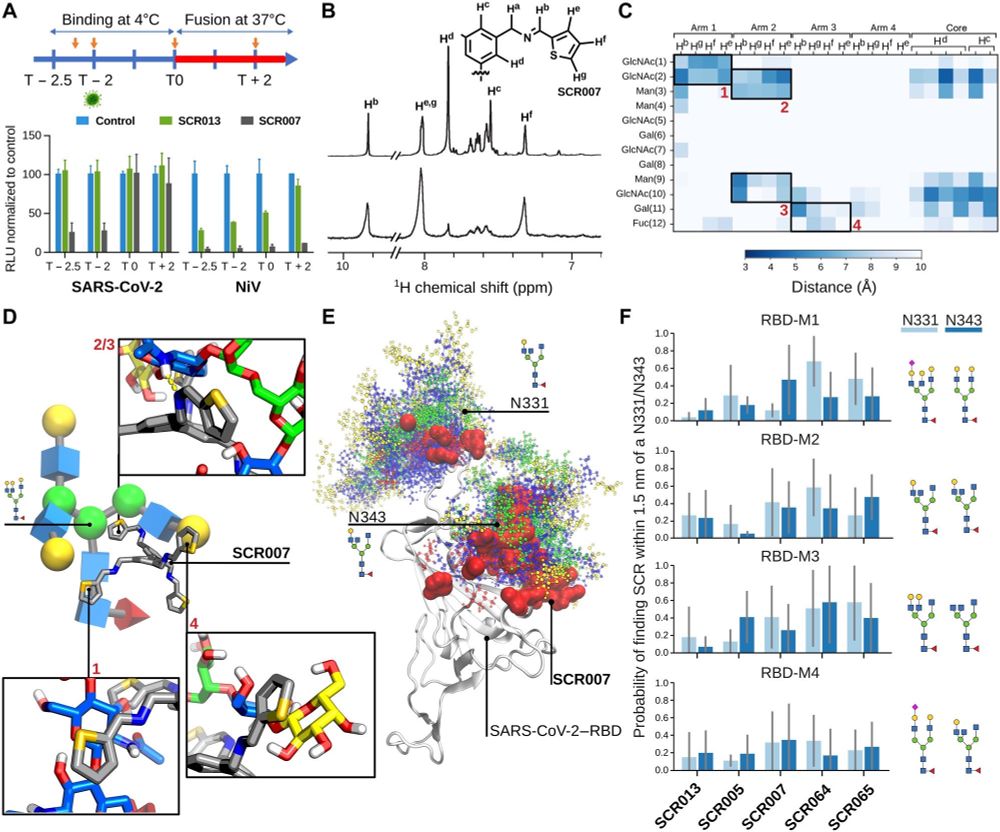
This finding was particularly important, as it expands the scope of SCR activity BEYOND enveloped viruses.

November 28, 2025 at 5:11 PM
This finding was particularly important, as it expands the scope of SCR activity BEYOND enveloped viruses.
Two of these compounds were also tested on mice infected with SARS-CoV-2 (the virus that causes COVID-19). BOTH compounds (SCR005 and SCR007) significantly reduced viral loads, severe illness AND death in animals genetically prone to develop severe illness. In tests of the most promising candidate,


November 28, 2025 at 5:09 PM
Two of these compounds were also tested on mice infected with SARS-CoV-2 (the virus that causes COVID-19). BOTH compounds (SCR005 and SCR007) significantly reduced viral loads, severe illness AND death in animals genetically prone to develop severe illness. In tests of the most promising candidate,
glycans. They identified four lead compounds that successfully blocked infection from seven different LIVE viruses across five unrelated families, including some of the world's most dangerous pathogens: Ebola, Marburg, Nipah, Hendra, SARS-CoV-1 and SARS-CoV-2 (coronaviruses).

November 28, 2025 at 5:08 PM
glycans. They identified four lead compounds that successfully blocked infection from seven different LIVE viruses across five unrelated families, including some of the world's most dangerous pathogens: Ebola, Marburg, Nipah, Hendra, SARS-CoV-1 and SARS-CoV-2 (coronaviruses).
Their efficacy was confirmed against LIVE viruses including Ebola, Marburg, Nipah, Hendra, SARS-CoV, SARS-CoV-2 (COVID-19), AND Middle East Respiratory Syndrome (MERS).
The study has been published in Science Advances. YES, it is PEER-REVIEWED.
• www.science.org/doi/10.1126/...
🧪🧵⬇️
The study has been published in Science Advances. YES, it is PEER-REVIEWED.
• www.science.org/doi/10.1126/...
🧪🧵⬇️

November 28, 2025 at 5:02 PM
Their efficacy was confirmed against LIVE viruses including Ebola, Marburg, Nipah, Hendra, SARS-CoV, SARS-CoV-2 (COVID-19), AND Middle East Respiratory Syndrome (MERS).
The study has been published in Science Advances. YES, it is PEER-REVIEWED.
• www.science.org/doi/10.1126/...
🧪🧵⬇️
The study has been published in Science Advances. YES, it is PEER-REVIEWED.
• www.science.org/doi/10.1126/...
🧪🧵⬇️
device related infections are treated. If the technology succeeds in animals and clinical trials, it could reduce the need for high dose broad spectrum antibiotics. That would help preserve existing drugs and slow the spread of resistance. For someone in intensive care, that shift could mean a

November 26, 2025 at 5:16 PM
device related infections are treated. If the technology succeeds in animals and clinical trials, it could reduce the need for high dose broad spectrum antibiotics. That would help preserve existing drugs and slow the spread of resistance. For someone in intensive care, that shift could mean a
partnership between Swansea University and Freie Universität Berlin, blending expertise in chemistry, polymer science and nanotechnology. Funding from the German Science Foundation is allowing researchers to push the technology further at Swansea. The next steps will likely include tests in animal

November 26, 2025 at 5:15 PM
partnership between Swansea University and Freie Universität Berlin, blending expertise in chemistry, polymer science and nanotechnology. Funding from the German Science Foundation is allowing researchers to push the technology further at Swansea. The next steps will likely include tests in animal
wiped out MORE THAN 99.9% of the bacteria hiding inside those biofilms. Microscopy backed up the numbers. Scanning electron images showed bacteria that looked crumpled and collapsed after exposure. Confocal imaging revealed biofilms that had thinned, broken and lost their smooth structure.


November 26, 2025 at 5:11 PM
wiped out MORE THAN 99.9% of the bacteria hiding inside those biofilms. Microscopy backed up the numbers. Scanning electron images showed bacteria that looked crumpled and collapsed after exposure. Confocal imaging revealed biofilms that had thinned, broken and lost their smooth structure.
harming human cells. To meet that challenge, researchers designed a flexible particle called a heteromultivalent nanogel. It sounds technical, but the idea is fairly straightforward. The nanogel acts like a guided smart bomb. The core is a soft network of linked polymers. Onto that framework,

November 26, 2025 at 5:07 PM
harming human cells. To meet that challenge, researchers designed a flexible particle called a heteromultivalent nanogel. It sounds technical, but the idea is fairly straightforward. The nanogel acts like a guided smart bomb. The core is a soft network of linked polymers. Onto that framework,
The study has been published in Angewandte Chemie. YES, it is PEER-REVIEWED.
• onlinelibrary.wiley.com/doi/10.1002/...
🧪🧵⬇️
• onlinelibrary.wiley.com/doi/10.1002/...
🧪🧵⬇️


November 26, 2025 at 5:03 PM
The study has been published in Angewandte Chemie. YES, it is PEER-REVIEWED.
• onlinelibrary.wiley.com/doi/10.1002/...
🧪🧵⬇️
• onlinelibrary.wiley.com/doi/10.1002/...
🧪🧵⬇️