




Shubhra Sau
@shubhrasau007.bsky.social
The goal of my study was persistence in color polymorphism in lizards. Interested to work on animals (preferably lizards) social behavior and cognition based on dorsal coloration and color patterns.
RG: Shubhra Sau
RG: Shubhra Sau
Reposted by Shubhra Sau

Chameleon-like, Miho skillfully blends into her surroundings, declining to pounce until her prey (a dropped tater-tot), has no chance of escape.

January 24, 2026 at 3:36 PM
Chameleon-like, Miho skillfully blends into her surroundings, declining to pounce until her prey (a dropped tater-tot), has no chance of escape.
Reposted by Shubhra Sau

Reposted by Shubhra Sau

🐥⬇️
New research from #BiologyLetters: Distress calls as social stressors affecting chicken welfare royalsocietypublishing.org/rsbl/article... | #AnimalBehaviour #DevelopmentalBiology

January 24, 2026 at 3:42 AM
🐥⬇️
Reposted by Shubhra Sau
Basking buddies: factors influencing social associations in basking aggregations of turtles BES

Basking buddies: factors influencing social associations in basking aggregations of turtles
Basking in groups with conspecifics is extensively documented in reptiles, and in some clades, notably Scincidae, basking aggregations can be representative of repeatable and stable social kin groups. Evidence for social basking in non-squamate reptiles is less reported, but mounting evidence suggests that social behaviour in turtles may be common. To elucidate the social drivers of basking aggregations, we recorded basking behaviour in a population of Midland Painted Turtles (Chrysemys picta marginata) over two active seasons. We explored potential factors influencing associations during basking aggregations, and tested whether social basking is impacted by individual traits that may reflect dominance hierarchies. We used network analysis to construct matrices of social association between basking individuals, and explored spatial overlap, genetic relatedness, body size, and sex as possible predictors of these population-level associations. We also quantified individual social behaviour by calculating network metrics and examined whether body size and a proxy of boldness influenced individual-level social behaviour. We found no support for spatial overlap, kinship, body size, or sex similarity as drivers of social associations while basking. Turtles did not generally associate with one another, but when they did, close to the majority of association were preferred (i.e., non-random). Further, we found that body size and a proxy of boldness affected the social behaviour of female turtles. These individual-level findings suggest that a dominance hierarchy may influence social structure in basking aggregations of Painted Turtles. Our findings have implications for understanding the evolution of cryptic sociality, and call for more thorough examination of social organization in a wider range of non-avian reptiles.
dlvr.it
December 31, 2025 at 1:53 PM
Basking buddies: factors influencing social associations in basking aggregations of turtles BES
Reposted by Shubhra Sau
Honeybees Collecting Latex From Breadfruit (Artocarpus altilis) in Puerto Rico Reveal a Novel Interaction With Broad Eco‐Evolutionary Implications Ecol&Evol

Honeybees Collecting Latex From Breadfruit (Artocarpus altilis) in Puerto Rico Reveal a Novel Interaction With Broad Eco‐Evolutionary Implications
Ecology and Evolution, Volume 15, Issue 12, December 2025.
dlvr.it
December 10, 2025 at 7:49 AM
Honeybees Collecting Latex From Breadfruit (Artocarpus altilis) in Puerto Rico Reveal a Novel Interaction With Broad Eco‐Evolutionary Implications Ecol&Evol
Reposted by Shubhra Sau
Perhaps it’s not bizarre when there is so much corruption in science, helping with the collapse in trust 🔽


December 10, 2025 at 9:13 AM
Perhaps it’s not bizarre when there is so much corruption in science, helping with the collapse in trust 🔽
Reposted by Shubhra Sau
Ant queen lays eggs that hatch into two species | Science | AAAS www.science.org/content/arti...

Ant queen lays eggs that hatch into two species
Bizarre discovery of interspecies cloning “almost impossible to believe,” biologists say
www.science.org
November 25, 2025 at 6:41 PM
Ant queen lays eggs that hatch into two species | Science | AAAS www.science.org/content/arti...
Ant queen lays eggs that hatch into two species | Science | AAAS www.science.org/content/arti...
Ant queen lays eggs that hatch into two species
Bizarre discovery of interspecies cloning “almost impossible to believe,” biologists say
www.science.org
November 25, 2025 at 6:41 PM
Ant queen lays eggs that hatch into two species | Science | AAAS www.science.org/content/arti...
Reposted by Shubhra Sau

In an increasingly divided world, how do strangers become friends? Parakeets might have something to teach us! New paper on formation of affiliative relationships, led by Dr. Claire O’Connell doi.org/10.1098/rsbl...

November 12, 2025 at 1:39 PM
In an increasingly divided world, how do strangers become friends? Parakeets might have something to teach us! New paper on formation of affiliative relationships, led by Dr. Claire O’Connell doi.org/10.1098/rsbl...
Reposted by Shubhra Sau
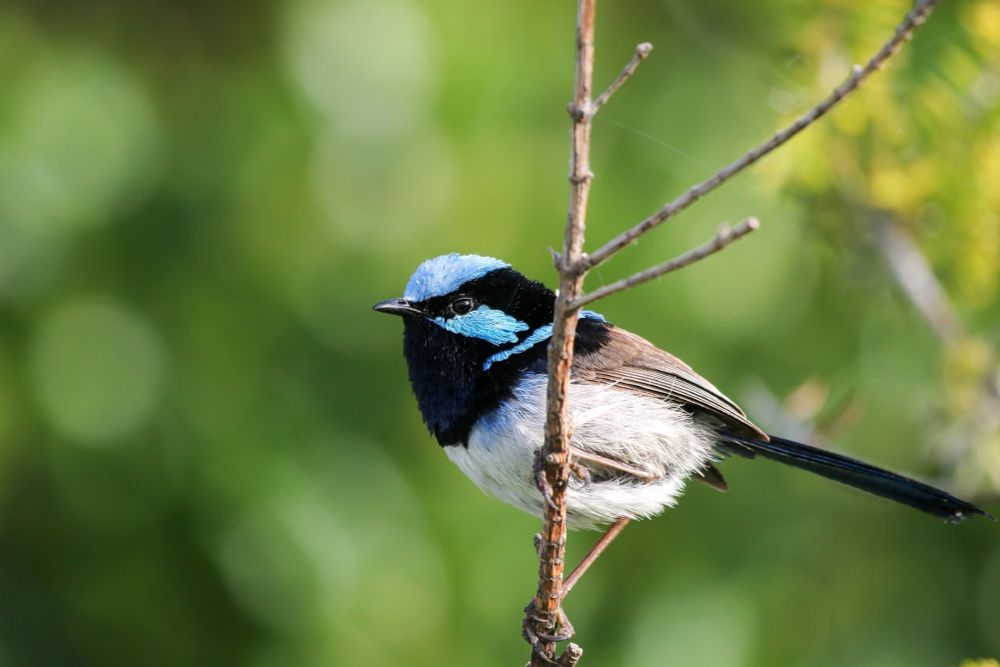
📢NEW paper out NOW in @asab.org Animal Behaviour on how a novel #call changes subsequent responses to #alarms in #fairywrens
🌟CONGRATULATIONS #NatalieTegtman on #first paper from #PhD
👥With #RobMagrath
@bristolbiosci.bsky.social
#animalcommunication #birds #fieldwork #ECR
doi.org/10.1016/j.an...
🌟CONGRATULATIONS #NatalieTegtman on #first paper from #PhD
👥With #RobMagrath
@bristolbiosci.bsky.social
#animalcommunication #birds #fieldwork #ECR
doi.org/10.1016/j.an...

November 24, 2025 at 4:30 PM
📢NEW paper out NOW in @asab.org Animal Behaviour on how a novel #call changes subsequent responses to #alarms in #fairywrens
🌟CONGRATULATIONS #NatalieTegtman on #first paper from #PhD
👥With #RobMagrath
@bristolbiosci.bsky.social
#animalcommunication #birds #fieldwork #ECR
doi.org/10.1016/j.an...
🌟CONGRATULATIONS #NatalieTegtman on #first paper from #PhD
👥With #RobMagrath
@bristolbiosci.bsky.social
#animalcommunication #birds #fieldwork #ECR
doi.org/10.1016/j.an...
Reposted by Shubhra Sau

Bees can learn to discriminate between visual stimuli of different durations. In the latest issue of Biology Letters. Thanks to everyone involved.
royalsocietypublishing.org/doi/10.1098/...
royalsocietypublishing.org/doi/10.1098/...

Duration discrimination in the bumblebee Bombus terrestris | Biology Letters
The ability to process temporal information is crucial for animal activities like
foraging, mating and predator avoidance. While circadian rhythms have been extensively
studied, there is limited knowl...
royalsocietypublishing.org
November 13, 2025 at 12:07 PM
Bees can learn to discriminate between visual stimuli of different durations. In the latest issue of Biology Letters. Thanks to everyone involved.
royalsocietypublishing.org/doi/10.1098/...
royalsocietypublishing.org/doi/10.1098/...
Reposted by Shubhra Sau
Island Syndrome in the Critically Endangered Lord Howe Island Cockroach Panesthia lata Ecol&Evol

Island Syndrome in the Critically Endangered Lord Howe Island Cockroach Panesthia lata
Ecology and Evolution, Volume 15, Issue 11, November 2025.
dlvr.it
November 6, 2025 at 11:16 AM
Island Syndrome in the Critically Endangered Lord Howe Island Cockroach Panesthia lata Ecol&Evol
Reposted by Shubhra Sau
Another one from my thesis. Our study shows that color and vision play important roles in predator–prey interactions but also points out some data limits. peerj.com/articles/20103
Predation experiments with 3D-printed lizard models yield limited responses in pheasants
Animal colouration has been viewed as an adaptation shaped by both abiotic and biotic factors, balancing sexual attractiveness against predation risk. In studying predator-prey dynamics, using 3D mode...
peerj.com
November 3, 2025 at 2:45 PM
Another one from my thesis. Our study shows that color and vision play important roles in predator–prey interactions but also points out some data limits. peerj.com/articles/20103
Another one from my thesis. Our study shows that color and vision play important roles in predator–prey interactions but also points out some data limits. peerj.com/articles/20103
Predation experiments with 3D-printed lizard models yield limited responses in pheasants
Animal colouration has been viewed as an adaptation shaped by both abiotic and biotic factors, balancing sexual attractiveness against predation risk. In studying predator-prey dynamics, using 3D mode...
peerj.com
November 3, 2025 at 2:45 PM
Another one from my thesis. Our study shows that color and vision play important roles in predator–prey interactions but also points out some data limits. peerj.com/articles/20103
Reposted by Shubhra Sau

Do you like using social media? 🗣️ Are you a bit of a TikTok Queen (or King)? 🤳 Do you want to help support #seabirds? 🕊️
We are still looking for someone to run our Social Media! You will have creative content control + an assistant to help 🧑🤝🧑 A great role for your CV & future jobs in conservation 💚
We are still looking for someone to run our Social Media! You will have creative content control + an assistant to help 🧑🤝🧑 A great role for your CV & future jobs in conservation 💚

October 29, 2025 at 11:10 AM
Do you like using social media? 🗣️ Are you a bit of a TikTok Queen (or King)? 🤳 Do you want to help support #seabirds? 🕊️
We are still looking for someone to run our Social Media! You will have creative content control + an assistant to help 🧑🤝🧑 A great role for your CV & future jobs in conservation 💚
We are still looking for someone to run our Social Media! You will have creative content control + an assistant to help 🧑🤝🧑 A great role for your CV & future jobs in conservation 💚
Reposted by Shubhra Sau

Our multi-site, multi-season field experiment reveals potential bias in using plasticine models to assess biotic interactions, highlighting the need for ecological studies to move beyond human-centric assumptions.
See details below 👇
royalsocietypublishing.org/doi/10.1098/...
See details below 👇
royalsocietypublishing.org/doi/10.1098/...

Humans perceive but animals don’t: pitfalls in using plasticine models for assessing biotic interactions | Proceedings of the Royal Society B: Biological Sciences
Observation methods are crucial for understanding ecological processes. One widely
used method is the application of plasticine models that visually mimic prey organisms
in assessing biotic interactio...
royalsocietypublishing.org
October 23, 2025 at 11:22 PM
Our multi-site, multi-season field experiment reveals potential bias in using plasticine models to assess biotic interactions, highlighting the need for ecological studies to move beyond human-centric assumptions.
See details below 👇
royalsocietypublishing.org/doi/10.1098/...
See details below 👇
royalsocietypublishing.org/doi/10.1098/...
Reposted by Shubhra Sau

A spectacular recovery: feral cats and fox exclusion dramatically reshapes a small mammal community in an Australian desert. Join us 5 Nov 8:00 AM (London, UK time) to hear #ProcB author Katherine Moseby talk about her research. Reserve your space: cassyni.com/events/RtW3T... #ecology

October 29, 2025 at 3:54 PM
A spectacular recovery: feral cats and fox exclusion dramatically reshapes a small mammal community in an Australian desert. Join us 5 Nov 8:00 AM (London, UK time) to hear #ProcB author Katherine Moseby talk about her research. Reserve your space: cassyni.com/events/RtW3T... #ecology
Reposted by Shubhra Sau
Dit wist ik nog niet: in Hong Kong leven bijna 1000 koeien in natuurlijke staat in de parken. Gewoon vrij, als wilde dieren die hun eigen gang mogen gaan. Zouden wij bijvoorbeeld in de randstad ook eens moeten doen. China toont dat het kan.

Understanding how ungulates maintain #socialbonds is important for #positiveanimalwelfare and highlights the complex social lives and cognitive abilities of cattle. To learn more about the study, visit royalsocietypublishing.org/doi/10.1098/... or our website hkcattleresearch.org 🐂

September 17, 2025 at 3:45 PM
Dit wist ik nog niet: in Hong Kong leven bijna 1000 koeien in natuurlijke staat in de parken. Gewoon vrij, als wilde dieren die hun eigen gang mogen gaan. Zouden wij bijvoorbeeld in de randstad ook eens moeten doen. China toont dat het kan.
Reposted by Shubhra Sau
2025. Humans perceive but animals don’t: pitfalls in using plasticine models for assessing biotic interactions | Proceedings of the Royal Society B: Biological Sciences royalsocietypublishing.org/doi/10.1098/...

Humans perceive but animals don’t: pitfalls in using plasticine models for assessing biotic interactions | Proceedings of the Royal Society B: Biological Sciences
Observation methods are crucial for understanding ecological processes. One widely
used method is the application of plasticine models that visually mimic prey organisms
in assessing biotic interactio...
royalsocietypublishing.org
October 28, 2025 at 3:20 AM
2025. Humans perceive but animals don’t: pitfalls in using plasticine models for assessing biotic interactions | Proceedings of the Royal Society B: Biological Sciences royalsocietypublishing.org/doi/10.1098/...
Reposted by Shubhra Sau
October 24 is International Gibbon Day!
Did you know gibbons plan their travel based on what type of food they want to eat later in the day?
#AnimalCognitionFunFacts #InternationalGibbonDay #Gibbons
Did you know gibbons plan their travel based on what type of food they want to eat later in the day?
#AnimalCognitionFunFacts #InternationalGibbonDay #Gibbons

October 24, 2025 at 6:02 PM
October 24 is International Gibbon Day!
Did you know gibbons plan their travel based on what type of food they want to eat later in the day?
#AnimalCognitionFunFacts #InternationalGibbonDay #Gibbons
Did you know gibbons plan their travel based on what type of food they want to eat later in the day?
#AnimalCognitionFunFacts #InternationalGibbonDay #Gibbons
Reposted by Shubhra Sau
#animal tool use: Capturing tool-expertise development with a deep learning network CurrentBiology

#animal tool use: Capturing tool-expertise development with a deep learning network
Movement tracking using the deep-learning network DeepLabCut has revealed how a species not known for tool use acquires and refines tool skills. This opens the door to detailed cross-species comparisons of the behavioural, cognitive, neural and evolutionary processes that turn naïve actions into expertise.
dlvr.it
October 24, 2025 at 10:35 PM
#animal tool use: Capturing tool-expertise development with a deep learning network CurrentBiology
Reposted by Shubhra Sau
Sex differences in healthy #brain aging are unlikely to explain higher Alzheimer’s disease prevalence in women @PNAS.org

Sex differences in healthy #brain aging are unlikely to explain higher Alzheimer’s disease prevalence in women
Proceedings of the National Academy of Sciences, Volume 122, Issue 42, October 2025.
As Alzheimer’s disease (AD) is diagnosed more frequently in women, understanding the role of sex has become a key priority in AD research. However, despite aging being the primary risk factor for AD, it remains unclear whether men and women differ in the ...
dlvr.it
October 24, 2025 at 10:51 PM
Reposted by Shubhra Sau
African wildlife scat sheds light on what shapes the gut ecosystem. [species ranging from African elephants (Loxodonta africana) and Angolan giraffes (Giraffa camelopardalis angolensis) to wildebeests, two species of zebra and a variety of antelope species.] phys.org/news/2025-10...

African wildlife scat sheds light on what shapes the gut ecosystem
A study of elephants, giraffes and other wildlife in Namibia's Etosha National Park underscores the ways in which the environment, biological sex, and anatomical distinctions can drive variation in th...
phys.org
October 16, 2025 at 6:22 AM
African wildlife scat sheds light on what shapes the gut ecosystem. [species ranging from African elephants (Loxodonta africana) and Angolan giraffes (Giraffa camelopardalis angolensis) to wildebeests, two species of zebra and a variety of antelope species.] phys.org/news/2025-10...
Reposted by Shubhra Sau
Ancient chewing gum could reveal how early men and women split up their chores | Science | AAAS www.science.org/content/arti...

Ancient chewing gum could reveal how early men and women split up their chores
Birch bark tar, used as chewing gum and glue, provides rare window into life 6000 years ago
www.science.org
October 15, 2025 at 10:15 PM
Ancient chewing gum could reveal how early men and women split up their chores | Science | AAAS www.science.org/content/arti...
Reposted by Shubhra Sau
Neophobia compared in 1,439 birds of 136 species
Specialised diets and migration are associated with greater fear of new objects. Surprisingly, witnessing such objects in groups is also associated with greater fear.
(paper) journals.plos.org/plosbiology/...
(blog) phys.org/news/2025-10...
Specialised diets and migration are associated with greater fear of new objects. Surprisingly, witnessing such objects in groups is also associated with greater fear.
(paper) journals.plos.org/plosbiology/...
(blog) phys.org/news/2025-10...


October 15, 2025 at 6:20 PM
Neophobia compared in 1,439 birds of 136 species
Specialised diets and migration are associated with greater fear of new objects. Surprisingly, witnessing such objects in groups is also associated with greater fear.
(paper) journals.plos.org/plosbiology/...
(blog) phys.org/news/2025-10...
Specialised diets and migration are associated with greater fear of new objects. Surprisingly, witnessing such objects in groups is also associated with greater fear.
(paper) journals.plos.org/plosbiology/...
(blog) phys.org/news/2025-10...