


Shujie Chang
@shujie.bsky.social
MPhil student at the University of Cambridge
Really enjoyed the @thepalass.bsky.social annual meeting in Portsmouth—and giving my first conference talk. I shared some of my latest work on competition in Avalon communities. Thanks for the chats, and to the organisers and session chairs. Looking forward to next time. #PalAss


December 15, 2025 at 10:37 AM
Really enjoyed the @thepalass.bsky.social annual meeting in Portsmouth—and giving my first conference talk. I shared some of my latest work on competition in Avalon communities. Thanks for the chats, and to the organisers and session chairs. Looking forward to next time. #PalAss
Reposted by Shujie Chang

HEY! YOU! ggdibbler 0.6.1 is finally up on CRAN!
harriet-mason.github.io/ggdibbler/in...
You can now pass random variables to any aesthetic in any ggplot geom/stat. If you can express it as a distribution, ggdibbler can plot it. It also works with ggplot extensions, like gganimate. #rstats
harriet-mason.github.io/ggdibbler/in...
You can now pass random variables to any aesthetic in any ggplot geom/stat. If you can express it as a distribution, ggdibbler can plot it. It also works with ggplot extensions, like gganimate. #rstats

December 6, 2025 at 3:16 PM
HEY! YOU! ggdibbler 0.6.1 is finally up on CRAN!
harriet-mason.github.io/ggdibbler/in...
You can now pass random variables to any aesthetic in any ggplot geom/stat. If you can express it as a distribution, ggdibbler can plot it. It also works with ggplot extensions, like gganimate. #rstats
harriet-mason.github.io/ggdibbler/in...
You can now pass random variables to any aesthetic in any ggplot geom/stat. If you can express it as a distribution, ggdibbler can plot it. It also works with ggplot extensions, like gganimate. #rstats
🎉🎉🎉

Finnegan has taken the lead with the most votes, with mollusks close behind!
Vote today, the competition is tight!
🐝🪱🐛🦋🐌🐞🐜🪰🪲🦂🐢🦖🐋🐊🦐🦑🐠🐫
paleo.memberclicks.net/Clades
@Paleo-Society on Venmo
#paleosociety #paleontology #invertebrates #vertebrateevolution #geology #geosciences
Vote today, the competition is tight!
🐝🪱🐛🦋🐌🐞🐜🪰🪲🦂🐢🦖🐋🐊🦐🦑🐠🐫
paleo.memberclicks.net/Clades
@Paleo-Society on Venmo
#paleosociety #paleontology #invertebrates #vertebrateevolution #geology #geosciences

October 29, 2025 at 7:35 PM
🎉🎉🎉
Reposted by Shujie Chang

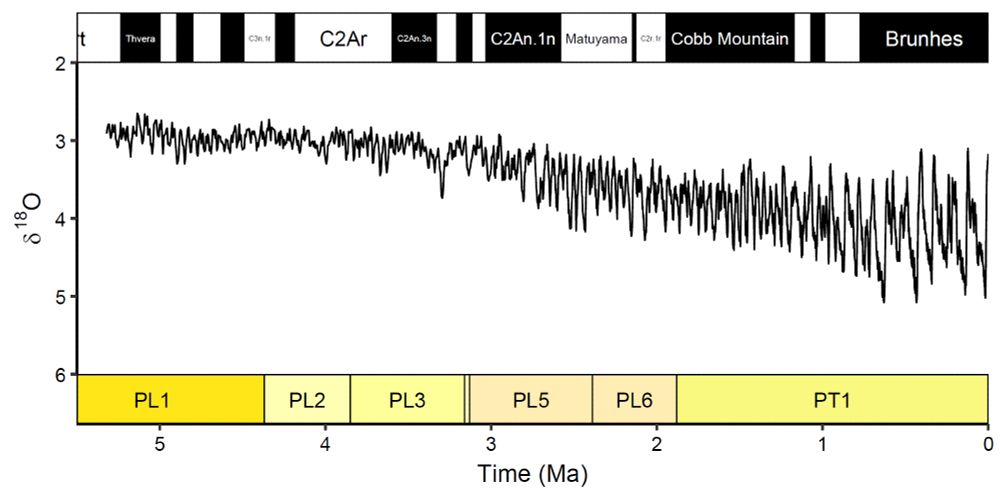
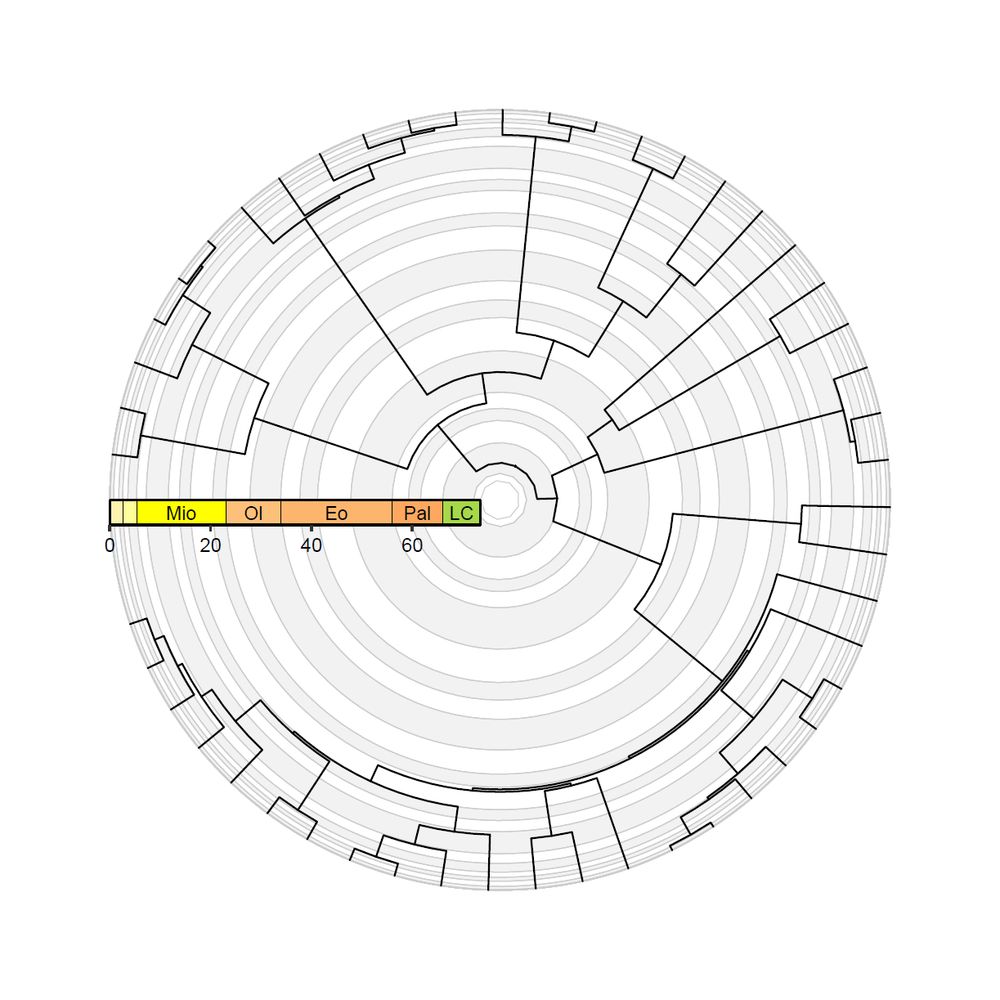
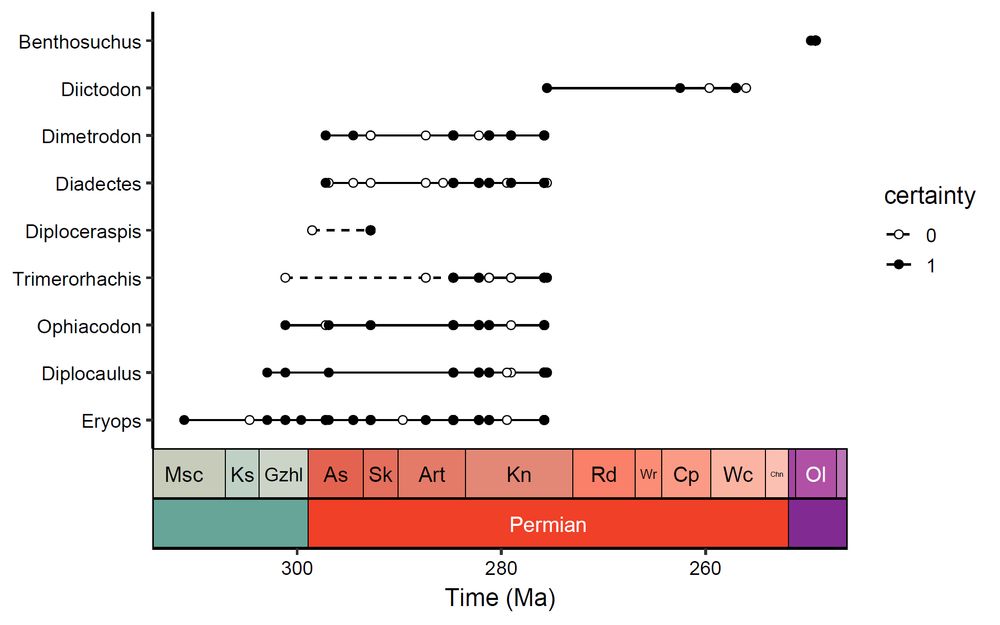
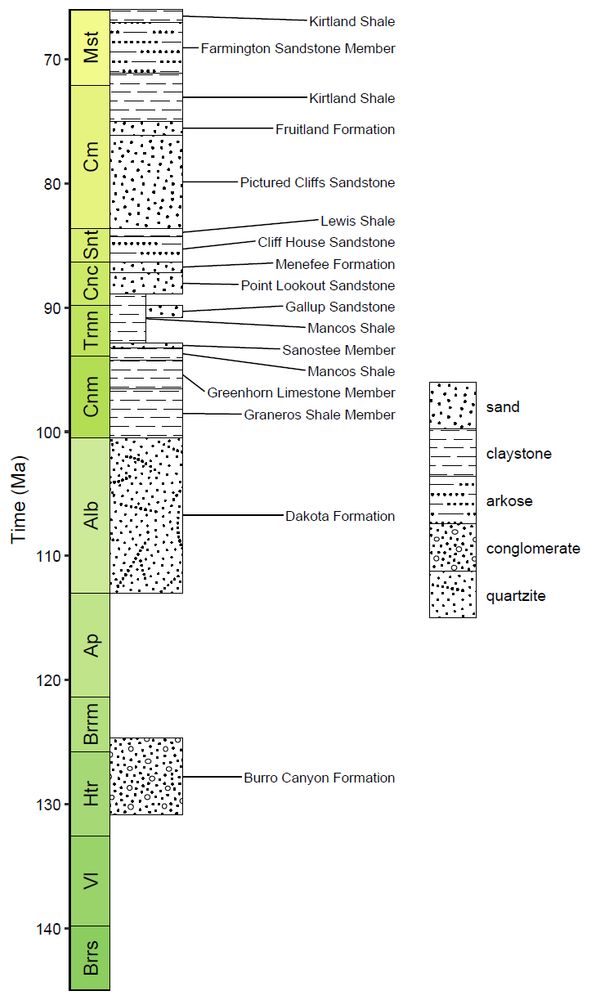
📢 deeptime: an R package that facilitates highly customizable and reproducible visualizations of data over geological time intervals
🔗 doi.org/10.1080/2096...
Fully #openaccess in @bigearthdata1.bsky.social with insight about deeptime📦 development and code examples!
#rstats #geology #paleontology
🔗 doi.org/10.1080/2096...
Fully #openaccess in @bigearthdata1.bsky.social with insight about deeptime📦 development and code examples!
#rstats #geology #paleontology
August 6, 2025 at 1:06 PM
📢 deeptime: an R package that facilitates highly customizable and reproducible visualizations of data over geological time intervals
🔗 doi.org/10.1080/2096...
Fully #openaccess in @bigearthdata1.bsky.social with insight about deeptime📦 development and code examples!
#rstats #geology #paleontology
🔗 doi.org/10.1080/2096...
Fully #openaccess in @bigearthdata1.bsky.social with insight about deeptime📦 development and code examples!
#rstats #geology #paleontology
Reposted by Shujie Chang

Human-driven extinction event not yet the "sixth mass extinction", but is very likely the largest extinction event of the last 66 million yrs. 🌏 🧪
Read about it in our new paper led by @jackhhatfield.bsky.social
and Katie Davis @anthropocenebio.bsky.social
doi.org/10.1111/gcb....
Read about it in our new paper led by @jackhhatfield.bsky.social
and Katie Davis @anthropocenebio.bsky.social
doi.org/10.1111/gcb....

The Greatest Extinction Event in 66 Million Years? Contextualising Anthropogenic Extinctions
Species and ecosystems are changing rapidly in response to human actions, but how does this compare with the deeper past? We review and compare the current extinction event to those over the last 66 ....
doi.org
September 4, 2025 at 11:14 AM
Human-driven extinction event not yet the "sixth mass extinction", but is very likely the largest extinction event of the last 66 million yrs. 🌏 🧪
Read about it in our new paper led by @jackhhatfield.bsky.social
and Katie Davis @anthropocenebio.bsky.social
doi.org/10.1111/gcb....
Read about it in our new paper led by @jackhhatfield.bsky.social
and Katie Davis @anthropocenebio.bsky.social
doi.org/10.1111/gcb....
Reposted by Shujie Chang

New paper in which we evaluate how we can use information on past extinction events to better contextualise the ongoing anthropogenic extinction, led by @anthropocenebio.bsky.social (with @bethanyjallen.bsky.social, @inesismartins.bsky.social, & others): onlinelibrary.wiley.com/doi/10.1111/...

September 4, 2025 at 10:27 AM
New paper in which we evaluate how we can use information on past extinction events to better contextualise the ongoing anthropogenic extinction, led by @anthropocenebio.bsky.social (with @bethanyjallen.bsky.social, @inesismartins.bsky.social, & others): onlinelibrary.wiley.com/doi/10.1111/...
Reposted by Shujie Chang
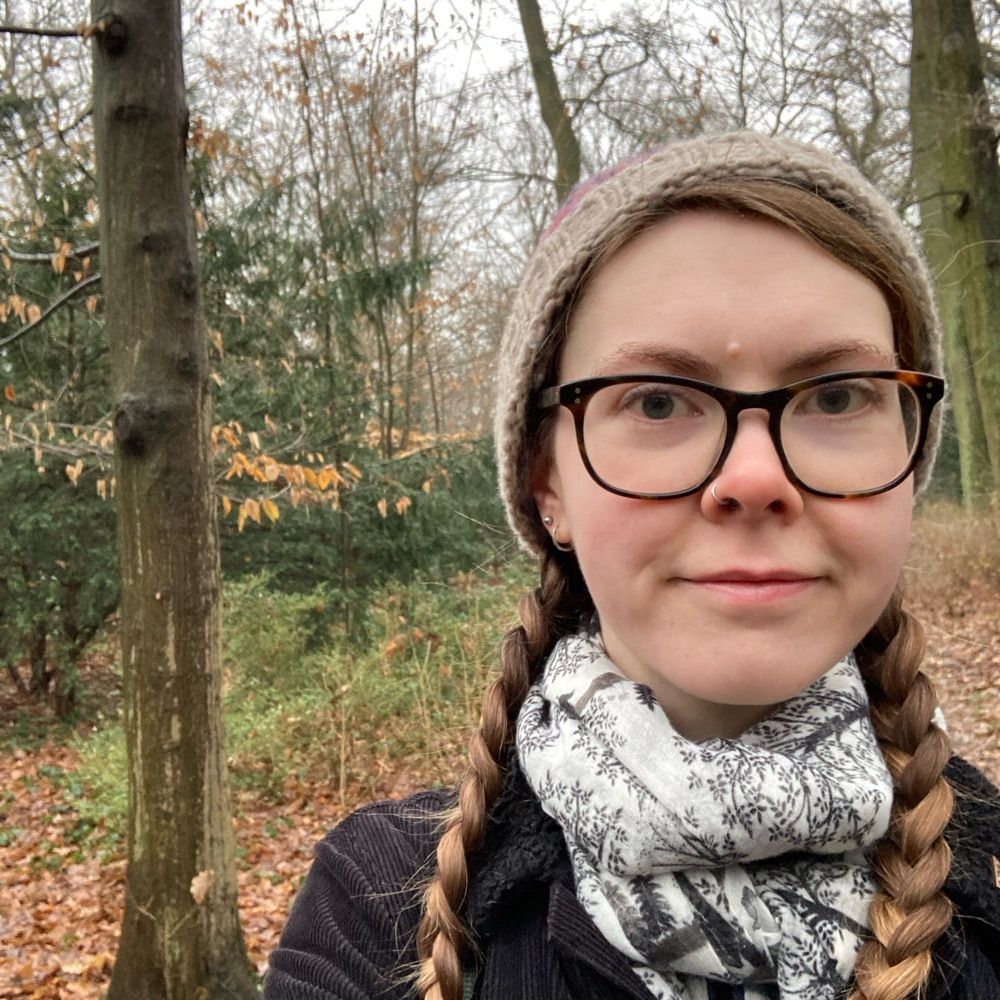
Huge thanks to @palaeopercs.bsky.social for inviting and hosting me! If you missed my talk on Tuesday, you can now catch up via their YouTube channel 👇
www.youtube.com/watch?v=x19X...
www.youtube.com/watch?v=x19X...
September 4, 2025 at 8:27 AM
Huge thanks to @palaeopercs.bsky.social for inviting and hosting me! If you missed my talk on Tuesday, you can now catch up via their YouTube channel 👇
www.youtube.com/watch?v=x19X...
www.youtube.com/watch?v=x19X...
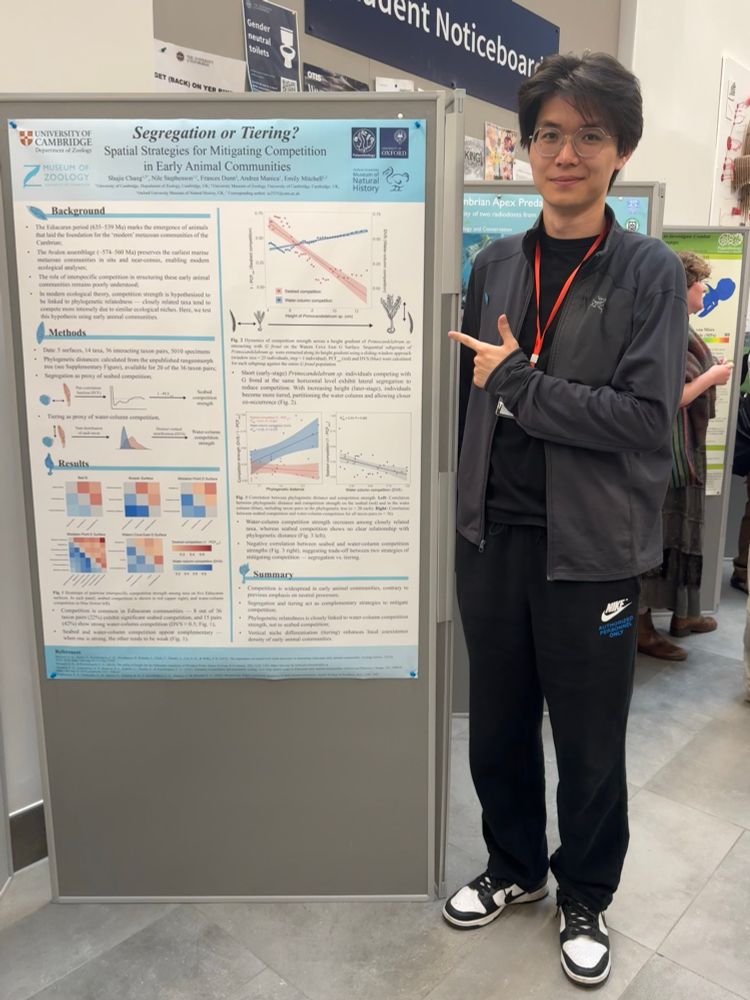
My first poster! Big thanks to my amazing supervisors and labmates for all the support!

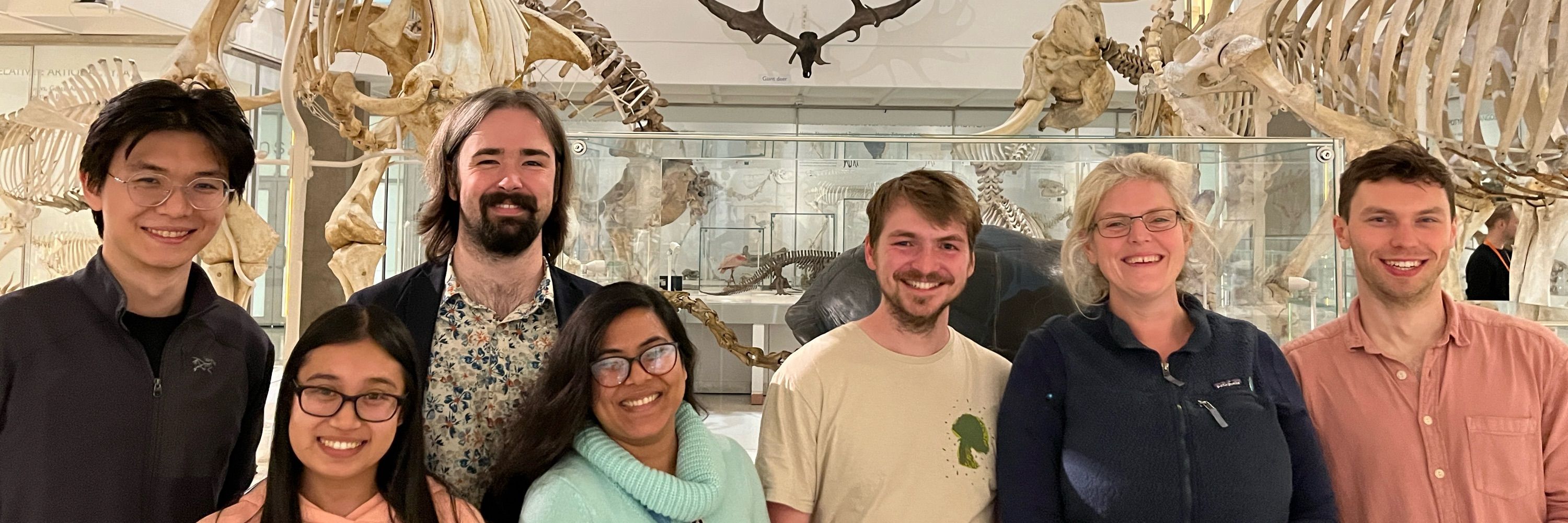
Deep Time Ecology members presenting at #progpal2025 in Edinburgh. @shujie.bsky.social ’s poster on competition in Ediacaran communities, @princessairab.bsky.social ’s talk on Charniodiscus and @yarongliu.bsky.social ’s talk on trace fossils
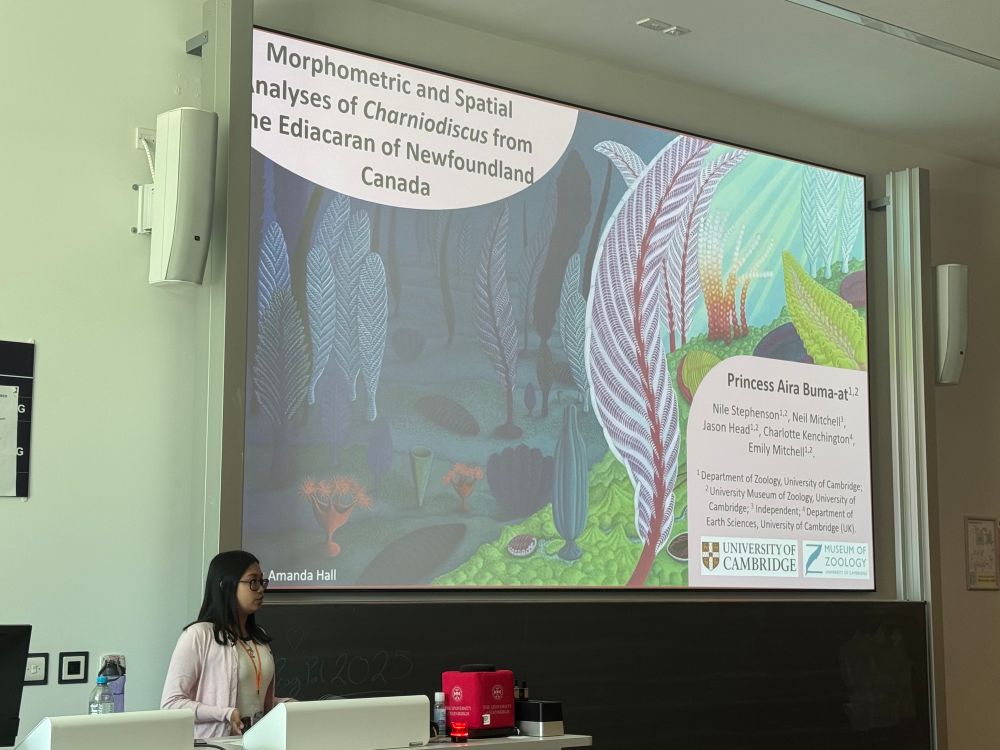
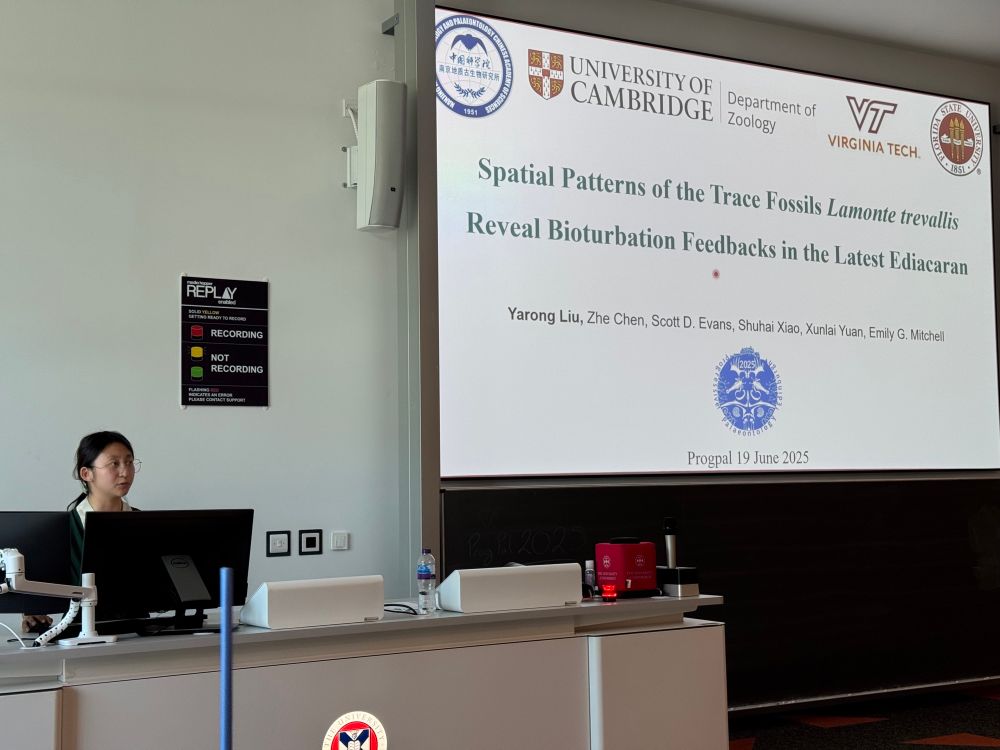
June 19, 2025 at 4:28 PM
My first poster! Big thanks to my amazing supervisors and labmates for all the support!
Reposted by Shujie Chang
If you are interested in biodiversity in deep time, check out my new preprint with @rachelwarnock.bsky.social and @dralexdunhill.bsky.social! We review methods of quantifying diversity and diversification, using the fossil record and phylogenies with extinct tips 🐚🦕📊
doi.org/10.32942/X2D...
doi.org/10.32942/X2D...
“A history of the world imperfectly kept”: Will we ever know how biodiversity has changed over deep time?
doi.org
May 6, 2025 at 1:51 PM
If you are interested in biodiversity in deep time, check out my new preprint with @rachelwarnock.bsky.social and @dralexdunhill.bsky.social! We review methods of quantifying diversity and diversification, using the fossil record and phylogenies with extinct tips 🐚🦕📊
doi.org/10.32942/X2D...
doi.org/10.32942/X2D...
Reposted by Shujie Chang
New 🗒️led by Alex Pigot - Macroecological rules predict how biomass scales with species richness in nature -Standing biomass increases with richness when large-bodied spp are numerically rare but independent when spp size & abundance are uncoupled. @ucl.ac.uk - Science www.science.org/doi/10.1126/...
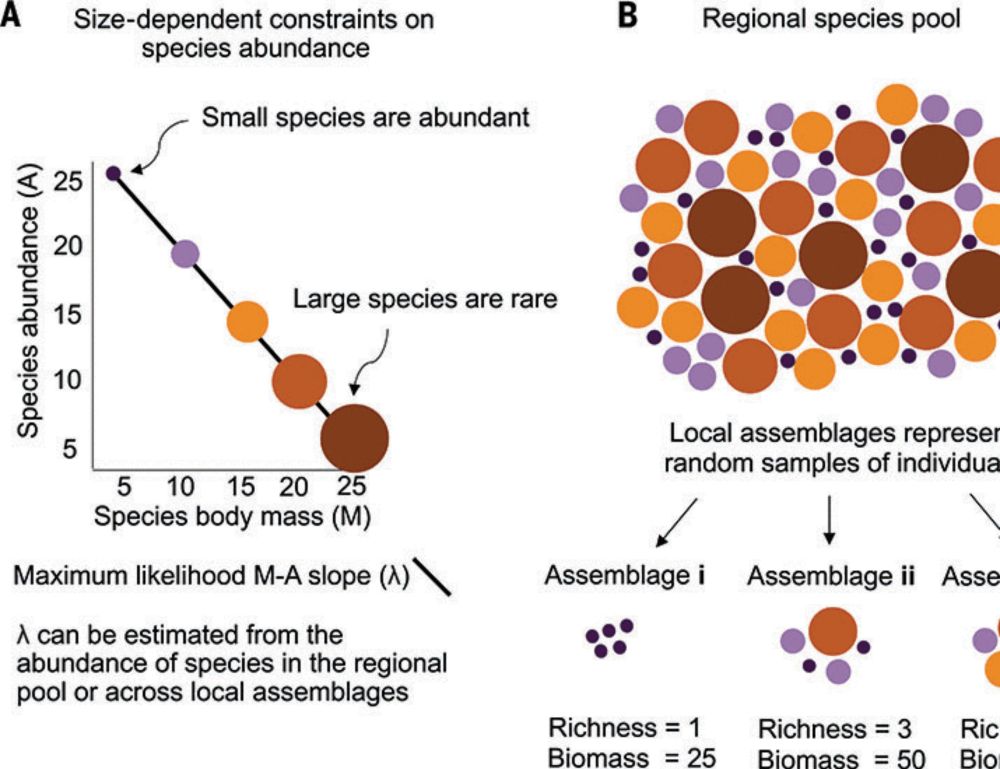
Macroecological rules predict how biomass scales with species richness in nature
Despite advances in theory and experiments, how biodiversity influences the structure and functioning of natural ecosystems remains debated. By applying new theory to data on 84,695 plant, animal, and...
www.science.org
March 21, 2025 at 9:26 AM
New 🗒️led by Alex Pigot - Macroecological rules predict how biomass scales with species richness in nature -Standing biomass increases with richness when large-bodied spp are numerically rare but independent when spp size & abundance are uncoupled. @ucl.ac.uk - Science www.science.org/doi/10.1126/...
Reposted by Shujie Chang
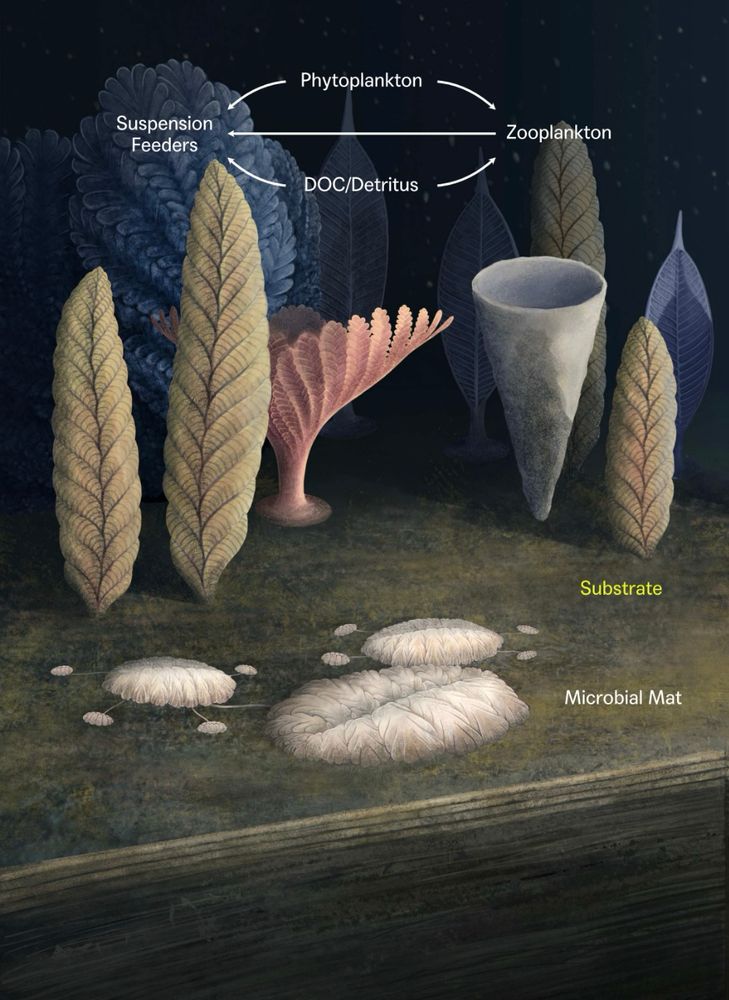
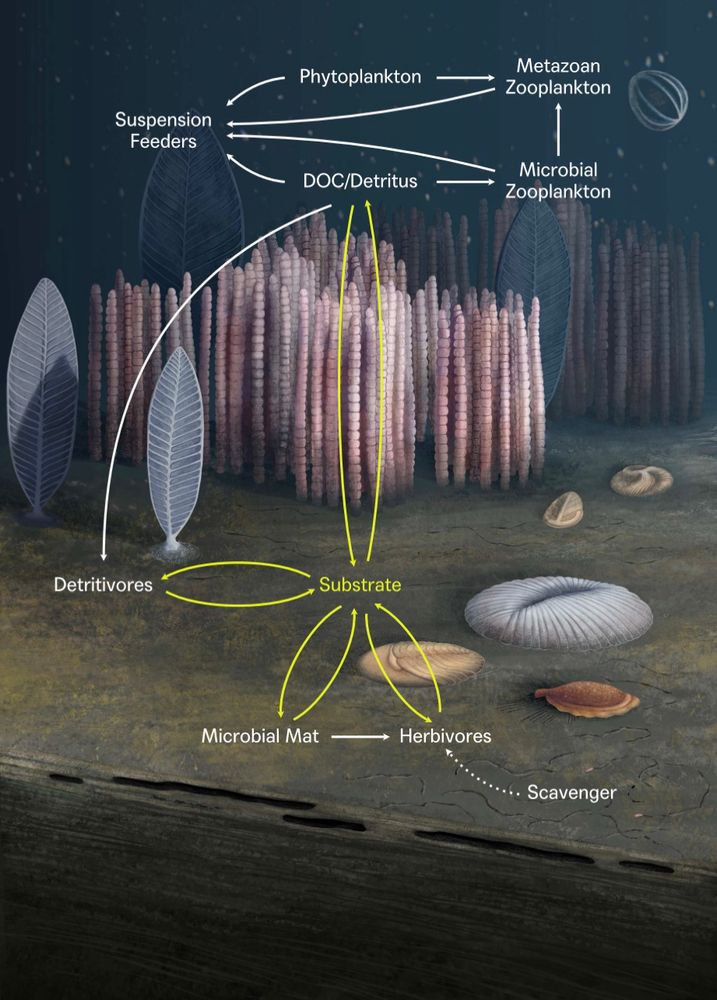
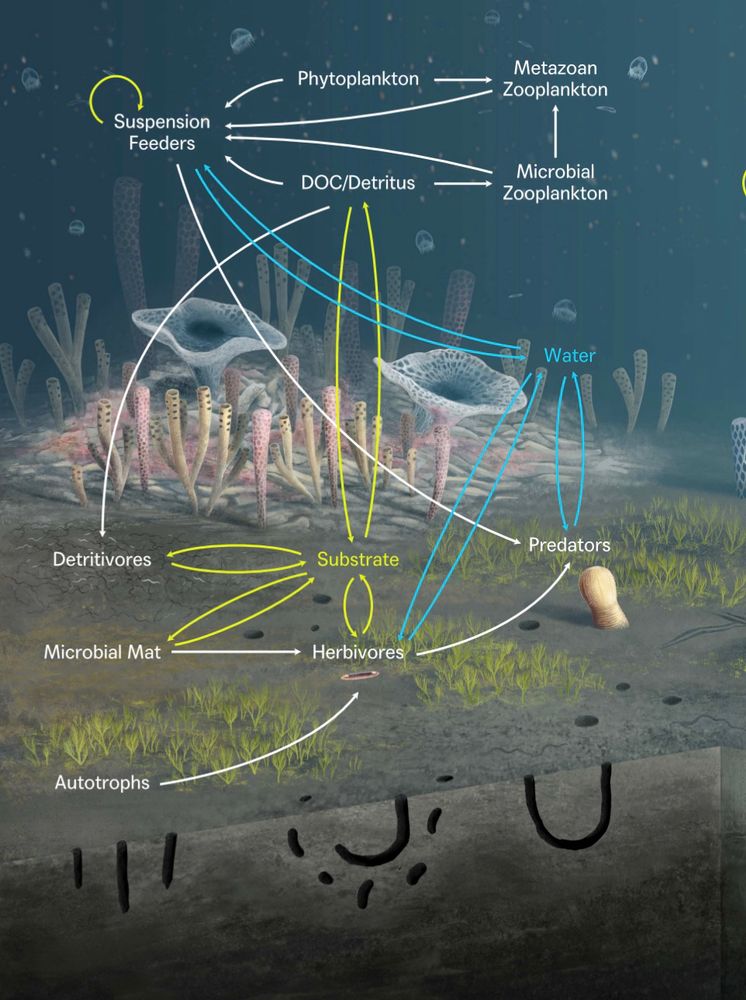
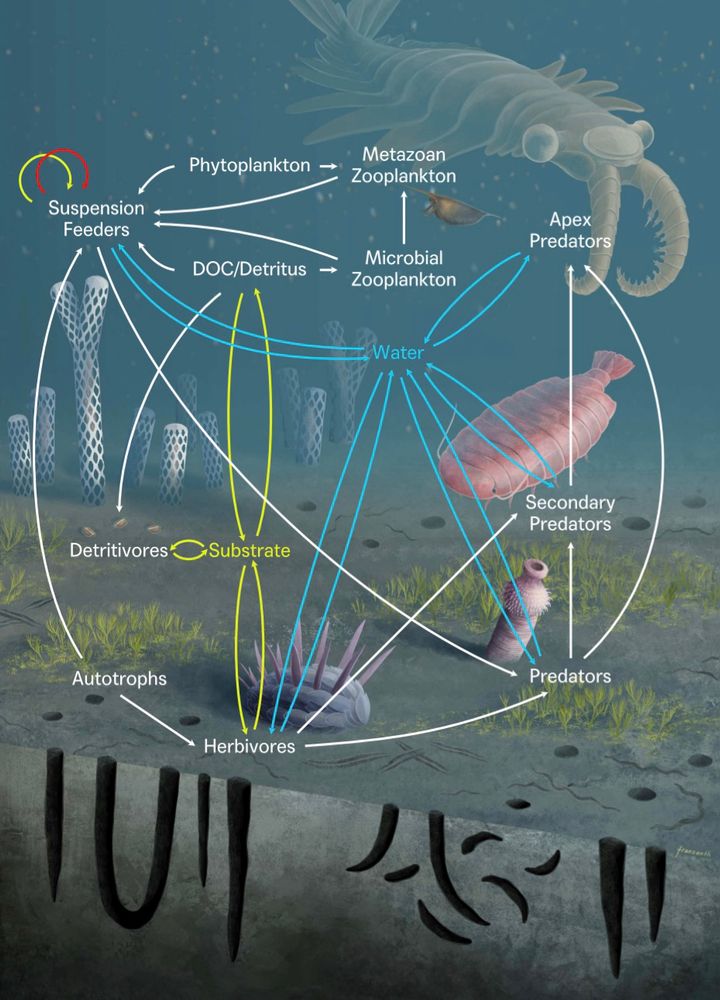
Super excited that our review on the ecology of the Ediacaran-Cambrian transition is now out on how ecology changes across scales from organisms to communities to the world through time. Fab art @franzanth.bsky.social showing the build up of ecological complexity
www.cambridge.org/core/journal...
www.cambridge.org/core/journal...
January 22, 2025 at 6:28 PM
Super excited that our review on the ecology of the Ediacaran-Cambrian transition is now out on how ecology changes across scales from organisms to communities to the world through time. Fab art @franzanth.bsky.social showing the build up of ecological complexity
www.cambridge.org/core/journal...
www.cambridge.org/core/journal...
Reposted by Shujie Chang

📖Published📖
Check out our research article 👉 Game target-group: Implementing inhomogeneous Poisson point process to estimate animal abundance from harvest data
Check out our research article 👉 Game target-group: Implementing inhomogeneous Poisson point process to estimate animal abundance from harvest data

buff.ly
November 30, 2024 at 9:00 AM
📖Published📖
Check out our research article 👉 Game target-group: Implementing inhomogeneous Poisson point process to estimate animal abundance from harvest data
Check out our research article 👉 Game target-group: Implementing inhomogeneous Poisson point process to estimate animal abundance from harvest data