




sieben-grafik.de | Bluesky Backup
@sieben-grafik.bsky.social
Aktiv bei Mastodon: https://norden.social/@sieben_grafik Bridge: @sieben-grafik.norden.social.ap.brid.gy
Mitglied bei @creativesforfuture.bsky.social
Mitglied bei @creativesforfuture.bsky.social
Reposted by sieben-grafik.de | Bluesky Backup

Vieles, was im Kontext von KI #opensource genannt wird, ist faktisch nicht #OpenSource (= Einschränkungen in der Weiternutzung, Beschränkung auf eine bestimmte Größe etc.)
Mit dieser Definition lässt es sich überprüfen:
https://opensource.org/ai/open-source-ai-definition
#weareopen
Mit dieser Definition lässt es sich überprüfen:
https://opensource.org/ai/open-source-ai-definition
#weareopen
The Open Source AI Definition – 1.0
#### version 1.0
See FAQs
See list of endorsements
Endorse the OSAID
## Preamble
### Why we need Open Source Artificial Intelligence (AI)
Open Source has demonstrated that massive benefits accrue to everyone after removing the barriers to learning, using, sharing and improving software systems. These benefits are the result of using licenses that adhere to the Open Source Definition. For AI, society needs at least the same essential freedoms of Open Source to enable AI developers, deployers and end users to enjoy those same benefits: autonomy, transparency, frictionless reuse and collaborative improvement.
## What is Open Source AI
When we refer to a “system,” we are speaking both broadly about a fully functional structure and its discrete structural elements. To be considered Open Source, the requirements are the same, whether applied to a **system** , a **model** , **weights and parameters** , or other structural elements.
An _Open Source AI_ is an AI system made available under terms and in a way that grant the freedoms1 to:
* **Use** the system for any purpose and without having to ask for permission.
* **Study** how the system works and inspect its components.
* **Modify** the system for any purpose, including to change its output.
* **Share** the system for others to use with or without modifications, for any purpose.
These freedoms apply both to a fully functional system and to discrete elements of a system. A precondition to exercising these freedoms is to have access to the preferred form to make modifications to the system.
### Preferred form to make modifications to machine-learning systems
The preferred form of making modifications to a machine-learning system must include all the elements below:
* **Data Information:** Sufficiently detailed information about the data used to train the system so that a skilled person can build a substantially equivalent system. Data Information shall be made available under OSI-approved terms.
* In particular, this must include: (1) the complete description of all data used for training, including (if used) of unshareable data, disclosing the provenance of the data, its scope and characteristics, how the data was obtained and selected, the labeling procedures, and data processing and filtering methodologies; (2) a listing of all publicly available training data and where to obtain it; and (3) a listing of all training data obtainable from third parties and where to obtain it, including for fee.
* **Code:** The complete source code used to train and run the system. The Code shall represent the full specification of how the data was processed and filtered, and how the training was done. Code shall be made available under OSI-approved licenses.
* For example, if used, this must include code used for processing and filtering data, code used for training including arguments and settings used, validation and testing, supporting libraries like tokenizers and hyperparameters search code, inference code, and model architecture.
* **Parameters:** The model parameters, such as weights or other configuration settings. Parameters shall be made available under OSI-approved terms.
* For example, this might include checkpoints from key intermediate stages of training as well as the final optimizer state.
The licensing or other terms applied to these elements and to any combination thereof may contain conditions that require any modified version to be released under the same terms as the original.
## Open Source models and Open Source weights
For machine learning systems,
* An **AI model** consists of the model architecture, model parameters (including weights) and inference code for running the model.
* **AI weights** are the set of learned parameters that overlay the model architecture to produce an output from a given input.
The preferred form to make modifications to machine learning systems also applies to these individual components. “Open Source models” and “Open Source weights” must include the data information and code used to derive those parameters.
The Open Source AI Definition does not require a specific legal mechanism for assuring that the model parameters are freely available to all. They may be free by their nature or a license or other legal instrument may be required to ensure their freedom. We expect this will become clearer over time, once the legal system has had more opportunity to address Open Source AI systems.
## Definitions
* AI system2: An AI system is a machine-based system that, for explicit or implicit objectives, infers, from the input it receives, how to generate outputs such as predictions, content, recommendations, or decisions that can influence physical or virtual environments. Different AI systems vary in their levels of autonomy and adaptiveness after deployment.
* Machine learning3: is a set of techniques that allows machines to improve their performance and usually generate models in an automated manner through exposure to training data, which can help identify patterns and regularities rather than through explicit instructions from a human. The process of improving a system’s performance using machine learning techniques is known as “training”.
1. These freedoms are derived from the Free Software Definition. ↩︎
2. Recommendation of the Council on Artificial Intelligence OECD/LEGAL/0449, Organization for Economic and Co-operation Development (OECD), 2024 ↩︎
3. Explanatory memorandum on the updated OECD definition of an AI system, OECD Artificial Intelligence Papers, No. 8, OECD Publishing, Paris ↩︎
See FAQs
See list of endorsements
* * *
## Endorse the Open Source AI Definition
**Thank you for your interest in endorsing the OSAID**. Being an endorser means your name and organizational affiliation will be appended to list of supporters of Version 1.0 of the Open Source AI Definition.
Please leave this field empty.
Your name
Your email
Your institution
Your role
Endorsement type
IndividualInstitutionalBoth
Your message (optional)
This form uses Akismet to reduce spam. Learn how your data is processed.
Δ
* * *
opensource.org
March 25, 2025 at 11:24 AM
Vieles, was im Kontext von KI #opensource genannt wird, ist faktisch nicht #OpenSource (= Einschränkungen in der Weiternutzung, Beschränkung auf eine bestimmte Größe etc.)
Mit dieser Definition lässt es sich überprüfen:
https://opensource.org/ai/open-source-ai-definition
#weareopen
Mit dieser Definition lässt es sich überprüfen:
https://opensource.org/ai/open-source-ai-definition
#weareopen
"Die ethischen Probleme sind vielleicht nichts Neues, aber nun da #KI in die Arbeitsbereiche der Grafikdesigner*innen eindringt, muss der übermäßige Energieverbrauch, die Ressourcenextraktion und die Ausbeutung kreativer Arbeitskreativen genauer betrachtet werden.
" *
1/3
#AI #GenAI #GraphicDesign
" *
1/3
#AI #GenAI #GraphicDesign

March 25, 2025 at 5:22 PM
"Die ethischen Probleme sind vielleicht nichts Neues, aber nun da #KI in die Arbeitsbereiche der Grafikdesigner*innen eindringt, muss der übermäßige Energieverbrauch, die Ressourcenextraktion und die Ausbeutung kreativer Arbeitskreativen genauer betrachtet werden.
" *
1/3
#AI #GenAI #GraphicDesign
" *
1/3
#AI #GenAI #GraphicDesign
Reposted by sieben-grafik.de | Bluesky Backup
Falls jemand am Donnerstag auf der Buchmesse Leipzig ist:
Ich spreche mit einigen Menschen darüber, ob Pauschallizeniserung von Kreativleistungen an KI-Unternehmen eine Lösung für Probleme sein kann oder nicht.
https://www.leipziger-buchmesse.de/pco/de/buchmesse/677cd6028c7b2707f60b5a59
Ich spreche mit einigen Menschen darüber, ob Pauschallizeniserung von Kreativleistungen an KI-Unternehmen eine Lösung für Probleme sein kann oder nicht.
https://www.leipziger-buchmesse.de/pco/de/buchmesse/677cd6028c7b2707f60b5a59

Leipziger Buchmesse - Mit Lizensierung in die Falle: Schluckt generative KI die Literaturproduktion auf dem sanften Weg? | Leipziger Buchmesse
Mit Lizensierung in die Falle: Schluckt generative KI die Literaturproduktion auf dem sanften Weg?: Was bedeutet ein Lizenz-Modell mittel- und langfristig für Literaturübersetzer:innen?
www.leipziger-buchmesse.de
March 25, 2025 at 11:05 AM
Falls jemand am Donnerstag auf der Buchmesse Leipzig ist:
Ich spreche mit einigen Menschen darüber, ob Pauschallizeniserung von Kreativleistungen an KI-Unternehmen eine Lösung für Probleme sein kann oder nicht.
https://www.leipziger-buchmesse.de/pco/de/buchmesse/677cd6028c7b2707f60b5a59
Ich spreche mit einigen Menschen darüber, ob Pauschallizeniserung von Kreativleistungen an KI-Unternehmen eine Lösung für Probleme sein kann oder nicht.
https://www.leipziger-buchmesse.de/pco/de/buchmesse/677cd6028c7b2707f60b5a59
Es ist zwar nur ein etwas anderer Anstrich der taz #Website (und auch nicht ganz konsequent durchgezogen) aber die Idee ist und der Blick zurück ist sehr cool 👏

Schaut heute mal auf taz.de vorbei!
Das sieht heute besonders schön aus. @taz.de feiert nämlich 30 Jahre Internetpräsenz. Wir waren 1995 die erste Tageszeitung im Internet…
Lest selbst:
👉 taz.de/30-Jahre-taz...
Das sieht heute besonders schön aus. @taz.de feiert nämlich 30 Jahre Internetpräsenz. Wir waren 1995 die erste Tageszeitung im Internet…
Lest selbst:
👉 taz.de/30-Jahre-taz...

March 20, 2025 at 12:39 PM
Es ist zwar nur ein etwas anderer Anstrich der taz #Website (und auch nicht ganz konsequent durchgezogen) aber die Idee ist und der Blick zurück ist sehr cool 👏
Reposted by sieben-grafik.de | Bluesky Backup

Eine praktische Liste mit Alternativen zu US-Software gibt es auch hier: european-alternatives.eu/de #opensource #software #alternative

Startseite | European Alternatives
Wir helfen Ihnen bei der Suche nach europäischen Alternativen für digitale Dienstleistungen und Produkte, wie Cloud-Dienste und SaaS-Produkte.
european-alternatives.eu
March 13, 2025 at 10:41 AM
Eine praktische Liste mit Alternativen zu US-Software gibt es auch hier: european-alternatives.eu/de #opensource #software #alternative
Reposted by sieben-grafik.de | Bluesky Backup

Gestern im @deutschlandfunk.de.web.brid.gy zu "Digitale Unabhängigkeit: Zeit für eine europäische Social-Media-Plattform?". Wobei ich betont habe, dass es weniger um USA/Europa, sondern um Logiken jenseits von privat-zentralistisch & werbefinanziert geht: www.deutschlandfunkkultur.de/digitale-una...

Digitale Unabhängigkeit: Zeit für eine europäische Social-Media-Plattform?
www.deutschlandfunkkultur.de
March 6, 2025 at 7:53 AM
Gestern im @deutschlandfunk.de.web.brid.gy zu "Digitale Unabhängigkeit: Zeit für eine europäische Social-Media-Plattform?". Wobei ich betont habe, dass es weniger um USA/Europa, sondern um Logiken jenseits von privat-zentralistisch & werbefinanziert geht: www.deutschlandfunkkultur.de/digitale-una...
Reposted by sieben-grafik.de | Bluesky Backup

Wir haben gerade diese Petition unterzeichnet: savesocial.eu

🇩🇪
Soziale Netzwerke als demokratische Kraft retten Nina George, Schriftstellerin, Ehrenpräsidentin European Writers’ Council (EWC) Foto: Heike Blenck Rocko Schamoni, Schriftsteller, Regisseur, Musiker, ...
savesocial.eu
February 18, 2025 at 5:43 PM
Wir haben gerade diese Petition unterzeichnet: savesocial.eu
@lpbmv.bsky.social folgt ihr dem Account @meckcounty.bsky.social aus Jux und Dollerei? 🙃
March 14, 2025 at 12:53 PM
@lpbmv.bsky.social folgt ihr dem Account @meckcounty.bsky.social aus Jux und Dollerei? 🙃
Reposted by sieben-grafik.de | Bluesky Backup
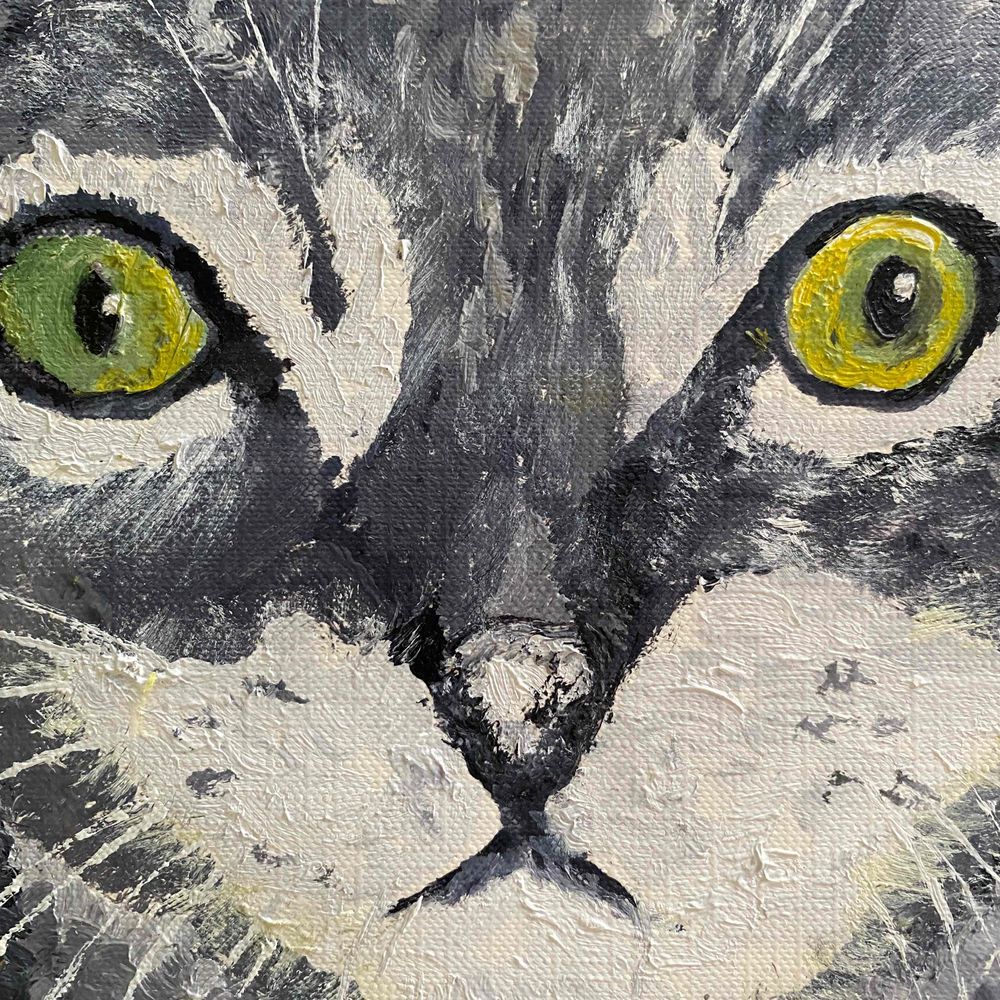
Fensterfreitag
#bildbeschreibung #blackandwhite
#Fensterfreitag #WindowFriday
#blackandwhitephotography
#edelsuesz #schwarzweiss
#schwarzweissfotografie
#bildbeschreibung #blackandwhite
#Fensterfreitag #WindowFriday
#blackandwhitephotography
#edelsuesz #schwarzweiss
#schwarzweissfotografie

March 13, 2025 at 11:00 PM
Reposted by sieben-grafik.de | Bluesky Backup

New post blog🎉
9 UI design tips for smarter marketing project designs
To stand out from the crowd, you’ll want to focus on making your UI as usable and effective as possible — these design tips can truly separate you from your competition.
penpot.app/blog/9-ui-de...
9 UI design tips for smarter marketing project designs
To stand out from the crowd, you’ll want to focus on making your UI as usable and effective as possible — these design tips can truly separate you from your competition.
penpot.app/blog/9-ui-de...

9 UI design tips for smarter marketing project designs
To stand out from the crowd, you’ll want to focus on making your UI as usable and effective as possible — these design tips can truly separate you from your competition.
penpot.app
March 14, 2025 at 10:17 AM
New post blog🎉
9 UI design tips for smarter marketing project designs
To stand out from the crowd, you’ll want to focus on making your UI as usable and effective as possible — these design tips can truly separate you from your competition.
penpot.app/blog/9-ui-de...
9 UI design tips for smarter marketing project designs
To stand out from the crowd, you’ll want to focus on making your UI as usable and effective as possible — these design tips can truly separate you from your competition.
penpot.app/blog/9-ui-de...
Reposted by sieben-grafik.de | Bluesky Backup

👉Gute Digitalisierung braucht Open Source! Unsere AG Open Source hat ein übersichtliches Starter Pack mit den wichtigsten #OpenSource Accounts auf Mastodon zusammengestellt. Helft mit, die Liste zu erweitern! Mehr Infos hier: d-64.org/open-source-...

February 28, 2025 at 10:17 AM
👉Gute Digitalisierung braucht Open Source! Unsere AG Open Source hat ein übersichtliches Starter Pack mit den wichtigsten #OpenSource Accounts auf Mastodon zusammengestellt. Helft mit, die Liste zu erweitern! Mehr Infos hier: d-64.org/open-source-...
Reposted by sieben-grafik.de | Bluesky Backup
Gemeinsam mit einem breiten gesellschaftlichen Bündnis aus mehr als 75 Organisationen fordern wir CDU/CSU und SPD in einem heute veröffentlichten Brief auf, die Kontrolle von Online-Plattformen und eine gemeinwohlorientierte Digitalisierung auf die Agenda der Sondierungsgespräche zu setzen.

Demokratie schützen, Gemeinwohl fördern: Online-Plattformen brauchen Kontrolle (Offener Brief) | D64 – Zentrum für digitalen Fortschritt
Act Now! Über 75 Verbände, Zivilgesellschaft, Verbraucherschutz, Kirchen, Gewerkschaften und Unternehmen fordern: Demokratische Diskursräume - auch im Digitalen!
d-64.org
March 4, 2025 at 9:47 AM
Gemeinsam mit einem breiten gesellschaftlichen Bündnis aus mehr als 75 Organisationen fordern wir CDU/CSU und SPD in einem heute veröffentlichten Brief auf, die Kontrolle von Online-Plattformen und eine gemeinwohlorientierte Digitalisierung auf die Agenda der Sondierungsgespräche zu setzen.
Reposted by sieben-grafik.de | Bluesky Backup

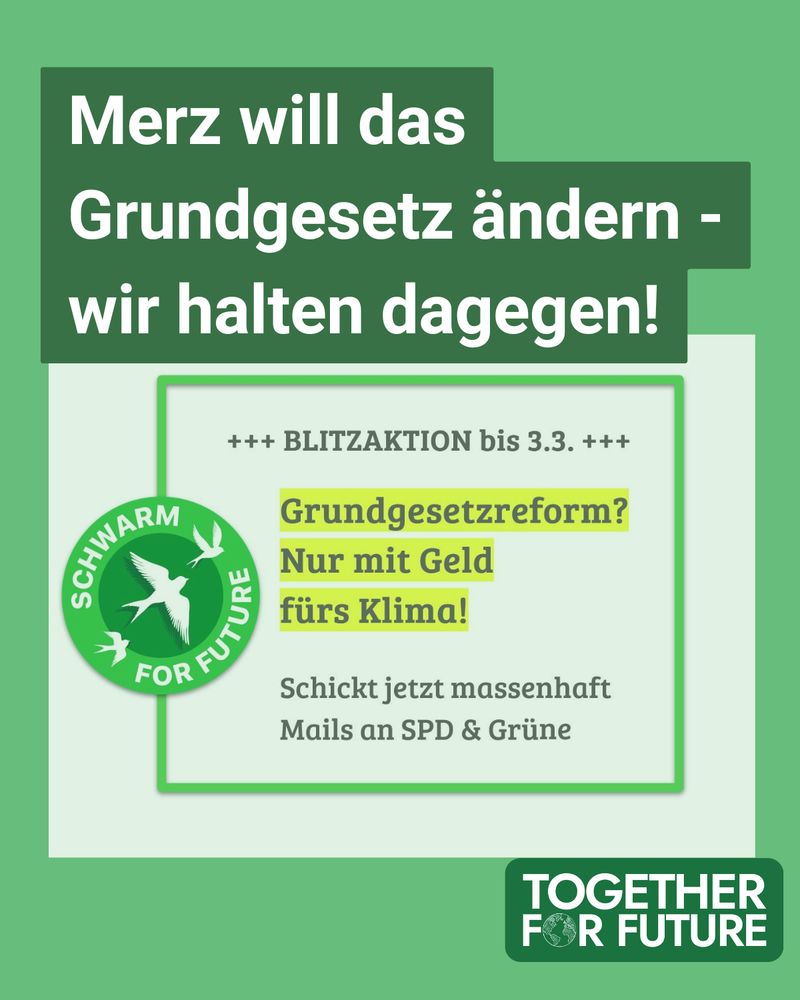
🚨 MERZ WILL ANS GRUNDGESETZ
Merz will das Grundgesetz ändern und ein neues Verteidigungs-Sondervermögen von 200 Milliarden Euro durch den „alten“ Bundestag drücken.
📣 WIR HALTEN DAGEGEN ...... mit Massenmails an SPD & Grüne
schwarmforfuture.net/abgeordnete-...
Merz will das Grundgesetz ändern und ein neues Verteidigungs-Sondervermögen von 200 Milliarden Euro durch den „alten“ Bundestag drücken.
📣 WIR HALTEN DAGEGEN ...... mit Massenmails an SPD & Grüne
schwarmforfuture.net/abgeordnete-...
February 27, 2025 at 1:01 PM
🚨 MERZ WILL ANS GRUNDGESETZ
Merz will das Grundgesetz ändern und ein neues Verteidigungs-Sondervermögen von 200 Milliarden Euro durch den „alten“ Bundestag drücken.
📣 WIR HALTEN DAGEGEN ...... mit Massenmails an SPD & Grüne
schwarmforfuture.net/abgeordnete-...
Merz will das Grundgesetz ändern und ein neues Verteidigungs-Sondervermögen von 200 Milliarden Euro durch den „alten“ Bundestag drücken.
📣 WIR HALTEN DAGEGEN ...... mit Massenmails an SPD & Grüne
schwarmforfuture.net/abgeordnete-...
Geht's Noch Social Media?!
Eine Empfehlung für #Mastodon : youtube.com/shorts/v5Y0C...
#SocialMedia #twitter #TwitterX #twittermigration
Eine Empfehlung für #Mastodon : youtube.com/shorts/v5Y0C...
#SocialMedia #twitter #TwitterX #twittermigration

Was soll Mastodon?
YouTube video by Geht's noch?!
youtube.com
February 28, 2025 at 4:23 PM
Geht's Noch Social Media?!
Eine Empfehlung für #Mastodon : youtube.com/shorts/v5Y0C...
#SocialMedia #twitter #TwitterX #twittermigration
Eine Empfehlung für #Mastodon : youtube.com/shorts/v5Y0C...
#SocialMedia #twitter #TwitterX #twittermigration