



Justin Fitzsimmons
@smn.l3ib.org.ap.brid.gy
He/Him - Toronto 🇨🇦 - Software developer
Big into nerd shit of all kinds, but especially vidya games. 🤓🕹
“I want shorter games with worse graphics made by people […]
[bridged from https://l3ib.org/@smn on the fediverse by https://fed.brid.gy/ ]
Big into nerd shit of all kinds, but especially vidya games. 🤓🕹
“I want shorter games with worse graphics made by people […]
[bridged from https://l3ib.org/@smn on the fediverse by https://fed.brid.gy/ ]
ohai.social
January 11, 2026 at 4:41 AM
funny how society (correctly) considers motor vehicles weapons only when they are being operated in the vicinity of "law enforcement" that needs something to be scared of
January 8, 2026 at 6:17 AM
funny how society (correctly) considers motor vehicles weapons only when they are being operated in the vicinity of "law enforcement" that needs something to be scared of
I don't usually make new years resolutions but in 2026 I'm starting with this: https://book.servo.org/contributing/getting-started.html
Getting Started - The Servo Book
book.servo.org
December 31, 2025 at 6:11 PM
I don't usually make new years resolutions but in 2026 I'm starting with this: https://book.servo.org/contributing/getting-started.html
Reposted by Justin Fitzsimmons

‘How did you know you were autistic’
‘I photocopied every bus pass I ever had and made a zine out of it because I really like buses’
‘I photocopied every bus pass I ever had and made a zine out of it because I really like buses’

December 22, 2025 at 4:56 AM
‘How did you know you were autistic’
‘I photocopied every bus pass I ever had and made a zine out of it because I really like buses’
‘I photocopied every bus pass I ever had and made a zine out of it because I really like buses’
Reposted by Justin Fitzsimmons
AI is just tech's version of rolling coal
December 21, 2025 at 5:48 AM
AI is just tech's version of rolling coal
Reposted by Justin Fitzsimmons

Author & TV host @ricksteves.bsky.social found out the local hygiene center for people experiencing homelessness was being shut down and sold, so he bought it to keep it open!
Article […]
[Original post on mstdn.ca]
Article […]
[Original post on mstdn.ca]

December 21, 2025 at 2:28 PM
Author & TV host @ricksteves.bsky.social found out the local hygiene center for people experiencing homelessness was being shut down and sold, so he bought it to keep it open!
Article […]
[Original post on mstdn.ca]
Article […]
[Original post on mstdn.ca]
AI is just tech's version of rolling coal
December 21, 2025 at 5:48 AM
AI is just tech's version of rolling coal
Reposted by Justin Fitzsimmons

"Let us be the repository of your passkeys" and "We may terminate your account at any time and permanently refuse to communicate with you" ... seems like a bad combination?
December 15, 2025 at 3:56 PM
"Let us be the repository of your passkeys" and "We may terminate your account at any time and permanently refuse to communicate with you" ... seems like a bad combination?
Reposted by Justin Fitzsimmons

I'm happy to announce arborium, a collection of 96 tree-sitter grammars (so far) that compile cleanly as crates and npm packages, for desktop & wasm.
It comes with themes, two rustdoc integrations, a clean HTML+ANSI highlighter, get it while it's hot:
https://arborium.bearcove.eu/#rust
It comes with themes, two rustdoc integrations, a clean HTML+ANSI highlighter, get it while it's hot:
https://arborium.bearcove.eu/#rust
December 14, 2025 at 1:06 AM
I'm happy to announce arborium, a collection of 96 tree-sitter grammars (so far) that compile cleanly as crates and npm packages, for desktop & wasm.
It comes with themes, two rustdoc integrations, a clean HTML+ANSI highlighter, get it while it's hot:
https://arborium.bearcove.eu/#rust
It comes with themes, two rustdoc integrations, a clean HTML+ANSI highlighter, get it while it's hot:
https://arborium.bearcove.eu/#rust
Reposted by Justin Fitzsimmons

The package manager in GitHub Actions might be the worst package manager in use today: https://nesbitt.io/2025/12/06/github-actions-package-manager.html
GitHub Actions Has a Package Manager, and It Might Be the Worst
After putting together ecosyste-ms/package-manager-resolvers, I started wondering what dependency resolution algorithm GitHub Actions uses. When you write `uses: actions/checkout@v4` in a workflow file, you’re declaring a dependency. GitHub resolves it, downloads it, and executes it. That’s package management. So I went spelunking into the runner codebase to see how it works. What I found was concerning.
Package managers are a critical part of software supply chain security. The industry has spent years hardening them after incidents like left-pad, event-stream, and countless others. Lockfiles, integrity hashes, and dependency visibility aren’t optional extras. They’re the baseline. GitHub Actions ignores all of it.
Compared to mature package ecosystems:
Feature | npm | Cargo | NuGet | Bundler | Go | Actions
---|---|---|---|---|---|---
Lockfile | ✓ | ✓ | ✓ | ✓ | ✓ | ✗
Transitive pinning | ✓ | ✓ | ✓ | ✓ | ✓ | ✗
Integrity hashes | ✓ | ✓ | ✓ | ✓ | ✓ | ✗
Dependency tree visibility | ✓ | ✓ | ✓ | ✓ | ✓ | ✗
Resolution specification | ✓ | ✓ | ✓ | ✓ | ✓ | ✗
The core problem is the lack of a lockfile. Every other package manager figured this out decades ago: you declare loose constraints in a manifest, the resolver picks specific versions, and the lockfile records exactly what was chosen. GitHub Actions has no equivalent. Every run re-resolves from your workflow file, and the results can change without any modification to your code.
Research from USENIX Security 2022 analyzed over 200,000 repositories and found that 99.7% execute externally developed Actions, 97% use Actions from unverified creators, and 18% run Actions with missing security updates. The researchers identified four fundamental security properties that CI/CD systems need: admittance control, execution control, code control, and access to secrets. GitHub Actions fails to provide adequate tooling for any of them. A follow-up study using static taint analysis found code injection vulnerabilities in over 4,300 workflows across 2.7 million analyzed. Nearly every GitHub Actions user is running third-party code with no verification, no lockfile, and no visibility into what that code depends on.
**Mutable versions.** When you pin to `actions/checkout@v4`, that tag can move. The maintainer can push a new commit and retag. Your workflow changes silently. A lockfile would record the SHA that `@v4` resolved to, giving you reproducibility while keeping version tags readable. Instead, you have to choose: readable tags with no stability, or unreadable SHAs with no automated update path.
GitHub has added mitigations. Immutable releases lock a release’s git tag after publication. Organizations can enforce SHA pinning as a policy. You can limit workflows to actions from verified creators. These help, but they only address the top-level dependency. They do nothing for transitive dependencies, which is the primary attack vector.
**Invisible transitive dependencies.** SHA pinning doesn’t solve this. Composite actions resolve their own dependencies, but you can’t see or control what they pull in. When you pin an action to a SHA, you only lock the outer file. If it internally pulls `some-helper@v1` with a mutable tag, your workflow is still vulnerable. You have zero visibility into this. A lockfile would record the entire resolved tree, making transitive dependencies visible and pinnable. Research on JavaScript Actions found that 54% contain at least one security weakness, with most vulnerabilities coming from indirect dependencies. The tj-actions/changed-files incident showed how this plays out in practice: a compromised action updated its transitive dependencies to exfiltrate secrets. With a lockfile, the unexpected transitive change would have been visible in a diff.
**No integrity verification.** npm records `integrity` hashes in the lockfile. Cargo records checksums in `Cargo.lock`. When you install, the package manager verifies the download matches what was recorded. Actions has nothing. You trust GitHub to give you the right code for a SHA. A lockfile with integrity hashes would let you verify that what you’re running matches what you resolved.
**Re-runs aren’t reproducible.** GitHub staff have confirmed this explicitly: “if the workflow uses some actions at a version, if that version was force pushed/updated, we will be fetching the latest version there.” A failed job re-run can silently get different code than the original run. Cache interaction makes it worse: caches only save on successful jobs, so a re-run after a force-push gets different code _and_ has to rebuild the cache. Two sources of non-determinism compounding. A lockfile would make re-runs deterministic: same lockfile, same code, every time.
**No dependency tree visibility.** npm has `npm ls`. Cargo has `cargo tree`. You can inspect your full dependency graph, find duplicates, trace how a transitive dependency got pulled in. Actions gives you nothing. You can’t see what your workflow actually depends on without manually reading every composite action’s source. A lockfile would be a complete manifest of your dependency tree.
**Undocumented resolution semantics.** Every package manager documents how dependency resolution works. npm has a spec. Cargo has a spec. Actions resolution is undocumented. The runner source is public, and the entire “resolution algorithm” is in ActionManager.cs. Here’s a simplified version of what it does:
// Simplified from actions/runner ActionManager.cs
async Task PrepareActionsAsync(steps) {
// Start fresh every time - no caching
DeleteDirectory("_work/_actions");
await PrepareActionsRecursiveAsync(steps, depth: 0);
}
async Task PrepareActionsRecursiveAsync(actions, depth) {
if (depth > 10)
throw new Exception("Composite action depth exceeded max depth 10");
foreach (var action in actions) {
// Resolution happens on GitHub's server - opaque to us
var downloadInfo = await GetDownloadInfoFromGitHub(action.Reference);
// Download and extract - no integrity verification
var tarball = await Download(downloadInfo.TarballUrl);
Extract(tarball, $"_actions/{action.Owner}/{action.Repo}/{downloadInfo.Sha}");
// If composite, recurse into its dependencies
var actionYml = Parse($"_actions/{action.Owner}/{action.Repo}/{downloadInfo.Sha}/action.yml");
if (actionYml.Type == "composite") {
// These nested actions may use mutable tags - we have no control
await PrepareActionsRecursiveAsync(actionYml.Steps, depth + 1);
}
}
}
That’s it. No version constraints, no deduplication (the same action referenced twice gets downloaded twice), no integrity checks. The tarball URL comes from GitHub’s API, and you trust them to return the right content for the SHA. A lockfile wouldn’t fix the missing spec, but it would at least give you a concrete record of what resolution produced.
Even setting lockfiles aside, Actions has other issues that proper package managers solved long ago.
**No registry.** Actions live in git repositories. There’s no central index, no security scanning, no malware detection, no typosquatting prevention. A real registry can flag malicious packages, store immutable copies independent of the source, and provide a single point for security response. The Marketplace exists but it’s a thin layer over repository search. Without a registry, there’s nowhere for immutable metadata to live. If an action’s source repository disappears or gets compromised, there’s no fallback.
**Shared mutable environment.** Actions aren’t sandboxed from each other. Two actions calling `setup-node` with different versions mutate the same `$PATH`. The outcome depends on execution order, not any deterministic resolution.
**No offline support.** Actions are pulled from GitHub on every run. There’s no offline installation mode, no vendoring mechanism, no way to run without network access. Other package managers let you vendor dependencies or set up private mirrors. With Actions, if GitHub is down, your CI is down.
**The namespace is GitHub usernames.** Anyone who creates a GitHub account owns that namespace for actions. Account takeovers and typosquatting are possible. When a popular action maintainer’s account gets compromised, attackers can push malicious code and retag. A lockfile with integrity hashes wouldn’t prevent account takeovers, but it would detect when the code changes unexpectedly. The hash mismatch would fail the build instead of silently running attacker-controlled code. Another option would be something like Go’s checksum database, a transparent log of known-good hashes that catches when the same version suddenly has different contents.
### How Did We Get Here?
The Actions runner is forked from Azure DevOps, designed for enterprises with controlled internal task libraries where you trust your pipeline tasks. GitHub bolted a public marketplace onto that foundation without rethinking the trust model. The addition of composite actions and reusable workflows created a dependency system, but the implementation ignored lessons from package management: lockfiles, integrity verification, transitive pinning, dependency visibility.
This matters beyond CI/CD. Trusted publishing is being rolled out across package registries: PyPI, npm, RubyGems, and others now let you publish packages directly from GitHub Actions using OIDC tokens instead of long-lived secrets. OIDC removes one class of attacks (stolen credentials) but amplifies another: the supply chain security of these registries now depends entirely on GitHub Actions, a system that lacks the lockfile and integrity controls these registries themselves require. A compromise in your workflow’s action dependencies can lead to malicious packages on registries with better security practices than the system they’re trusting to publish.
Other CI systems have done better. GitLab CI added an `integrity` keyword in version 17.9 that lets you specify a SHA256 hash for remote includes. If the hash doesn’t match, the pipeline fails. Their documentation explicitly warns that including remote configs “is similar to pulling a third-party dependency” and recommends pinning to full commit SHAs. GitLab recognized the problem and shipped integrity verification. GitHub closed the feature request.
GitHub’s design choices don’t just affect GitHub users. Forgejo Actions maintains compatibility with GitHub Actions, which means projects migrating to Codeberg for ethical reasons inherit the same broken CI architecture. The Forgejo maintainers openly acknowledge the problems, with contributors calling GitHub Actions’ ecosystem “terribly designed and executed.” But they’re stuck maintaining compatibility with it. Codeberg mirrors common actions to reduce GitHub dependency, but the fundamental issues are baked into the model itself. GitHub’s design flaws are spreading to the alternatives.
GitHub issue #2195 requested lockfile support. It was closed as “not planned” in 2022. Palo Alto’s “Unpinnable Actions” research documented how even SHA-pinned actions can have unpinnable transitive dependencies.
Dependabot can update action versions, which helps. Some teams vendor actions into their own repos. zizmor is excellent at scanning workflows and finding security issues. But these are workarounds for a system that lacks the basics.
The fix is a lockfile. Record resolved SHAs for every action reference, including transitives. Add integrity hashes. Make the dependency tree inspectable. GitHub closed the request three years ago and hasn’t revisited it.
* * *
**Further reading:**
* Characterizing the Security of GitHub CI Workflows - Koishybayev et al., USENIX Security 2022
* ARGUS: A Framework for Staged Static Taint Analysis of GitHub Workflows and Actions - Muralee et al., USENIX Security 2023
* New GitHub Action supply chain attack: reviewdog/action-setup - Wiz Research, 2025
* Unpinnable Actions: How Malicious Code Can Sneak into Your GitHub Actions Workflows
* GitHub Actions Worm: Compromising GitHub Repositories Through the Actions Dependency Tree
* setup-python: Action can be compromised via mutable dependency
nesbitt.io
December 6, 2025 at 1:21 PM
The package manager in GitHub Actions might be the worst package manager in use today: https://nesbitt.io/2025/12/06/github-actions-package-manager.html
After getting a Steam OS handheld and realizing that it runs basically his entire game collection, yet another nontechnical friend of mine has taken the plunge and replaced windows 11 with linux on his desktop PC.
Gamers are also surprisingly the segment of the market most able to resoundingly […]
Gamers are also surprisingly the segment of the market most able to resoundingly […]
Original post on l3ib.org
l3ib.org
December 8, 2025 at 3:07 AM
After getting a Steam OS handheld and realizing that it runs basically his entire game collection, yet another nontechnical friend of mine has taken the plunge and replaced windows 11 with linux on his desktop PC.
Gamers are also surprisingly the segment of the market most able to resoundingly […]
Gamers are also surprisingly the segment of the market most able to resoundingly […]
Reposted by Justin Fitzsimmons

My bank’s phone app just forced me to swipe through a “2025 wrapped” nonsense and then crashed. In hindsight, that feels about right for 2025.
December 4, 2025 at 10:16 AM
My bank’s phone app just forced me to swipe through a “2025 wrapped” nonsense and then crashed. In hindsight, that feels about right for 2025.
Reposted by Justin Fitzsimmons

So back in 1944, a German U-Boat Commander named Heinz-Wilhelm Eck did exactly what US Secretary of War Pete Hegseth ordered US military forces to do - kill the survivors of a destroyed boat at sea.
Now, as then, this is considered a War Crime.
In 1945, Commander Eck was tried, found guilty […]
Now, as then, this is considered a War Crime.
In 1945, Commander Eck was tried, found guilty […]
Original post on mastodon.social
mastodon.social
November 29, 2025 at 12:24 AM
So back in 1944, a German U-Boat Commander named Heinz-Wilhelm Eck did exactly what US Secretary of War Pete Hegseth ordered US military forces to do - kill the survivors of a destroyed boat at sea.
Now, as then, this is considered a War Crime.
In 1945, Commander Eck was tried, found guilty […]
Now, as then, this is considered a War Crime.
In 1945, Commander Eck was tried, found guilty […]
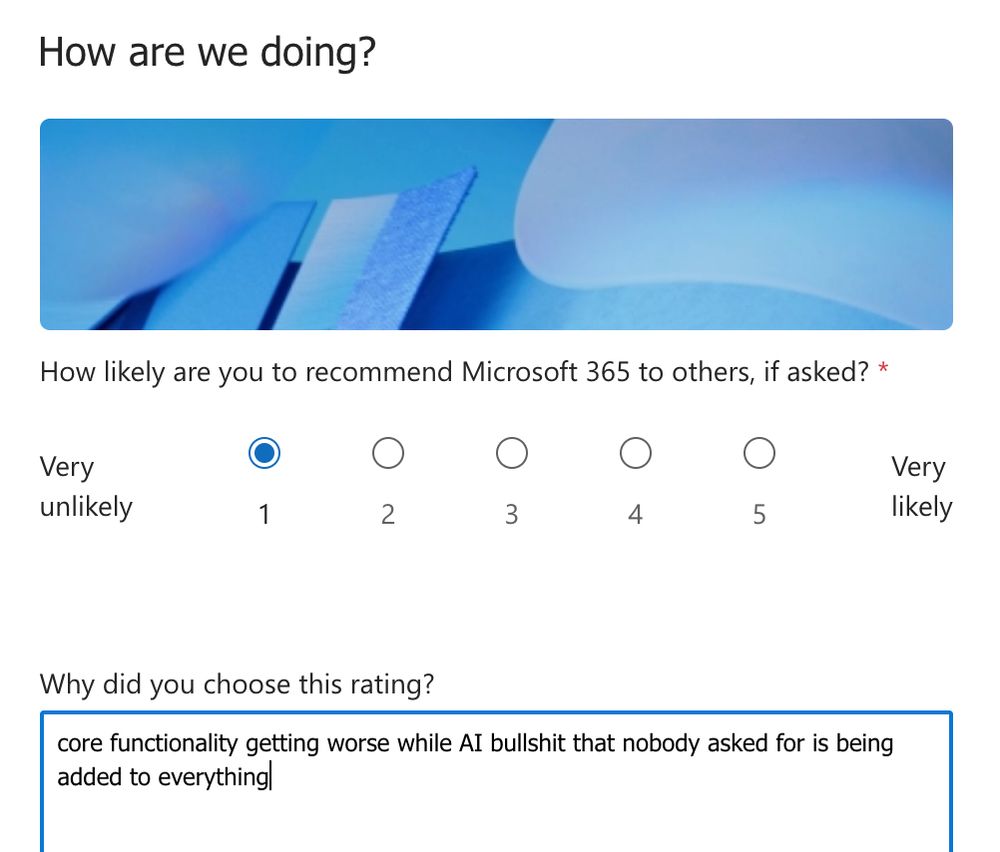
screaming into the void I'm sure but at least I got to do this today
November 24, 2025 at 4:30 PM
screaming into the void I'm sure but at least I got to do this today
Reposted by Justin Fitzsimmons

Many people are cheering for the popping of the "AI" bubble. Maybe it's not that simple though
https://tante.cc/2025/11/23/desire-to-pop/
https://tante.cc/2025/11/23/desire-to-pop/

Desire to Pop
Abstractions are powerful tools. Given enough abstraction everything gets somewhat simple. Somewhat clear. Also somewhat wrong. Abstraction turns everything real, material, consequential into mostly nothing. The abstraction of “a relationship” hides all the love and care and desire it might entail. The abstraction of “the border” hides the violence its defense entails. Given enough abstraction […]
tante.cc
November 22, 2025 at 11:11 PM
Many people are cheering for the popping of the "AI" bubble. Maybe it's not that simple though
https://tante.cc/2025/11/23/desire-to-pop/
https://tante.cc/2025/11/23/desire-to-pop/
google has made it so that if you opt out of letting them train AI with your email then they'll disable features that have been present in gmail for at least 10 years
November 21, 2025 at 2:30 AM
google has made it so that if you opt out of letting them train AI with your email then they'll disable features that have been present in gmail for at least 10 years

Liy (@[email protected])
Attached: 1 video I release my first VIdeo game for wii: Lily Skate
wetdry.world
November 20, 2025 at 3:58 AM
Reposted by Justin Fitzsimmons

Moziila didn’t have the ressource to keep a "subscribe to RSS" button in Firefox but has the manpower to build a full IA inside your browser.
And that’s all you need to know about the end of the web and the IA bubble.
And that’s all you need to know about the end of the web and the IA bubble.
November 16, 2025 at 1:10 PM
Moziila didn’t have the ressource to keep a "subscribe to RSS" button in Firefox but has the manpower to build a full IA inside your browser.
And that’s all you need to know about the end of the web and the IA bubble.
And that’s all you need to know about the end of the web and the IA bubble.
What Democrats say: "We're fighting to get you affordable health care"
What Democrats do: recriminalize cannabis
I wonder why their approval ratings are so low???
What Democrats do: recriminalize cannabis
I wonder why their approval ratings are so low???
November 13, 2025 at 1:56 AM
What Democrats say: "We're fighting to get you affordable health care"
What Democrats do: recriminalize cannabis
I wonder why their approval ratings are so low???
What Democrats do: recriminalize cannabis
I wonder why their approval ratings are so low???
Reposted by Justin Fitzsimmons

ICE Is Functioning Like an Occupying Army. I Know Because I Served in One.
https://truthout.org/articles/ice-is-functioning-like-an-occupying-army-i-know-because-i-served-in-one/?utm_campaign=davidaugust.com
#uspol #ice
https://truthout.org/articles/ice-is-functioning-like-an-occupying-army-i-know-because-i-served-in-one/?utm_campaign=davidaugust.com
#uspol #ice

ICE Is Functioning Like an Occupying Army. I Know Because I Served in One.
Veteran-led protests against Trump’s National Guard deployments encourage soldiers to resist Trump’s illegal orders.
truthout.org
November 12, 2025 at 1:58 PM
ICE Is Functioning Like an Occupying Army. I Know Because I Served in One.
https://truthout.org/articles/ice-is-functioning-like-an-occupying-army-i-know-because-i-served-in-one/?utm_campaign=davidaugust.com
#uspol #ice
https://truthout.org/articles/ice-is-functioning-like-an-occupying-army-i-know-because-i-served-in-one/?utm_campaign=davidaugust.com
#uspol #ice
Reposted by Justin Fitzsimmons

Key findings:
45% of all AI answers had at least one significant issue.
31% of responses showed serious sourcing problems – missing, misleading, or incorrect attributions.
20% contained major accuracy issues, including hallucinated details and outdated information.
Gemini performed worst with […]
45% of all AI answers had at least one significant issue.
31% of responses showed serious sourcing problems – missing, misleading, or incorrect attributions.
20% contained major accuracy issues, including hallucinated details and outdated information.
Gemini performed worst with […]
Original post on xoxo.zone
xoxo.zone
October 22, 2025 at 11:56 AM
Key findings:
45% of all AI answers had at least one significant issue.
31% of responses showed serious sourcing problems – missing, misleading, or incorrect attributions.
20% contained major accuracy issues, including hallucinated details and outdated information.
Gemini performed worst with […]
45% of all AI answers had at least one significant issue.
31% of responses showed serious sourcing problems – missing, misleading, or incorrect attributions.
20% contained major accuracy issues, including hallucinated details and outdated information.
Gemini performed worst with […]
#uspol
Trump: "Trade wars are good, and easy to win"
https://www.cnbc.com/2018/03/02/trump-trade-wars-are-good-and-easy-to-win.html
Trump: "China purposefully not buying U.S. soybeans"
https://www.youtube.com/watch?v=uot1xSdD0JM
Trump: "Trade wars are good, and easy to win"
https://www.cnbc.com/2018/03/02/trump-trade-wars-are-good-and-easy-to-win.html
Trump: "China purposefully not buying U.S. soybeans"
https://www.youtube.com/watch?v=uot1xSdD0JM

Trump doubles down: 'Trade wars are good, and easy to win'
Even if new tariffs spark an international trade war, Trump is confident the United States would come out on top.
www.cnbc.com
October 15, 2025 at 5:07 PM
#uspol
Trump: "Trade wars are good, and easy to win"
https://www.cnbc.com/2018/03/02/trump-trade-wars-are-good-and-easy-to-win.html
Trump: "China purposefully not buying U.S. soybeans"
https://www.youtube.com/watch?v=uot1xSdD0JM
Trump: "Trade wars are good, and easy to win"
https://www.cnbc.com/2018/03/02/trump-trade-wars-are-good-and-easy-to-win.html
Trump: "China purposefully not buying U.S. soybeans"
https://www.youtube.com/watch?v=uot1xSdD0JM
Reposted by Justin Fitzsimmons

1. Anti-trans outrage is losing its bite.
Last week, Elon Musk led a mass boycott campaign to get trans characters removed from shows on the platform.
Major conservatives joined in.
Now, we have the result: the boycott was a fizzle, and Netflix stock is up.
Subscribe to support my journalism.
Last week, Elon Musk led a mass boycott campaign to get trans characters removed from shows on the platform.
Major conservatives joined in.
Now, we have the result: the boycott was a fizzle, and Netflix stock is up.
Subscribe to support my journalism.

Netflix Stock Up As Elon Musk's Anti-Trans Boycott Fails To Materialize
Last week, conservatives tried to cancel Netflix to force the carrier to remove transgender characters.
www.erininthemorning.com
October 9, 2025 at 5:03 PM
1. Anti-trans outrage is losing its bite.
Last week, Elon Musk led a mass boycott campaign to get trans characters removed from shows on the platform.
Major conservatives joined in.
Now, we have the result: the boycott was a fizzle, and Netflix stock is up.
Subscribe to support my journalism.
Last week, Elon Musk led a mass boycott campaign to get trans characters removed from shows on the platform.
Major conservatives joined in.
Now, we have the result: the boycott was a fizzle, and Netflix stock is up.
Subscribe to support my journalism.