



Sorek Lab
@soreklab.bsky.social
Using an Alphafold co-folding screen, we found that some phages also encode small proteins that directly bind the defensive RES domain and inhibit aRES ability to cleave NAD

January 29, 2026 at 3:34 PM
Using an Alphafold co-folding screen, we found that some phages also encode small proteins that directly bind the defensive RES domain and inhibit aRES ability to cleave NAD
Then, we found that some phages evolved an extended NARP1 pathway, which includes a phosphatase. This phosphatase removes the additional phosphate from ADPR, and now NARP1 can work again


January 29, 2026 at 3:34 PM
Then, we found that some phages evolved an extended NARP1 pathway, which includes a phosphatase. This phosphatase removes the additional phosphate from ADPR, and now NARP1 can work again
Now, we found defense genes that rely on RES domains, which also cleave NAD+ but leave a phosphate group on ADPR
This mode of NAD+ cleavage renders phage NARP1 inactive, because the pathway cannot use ADPR-1P as a substrate
So this system, named aRES, defends from phages even if they encode NARP1
This mode of NAD+ cleavage renders phage NARP1 inactive, because the pathway cannot use ADPR-1P as a substrate
So this system, named aRES, defends from phages even if they encode NARP1

January 29, 2026 at 3:34 PM
Now, we found defense genes that rely on RES domains, which also cleave NAD+ but leave a phosphate group on ADPR
This mode of NAD+ cleavage renders phage NARP1 inactive, because the pathway cannot use ADPR-1P as a substrate
So this system, named aRES, defends from phages even if they encode NARP1
This mode of NAD+ cleavage renders phage NARP1 inactive, because the pathway cannot use ADPR-1P as a substrate
So this system, named aRES, defends from phages even if they encode NARP1
Two years ago we discovered that many phages encode a pathway that can rebuild NAD directly from ADPR and Nam, the debris left after NAD was broken by bacterial defenses. We called this pathway NAD reconstitution pathway 1 - NARP1 (Osterman, Nature 2024)

January 29, 2026 at 3:34 PM
Two years ago we discovered that many phages encode a pathway that can rebuild NAD directly from ADPR and Nam, the debris left after NAD was broken by bacterial defenses. We called this pathway NAD reconstitution pathway 1 - NARP1 (Osterman, Nature 2024)
Many bacteria degrade their entire NAD+ pool when they sense phage infection. NAD depletion deprives the phage of this essential molecule and prevents it from replicating
The bacterial defense systems typically break NAD into two molecules: ADPR and Nam
The bacterial defense systems typically break NAD into two molecules: ADPR and Nam

January 29, 2026 at 3:34 PM
Many bacteria degrade their entire NAD+ pool when they sense phage infection. NAD depletion deprives the phage of this essential molecule and prevents it from replicating
The bacterial defense systems typically break NAD into two molecules: ADPR and Nam
The bacterial defense systems typically break NAD into two molecules: ADPR and Nam
Preprint: Systematic discovery of TIR-based immune signaling systems in bacteria
Conservation of TIR-derived signals accross the tree of life! We found bacterial TIR immune systems that signal via canonical cADPR (like in humans) and 2'cADPR (a plant immune signal).
Documented 11 Thoeris types
Conservation of TIR-derived signals accross the tree of life! We found bacterial TIR immune systems that signal via canonical cADPR (like in humans) and 2'cADPR (a plant immune signal).
Documented 11 Thoeris types

December 4, 2025 at 1:56 PM
Preprint: Systematic discovery of TIR-based immune signaling systems in bacteria
Conservation of TIR-derived signals accross the tree of life! We found bacterial TIR immune systems that signal via canonical cADPR (like in humans) and 2'cADPR (a plant immune signal).
Documented 11 Thoeris types
Conservation of TIR-derived signals accross the tree of life! We found bacterial TIR immune systems that signal via canonical cADPR (like in humans) and 2'cADPR (a plant immune signal).
Documented 11 Thoeris types
Congratulations to Sorek lab alumnus Nitzan Tal, who won the prestigious 2025 Science & SciLifeLab prize for the best PhD thesis in Systems Biology! 💫
Read her Prize Assay, published in the journal Science today
www.science.org/doi/10.1126/...
@nitzantal.bsky.social
Read her Prize Assay, published in the journal Science today
www.science.org/doi/10.1126/...
@nitzantal.bsky.social

November 14, 2025 at 6:33 PM
Congratulations to Sorek lab alumnus Nitzan Tal, who won the prestigious 2025 Science & SciLifeLab prize for the best PhD thesis in Systems Biology! 💫
Read her Prize Assay, published in the journal Science today
www.science.org/doi/10.1126/...
@nitzantal.bsky.social
Read her Prize Assay, published in the journal Science today
www.science.org/doi/10.1126/...
@nitzantal.bsky.social
Preprint: Bacteria sense virus-induced genome degradation via methylated mononucleotides
tinyurl.com/ch3damp
We show how molecular byproducts released during virus-induced cell exploitation are used as signals to trigger host immunity
Revealed by the amazing Ilya Osterman. See his thread below👇
tinyurl.com/ch3damp
We show how molecular byproducts released during virus-induced cell exploitation are used as signals to trigger host immunity
Revealed by the amazing Ilya Osterman. See his thread below👇

November 6, 2025 at 10:39 AM
Preprint: Bacteria sense virus-induced genome degradation via methylated mononucleotides
tinyurl.com/ch3damp
We show how molecular byproducts released during virus-induced cell exploitation are used as signals to trigger host immunity
Revealed by the amazing Ilya Osterman. See his thread below👇
tinyurl.com/ch3damp
We show how molecular byproducts released during virus-induced cell exploitation are used as signals to trigger host immunity
Revealed by the amazing Ilya Osterman. See his thread below👇
Together with Melanie Blockesch and David Adams from EPFL, we show that plasmids expressing synthetic anti-defense proteins successfully transform and become retained in V. cholerae, enabling stable plasmid maintenance
7/n
7/n

September 2, 2025 at 10:48 AM
Together with Melanie Blockesch and David Adams from EPFL, we show that plasmids expressing synthetic anti-defense proteins successfully transform and become retained in V. cholerae, enabling stable plasmid maintenance
7/n
7/n
Engineering phages to express multiple anti-defense peptides in a row enabled them to infect bacteria with multiple defense systems. We believe this approach will allow using phages as therapy against bacteria that encode many defense systems
5/n
5/n

September 2, 2025 at 10:48 AM
Engineering phages to express multiple anti-defense peptides in a row enabled them to infect bacteria with multiple defense systems. We believe this approach will allow using phages as therapy against bacteria that encode many defense systems
5/n
5/n
We developed a high-throughput screening approach to assess the new designs. The technique rapidly detects peptides that efficiently inhibit bacterial defenses in vivo. We showed in vitro that the peptides tightly bind the defense proteins in nanomolar range affinity, and inhibit their activity
4/n
4/n

September 2, 2025 at 10:48 AM
We developed a high-throughput screening approach to assess the new designs. The technique rapidly detects peptides that efficiently inhibit bacterial defenses in vivo. We showed in vitro that the peptides tightly bind the defense proteins in nanomolar range affinity, and inhibit their activity
4/n
4/n
New AI tools now allow the design of peptides that bind protein targets. We used RFdiffusion to design peptides that bind active sites of defense system proteins. These peptides do not exist in nature – they are completely “made up”!
3/n
3/n

September 2, 2025 at 10:48 AM
New AI tools now allow the design of peptides that bind protein targets. We used RFdiffusion to design peptides that bind active sites of defense system proteins. These peptides do not exist in nature – they are completely “made up”!
3/n
3/n
Preprint: We discovered phage proteins that sequester diverse immune signaling molecules, including cUMP, cCMP, and N7-cADPR
The first viral sponges to inhibit Pycsar and type IV Thoeris
Congrats to talented leading author Romi Hadary! Read her thread to learn more about our findings
The first viral sponges to inhibit Pycsar and type IV Thoeris
Congrats to talented leading author Romi Hadary! Read her thread to learn more about our findings


August 25, 2025 at 1:00 PM
Preprint: We discovered phage proteins that sequester diverse immune signaling molecules, including cUMP, cCMP, and N7-cADPR
The first viral sponges to inhibit Pycsar and type IV Thoeris
Congrats to talented leading author Romi Hadary! Read her thread to learn more about our findings
The first viral sponges to inhibit Pycsar and type IV Thoeris
Congrats to talented leading author Romi Hadary! Read her thread to learn more about our findings
Some immune proteins produce altered nucleotides that poison viral replication. Viperin proteins, conserved from bacteria to humans, modify nucleotides to remove their 3’ OH moiety. The modified nucleotide is incorporated into the replicating viral RNA, and terminates viral replication
14/16
14/16

July 30, 2025 at 6:05 AM
Some immune proteins produce altered nucleotides that poison viral replication. Viperin proteins, conserved from bacteria to humans, modify nucleotides to remove their 3’ OH moiety. The modified nucleotide is incorporated into the replicating viral RNA, and terminates viral replication
14/16
14/16
As one could expect, viruses developed a huge variety of molecular techniques to evade or suppress host nucleotide signaling. We tried to summarize these in one (rather complex) figure
13/16
13/16

July 30, 2025 at 6:05 AM
As one could expect, viruses developed a huge variety of molecular techniques to evade or suppress host nucleotide signaling. We tried to summarize these in one (rather complex) figure
13/16
13/16
Bacteria, masters of innovation and diversity, employ other immune pathways that use the nucleotide pool for substrates. Type III CRISPR systems build large “rings” of adenosines, while the Pycsar system produces cyclic CMP and cyclic UMP as immune signaling molecules
12/16
12/16

July 30, 2025 at 6:05 AM
Bacteria, masters of innovation and diversity, employ other immune pathways that use the nucleotide pool for substrates. Type III CRISPR systems build large “rings” of adenosines, while the Pycsar system produces cyclic CMP and cyclic UMP as immune signaling molecules
12/16
12/16
Bacterial and plant immune TIRs produce “exotic” immune signaling molecules. In some cases, these are versions of cyclic ADPR (cADPR). In other cases the signaling molecules comprise ADPR conjugated to histidine (His-ADPR) or ADPR conjugated to ATP
11/16
11/16

July 30, 2025 at 6:05 AM
Bacterial and plant immune TIRs produce “exotic” immune signaling molecules. In some cases, these are versions of cyclic ADPR (cADPR). In other cases the signaling molecules comprise ADPR conjugated to histidine (His-ADPR) or ADPR conjugated to ATP
11/16
11/16
Bacteria and plants share immune pathways that rely on ADP-ribose (ADPR) derivatives as immune signaling molecules. These molecules are produced by TIR proteins, which are enzymes that process NAD to generate signaling molecules
10/16
10/16

July 30, 2025 at 6:05 AM
Bacteria and plants share immune pathways that rely on ADP-ribose (ADPR) derivatives as immune signaling molecules. These molecules are produced by TIR proteins, which are enzymes that process NAD to generate signaling molecules
10/16
10/16
The cGAS-STING pathway evolved from a large family of bacterial defense systems called CBASS (cyclic oligonucleotide based antiphage signaling systems). These systems produce a variety of cyclic di-nucleotides and tri-nucleotides as signaling molecules. About 15% of all bacteria encode CBASS
9/16
9/16

July 30, 2025 at 6:05 AM
The cGAS-STING pathway evolved from a large family of bacterial defense systems called CBASS (cyclic oligonucleotide based antiphage signaling systems). These systems produce a variety of cyclic di-nucleotides and tri-nucleotides as signaling molecules. About 15% of all bacteria encode CBASS
9/16
9/16
The human cGAS-STING pathway uses the nucleotides GMP and AMP as building blocks to generate the immune signaling molecule cyclic GMP-AMP (cGAMP). In other animals, cGAS-like proteins (cGLRs) produce alternative molecules, for example cyclic UMP-AMP
8/16
8/16

July 30, 2025 at 6:05 AM
The human cGAS-STING pathway uses the nucleotides GMP and AMP as building blocks to generate the immune signaling molecule cyclic GMP-AMP (cGAMP). In other animals, cGAS-like proteins (cGLRs) produce alternative molecules, for example cyclic UMP-AMP
8/16
8/16
In bacteria, some defense systems convert ATP and deoxy-ATP to their inosine derivatives – ITP and dITP. This halts phage replication in a way that is not yet completely understood
5/
5/

July 30, 2025 at 6:05 AM
In bacteria, some defense systems convert ATP and deoxy-ATP to their inosine derivatives – ITP and dITP. This halts phage replication in a way that is not yet completely understood
5/
5/
Many defense mechanisms in bacteria respond to phage by depleting ATP or NAD (nicotinamide adenine dinucleotide). Both nucleotides are essential for energy metabolism. No energy = no viral replication. And sometimes NAD or ATP depletion causes premature activation of phage lysis machinery
4/
4/

July 30, 2025 at 6:05 AM
Many defense mechanisms in bacteria respond to phage by depleting ATP or NAD (nicotinamide adenine dinucleotide). Both nucleotides are essential for energy metabolism. No energy = no viral replication. And sometimes NAD or ATP depletion causes premature activation of phage lysis machinery
4/
4/
Nucleotide depletion is a major aspect of antiviral immunity. In humans and bacteria, immune pathways deplete individual deoxy-nucleotides as an antiviral measure. The logic is simple: when the building blocks for making DNA are missing, the virus cannot replicate
3/
3/

July 30, 2025 at 6:05 AM
Nucleotide depletion is a major aspect of antiviral immunity. In humans and bacteria, immune pathways deplete individual deoxy-nucleotides as an antiviral measure. The logic is simple: when the building blocks for making DNA are missing, the virus cannot replicate
3/
3/
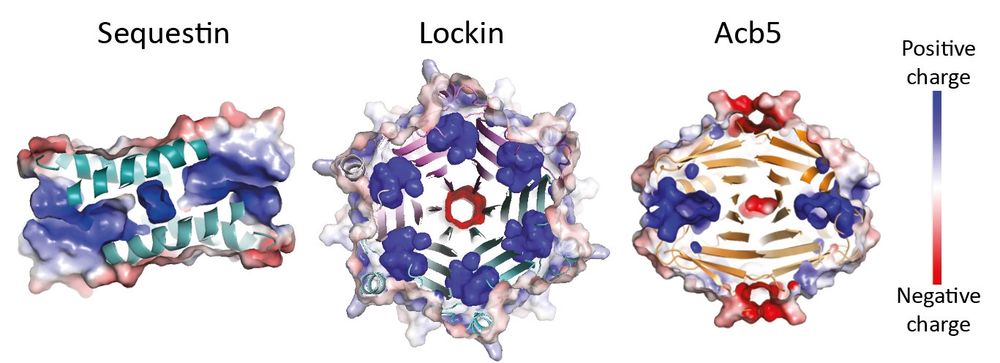
Preprint: “Structural modeling reveals viral proteins that manipulate host immune signaling”
Using AI-guided structural modeling, we find new families of viral proteins that sequester or cleave host immune signaling molecules
Congrats Nitzan Tal!
www.biorxiv.org/content/10.1...
Using AI-guided structural modeling, we find new families of viral proteins that sequester or cleave host immune signaling molecules
Congrats Nitzan Tal!
www.biorxiv.org/content/10.1...
July 14, 2025 at 7:36 AM
Preprint: “Structural modeling reveals viral proteins that manipulate host immune signaling”
Using AI-guided structural modeling, we find new families of viral proteins that sequester or cleave host immune signaling molecules
Congrats Nitzan Tal!
www.biorxiv.org/content/10.1...
Using AI-guided structural modeling, we find new families of viral proteins that sequester or cleave host immune signaling molecules
Congrats Nitzan Tal!
www.biorxiv.org/content/10.1...
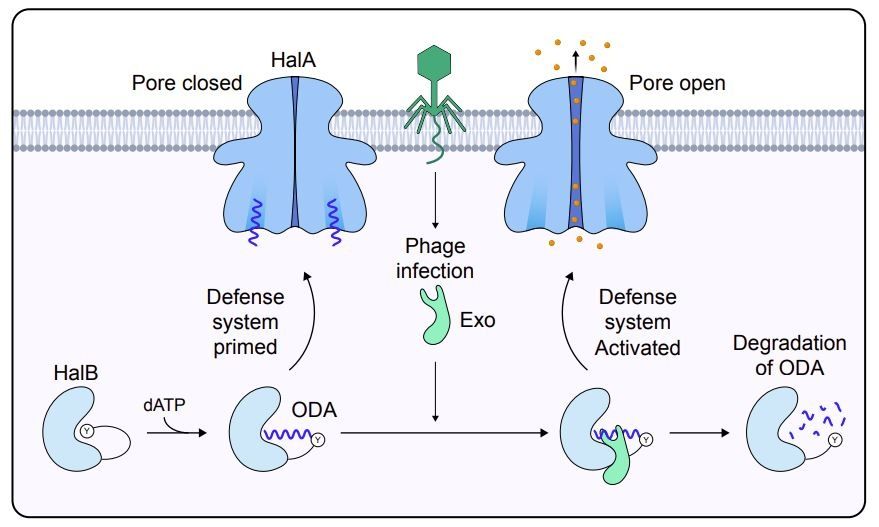
A beautiful discovery by Joel Tan and Philip Kranzusch, out today in Nature:
A DNA-gated molecular guard controls bacterial Hailong anti-phage defence
Congrats Joel and Philip! Was a pleasure to contribute to this discovery together with Sarah Melamed
www.nature.com/articles/s41...
A DNA-gated molecular guard controls bacterial Hailong anti-phage defence
Congrats Joel and Philip! Was a pleasure to contribute to this discovery together with Sarah Melamed
www.nature.com/articles/s41...
April 30, 2025 at 6:59 PM
A beautiful discovery by Joel Tan and Philip Kranzusch, out today in Nature:
A DNA-gated molecular guard controls bacterial Hailong anti-phage defence
Congrats Joel and Philip! Was a pleasure to contribute to this discovery together with Sarah Melamed
www.nature.com/articles/s41...
A DNA-gated molecular guard controls bacterial Hailong anti-phage defence
Congrats Joel and Philip! Was a pleasure to contribute to this discovery together with Sarah Melamed
www.nature.com/articles/s41...