


Michael Hothorn
@structplantbio.bsky.social
Structural biologist interested in all things green. Professor at University of Geneva, Switzerland. https://web.structplantbio.org/
@fxrico.bsky.social deleted the single BSU1 gene in Marchantia, resulting in a mass of undifferentiated cells & strong patterning defects. Cell cycle markers are highly active in the thallus. Our data point to a function for Kelch phosphatases in the cell cycle not in BR signaling (6/6).

January 7, 2026 at 7:53 AM
@fxrico.bsky.social deleted the single BSU1 gene in Marchantia, resulting in a mass of undifferentiated cells & strong patterning defects. Cell cycle markers are highly active in the thallus. Our data point to a function for Kelch phosphatases in the cell cycle not in BR signaling (6/6).
In Andrea’s structure the C-terminal tail of BSU1 is phosphorylated and bound to the active site. Andrea and Pierre showed that this phosphorylation is caused by the CDK1-cyclin-CKS1 complex, very similar to PP1, where no structure is available. The phosphorylation inhibits BSU1 activity (5/6).

January 7, 2026 at 7:51 AM
In Andrea’s structure the C-terminal tail of BSU1 is phosphorylated and bound to the active site. Andrea and Pierre showed that this phosphorylation is caused by the CDK1-cyclin-CKS1 complex, very similar to PP1, where no structure is available. The phosphorylation inhibits BSU1 activity (5/6).
Oded and Felix Rico generated CRISPR/Cas9 knock-out mutants of all Kelch phosphatases in Arabidopsis. These mutants have a fertility defect, suggesting a function in embryo development, many more stomata than wild type, but wild type-like BR responses. (4/6)

January 7, 2026 at 7:50 AM
Oded and Felix Rico generated CRISPR/Cas9 knock-out mutants of all Kelch phosphatases in Arabidopsis. These mutants have a fertility defect, suggesting a function in embryo development, many more stomata than wild type, but wild type-like BR responses. (4/6)
BSU1 was originally identified in an activation tagging screen in the weak BR receptor mutant bri1-5. Oded Pri-Tal found, to our surprise, that also phosphatase-dead versions of the enzyme can rescue the bri1-5 mutant. A mutant in the RVxF substrate binding groove does not rescue. (3/6)

January 7, 2026 at 7:50 AM
BSU1 was originally identified in an activation tagging screen in the weak BR receptor mutant bri1-5. Oded Pri-Tal found, to our surprise, that also phosphatase-dead versions of the enzyme can rescue the bri1-5 mutant. A mutant in the RVxF substrate binding groove does not rescue. (3/6)
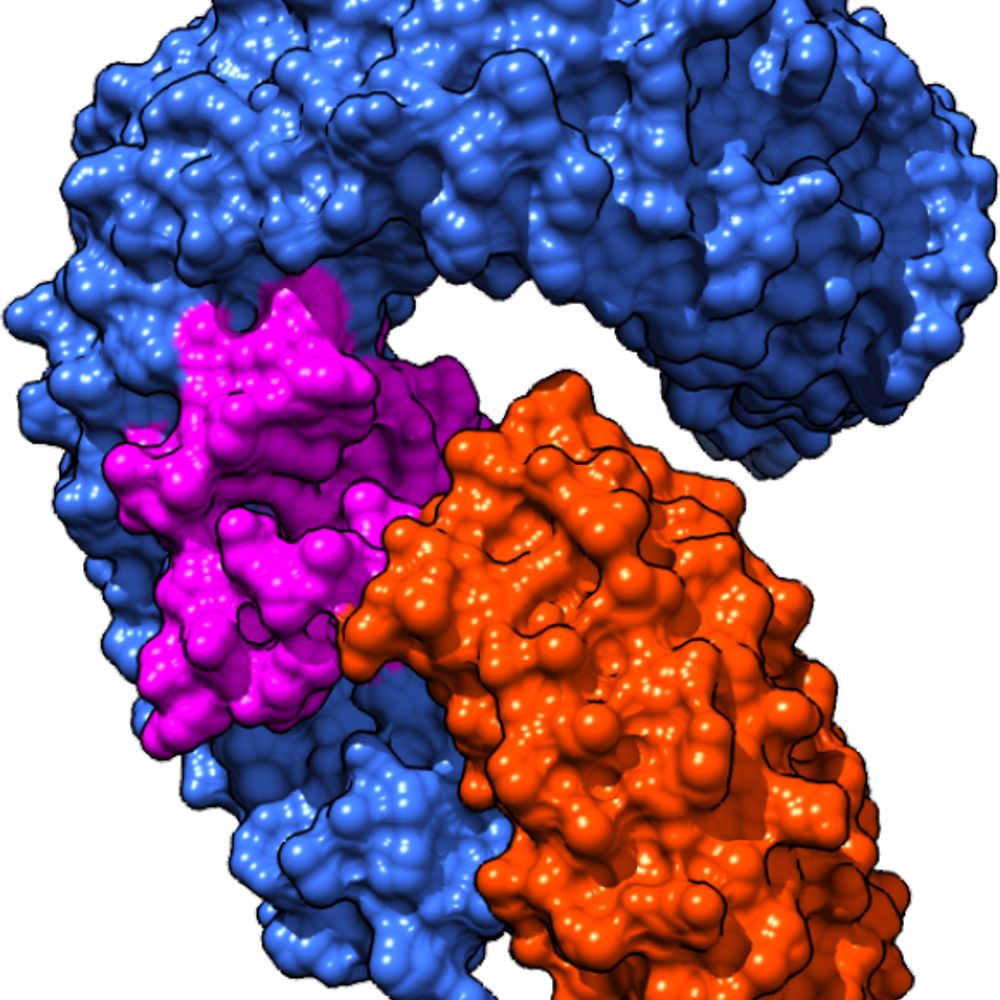
A crystal structure from Andrea Moretti of the Kelch phosphatase BSU1 reveals that it looks virtually identical to PP1, a Ser/Thr phosphatase involved in cell cycle regulation. Consistently, Pierre Raia could show that BSU1 is an efficient Ser/Thr, not a tyrosine phosphatase in vitro. (2/6)

January 7, 2026 at 7:49 AM
A crystal structure from Andrea Moretti of the Kelch phosphatase BSU1 reveals that it looks virtually identical to PP1, a Ser/Thr phosphatase involved in cell cycle regulation. Consistently, Pierre Raia could show that BSU1 is an efficient Ser/Thr, not a tyrosine phosphatase in vitro. (2/6)
Have a great start in Mainz Laura! I really hope you like en.wikipedia.org/wiki/Mainz_c...

Mainz carnival - Wikipedia
en.wikipedia.org
December 14, 2025 at 5:36 PM
Have a great start in Mainz Laura! I really hope you like en.wikipedia.org/wiki/Mainz_c...
I hope he just finished it 😉
December 14, 2025 at 5:32 PM
I hope he just finished it 😉
This project has been a joint effort with the Fiedler and Panse labs, supported by an @snf-fns.ch Sinergia grant and the @erc.europa.eu. The work from my lab was done by PhD student Kristina Sturm, postdocs Oded Pri-Tal, @fxrico.bsky.social, @hmchen93.bsky.social and technician Larissa Broger (6/6).

November 29, 2025 at 7:27 PM
This project has been a joint effort with the Fiedler and Panse labs, supported by an @snf-fns.ch Sinergia grant and the @erc.europa.eu. The work from my lab was done by PhD student Kristina Sturm, postdocs Oded Pri-Tal, @fxrico.bsky.social, @hmchen93.bsky.social and technician Larissa Broger (6/6).
Interestingly, only the α-subunit, not the α2β2 CK2 holoenzyme, is regulated by PP-InsPs in vitro. Genetic analyses in Arabidopsis and Marchantia indicate that α-subunits can act independently of β-subunits, underscoring the physiological relevance of PP-InsP-mediated regulation of CK2. (5/6)

November 29, 2025 at 7:25 PM
Interestingly, only the α-subunit, not the α2β2 CK2 holoenzyme, is regulated by PP-InsPs in vitro. Genetic analyses in Arabidopsis and Marchantia indicate that α-subunits can act independently of β-subunits, underscoring the physiological relevance of PP-InsP-mediated regulation of CK2. (5/6)
Mutations in the CK2 PP-InsP binding site alter flowering time in Arabidopsis. In parallel, the Panse lab showed that this site is essential for CK2 function in yeast (4/6).

November 29, 2025 at 7:23 PM
Mutations in the CK2 PP-InsP binding site alter flowering time in Arabidopsis. In parallel, the Panse lab showed that this site is essential for CK2 function in yeast (4/6).
Notably, we found the α-subunit of casein kinase 2 (CK2) interact with PP-InsPs and with the PP-InsP kinase VIH2. CK2 binds InsP6/7/8 with micromolar affinity. PP-InsP binding reduces substrate phosphorylation by occupying the kinase’s basic substrate-binding surface (3/6).

November 29, 2025 at 7:19 PM
Notably, we found the α-subunit of casein kinase 2 (CK2) interact with PP-InsPs and with the PP-InsP kinase VIH2. CK2 binds InsP6/7/8 with micromolar affinity. PP-InsP binding reduces substrate phosphorylation by occupying the kinase’s basic substrate-binding surface (3/6).
The first major surprise was the prevalence of deeply conserved protein complexes among the identified interactors, including the spliceosome, the ribosome, the CFlm complex, and numerous signaling proteins such as protein kinases. (2/6).

November 29, 2025 at 7:16 PM
The first major surprise was the prevalence of deeply conserved protein complexes among the identified interactors, including the spliceosome, the ribosome, the CFlm complex, and numerous signaling proteins such as protein kinases. (2/6).