




Sumiko Tsukamoto
@sumikotsuka.bsky.social
Reposted by Sumiko Tsukamoto
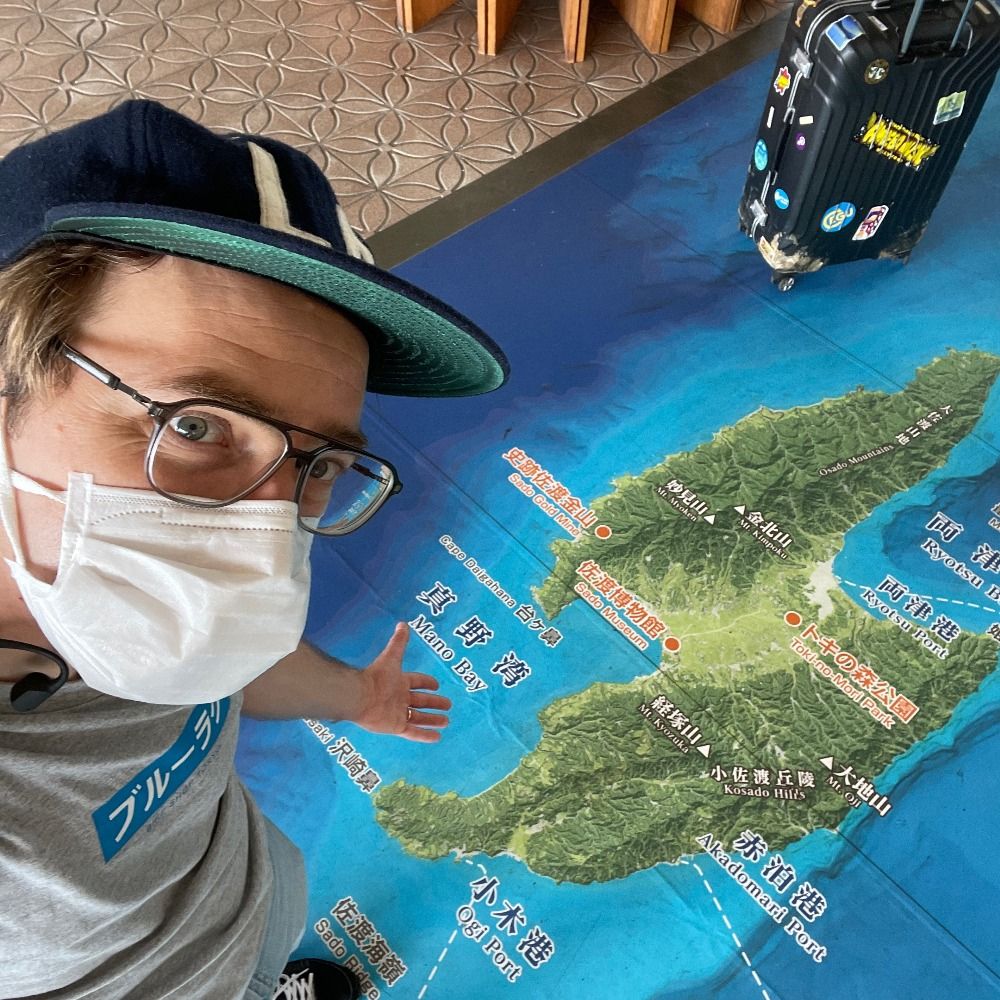
On Noto Peninsula where coseismic uplift was ~2m.
Sequence pre-earthquake, EQ +3 months, EQ +23 months. I thought we would be able to monitor this nice flat surface for weathering efficiency over the years…
Sequence pre-earthquake, EQ +3 months, EQ +23 months. I thought we would be able to monitor this nice flat surface for weathering efficiency over the years…


November 14, 2025 at 9:43 PM
On Noto Peninsula where coseismic uplift was ~2m.
Sequence pre-earthquake, EQ +3 months, EQ +23 months. I thought we would be able to monitor this nice flat surface for weathering efficiency over the years…
Sequence pre-earthquake, EQ +3 months, EQ +23 months. I thought we would be able to monitor this nice flat surface for weathering efficiency over the years…
Reposted by Sumiko Tsukamoto

Too old, too dirty, to unradiogenic? Can’t use your #speleothem? Don’t despair! ITL dating is here to help you out! www.sciencedirect.com/science/arti... @speleoseb.bsky.social @sumikotsuka.bsky.social

Isothermal thermoluminescence dating of speleothem growth – A case study from Bleßberg cave 2, Germany
Speleothems are a key archive of past climatic and environmental changes. 230Th/U dating is the most commonly used method to determine speleothem ages…
www.sciencedirect.com
December 6, 2024 at 11:13 PM
Too old, too dirty, to unradiogenic? Can’t use your #speleothem? Don’t despair! ITL dating is here to help you out! www.sciencedirect.com/science/arti... @speleoseb.bsky.social @sumikotsuka.bsky.social
Reposted by Sumiko Tsukamoto
Our work on surface deformation by the Noto Earthquake is finally out! Fukushima Yo led a team to create and ground-truth a full 3D deformation field from InSAR on the entire Peninsula. We show that repetition of similar quakes explains the 1st-order landscape features. 1/5
doi.org/10.1126/scia...
doi.org/10.1126/scia...

Landscape changes caused by the 2024 Noto Peninsula earthquake in Japan
Deformation due to the Noto Peninsula earthquake showed that its repetition shaped the Peninsula’s modern landscapes.
doi.org
December 5, 2024 at 10:38 PM
Our work on surface deformation by the Noto Earthquake is finally out! Fukushima Yo led a team to create and ground-truth a full 3D deformation field from InSAR on the entire Peninsula. We show that repetition of similar quakes explains the 1st-order landscape features. 1/5
doi.org/10.1126/scia...
doi.org/10.1126/scia...
Reposted by Sumiko Tsukamoto
A recurring question for us: Where do beach cobbles come from?
Here a cool answer on a ~340ka terrace that shows strath & sed cover:
(Salt?) weathering of volcaniclastics frees clasts when it was a coastal (intertidal?) platform. Strongest survive & make up sediment. Or so we think.
Here a cool answer on a ~340ka terrace that shows strath & sed cover:
(Salt?) weathering of volcaniclastics frees clasts when it was a coastal (intertidal?) platform. Strongest survive & make up sediment. Or so we think.


November 14, 2024 at 12:05 PM
A recurring question for us: Where do beach cobbles come from?
Here a cool answer on a ~340ka terrace that shows strath & sed cover:
(Salt?) weathering of volcaniclastics frees clasts when it was a coastal (intertidal?) platform. Strongest survive & make up sediment. Or so we think.
Here a cool answer on a ~340ka terrace that shows strath & sed cover:
(Salt?) weathering of volcaniclastics frees clasts when it was a coastal (intertidal?) platform. Strongest survive & make up sediment. Or so we think.
Reposted by Sumiko Tsukamoto
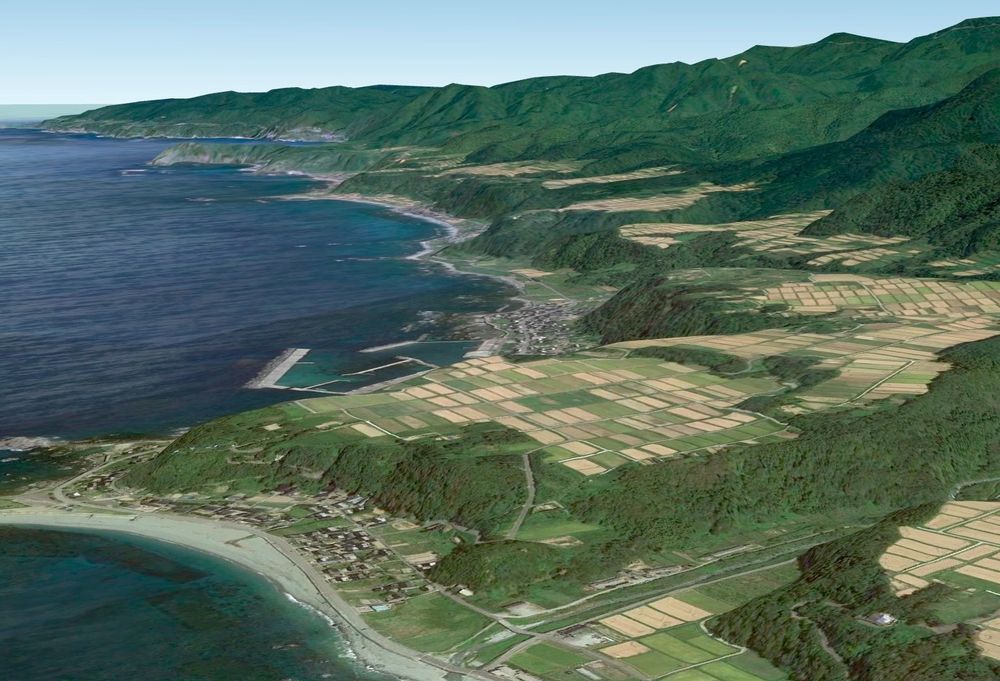
Some context for the 🇯🇵 pictures I am posting. @sumikotsuka.bsky.social & I are working on Sado Island and Noto Peninsula since '23 for the DFG project TEMARI. Both sites face 🌊 on 1 side, are tectonically active (Noto EQ), & have many many marine terraces
*What controls the creation of terraces?
*What controls the creation of terraces?

November 1, 2024 at 2:01 PM
Some context for the 🇯🇵 pictures I am posting. @sumikotsuka.bsky.social & I are working on Sado Island and Noto Peninsula since '23 for the DFG project TEMARI. Both sites face 🌊 on 1 side, are tectonically active (Noto EQ), & have many many marine terraces
*What controls the creation of terraces?
*What controls the creation of terraces?
Reposted by Sumiko Tsukamoto
We have shown that thermoluminescence dating can provide reliable age estimates for particularly old speleothems: (open access)
www.sciencedirect.com/science/arti...
short summary at bbh.pik-potsdam.de/en/thermolum...
www.sciencedirect.com/science/arti...
short summary at bbh.pik-potsdam.de/en/thermolum...
Isothermal thermoluminescence dating of speleothem growth – A case study from Bleßberg cave 2, Germany
Speleothems are a key archive of past climatic and environmental changes. 230Th/U dating is the most commonly used method to determine speleothem ages…
www.sciencedirect.com
October 1, 2024 at 4:55 PM
We have shown that thermoluminescence dating can provide reliable age estimates for particularly old speleothems: (open access)
www.sciencedirect.com/science/arti...
short summary at bbh.pik-potsdam.de/en/thermolum...
www.sciencedirect.com/science/arti...
short summary at bbh.pik-potsdam.de/en/thermolum...
Reposted by Sumiko Tsukamoto

If you have dirty and seemingly ’undatable‘ speleothem samples in your lab - look no further! Isothermal Thermoluminescence (ITL) dating can help you ! Look at our latest study led by Junjie Zhang & Sumiko Tsukamoto of #LIAG and #TuebingenUni : eur02.safelinks.protection.outlook.com?url=https%3A...
Redirecting
eur02.safelinks.protection.outlook.com
September 29, 2024 at 4:17 PM
If you have dirty and seemingly ’undatable‘ speleothem samples in your lab - look no further! Isothermal Thermoluminescence (ITL) dating can help you ! Look at our latest study led by Junjie Zhang & Sumiko Tsukamoto of #LIAG and #TuebingenUni : eur02.safelinks.protection.outlook.com?url=https%3A...
Reposted by Sumiko Tsukamoto
We were able to reach the same spot on the north coast of Noto Peninsula where I took pictures last November. That was before the earthquake and the ~1.7m of uplift it caused at this location.
Before/after below
Before/after below


March 4, 2024 at 8:47 AM
We were able to reach the same spot on the north coast of Noto Peninsula where I took pictures last November. That was before the earthquake and the ~1.7m of uplift it caused at this location.
Before/after below
Before/after below
Reposted by Sumiko Tsukamoto
As a result of liquefaction, we see manholes shooting up across the pavement. At first I thought it was the land sinking around fixed water pipes, but it seems that they do actually move up. Is it a matter of buoyancy? They're mostly empty after all. Does someone here know?

March 3, 2024 at 12:02 PM
As a result of liquefaction, we see manholes shooting up across the pavement. At first I thought it was the land sinking around fixed water pipes, but it seems that they do actually move up. Is it a matter of buoyancy? They're mostly empty after all. Does someone here know?
Reposted by Sumiko Tsukamoto
Back in Noto Peninsula 🇯🇵 for a post earthquake survey. Here you see a bay near Monzenmachi, we measured 4.4m of coseismic uplift. The white rocks are covered by organisms that lived in the sea, now perennially emerged. Note the now dry harbor on the right.

March 2, 2024 at 1:13 PM
Back in Noto Peninsula 🇯🇵 for a post earthquake survey. Here you see a bay near Monzenmachi, we measured 4.4m of coseismic uplift. The white rocks are covered by organisms that lived in the sea, now perennially emerged. Note the now dry harbor on the right.