




UAntwerp FunMorph
@uafunmorph.bsky.social
Functional Morphology Lab Group of Department of Biology, University of Antwerp.
https://www.uantwerpen.be/en/research-groups/funmorph/
https://www.uantwerpen.be/en/research-groups/funmorph/
This is vital information moving forward in research on the #biomechanical trade-offs within avian feeding and vocalisation, but also has broad applications for many muscle-driven lever systems. Read more here: 🔗 doi.org/10.1242/jeb....

A modelling perspective on torque–frequency trade-offs in multifunctional lever systems driven by antagonist muscle pairs
Summary: Low-inertia musculoskeletal lever systems are primarily constrained in their high-frequency movement output by fiber types and orderly recruitment, whereas mass, muscle cross-sectional area a...
doi.org
February 4, 2026 at 8:03 AM
This is vital information moving forward in research on the #biomechanical trade-offs within avian feeding and vocalisation, but also has broad applications for many muscle-driven lever systems. Read more here: 🔗 doi.org/10.1242/jeb....
Using a model of a Java finch mandible 🐦, the study shows muscle fibre type is key: overdeveloped muscles recruit slow-twitch fibres, boosting torque but reducing frequency (Henneman’s principle).
A modelling perspective on torque–frequency trade-offs in multifunctional lever systems driven by antagonist muscle pairs
Summary: Low-inertia musculoskeletal lever systems are primarily constrained in their high-frequency movement output by fiber types and orderly recruitment, whereas mass, muscle cross-sectional area a...
doi.org
February 4, 2026 at 8:03 AM
Using a model of a Java finch mandible 🐦, the study shows muscle fibre type is key: overdeveloped muscles recruit slow-twitch fibres, boosting torque but reducing frequency (Henneman’s principle).
By integrating evidence from #mammals 🦁, #fish 🐟, #amphibians 🐸, #reptiles 🦎, and #birds 🐦, this paper highlights broader evolutionary patterns and provides a clearer comparative framework that facilitates interpretation of future results. Read more here: onlinelibrary.wiley.com/doi/full/10....
onlinelibrary.wiley.com
January 28, 2026 at 10:25 AM
By integrating evidence from #mammals 🦁, #fish 🐟, #amphibians 🐸, #reptiles 🦎, and #birds 🐦, this paper highlights broader evolutionary patterns and provides a clearer comparative framework that facilitates interpretation of future results. Read more here: onlinelibrary.wiley.com/doi/full/10....
In a new review paper in Biological Reviews, co-authored by @uafunmorph.bsky.social PhD student @maja-mielke.bsky.social, Daniel Schwarz et al. synthesize this diversity across vertebrates and propose a unified terminology and conceptual framework for oropharyngeal food processing.
January 28, 2026 at 10:25 AM
In a new review paper in Biological Reviews, co-authored by @uafunmorph.bsky.social PhD student @maja-mielke.bsky.social, Daniel Schwarz et al. synthesize this diversity across vertebrates and propose a unified terminology and conceptual framework for oropharyngeal food processing.
Read the article published in the Journal of Thermal Biology here: www.sciencedirect.com/science/arti...
We look forward to seeing many more collaborative studies of this integrative nature in the near future from our lab!
#physiology #experimentalbiology #temperature
We look forward to seeing many more collaborative studies of this integrative nature in the near future from our lab!
#physiology #experimentalbiology #temperature

Relationship between cognitive and thermoregulatory performance in the common wall lizard
Behavioural thermoregulation is critical for reptiles, because it allows them to maintain their body temperatures within a range that optimizes physio…
www.sciencedirect.com
January 26, 2026 at 1:57 PM
Read the article published in the Journal of Thermal Biology here: www.sciencedirect.com/science/arti...
We look forward to seeing many more collaborative studies of this integrative nature in the near future from our lab!
#physiology #experimentalbiology #temperature
We look forward to seeing many more collaborative studies of this integrative nature in the near future from our lab!
#physiology #experimentalbiology #temperature
Using common wall lizards in a set-up mimicking the lizards’ natural, spatiotemporally heterogeneous thermal #environment, higher cognition scores were linked to exploitation of the thermal heterogeneity, but not more accurate thermoregulation.
#Podarcis
#Podarcis

January 26, 2026 at 1:57 PM
Using common wall lizards in a set-up mimicking the lizards’ natural, spatiotemporally heterogeneous thermal #environment, higher cognition scores were linked to exploitation of the thermal heterogeneity, but not more accurate thermoregulation.
#Podarcis
#Podarcis
In collaboration with cichlid fish experts from the Evolutionary Ecology Lab @SvardalGroup at #UAntwerpen
Read more here: www.nature.com/articles/s42...
Read more here: www.nature.com/articles/s42...

An alternative pattern of head expansion during feeding in cichlids - Communications Biology
Kinematic analyses of Lake Malawi cichlids reveal that algae specialists use head expansions that happen synchronously along the head. This contrasts with the wave-like pattern of piscivores and is hypothesized to increase algae feeding efficiency.
www.nature.com
October 10, 2025 at 2:57 PM
In collaboration with cichlid fish experts from the Evolutionary Ecology Lab @SvardalGroup at #UAntwerpen
Read more here: www.nature.com/articles/s42...
Read more here: www.nature.com/articles/s42...
To help them with a smooth start, we organised an introduction session where they got the opportunity to present themselves and their project.
Keep an eye out for more updates from our lab, including the student projects, throughout the coming year!
#masterinbiology
Keep an eye out for more updates from our lab, including the student projects, throughout the coming year!
#masterinbiology

September 8, 2025 at 8:56 AM
To help them with a smooth start, we organised an introduction session where they got the opportunity to present themselves and their project.
Keep an eye out for more updates from our lab, including the student projects, throughout the coming year!
#masterinbiology
Keep an eye out for more updates from our lab, including the student projects, throughout the coming year!
#masterinbiology
Reposted by UAntwerp FunMorph
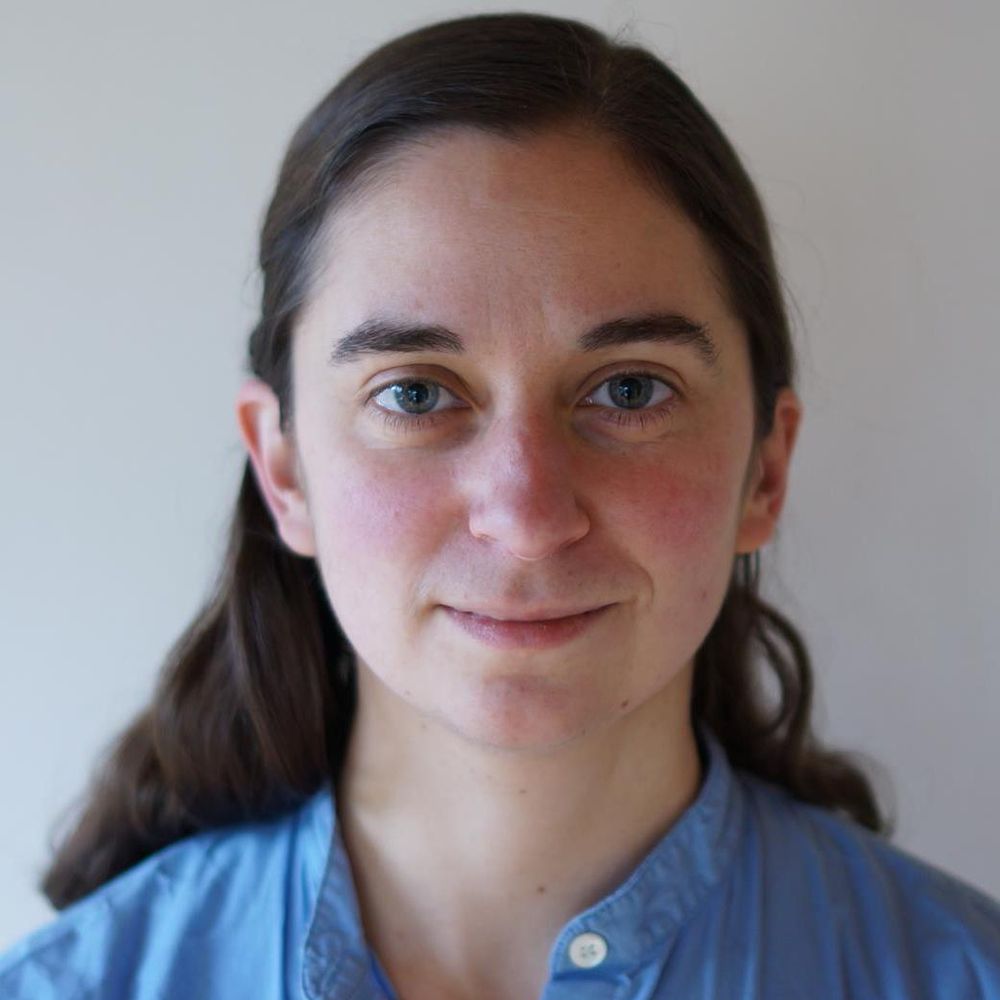
Lukas Hageneder from @uafunmorph.bsky.social is studying how the tongue and skeleton of ducks interact to successfully filter food

July 31, 2025 at 7:09 AM
Lukas Hageneder from @uafunmorph.bsky.social is studying how the tongue and skeleton of ducks interact to successfully filter food
