




UCLA Latino Policy and Politics Institute (LPPI)
@uclalppi.bsky.social
UCLA LPPI champions evidence-based policies that center the needs of Latinos & communities of color. Learn more at latino.ucla.edu
Reposted by UCLA Latino Policy and Politics Institute (LPPI)
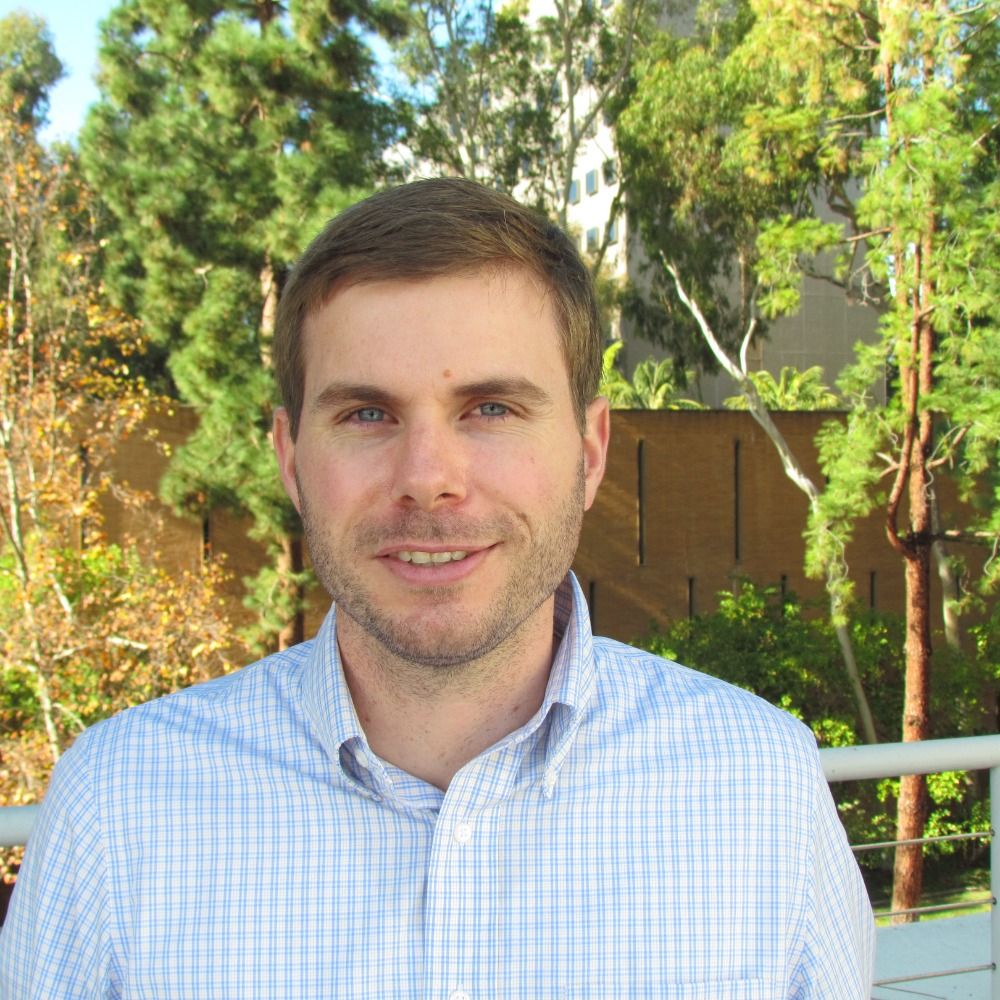
Great to work w/ Ariana Hernandez @luskininnovation.bsky.social & Silvia Gonzalez @uclalppi.bsky.social, now out in Environmental Justice.
We studied caregivers' role in tap trust and trade-offs decision making around household water & SSB use & spending.
www.liebertpub.com/doi/10.1177/...
We studied caregivers' role in tap trust and trade-offs decision making around household water & SSB use & spending.
www.liebertpub.com/doi/10.1177/...

Trust and Trade-Offs: Gendered Responses to Tap Water Insecurity and Sugar-Sweetened Beverage Policies | Environmental Justice
Gendered decision making around household water use and spending is well-documented in the Global South but remains under-explored in the United States. This study examines how gender and trust in tap water influence caregivers’ use of bottled or filtered water, sugar-sweetened beverage (SSB) consumption, and attitudes toward SSB taxation in California’s San Joaquin Valley, one of the state’s most environmentally burdened regions. We analyze survey responses from 155 caregivers in Kern County, located in California’s San Joaquin Valley. We use descriptive analysis and binary logistic regression models to assess associations between gender, tap water trust, SSB consumption, and attitudes toward SSB taxation. Female caregivers are significantly more likely than male caregivers to rely on alternative water sources, despite being less likely to express concern about tap water safety, suggesting a disconnect between perception and behavior. Although male and female respondents report similar SSB consumption, females are also more likely to oppose an SSB tax, report greater price sensitivity, and are less responsive to participatory budgeting approaches. Renters are more supportive of taxation when given input on spending, while Supplemental Nutrition Assistance Program -eligible households remain skeptical. Findings suggest a disconnection between perceived water safety and actual water use and spending decisions among women, likely reflecting broader caregiving burdens and resource constraints, and point toward gendered responses to health policy interventions. Integrating gender and care work into analyses of environmental health disparities and policy design is essential for addressing water insecurity and promoting equitable health outcomes in under-resourced communities.
www.liebertpub.com
November 13, 2025 at 4:10 PM
Great to work w/ Ariana Hernandez @luskininnovation.bsky.social & Silvia Gonzalez @uclalppi.bsky.social, now out in Environmental Justice.
We studied caregivers' role in tap trust and trade-offs decision making around household water & SSB use & spending.
www.liebertpub.com/doi/10.1177/...
We studied caregivers' role in tap trust and trade-offs decision making around household water & SSB use & spending.
www.liebertpub.com/doi/10.1177/...
Thank you @sgvHabitat for welcoming LPPI staff and fellows to volunteer in Altadena. Our research shows recovery can take years for families after disasters, and being on the ground underscores why equitable rebuilding matters. Read more in our blog: bit.ly/4hWGSzs

LPPI Staff and Fellows Volunteer with Habitat for Humanity in Altadena
On Friday, November 7, UCLA Latino Policy & Politics Institute (LPPI) staff and fellows volunteered with the San Gabriel Valley Habitat for Humanity in Altadena, contributing to the first home being…
bit.ly
November 13, 2025 at 11:29 PM
Thank you @sgvHabitat for welcoming LPPI staff and fellows to volunteer in Altadena. Our research shows recovery can take years for families after disasters, and being on the ground underscores why equitable rebuilding matters. Read more in our blog: bit.ly/4hWGSzs
This Veterans Day, we honor the service and sacrifices of those who have served our country.

November 11, 2025 at 4:00 PM
This Veterans Day, we honor the service and sacrifices of those who have served our country.
Reposted by UCLA Latino Policy and Politics Institute (LPPI)

We invite you to join us in-person on Friday, November 14th for a convening to discuss our newest publication, BEYOND SANCTUARY, and its relevance to the moment at hand. RSVP>> beyondsanctuary.eventbrite.com

October 3, 2025 at 6:52 PM
We invite you to join us in-person on Friday, November 14th for a convening to discuss our newest publication, BEYOND SANCTUARY, and its relevance to the moment at hand. RSVP>> beyondsanctuary.eventbrite.com
FACT: Latino neighborhoods face nearly triple the diesel pollution exposure than white neighborhoods, denser traffic, and greater proximity to toxic sites. Our new toolkit turns community insights into policy action for clean air and health equity. https://ucla.in/4hM9efR

Cleaner Air, Healthier Communities: A Policy Advocacy Toolkit for California’s Latino Communities
This policy toolkit provides key data and community-informed policy recommendations to address the disproportionate air pollution burdens facing California’s Latino neighborhoods.
ucla.in
November 5, 2025 at 6:00 PM
FACT: Latino neighborhoods face nearly triple the diesel pollution exposure than white neighborhoods, denser traffic, and greater proximity to toxic sites. Our new toolkit turns community insights into policy action for clean air and health equity. https://ucla.in/4hM9efR
DYK: Latinas in the Inland Empire earn the lowest median hourly wage at $17, and even college-educated Latino workers earn less than their peers of other racial or ethnic groups. Read more: https://ucla.in/3WkxcoA

Latino Workers in the Inland Empire
Using data from the Latino Data Hub and eight semi-structured interviews, this report provides a comprehensive profile of Latino workers in the Inland Empire.
ucla.in
October 27, 2025 at 4:40 PM
DYK: Latinas in the Inland Empire earn the lowest median hourly wage at $17, and even college-educated Latino workers earn less than their peers of other racial or ethnic groups. Read more: https://ucla.in/3WkxcoA
FACT: Between 2000 and 2022, the Latino workforce in the Inland Empire grew by 154% — from 460,000 to 1.2 million. That’s nearly 90% of all labor force growth in the region. Analysis by @UCLAlatino & #CIELOFund: https://ucla.in/3WkxcoA
Latino Workers in the Inland Empire
Using data from the Latino Data Hub and eight semi-structured interviews, this report provides a comprehensive profile of Latino workers in the Inland Empire.
ucla.in
October 23, 2025 at 7:40 PM
FACT: Between 2000 and 2022, the Latino workforce in the Inland Empire grew by 154% — from 460,000 to 1.2 million. That’s nearly 90% of all labor force growth in the region. Analysis by @UCLAlatino & #CIELOFund: https://ucla.in/3WkxcoA
The Jan. 2025 wildfires disproportionately affected small businesses with under 10 employees, exacerbating their already unstable footing. New data briefs by UCLA LPPI and UCLA CNK provide the first integrated analysis of wildfire impact on small businesses.
Read more here:
https://ucla.in/3WOQL8C
Read more here:
https://ucla.in/3WOQL8C


October 21, 2025 at 6:30 PM
The Jan. 2025 wildfires disproportionately affected small businesses with under 10 employees, exacerbating their already unstable footing. New data briefs by UCLA LPPI and UCLA CNK provide the first integrated analysis of wildfire impact on small businesses.
Read more here:
https://ucla.in/3WOQL8C
Read more here:
https://ucla.in/3WOQL8C
Nearly nine months after the Eaton Fire, around 70% of severely damaged homes show no progress toward rebuilding, with families of color facing the greatest barriers to recovery and rebuilding. Read more: latino.ucla.edu/research/who...

Who’s Coming Home?
This data brief combines property sales, market listings, permits & fire damage data to create a snapshot of how Altadena homeowners are faring 7 months after the Eaton Fire.
latino.ucla.edu
October 17, 2025 at 5:41 PM
Nearly nine months after the Eaton Fire, around 70% of severely damaged homes show no progress toward rebuilding, with families of color facing the greatest barriers to recovery and rebuilding. Read more: latino.ucla.edu/research/who...
Dr. Armenta’s journey started in California’s Imperial Valley, where she learned to love being Latina while witnessing constant immigration enforcement surveillance. Read more: https://newsroom.ucla.edu/stories/lppi-amada-armenta-personal-history-influences-policy-efforts

LPPI faculty director Amada Armenta’s personal history influences her policy efforts
The UCLA professor and alumna’s pride in her heritage inspires her to empower Latino communities through her work.
newsroom.ucla.edu
October 16, 2025 at 9:15 PM
Dr. Armenta’s journey started in California’s Imperial Valley, where she learned to love being Latina while witnessing constant immigration enforcement surveillance. Read more: https://newsroom.ucla.edu/stories/lppi-amada-armenta-personal-history-influences-policy-efforts
On Indigenous Peoples Day, we celebrate the culture, contributions, and resiliency of Indigenous communities across the globe. UCLA LPPI acknowledges and honors the ancestral lands and histories of Indigenous peoples.

October 13, 2025 at 4:00 PM
On Indigenous Peoples Day, we celebrate the culture, contributions, and resiliency of Indigenous communities across the globe. UCLA LPPI acknowledges and honors the ancestral lands and histories of Indigenous peoples.
In 2023, Latinas earned $17/hr vs. $25 for all men.
Over a lifetime, that gap translates to over $1 million lost when compared to white men.
Data from UCLA LPPI shows persistent inequities by age, descent, and state: http://bit.ly/3KGYov5
Over a lifetime, that gap translates to over $1 million lost when compared to white men.
Data from UCLA LPPI shows persistent inequities by age, descent, and state: http://bit.ly/3KGYov5

Latino Data Hub
A groundbreaking digital platform offering free, reliable, and bilingual data that transforms our understanding of Latinos and equips us to create data-driven solutions for our communities.
bit.ly
October 9, 2025 at 5:26 PM
In 2023, Latinas earned $17/hr vs. $25 for all men.
Over a lifetime, that gap translates to over $1 million lost when compared to white men.
Data from UCLA LPPI shows persistent inequities by age, descent, and state: http://bit.ly/3KGYov5
Over a lifetime, that gap translates to over $1 million lost when compared to white men.
Data from UCLA LPPI shows persistent inequities by age, descent, and state: http://bit.ly/3KGYov5
Latina Equal Pay Day (Oct. 8) marks how far into the year Latinas must work to earn what white men made the previous year. Despite record gains in education by Latinas, the wage gap endures. Read more: http://bit.ly/3KGYov5
Latino Data Hub
A groundbreaking digital platform offering free, reliable, and bilingual data that transforms our understanding of Latinos and equips us to create data-driven solutions for our communities.
bit.ly
October 8, 2025 at 9:18 PM
Latina Equal Pay Day (Oct. 8) marks how far into the year Latinas must work to earn what white men made the previous year. Despite record gains in education by Latinas, the wage gap endures. Read more: http://bit.ly/3KGYov5
DYK: Latinas now make up almost 20% of women in the U.S.? Yet, they’re still the lowest-paid major demographic in the workforce. Even among college graduates, Latinas earn less than their peers, proving that education alone isn’t shattering that pay gap.
Read more: http://bit.ly/3KGYov5
Read more: http://bit.ly/3KGYov5
Latino Data Hub
A groundbreaking digital platform offering free, reliable, and bilingual data that transforms our understanding of Latinos and equips us to create data-driven solutions for our communities.
bit.ly
October 8, 2025 at 5:23 PM
DYK: Latinas now make up almost 20% of women in the U.S.? Yet, they’re still the lowest-paid major demographic in the workforce. Even among college graduates, Latinas earn less than their peers, proving that education alone isn’t shattering that pay gap.
Read more: http://bit.ly/3KGYov5
Read more: http://bit.ly/3KGYov5
Latino workers are essential to CA’s economy—yet face steep inequities across all regions.
- A degree ≠ equal higher pay for Latinos.
- Nearly 1 in 3 jobs are at high risk of automation.
- Highest rates of overcrowded housing.
Read more: ucla.in/4mpinvA
- A degree ≠ equal higher pay for Latinos.
- Nearly 1 in 3 jobs are at high risk of automation.
- Highest rates of overcrowded housing.
Read more: ucla.in/4mpinvA

Key Facts About the Latino Workforce Across California
These briefs highlight Latino resilience, innovation, and community-driven strategies in South Phoenix, Tucson, Fruitvale, and San Ysidro neighborhoods during and beyond the COVID-19 pandemic.
ucla.in
September 18, 2025 at 9:58 PM
Latino workers are essential to CA’s economy—yet face steep inequities across all regions.
- A degree ≠ equal higher pay for Latinos.
- Nearly 1 in 3 jobs are at high risk of automation.
- Highest rates of overcrowded housing.
Read more: ucla.in/4mpinvA
- A degree ≠ equal higher pay for Latinos.
- Nearly 1 in 3 jobs are at high risk of automation.
- Highest rates of overcrowded housing.
Read more: ucla.in/4mpinvA
DYK: Latino neighborhoods in California face significantly higher exposure to extreme heat and have less access to protective infrastructure like tree canopy. Read more in our latest analysis: https://ucla.in/46kWW8L

Climate Change and Health Disparities in California’s Latino Neighborhoods
This data brief provides key facts on how California’s Latino neighborhoods face disproportionate risks from extreme heat, air pollution, and health inequities.
ucla.in
September 17, 2025 at 4:22 PM
DYK: Latino neighborhoods in California face significantly higher exposure to extreme heat and have less access to protective infrastructure like tree canopy. Read more in our latest analysis: https://ucla.in/46kWW8L
Our analysis uncovers how, in 2022, LOBs were 1.3× more likely than all businesses to report major sales losses and 1.5× more likely to report financing needs, yet they consistently faced greater barriers to credit. Read more: ucla.in/42gO42G

Post-Pandemic Small Business Recovery Amid Economic and Credit Headwinds
This data brief examines post-pandemic small business recovery in the U.S, highlighting how Latino-owned businesses have grown in number despite facing disproportionate challenges with earnings, acces...
ucla.in
September 12, 2025 at 7:34 PM
Our analysis uncovers how, in 2022, LOBs were 1.3× more likely than all businesses to report major sales losses and 1.5× more likely to report financing needs, yet they consistently faced greater barriers to credit. Read more: ucla.in/42gO42G
FACT: From 2018 to 2022, Latino-owned businesses grew from 533,000 to 658,000, preventing a decline in total U.S. business counts despite challenges. Read more: ucla.in/42gO42G
Post-Pandemic Small Business Recovery Amid Economic and Credit Headwinds
This data brief examines post-pandemic small business recovery in the U.S, highlighting how Latino-owned businesses have grown in number despite facing disproportionate challenges with earnings, acces...
ucla.in
September 11, 2025 at 4:08 PM
FACT: From 2018 to 2022, Latino-owned businesses grew from 533,000 to 658,000, preventing a decline in total U.S. business counts despite challenges. Read more: ucla.in/42gO42G
New Research! In Tucson’s 12th Avenue Corridor, community-led mutual aid, business support, & cultural organizing delivered immediate relief to community members dealing with challenges arising from the COVID-19 pandemic.
Learn more: ucla.in/41O0HlC
Learn more: ucla.in/41O0HlC

Building Stronger Communities: La Doce, AZ
This case study combines quantitative data and community voices to highlight Latino-led, grassroots-driven responses to COVID-19 in Tucson’s La Doce Corridor.
ucla.in
September 5, 2025 at 10:46 PM
New Research! In Tucson’s 12th Avenue Corridor, community-led mutual aid, business support, & cultural organizing delivered immediate relief to community members dealing with challenges arising from the COVID-19 pandemic.
Learn more: ucla.in/41O0HlC
Learn more: ucla.in/41O0HlC
In South Phoenix, collaborative networks equipped and educated residents to shape more equitable and resident-centered transit projects from design to implementation. Learn more: ucla.in/4lB49r6

Building Stronger Communities: South Phoenix, AZ
This case study combines quantitative data and community voices to highlight Latino-led, grassroots-driven responses to COVID-19 in South Phoenix, AZ
ucla.in
September 4, 2025 at 11:10 PM
In South Phoenix, collaborative networks equipped and educated residents to shape more equitable and resident-centered transit projects from design to implementation. Learn more: ucla.in/4lB49r6
In San Ysidro, COVID-19 death rates were triple the county average, but local leaders and community orgs collaborated to achieve the highest vaccination rates through tailored outreach. Learn more about Latino-led Economic Development in San Ysidro: ucla.in/47R9LKl

Building Stronger Communities: San Ysidro, CA
This case study combines quantitative data and community voices to highlight Latino-led, grassroots-driven responses to COVID-19 in San Ysidro.
ucla.in
September 3, 2025 at 5:16 PM
In San Ysidro, COVID-19 death rates were triple the county average, but local leaders and community orgs collaborated to achieve the highest vaccination rates through tailored outreach. Learn more about Latino-led Economic Development in San Ysidro: ucla.in/47R9LKl
During the pandemic, Fruitvale community orgs leveraged historic coalitions for crisis response. The Resilient Fruitvale Collaborative organized culturally competent outreach, testing, & aid distribution for Latino and Mam residents. Learn more: ucla.in/46ZlJkR

Building Stronger Communities: Fruitvale, CA
This case study combines quantitative data and community voices to highlight Latino-led, grassroots-driven responses to COVID-19 in Oakland’s Fruitvale neighborhood.
ucla.in
September 2, 2025 at 4:45 PM
During the pandemic, Fruitvale community orgs leveraged historic coalitions for crisis response. The Resilient Fruitvale Collaborative organized culturally competent outreach, testing, & aid distribution for Latino and Mam residents. Learn more: ucla.in/46ZlJkR
This summer, six UCLA Luskin students are gaining hands-on policy experience—from the State Capitol to grassroots orgs—working on housing, immigration, climate justice & more. Learn more: ucla.in/47mQHmW

The 2025 Monica Salinas Field Fellowship Cohort Announced
As Women’s History Month draws to a close, two new data briefs from the UCLA Latino Policy and Politics Institute (LPPI) spotlight the resilience of self-employed women entrepreneurs in California.
ucla.in
August 5, 2025 at 5:22 PM
This summer, six UCLA Luskin students are gaining hands-on policy experience—from the State Capitol to grassroots orgs—working on housing, immigration, climate justice & more. Learn more: ucla.in/47mQHmW
Discover the upgraded Latino Data Hub! New 2023 ACS data, K–12 English Learner stats, and more ways to analyze Latino experiences. Discover more at latinodatahub.org.

Latino Data Hub
A groundbreaking digital platform offering free, reliable, and bilingual data that transforms our understanding of Latinos and equips us to create data-driven solutions for our communities.
latinodatahub.org
July 25, 2025 at 5:04 PM
Discover the upgraded Latino Data Hub! New 2023 ACS data, K–12 English Learner stats, and more ways to analyze Latino experiences. Discover more at latinodatahub.org.
The Latino Data Hub’s 2025 update is here! New child wellbeing data, transportation metrics, and a re-designed filter function with 5 new filters. Empowering Latino communities with data! Visit latinodatahub.org!
Latino Data Hub
A groundbreaking digital platform offering free, reliable, and bilingual data that transforms our understanding of Latinos and equips us to create data-driven solutions for our communities.
latinodatahub.org
July 21, 2025 at 5:03 PM
The Latino Data Hub’s 2025 update is here! New child wellbeing data, transportation metrics, and a re-designed filter function with 5 new filters. Empowering Latino communities with data! Visit latinodatahub.org!