



University of Minnesota Department of Biomedical Engineering
@umnbme.bsky.social
The official Bluesky account of the Department of Biomedical Engineering at the University of Minnesota-Twin Cities.
bme.umn.edu
bme.umn.edu
Reposted by University of Minnesota Department of Biomedical Engineering
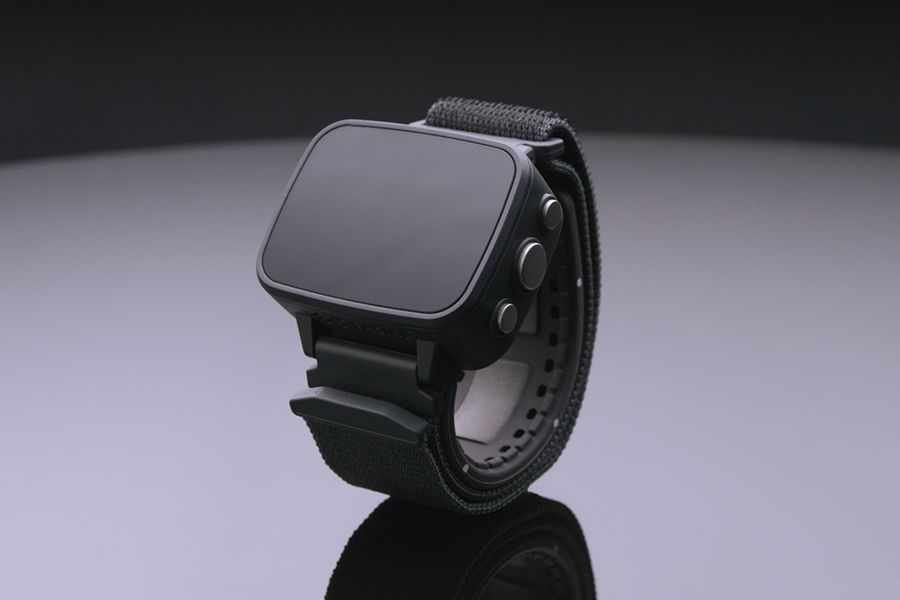
University of Minnesota spin-off company Fasikl announced that the @US_FDA has granted 510(k) clearance for the first-of-its-kind Felix™ NeuroAI™ Wristband for tremor-related functional limitations in the upper limbs. Read more at Learn more at z.umn.edu/TremorTrea...
University of Minnesota spin-off receives FDA clearance for AI-powered essential tremor treatment
Smartwatch-looking device offers noninvasive, drug-free alternative to provide all-day relief for essential tremorsMINNEAPOLIS / ST. PAUL (07/02/2025) — University of Minnesota spin-off company Fasikl announced that the U.S. Food and Drug Administration (FDA) has granted 510(k) clearance for the first-of-its-kind Felix™ NeuroAI™ Wristband for tremor-related functional limitations in the upper limbs in adults with essential tremor. University of Minnesota Biomedical Engineering Professor Zhi Yang laid the groundwork for a new class of AI-driven therapies and conceptualized Fasikl’s core products and overall business strategy. Photo by: Fasikl Headquartered in Minnesota, the neuro-AI company is redefining the intersection of advanced bioelectronic medicine and artificial intelligence (AI). University of Minnesota Biomedical Engineering Associate Professor Zhi Yang, who studies emerging brain interface technologies and neuroelectronics, laid the groundwork for a new class of AI-driven therapies and conceptualized Fasikl’s core products and overall business strategy. He co-founded Fasikl and serves as the company’s CEO. “FDA clearance of Felix marks a defining moment for Fasikl and the millions of people living with essential tremor who have long been underserved by existing therapies,” said Yang, who has been a faculty member at the University of Minnesota since 2015. “This breakthrough in noninvasive, intelligent, and personalized neuromodulation marks the emergence of AI therapeutics in disease treatment. It offers a new option that is potentially more effective, safer, and more scalable. Our next step is to execute the commercialization plan to support Felix’s initial product launch."According to previous research, essential tremor is the most common type of tremor disorder, affecting about 7 million people in the United States and is about seven times more common than Parkinson’s disease. It causes involuntary and rhythmic shaking—most often in the hands—that can make simple and everyday activities like drinking from a glass or tying shoelaces difficult. Traditional treatment options are limited, with oral medications providing inconsistent relief and often accompanied by undesirable side effects. Surgical interventions such as deep brain stimulation (DBS), while effective, require invasive procedures, carry surgical risks, and may not be suitable or desirable for all patients, particularly older adults or those with coexisting health conditions.Unlike interventions using surgeries or medicines, Felix is a noninvasive, wearable device that effortlessly connects to Fasikl’s cloud-based AI platform, enabling continuous brain-AI co-adaptation and personalized therapy. Worn on the wrist, it uses the cloud to dynamically adjust stimulation, offering all-day symptom relief while seamlessly fitting into the wearer’s lifestyle.The FDA clearance of Felix is supported by data from the TRANQUIL study, a randomized, double-blind, sham-controlled trial. Results showed that the Felix wristband significantly reduced tremors and displayed statistically and clinically significant improvement in the users' ability to perform daily activities compared to those using a device that looked similar but provided no real therapy. Efficacy was consistent across demographics, with no serious device-related adverse events reported. Results of this study were presented at the American Academy of Neurology annual meeting in April 2025.“The Felix wristband represents a significant step forward in noninvasive, personalized treatment options for essential tremor,” said Rajesh Pahwa, M.D., a Laverne and Joyce Rider Professor of Neurology at the University of Kansas School of Medicine, Director of the Movement Disorder Program at The University of Kansas Health System. “For many patients, current treatment options fall short — pharmaceutical treatments are helpful for less than 50 percent of the patients, and deep brain stimulation and focused ultrasound, while effective, require surgical intervention. This new AI wearable wristband backed by clinical evidence is an effective treatment option in patients with essential tremor.”The Felix NeuroAI Wristband will be available by prescription through healthcare providers in select U.S. regions starting later this year, with nationwide availability expected in 2026.To learn more, visit the Fasikl website.
z.umn.edu
July 3, 2025 at 3:00 PM
University of Minnesota spin-off company Fasikl announced that the @US_FDA has granted 510(k) clearance for the first-of-its-kind Felix™ NeuroAI™ Wristband for tremor-related functional limitations in the upper limbs. Read more at Learn more at z.umn.edu/TremorTrea...
Reposted by University of Minnesota Department of Biomedical Engineering
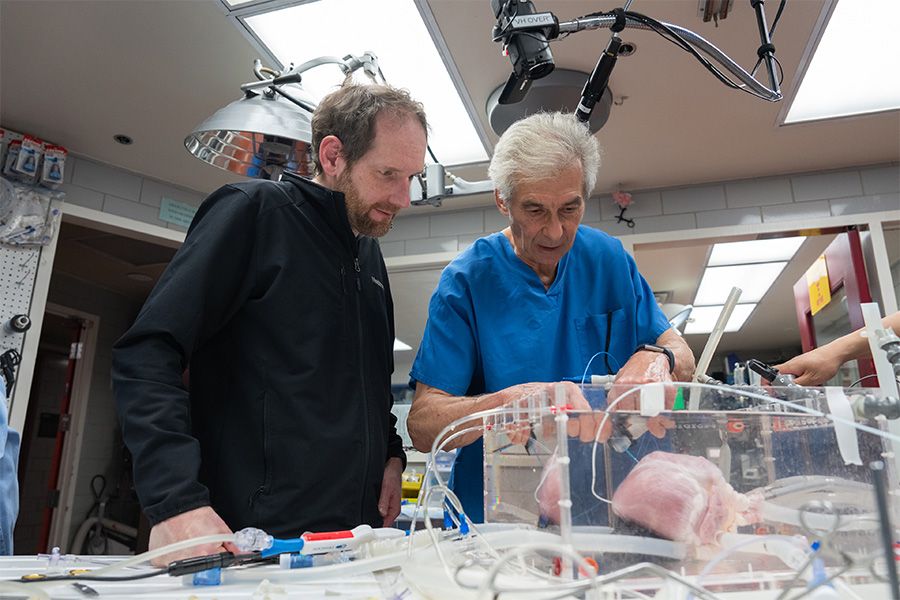
Alex Hill, a biomedical engineering alumnus who is now senior engineering director at Medtronic, took Paul Iaizzo’s Advanced Cardiac Physiology and Anatomy course when he was a student. Now, Hill helps teach the course at the Visible Heart Laboratories.
Read more at z.umn.edu/MedtronicA...
Read more at z.umn.edu/MedtronicA...
Biomedical engineering alumnus values partnership of Medtronic and the Visible Heart Labs
The partnership helps to visualize better heart devicesMINNEAPOLIS / ST. PAUL (07/16/2025) — The Visible Heart Laboratories, located on the University of Minnesota Twin Cities campus, are part of a unique partnership between academia and industry that is enhancing the future of cardiac technologies. Back in 1997, then-Medtronic executive Dale Wahlstrom realized that cardiac engineers were missing a crucial piece of their training. With the help of his colleagues Mark Hjelle and Tim Laske, he approached Paul Iaizzo, a University of Minnesota professor focused on system physiological research and human anatomical studies, to help find solutions.Iaizzo went on to develop the Visible Heart Labs (part of the University of Minnesota’s Institute for Engineering in Medicine), which are now well-positioned to provide essential, hands-on education covering the physiology and anatomy of the human heart. Alex Hill, a biomedical engineering alumnus who is now senior engineering director at Medtronic, took Iaizzo’s Advanced Cardiac Physiology and Anatomy course when he was a student and spent countless hours conducting research on human heart specimens. After Hill graduated, Iaizzo asked Hill to help teach the course, which he’s been doing for more than 20 years.“We design medical devices, so understanding the physiology and understanding the anatomy [of the heart] are critical things that a lot of engineering students don’t necessarily have as much exposure to,” Hill said.“It’s a pretty critical aspect of designing something that’s going to be safe and used by physicians to treat hundreds of thousands of patients.”As a longtime supporter of the Visible Heart Labs, Hill says Medtronic has benefited greatly from this ongoing collaboration.“We’ve been able to co-build and learn together,” Hill said. “The partnership gives us the ability to collaborate…to really be inventive and create things and develop good solutions.”Iaizzo also appreciates the decades-long partnership with Medtronic and the professional flexibility it affords him. He holds the Medtronic Professorship in the Institute for Engineering in Medicine, a position that provides him with funding to pursue innovative educational projects. One such project was creating a mobile app that helps medical students visualize and understand echocardiography. Read the full story on the University of Minnesota Foundation website.
z.umn.edu
July 21, 2025 at 3:00 PM
Alex Hill, a biomedical engineering alumnus who is now senior engineering director at Medtronic, took Paul Iaizzo’s Advanced Cardiac Physiology and Anatomy course when he was a student. Now, Hill helps teach the course at the Visible Heart Laboratories.
Read more at z.umn.edu/MedtronicA...
Read more at z.umn.edu/MedtronicA...