



@woodsandwings.bsky.social
Nature photographer, climate activist, poet, author, cat lover
Reposted
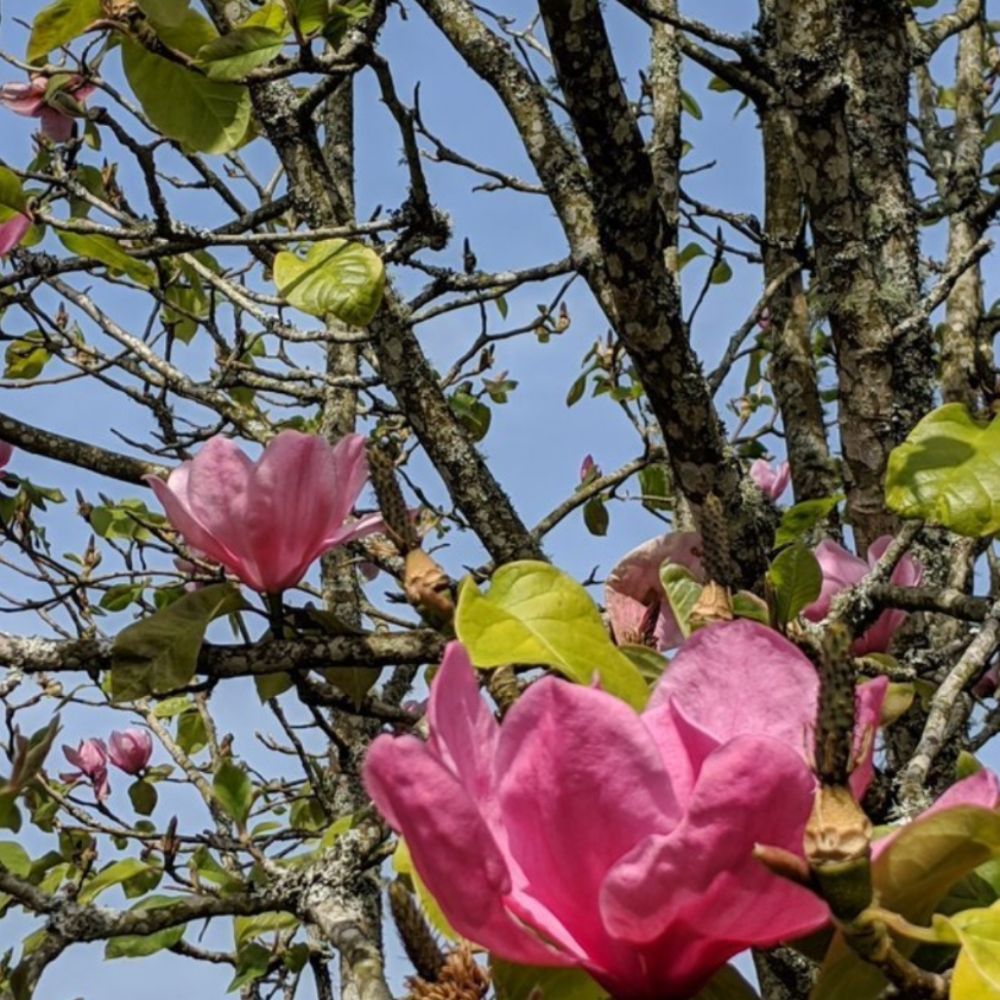
How many creatures are sheltered by this mossy stone bank, among the tree roots in this grown-out hedge? How many do the moss, ferns, ivy, leaf litter support? Structures intricate + complex. A path of life tracing through the land. #WildflowerHour

January 4, 2026 at 6:05 PM
How many creatures are sheltered by this mossy stone bank, among the tree roots in this grown-out hedge? How many do the moss, ferns, ivy, leaf litter support? Structures intricate + complex. A path of life tracing through the land. #WildflowerHour
Aubretia (Aubrieta deltoidea)
Thank you @bsbibotany.bsky.social for getting back to me so quickly on the plant IDs!!
#NewYearPlantHunt
Thank you @bsbibotany.bsky.social for getting back to me so quickly on the plant IDs!!
#NewYearPlantHunt


January 4, 2026 at 2:24 PM
Aubretia (Aubrieta deltoidea)
Thank you @bsbibotany.bsky.social for getting back to me so quickly on the plant IDs!!
#NewYearPlantHunt
Thank you @bsbibotany.bsky.social for getting back to me so quickly on the plant IDs!!
#NewYearPlantHunt
Some finds from 12 species discovered on an amazing #NewYearPlantHunt
Yarrow ( Achillea millefolium)
Common field speedwell (Veronica persica)
White Dead-Nettle (Lamium album)
Aubretia (Aubrieta deltoidea)
#WildflowerHour
Yarrow ( Achillea millefolium)
Common field speedwell (Veronica persica)
White Dead-Nettle (Lamium album)
Aubretia (Aubrieta deltoidea)
#WildflowerHour


January 4, 2026 at 2:17 PM
Some finds from 12 species discovered on an amazing #NewYearPlantHunt
Yarrow ( Achillea millefolium)
Common field speedwell (Veronica persica)
White Dead-Nettle (Lamium album)
Aubretia (Aubrieta deltoidea)
#WildflowerHour
Yarrow ( Achillea millefolium)
Common field speedwell (Veronica persica)
White Dead-Nettle (Lamium album)
Aubretia (Aubrieta deltoidea)
#WildflowerHour
Another early #MushroomMonday
I think this is a Wood Blewit (Lepista Nuda)
Etymology fact: Lepista is the Latin for goblet, referring to the shape of a Wood Blewit’s cap once fully grown
#fungi #Nature
I think this is a Wood Blewit (Lepista Nuda)
Etymology fact: Lepista is the Latin for goblet, referring to the shape of a Wood Blewit’s cap once fully grown
#fungi #Nature


December 28, 2025 at 6:38 PM
Another early #MushroomMonday
I think this is a Wood Blewit (Lepista Nuda)
Etymology fact: Lepista is the Latin for goblet, referring to the shape of a Wood Blewit’s cap once fully grown
#fungi #Nature
I think this is a Wood Blewit (Lepista Nuda)
Etymology fact: Lepista is the Latin for goblet, referring to the shape of a Wood Blewit’s cap once fully grown
#fungi #Nature
Reposted

December 26, 2025 at 3:31 PM
An early #MushroomMonday
Exidia nucleata: Crystal Brain
The Crystal brain fungus thrives in damp conditions. In dry weather, it retracts and hardens, sometimes shrinking until it is hardly visible!
Exidia nucleata: Crystal Brain
The Crystal brain fungus thrives in damp conditions. In dry weather, it retracts and hardens, sometimes shrinking until it is hardly visible!


December 28, 2025 at 11:36 AM
An early #MushroomMonday
Exidia nucleata: Crystal Brain
The Crystal brain fungus thrives in damp conditions. In dry weather, it retracts and hardens, sometimes shrinking until it is hardly visible!
Exidia nucleata: Crystal Brain
The Crystal brain fungus thrives in damp conditions. In dry weather, it retracts and hardens, sometimes shrinking until it is hardly visible!
Fairy Inkcaps Coprinellus disseminatus
: A colour changing mushroom!
Fairy Inkcaps, or Trooping Crumble Caps, distentegrate easily when touched, and don’t deliquesce like other ink cap species. However, they transform from white to grey, sometimes in a matter of a day!
#MushroomMonday #Fungi #Nature
: A colour changing mushroom!
Fairy Inkcaps, or Trooping Crumble Caps, distentegrate easily when touched, and don’t deliquesce like other ink cap species. However, they transform from white to grey, sometimes in a matter of a day!
#MushroomMonday #Fungi #Nature


December 22, 2025 at 7:09 PM
Fairy Inkcaps Coprinellus disseminatus
: A colour changing mushroom!
Fairy Inkcaps, or Trooping Crumble Caps, distentegrate easily when touched, and don’t deliquesce like other ink cap species. However, they transform from white to grey, sometimes in a matter of a day!
#MushroomMonday #Fungi #Nature
: A colour changing mushroom!
Fairy Inkcaps, or Trooping Crumble Caps, distentegrate easily when touched, and don’t deliquesce like other ink cap species. However, they transform from white to grey, sometimes in a matter of a day!
#MushroomMonday #Fungi #Nature
Velvet shank: (Flammulina velutipes)
These mushrooms shine on rainy days, their orange caps slimy with water. They have elliptical spores and can survive severe cold, frosty conditions.
#Fungi #FungiFriday #Nature
These mushrooms shine on rainy days, their orange caps slimy with water. They have elliptical spores and can survive severe cold, frosty conditions.
#Fungi #FungiFriday #Nature


December 19, 2025 at 9:44 PM
Velvet shank: (Flammulina velutipes)
These mushrooms shine on rainy days, their orange caps slimy with water. They have elliptical spores and can survive severe cold, frosty conditions.
#Fungi #FungiFriday #Nature
These mushrooms shine on rainy days, their orange caps slimy with water. They have elliptical spores and can survive severe cold, frosty conditions.
#Fungi #FungiFriday #Nature
Rhodocoybia butrycea: The Butter Cap
These mushrooms have hollow stems and an iconic buttery grease to their caps! #FungiFriday #Nature
These mushrooms have hollow stems and an iconic buttery grease to their caps! #FungiFriday #Nature


December 19, 2025 at 9:15 PM
Rhodocoybia butrycea: The Butter Cap
These mushrooms have hollow stems and an iconic buttery grease to their caps! #FungiFriday #Nature
These mushrooms have hollow stems and an iconic buttery grease to their caps! #FungiFriday #Nature
Timeline of a Glistening Inkcap
(Coprinellus micaeus)
When young, this fungus is a pale colour speckled with tiny mica-like granules (first photo)
As they mature, they darken and become bell shaped (see other photos). Eventually, they will deliquesce into an inky black substance. #MushroomMonday
(Coprinellus micaeus)
When young, this fungus is a pale colour speckled with tiny mica-like granules (first photo)
As they mature, they darken and become bell shaped (see other photos). Eventually, they will deliquesce into an inky black substance. #MushroomMonday


December 15, 2025 at 10:34 PM
Timeline of a Glistening Inkcap
(Coprinellus micaeus)
When young, this fungus is a pale colour speckled with tiny mica-like granules (first photo)
As they mature, they darken and become bell shaped (see other photos). Eventually, they will deliquesce into an inky black substance. #MushroomMonday
(Coprinellus micaeus)
When young, this fungus is a pale colour speckled with tiny mica-like granules (first photo)
As they mature, they darken and become bell shaped (see other photos). Eventually, they will deliquesce into an inky black substance. #MushroomMonday
Candlesnuff fungus ( Xylaria Hypoxylon) or Stag’s Horn Fungus: A light in the dark
This is a fungus which is weakly bioluminescent. The phenomenon is
detectable by long exposure photographs!! #FungiFriday
This is a fungus which is weakly bioluminescent. The phenomenon is
detectable by long exposure photographs!! #FungiFriday


December 5, 2025 at 10:42 PM
Candlesnuff fungus ( Xylaria Hypoxylon) or Stag’s Horn Fungus: A light in the dark
This is a fungus which is weakly bioluminescent. The phenomenon is
detectable by long exposure photographs!! #FungiFriday
This is a fungus which is weakly bioluminescent. The phenomenon is
detectable by long exposure photographs!! #FungiFriday
Some finds from Wytham Woods, on their fungi monitoring stations! There weren’t any oyster mushrooms but I did discover these:
King Alfred’s cakes (Daldinia concentrica)
Hairy stereum (Stereum hirsutum)
Thank you @wythamwoods.bsky.social for this exciting citizen science project!
#FungiFriday
King Alfred’s cakes (Daldinia concentrica)
Hairy stereum (Stereum hirsutum)
Thank you @wythamwoods.bsky.social for this exciting citizen science project!
#FungiFriday


November 28, 2025 at 9:07 PM
Some finds from Wytham Woods, on their fungi monitoring stations! There weren’t any oyster mushrooms but I did discover these:
King Alfred’s cakes (Daldinia concentrica)
Hairy stereum (Stereum hirsutum)
Thank you @wythamwoods.bsky.social for this exciting citizen science project!
#FungiFriday
King Alfred’s cakes (Daldinia concentrica)
Hairy stereum (Stereum hirsutum)
Thank you @wythamwoods.bsky.social for this exciting citizen science project!
#FungiFriday
The Ultimate Recycler: A #FungiFriday Special!
Jelly ear (Auricularia auricula-judae) is a saprobic fungus, and helps to decompose wood.
Jelly ear (Auricularia auricula-judae) is a saprobic fungus, and helps to decompose wood.

November 21, 2025 at 8:02 PM
The Ultimate Recycler: A #FungiFriday Special!
Jelly ear (Auricularia auricula-judae) is a saprobic fungus, and helps to decompose wood.
Jelly ear (Auricularia auricula-judae) is a saprobic fungus, and helps to decompose wood.
Some purple jellydisc fungi for #FungiFriday! This small,fleshy fungus has some secret superpowers to help forests thrive:
It uses the antibiotic compound ascorynin to deter invasive fungi, helping trees to stay healthy.
It is also a saprobic fungus and helps to decompose deciduous dead wood!
It uses the antibiotic compound ascorynin to deter invasive fungi, helping trees to stay healthy.
It is also a saprobic fungus and helps to decompose deciduous dead wood!

November 14, 2025 at 8:09 PM
Some purple jellydisc fungi for #FungiFriday! This small,fleshy fungus has some secret superpowers to help forests thrive:
It uses the antibiotic compound ascorynin to deter invasive fungi, helping trees to stay healthy.
It is also a saprobic fungus and helps to decompose deciduous dead wood!
It uses the antibiotic compound ascorynin to deter invasive fungi, helping trees to stay healthy.
It is also a saprobic fungus and helps to decompose deciduous dead wood!
A three-name fungus! Its Latin name is Postia caesia and is colloquially known as the Blue Cheese Polypore and the Conifer Blueing Bracket.

November 9, 2025 at 7:52 PM
A three-name fungus! Its Latin name is Postia caesia and is colloquially known as the Blue Cheese Polypore and the Conifer Blueing Bracket.
Reposted

New #GBRedList for vascular plants is published today by a team led by @bsbibotany.bsky.social with partners @naturalengland.bsky.social @ukceh.bsky.social @naturescot.bsky.social @natreswales.bsky.social @nhm-london.bsky.social @plantlifeintl.bsky.social @rbgkew.bsky.social @thebotanics.bsky.social

November 5, 2025 at 9:21 AM
New #GBRedList for vascular plants is published today by a team led by @bsbibotany.bsky.social with partners @naturalengland.bsky.social @ukceh.bsky.social @naturescot.bsky.social @natreswales.bsky.social @nhm-london.bsky.social @plantlifeintl.bsky.social @rbgkew.bsky.social @thebotanics.bsky.social
Reposted
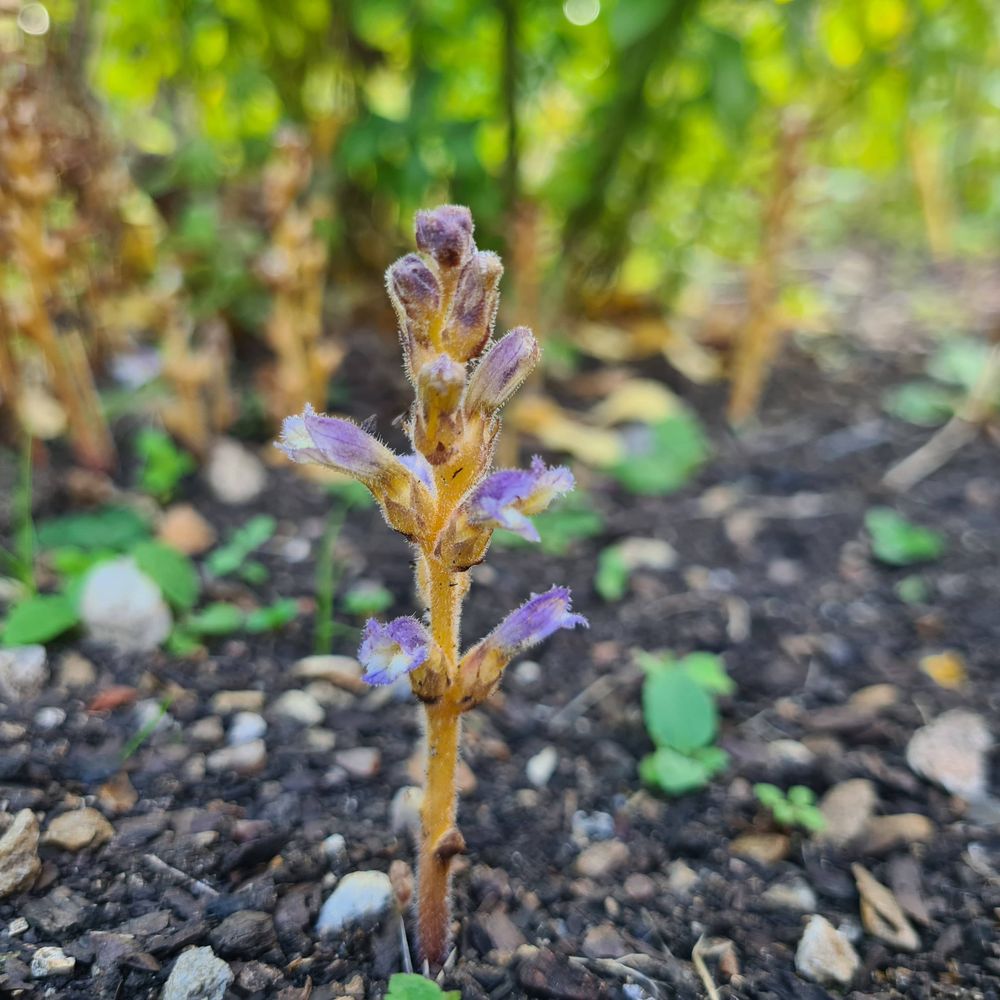
A new Red List for Vascular Plants in Great Britain has just been published - the first update for twenty years 🌿
So what is a Red List, and why does it matter? What does this new report tells us about the state of Britain’s flora?
So what is a Red List, and why does it matter? What does this new report tells us about the state of Britain’s flora?

November 7, 2025 at 12:43 PM
A new Red List for Vascular Plants in Great Britain has just been published - the first update for twenty years 🌿
So what is a Red List, and why does it matter? What does this new report tells us about the state of Britain’s flora?
So what is a Red List, and why does it matter? What does this new report tells us about the state of Britain’s flora?
The underside of a milking bonnet. Its beautiful gills are essential for the production and dissemination of spores! #FungiFriday

November 7, 2025 at 6:57 PM
The underside of a milking bonnet. Its beautiful gills are essential for the production and dissemination of spores! #FungiFriday

September 1, 2025 at 6:03 PM

September 1, 2025 at 5:53 PM
Stargazer lily! 🌺#Macrophotography #LearningMacro

July 30, 2025 at 3:31 PM
Stargazer lily! 🌺#Macrophotography #LearningMacro
Macro bumblebee!! #LearningMacro #Macrophotography

July 27, 2025 at 1:21 PM
Macro bumblebee!! #LearningMacro #Macrophotography
Bumblebee investigating a penstemon

July 27, 2025 at 1:10 PM
Bumblebee investigating a penstemon
Ladybug hanging upside down!

July 27, 2025 at 12:59 PM
Ladybug hanging upside down!
