



Our world under the waves
@worldunderthewaves.bsky.social
Sharing stories about the oceans and how they affect our lives, sometimes in unexpected ways.
Stay tuned here for links and bitesize content. For full length, original articles visit https://ourworldunderthewaves.com/
Stay tuned here for links and bitesize content. For full length, original articles visit https://ourworldunderthewaves.com/
Media Monday #66🎨
A few watercolour paintings by Luigi Balugani (1737-1770) depicting a sand dollar, a pufferfish, a blue crab and a Venus Comb Murex, a predatory (and spiky) sea snail.
A few watercolour paintings by Luigi Balugani (1737-1770) depicting a sand dollar, a pufferfish, a blue crab and a Venus Comb Murex, a predatory (and spiky) sea snail.


December 8, 2025 at 2:49 PM
Media Monday #66🎨
A few watercolour paintings by Luigi Balugani (1737-1770) depicting a sand dollar, a pufferfish, a blue crab and a Venus Comb Murex, a predatory (and spiky) sea snail.
A few watercolour paintings by Luigi Balugani (1737-1770) depicting a sand dollar, a pufferfish, a blue crab and a Venus Comb Murex, a predatory (and spiky) sea snail.
***COMING SOON***
A new article on Our World Under The Waves all about the magnificent giant grouper.
Stay tuned 🌊
A new article on Our World Under The Waves all about the magnificent giant grouper.
Stay tuned 🌊

December 6, 2025 at 3:12 PM
***COMING SOON***
A new article on Our World Under The Waves all about the magnificent giant grouper.
Stay tuned 🌊
A new article on Our World Under The Waves all about the magnificent giant grouper.
Stay tuned 🌊
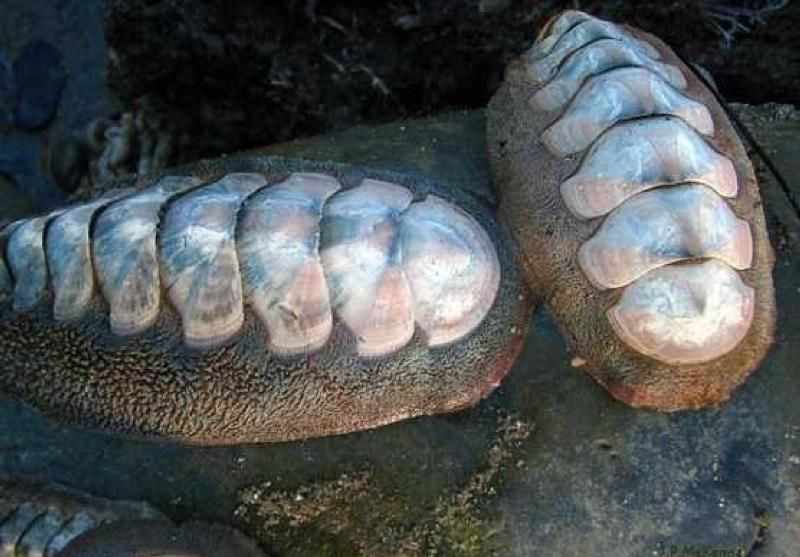
Armour plating at its most flexible 🛡️
These impressive looking specimens are chitons, sea snails who crawl along the seashore when the tide has come in (ideally at night) to scrape up tiny algae that grow on the rocks. Unlike limpets, their shell is made up of connected plates, not one single dome.
These impressive looking specimens are chitons, sea snails who crawl along the seashore when the tide has come in (ideally at night) to scrape up tiny algae that grow on the rocks. Unlike limpets, their shell is made up of connected plates, not one single dome.
December 3, 2025 at 12:46 PM
Armour plating at its most flexible 🛡️
These impressive looking specimens are chitons, sea snails who crawl along the seashore when the tide has come in (ideally at night) to scrape up tiny algae that grow on the rocks. Unlike limpets, their shell is made up of connected plates, not one single dome.
These impressive looking specimens are chitons, sea snails who crawl along the seashore when the tide has come in (ideally at night) to scrape up tiny algae that grow on the rocks. Unlike limpets, their shell is made up of connected plates, not one single dome.
Happy Antarctica Day ❄️
This cold frontier has been challenging explorers for decades, yielding maps that reflect different aspects of the icy continent. Including old naval charts, research stations and territorial claims, topography of the land & depths of the seabed and changes to the ice sheets
This cold frontier has been challenging explorers for decades, yielding maps that reflect different aspects of the icy continent. Including old naval charts, research stations and territorial claims, topography of the land & depths of the seabed and changes to the ice sheets


December 1, 2025 at 8:57 AM
Happy Antarctica Day ❄️
This cold frontier has been challenging explorers for decades, yielding maps that reflect different aspects of the icy continent. Including old naval charts, research stations and territorial claims, topography of the land & depths of the seabed and changes to the ice sheets
This cold frontier has been challenging explorers for decades, yielding maps that reflect different aspects of the icy continent. Including old naval charts, research stations and territorial claims, topography of the land & depths of the seabed and changes to the ice sheets
Today is Remeberance Day for Lost Species 😥
Extinction is a natural process, one that’s shaped the natural world throughout Earth’s history.
But the loss of the Yangtze river dolphin (declared extinct by 2007), was caused by noisy boats and habitat destruction through the Yangtze river system.
Extinction is a natural process, one that’s shaped the natural world throughout Earth’s history.
But the loss of the Yangtze river dolphin (declared extinct by 2007), was caused by noisy boats and habitat destruction through the Yangtze river system.

November 30, 2025 at 7:56 AM
Today is Remeberance Day for Lost Species 😥
Extinction is a natural process, one that’s shaped the natural world throughout Earth’s history.
But the loss of the Yangtze river dolphin (declared extinct by 2007), was caused by noisy boats and habitat destruction through the Yangtze river system.
Extinction is a natural process, one that’s shaped the natural world throughout Earth’s history.
But the loss of the Yangtze river dolphin (declared extinct by 2007), was caused by noisy boats and habitat destruction through the Yangtze river system.
This may look like an underwater missile. But the REMUS 100 AUV is actually an underwater drone for exploration, disposal of sea mines etc.
Hydroid, the marine robotics developer behind this device, and other later models, shares its name with a group of animals that includes ‘immortal’ jellyfish.
Hydroid, the marine robotics developer behind this device, and other later models, shares its name with a group of animals that includes ‘immortal’ jellyfish.

November 26, 2025 at 12:15 PM
This may look like an underwater missile. But the REMUS 100 AUV is actually an underwater drone for exploration, disposal of sea mines etc.
Hydroid, the marine robotics developer behind this device, and other later models, shares its name with a group of animals that includes ‘immortal’ jellyfish.
Hydroid, the marine robotics developer behind this device, and other later models, shares its name with a group of animals that includes ‘immortal’ jellyfish.
This little amphipod may not look like much, but they play an important role in freshwater ecosystems by consuming, and recycling, dead algae and animal matter. The mothers are also quite flexible, producing many small eggs in lakes at lower altitudes, but fewer, larger eggs at higher altitudes.

November 22, 2025 at 1:37 PM
This little amphipod may not look like much, but they play an important role in freshwater ecosystems by consuming, and recycling, dead algae and animal matter. The mothers are also quite flexible, producing many small eggs in lakes at lower altitudes, but fewer, larger eggs at higher altitudes.
The nautilus with a few more of their namesakes. Yes really, these cephalopods have luxury SUVs, the default file manager app for GNOME (a free and open source desktop environment) and a beach hotel in Miami, Florida, named after them.


November 19, 2025 at 2:54 PM
The nautilus with a few more of their namesakes. Yes really, these cephalopods have luxury SUVs, the default file manager app for GNOME (a free and open source desktop environment) and a beach hotel in Miami, Florida, named after them.
Media Monday #64✒️
In centuries gone by, the artwork that was used to surround a single letter in printed texts was something else.
Note the dolphin (apparently) in the middle of these two examples, each with a crown above its head which is thought to be a reference to King Francis I of France.
In centuries gone by, the artwork that was used to surround a single letter in printed texts was something else.
Note the dolphin (apparently) in the middle of these two examples, each with a crown above its head which is thought to be a reference to King Francis I of France.


November 17, 2025 at 1:06 PM
Media Monday #64✒️
In centuries gone by, the artwork that was used to surround a single letter in printed texts was something else.
Note the dolphin (apparently) in the middle of these two examples, each with a crown above its head which is thought to be a reference to King Francis I of France.
In centuries gone by, the artwork that was used to surround a single letter in printed texts was something else.
Note the dolphin (apparently) in the middle of these two examples, each with a crown above its head which is thought to be a reference to King Francis I of France.
Even in stamp collecting circles, the ocean makes its mark in various countries around the globe. Including (clockwise from top left) blue whales from Indonesia, jellyfish-like hydrozoans from Azerbaijan, common whelks from Albania and pufferfish from Tanzania.

November 15, 2025 at 12:39 PM
Even in stamp collecting circles, the ocean makes its mark in various countries around the globe. Including (clockwise from top left) blue whales from Indonesia, jellyfish-like hydrozoans from Azerbaijan, common whelks from Albania and pufferfish from Tanzania.
This covering, found on seaweeds, rocks and other surfaces, is a bryozoan colony. On closer inspection, you can see individual zooids, each contained within their own little ‘boxes’, each with tubes connecting them with their immediate neighbours for the transfer of nutrients and other materials.


November 12, 2025 at 9:41 AM
This covering, found on seaweeds, rocks and other surfaces, is a bryozoan colony. On closer inspection, you can see individual zooids, each contained within their own little ‘boxes’, each with tubes connecting them with their immediate neighbours for the transfer of nutrients and other materials.
Media Monday #63🧈
This looks like a delightful piece of whale shaped pottery.
But the russian art store website (which has a large physical store in Toronto, Canada) demonstrates its use as a butter dish with lid, albeit an extravagant one.
This looks like a delightful piece of whale shaped pottery.
But the russian art store website (which has a large physical store in Toronto, Canada) demonstrates its use as a butter dish with lid, albeit an extravagant one.

November 10, 2025 at 9:21 AM
Media Monday #63🧈
This looks like a delightful piece of whale shaped pottery.
But the russian art store website (which has a large physical store in Toronto, Canada) demonstrates its use as a butter dish with lid, albeit an extravagant one.
This looks like a delightful piece of whale shaped pottery.
But the russian art store website (which has a large physical store in Toronto, Canada) demonstrates its use as a butter dish with lid, albeit an extravagant one.
Though unlikely to happen at the surface, giant deep sea squid are known to put up a fight against the sperm whales who hunt them. As evidenced by scars they leave on the whale’s skin, courtesy of the ring-shaped tooth concealed within each sucker.


November 8, 2025 at 12:31 PM
Though unlikely to happen at the surface, giant deep sea squid are known to put up a fight against the sperm whales who hunt them. As evidenced by scars they leave on the whale’s skin, courtesy of the ring-shaped tooth concealed within each sucker.
Though more famous for studying the adaptations of different finch species on the Galapogos Islands, Charles Darwin also spent years studying barnacles whilst working on his theory of natural selection.
These samples were photographed whilst on display at the Zoological Museum of Copenhagen.
These samples were photographed whilst on display at the Zoological Museum of Copenhagen.

November 5, 2025 at 12:45 PM
Though more famous for studying the adaptations of different finch species on the Galapogos Islands, Charles Darwin also spent years studying barnacles whilst working on his theory of natural selection.
These samples were photographed whilst on display at the Zoological Museum of Copenhagen.
These samples were photographed whilst on display at the Zoological Museum of Copenhagen.
A gold turtle pendant constructed somewhere between the 11th and 16th century by the Veraguas culture (now a modern day province of Panama). This pre-Columbian civilisation is known for their goldwork and such pendants have been found in burial sites in the region.

November 2, 2025 at 10:07 AM
A gold turtle pendant constructed somewhere between the 11th and 16th century by the Veraguas culture (now a modern day province of Panama). This pre-Columbian civilisation is known for their goldwork and such pendants have been found in burial sites in the region.
Marine worms are not always as wriggly and ‘wormy’ as you might think. Some look like they’re using feather dusters, some look like Christmas trees and some secure themselves within a honeycomb network of cemented sand. The latter being the true masters of sand castles.


October 29, 2025 at 12:58 PM
Marine worms are not always as wriggly and ‘wormy’ as you might think. Some look like they’re using feather dusters, some look like Christmas trees and some secure themselves within a honeycomb network of cemented sand. The latter being the true masters of sand castles.
Despite not being a flying bird, penguins still have their name attached to flying vehicles and projectiles. Such as an anti-ship missile (AGM-119 Penguin) developed in the 1960s and a light aircraft (EAA Penguin). The latter was originally designed in 1932, but not built until 2014.


October 25, 2025 at 12:11 PM
Despite not being a flying bird, penguins still have their name attached to flying vehicles and projectiles. Such as an anti-ship missile (AGM-119 Penguin) developed in the 1960s and a light aircraft (EAA Penguin). The latter was originally designed in 1932, but not built until 2014.
And now for one of the strangest looking animal groups in the sea, the sea spiders.
Believe it or not, there is a central body there, but the arrangement is so dominated by their legs that there’s nowhere else to keep some of their internal organs, including those for digestion and reproduction.
Believe it or not, there is a central body there, but the arrangement is so dominated by their legs that there’s nowhere else to keep some of their internal organs, including those for digestion and reproduction.

October 22, 2025 at 12:34 PM
And now for one of the strangest looking animal groups in the sea, the sea spiders.
Believe it or not, there is a central body there, but the arrangement is so dominated by their legs that there’s nowhere else to keep some of their internal organs, including those for digestion and reproduction.
Believe it or not, there is a central body there, but the arrangement is so dominated by their legs that there’s nowhere else to keep some of their internal organs, including those for digestion and reproduction.
Media Monday #60🦞
The “Giant Freshwater Lobster” is hard to miss for those visiting Burnie Park in Tasmania, Australia. Its namesake (actually a species of crayfish) is the world’s largest freshwater invertebrate and endemic to the rivers of northern Tasmania.
The “Giant Freshwater Lobster” is hard to miss for those visiting Burnie Park in Tasmania, Australia. Its namesake (actually a species of crayfish) is the world’s largest freshwater invertebrate and endemic to the rivers of northern Tasmania.

October 20, 2025 at 12:09 PM
Media Monday #60🦞
The “Giant Freshwater Lobster” is hard to miss for those visiting Burnie Park in Tasmania, Australia. Its namesake (actually a species of crayfish) is the world’s largest freshwater invertebrate and endemic to the rivers of northern Tasmania.
The “Giant Freshwater Lobster” is hard to miss for those visiting Burnie Park in Tasmania, Australia. Its namesake (actually a species of crayfish) is the world’s largest freshwater invertebrate and endemic to the rivers of northern Tasmania.
These sheets of “Gim”, the Korean word for a number of edible seaweeds that are roasted (sometimes oiled and salted as well), can be used to make kimbap, a dish that is similar to sushi. It can be served with a number of different meats and vegetables.

October 18, 2025 at 8:55 AM
These sheets of “Gim”, the Korean word for a number of edible seaweeds that are roasted (sometimes oiled and salted as well), can be used to make kimbap, a dish that is similar to sushi. It can be served with a number of different meats and vegetables.
These beautiful nudibranchs (i.e. sea slugs) all belong to the same species, Phyllidia ocellata, and are often yellow with 4-10 black rings with white borders. "Often" seems to be the best word to use, since these images show how a pattern can vary even within a species.


October 15, 2025 at 11:53 AM
These beautiful nudibranchs (i.e. sea slugs) all belong to the same species, Phyllidia ocellata, and are often yellow with 4-10 black rings with white borders. "Often" seems to be the best word to use, since these images show how a pattern can vary even within a species.
Media Monday #59🧽
An artistic reconstruction of Eocyathispongia qiania, an ancient sea sponge dated back to 600 million years ago, and then hidden to mysteries of time until a fossilised specimen was discovered in China in 2015.
An artistic reconstruction of Eocyathispongia qiania, an ancient sea sponge dated back to 600 million years ago, and then hidden to mysteries of time until a fossilised specimen was discovered in China in 2015.

October 13, 2025 at 12:20 PM
Media Monday #59🧽
An artistic reconstruction of Eocyathispongia qiania, an ancient sea sponge dated back to 600 million years ago, and then hidden to mysteries of time until a fossilised specimen was discovered in China in 2015.
An artistic reconstruction of Eocyathispongia qiania, an ancient sea sponge dated back to 600 million years ago, and then hidden to mysteries of time until a fossilised specimen was discovered in China in 2015.
Happy World Migratory Bird Day 🐦
These Red Knots migrate thousands of kilometres between their breeding grounds on the Arctic tundra and the temperate/tropical mudflats where they live for the rest of the year. Along the way, they rely on the bounty of horseshoe crab eggs for a much needed pit stop
These Red Knots migrate thousands of kilometres between their breeding grounds on the Arctic tundra and the temperate/tropical mudflats where they live for the rest of the year. Along the way, they rely on the bounty of horseshoe crab eggs for a much needed pit stop

October 11, 2025 at 2:50 PM
Happy World Migratory Bird Day 🐦
These Red Knots migrate thousands of kilometres between their breeding grounds on the Arctic tundra and the temperate/tropical mudflats where they live for the rest of the year. Along the way, they rely on the bounty of horseshoe crab eggs for a much needed pit stop
These Red Knots migrate thousands of kilometres between their breeding grounds on the Arctic tundra and the temperate/tropical mudflats where they live for the rest of the year. Along the way, they rely on the bounty of horseshoe crab eggs for a much needed pit stop
Happy World Octopus Day 🐙
There are few cephalopods as cute, but deadly as a blue ringed octopus. This particular individual is a greater blue ringed octopus and its venom glands are armed with tetrodotoxin, a potent neurotoxin (also used by pufferfish) that intereferes with the nervous system.
There are few cephalopods as cute, but deadly as a blue ringed octopus. This particular individual is a greater blue ringed octopus and its venom glands are armed with tetrodotoxin, a potent neurotoxin (also used by pufferfish) that intereferes with the nervous system.

October 8, 2025 at 12:50 PM
Happy World Octopus Day 🐙
There are few cephalopods as cute, but deadly as a blue ringed octopus. This particular individual is a greater blue ringed octopus and its venom glands are armed with tetrodotoxin, a potent neurotoxin (also used by pufferfish) that intereferes with the nervous system.
There are few cephalopods as cute, but deadly as a blue ringed octopus. This particular individual is a greater blue ringed octopus and its venom glands are armed with tetrodotoxin, a potent neurotoxin (also used by pufferfish) that intereferes with the nervous system.
Happy World Habitat Day 🏝️
And a pleasent reminder that even small, living spaces can provide valuable habitat for the even smaller ocean residents. Such as (left to right) a bryozoan colony on a mussel shell, barnacles on a whelk shell and a whole mass of life on the back of a spider crab.
And a pleasent reminder that even small, living spaces can provide valuable habitat for the even smaller ocean residents. Such as (left to right) a bryozoan colony on a mussel shell, barnacles on a whelk shell and a whole mass of life on the back of a spider crab.

October 6, 2025 at 11:56 AM
Happy World Habitat Day 🏝️
And a pleasent reminder that even small, living spaces can provide valuable habitat for the even smaller ocean residents. Such as (left to right) a bryozoan colony on a mussel shell, barnacles on a whelk shell and a whole mass of life on the back of a spider crab.
And a pleasent reminder that even small, living spaces can provide valuable habitat for the even smaller ocean residents. Such as (left to right) a bryozoan colony on a mussel shell, barnacles on a whelk shell and a whole mass of life on the back of a spider crab.