


Rebecca Griffiths
@yorym-flo.bsky.social
Archaeologist, Finds Liaison Officer (FLO) at York Museums Trust.
All thoughts & opinions are my own.
All thoughts & opinions are my own.
Absolutely over the moon that the York MeRit Project was picked as runner up in the award for Engagement and Collaboration by the Society of Museum Archaeology. I'm super proud of this one and all the people who made it happen. socmusarch.org.uk/conference/

December 12, 2025 at 11:50 AM
Absolutely over the moon that the York MeRit Project was picked as runner up in the award for Engagement and Collaboration by the Society of Museum Archaeology. I'm super proud of this one and all the people who made it happen. socmusarch.org.uk/conference/
The is one half of a Roman cosmetic set. It is a mortar which would have paired with a pestle & used for grinding small quantities of powders for cosmetic or medicinal use. They are thought to be a British phenomenon with origin in the pre-Roman Iron Age. #FindsFriday finds.org.uk/database/art...

December 12, 2025 at 8:30 AM
The is one half of a Roman cosmetic set. It is a mortar which would have paired with a pestle & used for grinding small quantities of powders for cosmetic or medicinal use. They are thought to be a British phenomenon with origin in the pre-Roman Iron Age. #FindsFriday finds.org.uk/database/art...
This is a somewhat squashed Roman penannular brooch. This distribution of this type of brooch focuses on Roman military sites & by towns. The use of humped pins is concentrated in the north of Britain. #FindsFriday finds.org.uk/database/art...

November 28, 2025 at 8:30 AM
This is a somewhat squashed Roman penannular brooch. This distribution of this type of brooch focuses on Roman military sites & by towns. The use of humped pins is concentrated in the north of Britain. #FindsFriday finds.org.uk/database/art...
This Iron Age/Roman enamelled stud may once have decorated the hilt of a sword. Red glass, coral & stone features in a range of weapons as well as chariot fittings, pendants & brooches. Chequerboard enamel is also seen on Roman button & loop fasteners. #FindsFriday finds.org.uk/database/art...

November 21, 2025 at 8:30 AM
This Iron Age/Roman enamelled stud may once have decorated the hilt of a sword. Red glass, coral & stone features in a range of weapons as well as chariot fittings, pendants & brooches. Chequerboard enamel is also seen on Roman button & loop fasteners. #FindsFriday finds.org.uk/database/art...
This is a shilling of William III. These are often found worn smooth & bent into an S-shape & interpreted as love tokens but their significance is not understood, Traditional 'love tokens' were inscribed with a name, but most of these coins are uninscribed. #FindsFriday finds.org.uk/database/art...

finds.org.uk
November 14, 2025 at 8:30 AM
This is a shilling of William III. These are often found worn smooth & bent into an S-shape & interpreted as love tokens but their significance is not understood, Traditional 'love tokens' were inscribed with a name, but most of these coins are uninscribed. #FindsFriday finds.org.uk/database/art...
These are often mistaken for Early-Medieval pins but they are medieval strap ends. Only one published example is known from a 14th-15th-century context in Hartlepool. Some feature a terminal cross as on 13th-14th-century strap-ends. #FindsFriday finds.org.uk/database/art...

November 7, 2025 at 8:30 AM
These are often mistaken for Early-Medieval pins but they are medieval strap ends. Only one published example is known from a 14th-15th-century context in Hartlepool. Some feature a terminal cross as on 13th-14th-century strap-ends. #FindsFriday finds.org.uk/database/art...
This lovely gold coin is an Ecu d'or au Soleil du Dauphine of Francis I of France dating to c.AD 1515 - 1528. The reverse depicts the quartered field of France-Dauphiné, under a sun. It was minted in Crémieu, southeastern France. #FindsFriday finds.org.uk/database/art...

October 31, 2025 at 8:30 AM
This lovely gold coin is an Ecu d'or au Soleil du Dauphine of Francis I of France dating to c.AD 1515 - 1528. The reverse depicts the quartered field of France-Dauphiné, under a sun. It was minted in Crémieu, southeastern France. #FindsFriday finds.org.uk/database/art...
An excellent and detailed thread from @trixranderson.bsky.social on the discovery of a wonderful assemblage which shows what can be achieved when detectorists and archaeologists work together.
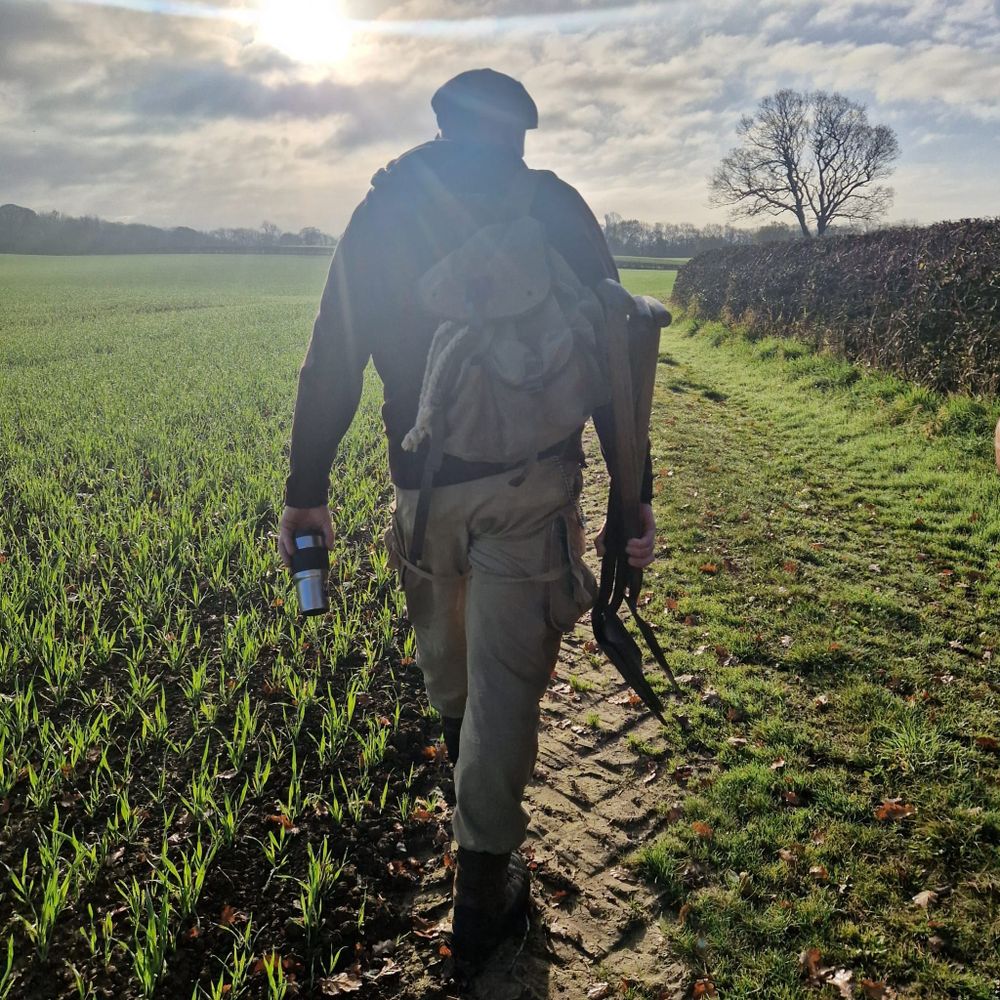
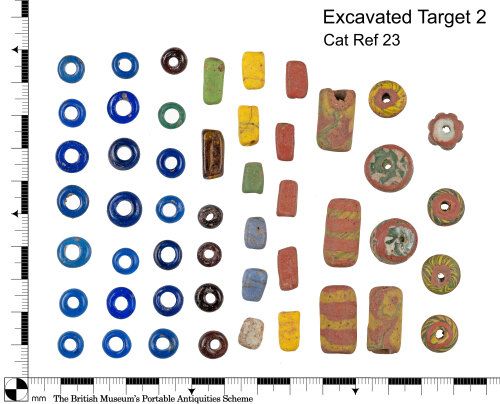
As others have said today: nothing beats a good bead!
I thought we'd take a pause from Viking camps and instead look at a North Yorks assemblage which I helped lift last year - and which Rebecca Griffiths @yorym-flo.bsky.social posted about last week. I watched these beauties come out the ground...
I thought we'd take a pause from Viking camps and instead look at a North Yorks assemblage which I helped lift last year - and which Rebecca Griffiths @yorym-flo.bsky.social posted about last week. I watched these beauties come out the ground...
October 24, 2025 at 10:58 AM
An excellent and detailed thread from @trixranderson.bsky.social on the discovery of a wonderful assemblage which shows what can be achieved when detectorists and archaeologists work together.
This 13th century seal matrix depicts a bird surrounded by a Latin legend which reads [FRA]NGE LEGGE TE[GE] and translates to ‘Break, read, conceal’. Most medieval matrices were made of metal, but ivory, like this example, jet, and soapstone are also known. #FindsFriday finds.org.uk/database/art...

October 24, 2025 at 7:30 AM
This 13th century seal matrix depicts a bird surrounded by a Latin legend which reads [FRA]NGE LEGGE TE[GE] and translates to ‘Break, read, conceal’. Most medieval matrices were made of metal, but ivory, like this example, jet, and soapstone are also known. #FindsFriday finds.org.uk/database/art...
This assemblage of Early-Medieval material was found by a metal detectorist. Realising the significance of the find, they stopped & followed our Emergency Excavation Protocol allowing the find to be professionally excavated, preserving its important context. #FindFriday finds.org.uk/database/art...


October 17, 2025 at 7:30 AM
This assemblage of Early-Medieval material was found by a metal detectorist. Realising the significance of the find, they stopped & followed our Emergency Excavation Protocol allowing the find to be professionally excavated, preserving its important context. #FindFriday finds.org.uk/database/art...
This amazing object is a Bronze Age palstave axehead c.1500-1250 BC. The axe would be hafted to a forked wooden handle held in place by high flanges & deep stop ridge. It is decorated with a trident-like shield design. #FindsFriday finds.org.uk/database/art...

October 10, 2025 at 7:30 AM
This amazing object is a Bronze Age palstave axehead c.1500-1250 BC. The axe would be hafted to a forked wooden handle held in place by high flanges & deep stop ridge. It is decorated with a trident-like shield design. #FindsFriday finds.org.uk/database/art...
This silver coin is a groat of Queen Mary dating to AD 1553 - 1554. These are often mistaken for Queen Elizabeth coins as they are often very worn. Tell-tale signs include the reverse legend and style of lettering. finds.org.uk/database/art...

October 3, 2025 at 7:30 AM
This silver coin is a groat of Queen Mary dating to AD 1553 - 1554. These are often mistaken for Queen Elizabeth coins as they are often very worn. Tell-tale signs include the reverse legend and style of lettering. finds.org.uk/database/art...
This beautiful object is a Bronze Age barbed & tanged arrowhead, c.2300 - 1700 BC. Arrowheads often represent the pinnacle of flint working, requiring extensive detailed working to create the necessary shape. These Bronze Age examples are some of the finest. #FindsFriday finds.org.uk/database/art...

September 26, 2025 at 7:30 AM
This beautiful object is a Bronze Age barbed & tanged arrowhead, c.2300 - 1700 BC. Arrowheads often represent the pinnacle of flint working, requiring extensive detailed working to create the necessary shape. These Bronze Age examples are some of the finest. #FindsFriday finds.org.uk/database/art...
This Palaeolithic handaxe would be unusual in Yorkshire but is normal for Norfolk where it was found. The area has a rich flint industry with a variety of tool and flake types and sites ranging from c.900,000-500,000 years ago. #FindsFriday finds.org.uk/database/art...

September 19, 2025 at 7:30 AM
This Palaeolithic handaxe would be unusual in Yorkshire but is normal for Norfolk where it was found. The area has a rich flint industry with a variety of tool and flake types and sites ranging from c.900,000-500,000 years ago. #FindsFriday finds.org.uk/database/art...
Terret rings were rein guides on chariots or carts in late Iron Age/early Roman period. They were set in a line along the yoke in groups of 5. Examples are known from 3rd or 2nd century BC East Yorkshire chariot burials as well as the later 1st century AD. #FindsFriday finds.org.uk/database/art...

September 12, 2025 at 7:30 AM
Terret rings were rein guides on chariots or carts in late Iron Age/early Roman period. They were set in a line along the yoke in groups of 5. Examples are known from 3rd or 2nd century BC East Yorkshire chariot burials as well as the later 1st century AD. #FindsFriday finds.org.uk/database/art...
This is a silver (possibly silver plated) contemporary copy of a Roman denarius of Trajan (AD 98-117) dating to c. AD 98. The non traditional portrait and blundered legends show this to be a contemporary copy rather than an official issue. #FindsFriday finds.org.uk/database/art...

September 5, 2025 at 7:30 AM
This is a silver (possibly silver plated) contemporary copy of a Roman denarius of Trajan (AD 98-117) dating to c. AD 98. The non traditional portrait and blundered legends show this to be a contemporary copy rather than an official issue. #FindsFriday finds.org.uk/database/art...
This Early-Medieval strap end is decorated with moulded zoomorphic designs featuring stylized animal heads. This design is seen on a selection of metalwork of Scandinavian & Anglo-Scandinavian origins, including strap-end mounts from Borre, Vestfold, Norway. #FindsFriday finds.org.uk/database/art...

August 29, 2025 at 7:30 AM
This Early-Medieval strap end is decorated with moulded zoomorphic designs featuring stylized animal heads. This design is seen on a selection of metalwork of Scandinavian & Anglo-Scandinavian origins, including strap-end mounts from Borre, Vestfold, Norway. #FindsFriday finds.org.uk/database/art...
The boar was a symbol of Richard III who died #OTD in 1485 at the Battle of Bosworth. Badges like this one from Stillingfleet, North Yorkshire, were worn by his household & followers. It was declared Treasure & acquired by the Yorkshire Museum #FindsFriday finds.org.uk/database/art...

August 22, 2025 at 7:30 AM
The boar was a symbol of Richard III who died #OTD in 1485 at the Battle of Bosworth. Badges like this one from Stillingfleet, North Yorkshire, were worn by his household & followers. It was declared Treasure & acquired by the Yorkshire Museum #FindsFriday finds.org.uk/database/art...
This is a silver miliarensis of Constantine II, c.AD 337-340. The reverse legend means "Joy of the Roman People". It was intended to foster a sense of unity and optimism, especially during times of stability or celebration. #FindFriday finds.org.uk/database/art...

August 15, 2025 at 7:30 AM
This is a silver miliarensis of Constantine II, c.AD 337-340. The reverse legend means "Joy of the Roman People". It was intended to foster a sense of unity and optimism, especially during times of stability or celebration. #FindFriday finds.org.uk/database/art...
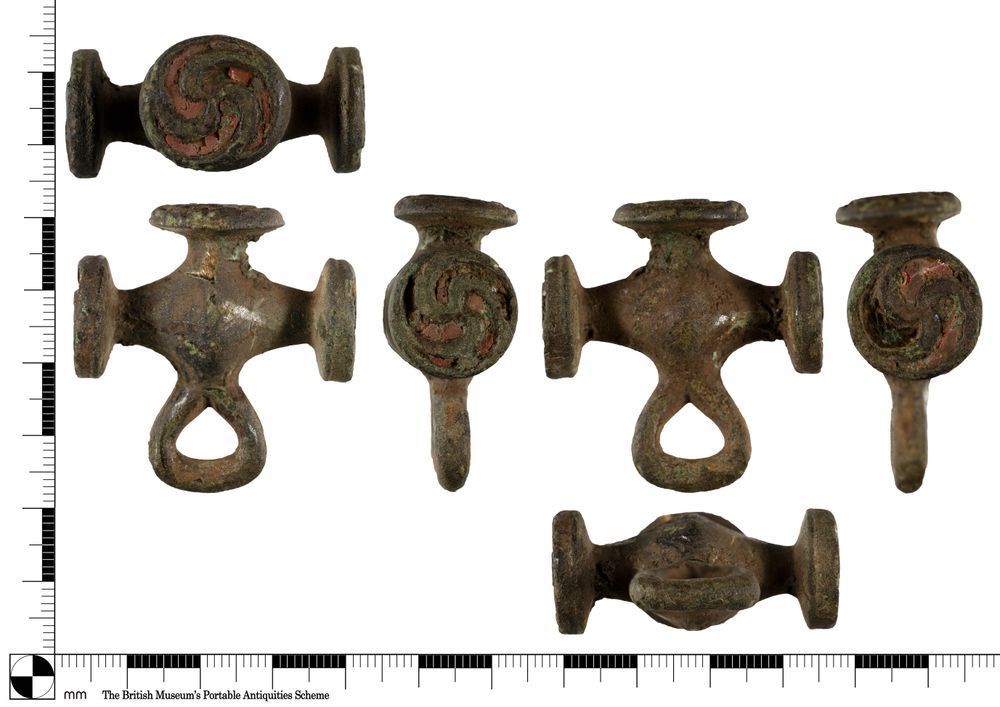
This Iron Age strap fitting, or toggle has bright red enamel set within intricate triskele-swirled motifs. These objects are becoming increasingly common finds with greater variations in style & decoration apparent through recording with PAS. FindsFriday finds.org.uk/database/art...
August 8, 2025 at 7:30 AM
This Iron Age strap fitting, or toggle has bright red enamel set within intricate triskele-swirled motifs. These objects are becoming increasingly common finds with greater variations in style & decoration apparent through recording with PAS. FindsFriday finds.org.uk/database/art...
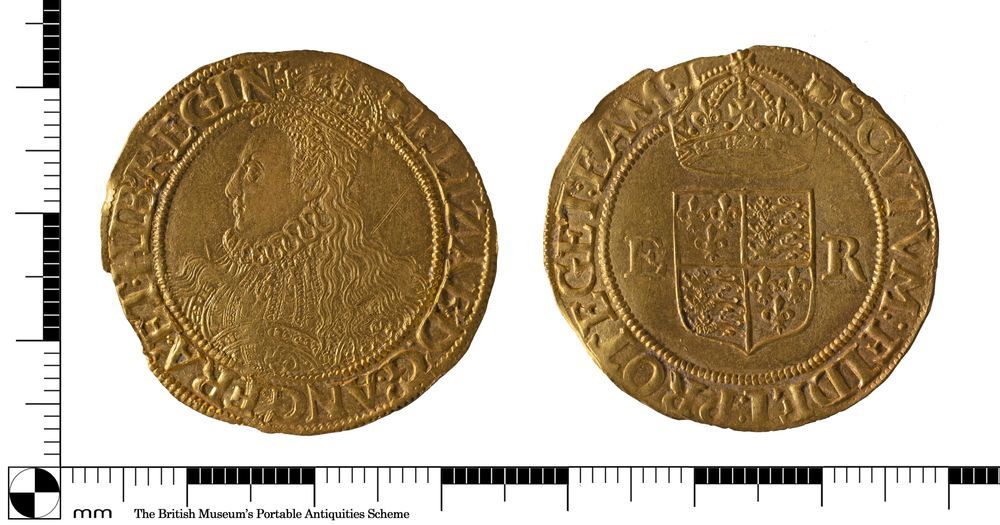
This gold halfpound of Elizabeth I dates to AD 1594-96. A small cross is scratched into the surface of the coin, behind the bust. The reason for this intentional treatment is not fully understood but was perhaps related to religious tensions of the time. #FindsFriday finds.org.uk/database/art...
August 1, 2025 at 7:30 AM
This gold halfpound of Elizabeth I dates to AD 1594-96. A small cross is scratched into the surface of the coin, behind the bust. The reason for this intentional treatment is not fully understood but was perhaps related to religious tensions of the time. #FindsFriday finds.org.uk/database/art...
These partifacts can cause confusion & be mistaken for dress hooks. They're pins from distinctive, decorative buckles known as ‘disc-on-pin’. The pointed end was functional, but the disc would be hidden behind the strap, unless held back on themselves. #FindsFriday finds.org.uk/database/art...
July 25, 2025 at 7:30 AM
These partifacts can cause confusion & be mistaken for dress hooks. They're pins from distinctive, decorative buckles known as ‘disc-on-pin’. The pointed end was functional, but the disc would be hidden behind the strap, unless held back on themselves. #FindsFriday finds.org.uk/database/art...
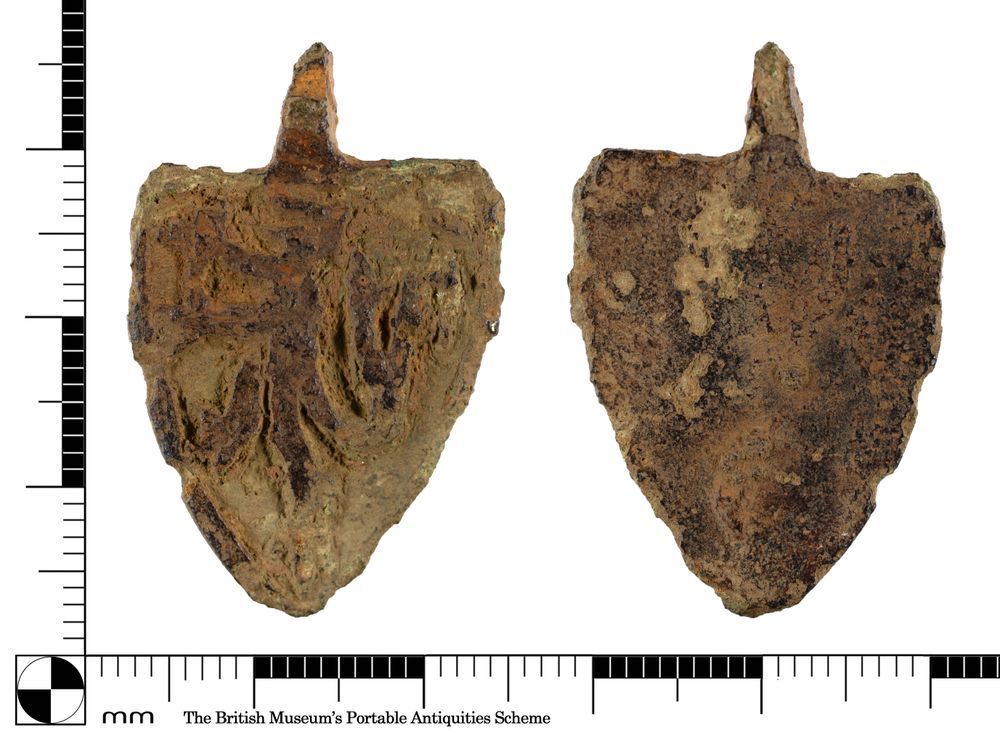
This medieval harness pendant is decorated with a lion standing, forepaws raised, hind legs apart, & forked tail. They date to 12th-14th century. Many have common motifs like lions, crowns, & fleur-de-lis. Some featured mythical creatures. #FindsFriday finds.org.uk/database/art...
July 18, 2025 at 7:30 AM
This medieval harness pendant is decorated with a lion standing, forepaws raised, hind legs apart, & forked tail. They date to 12th-14th century. Many have common motifs like lions, crowns, & fleur-de-lis. Some featured mythical creatures. #FindsFriday finds.org.uk/database/art...
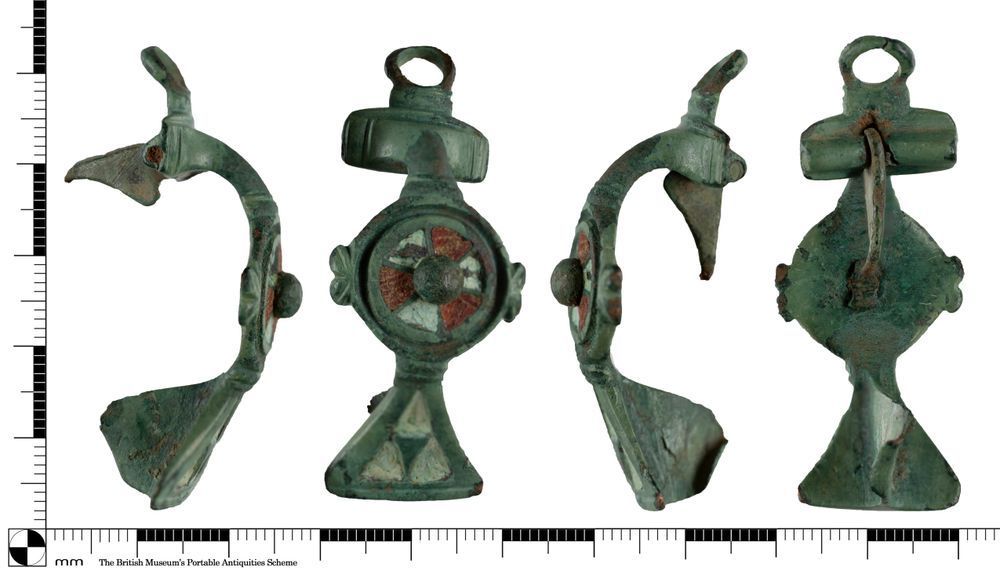
This lovely Roman bow & fantail brooch dates from the late 1st - early 2nd century. It's decorated with colourful enamel & the metal, now green, would originally have been shiny & brassy, almost gold in colour. These are a derivative of the Trumpet Brooch. #FindsFriday finds.org.uk/database/art...
July 11, 2025 at 7:30 AM
This lovely Roman bow & fantail brooch dates from the late 1st - early 2nd century. It's decorated with colourful enamel & the metal, now green, would originally have been shiny & brassy, almost gold in colour. These are a derivative of the Trumpet Brooch. #FindsFriday finds.org.uk/database/art...
This Roman nummus of Constantine I was issued in AD 320. The reverse depicts two captives seated under trophy and proclaims "courage of the army" #FindsFriday finds.org.uk/database/art...
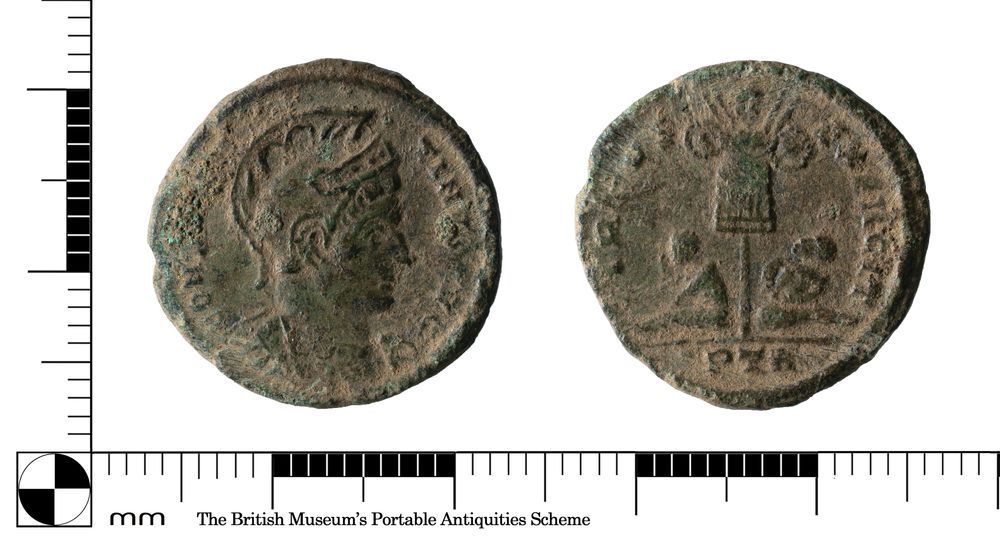
July 4, 2025 at 7:01 AM
This Roman nummus of Constantine I was issued in AD 320. The reverse depicts two captives seated under trophy and proclaims "courage of the army" #FindsFriday finds.org.uk/database/art...