



Zimeng Wu
@zimengwu33.bsky.social
Wellcome Trust Optical Biology PhD student @ UCL in the Wong Lab // interested in mechanotransduction and dynamic signalling in morphogenesis
Big thanks to Nick S. from @zeiss-microscopy.bsky.social and Rob T. from @healthcare.nikon.com for help with integration development. Also the UCL facility for microscopy support. And of course our co-authors Octavian, @mongeralab.bsky.social, @mayorlab.bsky.social and @miewong.bsky.social.
[6/6]
[6/6]
December 8, 2025 at 2:03 PM
Big thanks to Nick S. from @zeiss-microscopy.bsky.social and Rob T. from @healthcare.nikon.com for help with integration development. Also the UCL facility for microscopy support. And of course our co-authors Octavian, @mongeralab.bsky.social, @mayorlab.bsky.social and @miewong.bsky.social.
[6/6]
[6/6]
Thank you!!
I’m not quite sure I understand the question - maybe you could elaborate? The major benefit, however, of DySTrack is that you can correct/follow on the fly during acquisition rather than doing anything post!
I’m not quite sure I understand the question - maybe you could elaborate? The major benefit, however, of DySTrack is that you can correct/follow on the fly during acquisition rather than doing anything post!
December 8, 2025 at 1:39 PM
Thank you!!
I’m not quite sure I understand the question - maybe you could elaborate? The major benefit, however, of DySTrack is that you can correct/follow on the fly during acquisition rather than doing anything post!
I’m not quite sure I understand the question - maybe you could elaborate? The major benefit, however, of DySTrack is that you can correct/follow on the fly during acquisition rather than doing anything post!
If you’ve wanted a low-barrier entry into smart microscopy then this is it.
Open-source, documented, and ready for feedback & contributions.
Check out the GitHub repo here:
github.com/WhoIsJack/Dy...
[5/6]
Open-source, documented, and ready for feedback & contributions.
Check out the GitHub repo here:
github.com/WhoIsJack/Dy...
[5/6]

GitHub - WhoIsJack/DySTrack: A simple automated feedback microscopy tool for live tracking of moving samples.
A simple automated feedback microscopy tool for live tracking of moving samples. - WhoIsJack/DySTrack
github.com
December 8, 2025 at 9:53 AM
If you’ve wanted a low-barrier entry into smart microscopy then this is it.
Open-source, documented, and ready for feedback & contributions.
Check out the GitHub repo here:
github.com/WhoIsJack/Dy...
[5/6]
Open-source, documented, and ready for feedback & contributions.
Check out the GitHub repo here:
github.com/WhoIsJack/Dy...
[5/6]
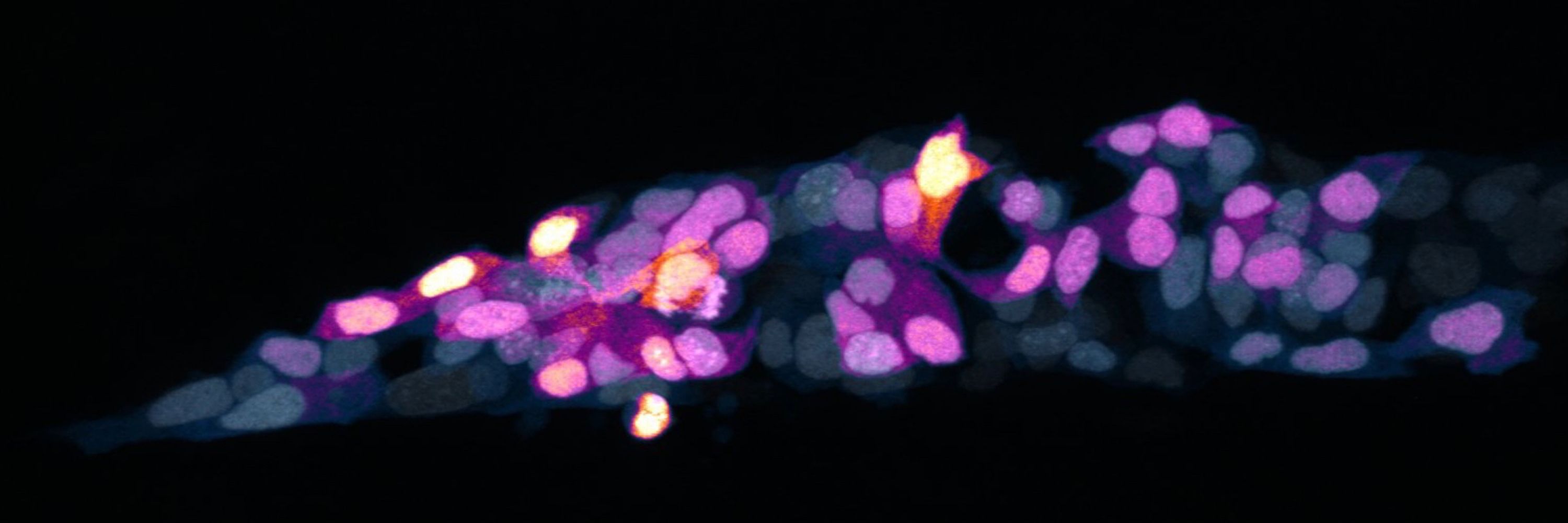
We include example pipelines for:
🐟 migrating zebrafish pLLP
🐟 zebrafish neuromast drift correction
🐣 chick Hensen’s node (pictured)
All easy to adapt to your own system.
[4/6]
🐟 migrating zebrafish pLLP
🐟 zebrafish neuromast drift correction
🐣 chick Hensen’s node (pictured)
All easy to adapt to your own system.
[4/6]
December 8, 2025 at 9:52 AM
We include example pipelines for:
🐟 migrating zebrafish pLLP
🐟 zebrafish neuromast drift correction
🐣 chick Hensen’s node (pictured)
All easy to adapt to your own system.
[4/6]
🐟 migrating zebrafish pLLP
🐟 zebrafish neuromast drift correction
🐣 chick Hensen’s node (pictured)
All easy to adapt to your own system.
[4/6]
The result:
Your microscope can follow moving or drifting samples on its own with no vendor lock-in, no rewriting control software and no massive frameworks to learn. We provide integration for Zeiss LSM880, LSM980 and Nikon scopes that have JOBS.
[3/6]
Your microscope can follow moving or drifting samples on its own with no vendor lock-in, no rewriting control software and no massive frameworks to learn. We provide integration for Zeiss LSM880, LSM980 and Nikon scopes that have JOBS.
[3/6]
December 8, 2025 at 9:51 AM
The result:
Your microscope can follow moving or drifting samples on its own with no vendor lock-in, no rewriting control software and no massive frameworks to learn. We provide integration for Zeiss LSM880, LSM980 and Nikon scopes that have JOBS.
[3/6]
Your microscope can follow moving or drifting samples on its own with no vendor lock-in, no rewriting control software and no massive frameworks to learn. We provide integration for Zeiss LSM880, LSM980 and Nikon scopes that have JOBS.
[3/6]
The core idea is simple:
DySTrack lets you keep using Zeiss/Nikon software for acquisition while running any Python image analysis you want in the loop.
It watches prescans -> runs your analysis -> updates stage coords automatically.
[2/6]
DySTrack lets you keep using Zeiss/Nikon software for acquisition while running any Python image analysis you want in the loop.
It watches prescans -> runs your analysis -> updates stage coords automatically.
[2/6]

December 8, 2025 at 9:49 AM
The core idea is simple:
DySTrack lets you keep using Zeiss/Nikon software for acquisition while running any Python image analysis you want in the loop.
It watches prescans -> runs your analysis -> updates stage coords automatically.
[2/6]
DySTrack lets you keep using Zeiss/Nikon software for acquisition while running any Python image analysis you want in the loop.
It watches prescans -> runs your analysis -> updates stage coords automatically.
[2/6]