



The USA government has always protected corporations who POISON US and make our planet TOXIC to all living beings ‼️Is it then surprising that these corporations cause Parkinson’s Disease❓
#stoppoisoning
#banparaquat
#stoppoisoning
#banparaquat

Thousands of U.S. farmers have Parkinson’s, and they blame a deadly pesticide that's banned in 70 countries — but not in America.
Paraquat, a weed killer, is the subject of thousands of lawsuits claiming it’s linked to Parkinson’s disease.
www.mlive.com/news/2025/12...
Paraquat, a weed killer, is the subject of thousands of lawsuits claiming it’s linked to Parkinson’s disease.
www.mlive.com/news/2025/12...

Thousands of U.S. farmers have Parkinson’s. They blame a deadly pesticide.
Paraquat is banned in more than 70 countries, but still legal in the United States. Now, a growing number of U.S. farmers are blaming the toxic pesticide for their Parkinson's disease in a large lawsu...
www.mlive.com
December 17, 2025 at 4:59 PM
The USA government has always protected corporations who POISON US and make our planet TOXIC to all living beings ‼️Is it then surprising that these corporations cause Parkinson’s Disease❓
#stoppoisoning
#banparaquat
#stoppoisoning
#banparaquat

Our Australian #BanParaquat (PQ) campaign on Thurs, 13 Nov, 1 pm (ACDT). REGISTER NOW: hubs.la/Q03SkNjj0
Did you know that over 70 countries have already banned Paraquat, including China & the UK, which still export it but won’t allow its use at home. Yet the US and Australia continue to use it…
Did you know that over 70 countries have already banned Paraquat, including China & the UK, which still export it but won’t allow its use at home. Yet the US and Australia continue to use it…

November 11, 2025 at 11:10 PM
Our Australian #BanParaquat (PQ) campaign on Thurs, 13 Nov, 1 pm (ACDT). REGISTER NOW: hubs.la/Q03SkNjj0
Did you know that over 70 countries have already banned Paraquat, including China & the UK, which still export it but won’t allow its use at home. Yet the US and Australia continue to use it…
Did you know that over 70 countries have already banned Paraquat, including China & the UK, which still export it but won’t allow its use at home. Yet the US and Australia continue to use it…

CALIFORNIA RESIDENTS - Ban Paraquat in California!
act.ewg.org/FezfeIslSkKb...
#Activism #Environmentalism #Politics #USPolitics #California #CaliforniaPolitics #Pesticides #Paraquat #BanParaquat #EmailYourSenator
act.ewg.org/FezfeIslSkKb...
#Activism #Environmentalism #Politics #USPolitics #California #CaliforniaPolitics #Pesticides #Paraquat #BanParaquat #EmailYourSenator
Ban Paraquat in California!
act.ewg.org
June 21, 2024 at 3:28 AM
CALIFORNIA RESIDENTS - Ban Paraquat in California!
act.ewg.org/FezfeIslSkKb...
#Activism #Environmentalism #Politics #USPolitics #California #CaliforniaPolitics #Pesticides #Paraquat #BanParaquat #EmailYourSenator
act.ewg.org/FezfeIslSkKb...
#Activism #Environmentalism #Politics #USPolitics #California #CaliforniaPolitics #Pesticides #Paraquat #BanParaquat #EmailYourSenator
EPA Must Ban Paraquat To Save Lives
www.panna.org/action/epa-m...
#Politics #USPolitics #Climate #Environment #Health #Chemicals #Pesticides #Paraquat #BanParaquat #EPA #EnvironmentalProtectionAgency #EmailTheEPA
www.panna.org/action/epa-m...
#Politics #USPolitics #Climate #Environment #Health #Chemicals #Pesticides #Paraquat #BanParaquat #EPA #EnvironmentalProtectionAgency #EmailTheEPA

EPA Must Ban Paraquat to Save Lives | Pesticide Action Network (PAN)
Paraquat is one of the most lethal pesticides used today, and is banned in 67 countries. Viable alternatives to this deadly chemical are widely known and used across the world, yet the U.S. continues ...
www.panna.org
June 12, 2024 at 12:46 AM
EPA Must Ban Paraquat To Save Lives
www.panna.org/action/epa-m...
#Politics #USPolitics #Climate #Environment #Health #Chemicals #Pesticides #Paraquat #BanParaquat #EPA #EnvironmentalProtectionAgency #EmailTheEPA
www.panna.org/action/epa-m...
#Politics #USPolitics #Climate #Environment #Health #Chemicals #Pesticides #Paraquat #BanParaquat #EPA #EnvironmentalProtectionAgency #EmailTheEPA

This toxic sh** killed my father! Tell EPA to ban the toxic herbicide paraquat now: #BanParaquat earthjustice.org/action/tell-...
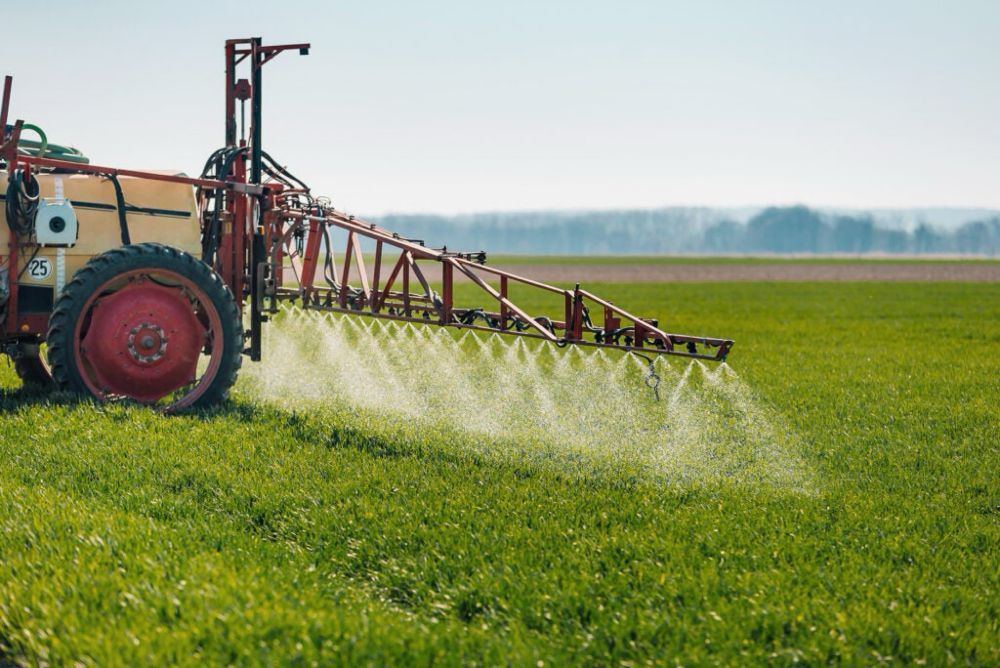
Tell EPA to ban the toxic herbicide paraquat now
Tell EPA to ban paraquat. Comment period ending April 1
earthjustice.org
March 8, 2024 at 5:16 PM
This toxic sh** killed my father! Tell EPA to ban the toxic herbicide paraquat now: #BanParaquat earthjustice.org/action/tell-...
Thank you Rep. @NydiaVelazquez for your leadership against this highly toxic #herbicide! #BanParaquat
x.com/NydiaVelazquez…
x.com/NydiaVelazquez…
February 26, 2025 at 12:50 AM
Thank you Rep. @NydiaVelazquez for your leadership against this highly toxic #herbicide! #BanParaquat
x.com/NydiaVelazquez…
x.com/NydiaVelazquez…
Herbicide Paraquat Again Linked to #Parkinson’s Symptoms in the Brain#health #herbicide #pesticide #banparaquat
bit.ly/2noQiKg
bit.ly/2noQiKg
Herbicide Paraquat Again Linked to Parkinson’s Symptoms in Brain - Beyond Pesticides Daily News Blog
(Beyond Pesticides, February 1, 2018) Scientists at the European Institute for the Biology of Aging are finding new information about how Parkinson’s disease manifests itself after exposure to the herbicide paraquat, in hopes of finding ways to prevent the progression of the disease. Despite a well-established body of scientific literature linking the paraquat to Parkinson’s, and a ban on the use of the chemical in the European Union that dates back to 2007, its use is still permitted in the U.S. Many health groups, including Beyond Pesticides and organizations like the Michael J Fox Foundation are calling on the U.S. Environmental Protection Agency stop the use of paraquat by denying its upcoming reregistration. Published in the journal Cell Reports, this new research on Parkinson’s investigates the impact of “senescent” cells in the body. Senescent cells are those which, despite being able to divide, stop doing so in response to stress. This is an anti-cancer mechanism, as stress would otherwise cause the cells to multiply unchecked and create malignancies. Researchers suspected that despite the benefit of stopping cancer, senescent cells may be causing other problems in the body. Rather than dying, these cells can cause inflammation in the area around where […]
bit.ly
February 25, 2025 at 11:55 PM
Herbicide Paraquat Again Linked to #Parkinson’s Symptoms in the Brain#health #herbicide #pesticide #banparaquat
bit.ly/2noQiKg
bit.ly/2noQiKg