



Sub-thread 5: Like prokaryotes, ONT long reads facilitate far enhanced recovery of marine vMAGs. Some marine Crassvirales clades are low-GC and present from Antarctica to the GBR, some appear to be higher GC and more warm adapted.
bsky.app/profile/stev...
bsky.app/profile/stev...
In recovering vMAGs from the GBR-MGD, we noticed firstly that viral classification is really hard, but also that what we could classify was often labeled as marine Crassvirales. Non-gut Crassvirales were known to exist already, but are criminally understudied nonetheless. So we looked into ours! A 🧵
Very excited to present the Great Barrier Reef Microbial Genomes Database (GBR-MGD), a comprehensive DB of 1000s of high-quality prokaryote, virus, plasmid, and chromosome-level eukaryote MAGs using Nanopore long reads. Subthreads incoming. Please share widely. 🙂
www.biorxiv.org/content/10.1...
www.biorxiv.org/content/10.1...
July 16, 2025 at 7:58 PM
Sub-thread 5: Like prokaryotes, ONT long reads facilitate far enhanced recovery of marine vMAGs. Some marine Crassvirales clades are low-GC and present from Antarctica to the GBR, some appear to be higher GC and more warm adapted.
bsky.app/profile/stev...
bsky.app/profile/stev...
At the same time, many of the GBR reps fall into a separate sub-clade characterized by much higher GC than the rest of the Crassvirales (~44% GC). This is actually quite interesting as, given genome streamlining theory and reefs being quite low-nutirent environments, I would have expected...
July 16, 2025 at 7:48 PM
At the same time, many of the GBR reps fall into a separate sub-clade characterized by much higher GC than the rest of the Crassvirales (~44% GC). This is actually quite interesting as, given genome streamlining theory and reefs being quite low-nutirent environments, I would have expected...
So now that we have some Crassvirales from coral reefs, where do they place? Piedade identified 4 marine clades, C1-C4. All from the GBR fell into a single large marine-only clade that coalesces the Piedade C1 and C2 clades and contains both Antarctic and tropical coral reef reps (panel 4B above).
July 16, 2025 at 7:35 PM
So now that we have some Crassvirales from coral reefs, where do they place? Piedade identified 4 marine clades, C1-C4. All from the GBR fell into a single large marine-only clade that coalesces the Piedade C1 and C2 clades and contains both Antarctic and tropical coral reef reps (panel 4B above).
Secondly, a lot about this paper refers back to GC bias. Most Crassvirales have low GC (~35%), so Illumina would strongly bias against them. Their abundance in Illumina data is surely lower than their actual abundance (refer to discussion of GC/pMAG recovery). This will apply to all low-GC microbes.
July 16, 2025 at 6:36 PM
Secondly, a lot about this paper refers back to GC bias. Most Crassvirales have low GC (~35%), so Illumina would strongly bias against them. Their abundance in Illumina data is surely lower than their actual abundance (refer to discussion of GC/pMAG recovery). This will apply to all low-GC microbes.
So we moved forward with our true Crassvirales contigs, made sure they had all the right Crassvirales core genes, and had a look at their taxonomy, incorporating several recently published Antarctic marine sequences from @goncalopiedade.bsky.social et al (2024).
pmc.ncbi.nlm.nih.gov/articles/PMC...
pmc.ncbi.nlm.nih.gov/articles/PMC...

July 16, 2025 at 6:22 PM
So we moved forward with our true Crassvirales contigs, made sure they had all the right Crassvirales core genes, and had a look at their taxonomy, incorporating several recently published Antarctic marine sequences from @goncalopiedade.bsky.social et al (2024).
pmc.ncbi.nlm.nih.gov/articles/PMC...
pmc.ncbi.nlm.nih.gov/articles/PMC...
We started out with 312 contigs >20kb classified by geNomad as putative Crassvirales (cool!), but once we placed them into a TerL tree we realized that 93% of them were actually Pachyviridae and Pervagoviridae, completely different order than the Crassvirales.
July 16, 2025 at 6:04 PM
We started out with 312 contigs >20kb classified by geNomad as putative Crassvirales (cool!), but once we placed them into a TerL tree we realized that 93% of them were actually Pachyviridae and Pervagoviridae, completely different order than the Crassvirales.
In recovering vMAGs from the GBR-MGD, we noticed firstly that viral classification is really hard, but also that what we could classify was often labeled as marine Crassvirales. Non-gut Crassvirales were known to exist already, but are criminally understudied nonetheless. So we looked into ours! A 🧵
Very excited to present the Great Barrier Reef Microbial Genomes Database (GBR-MGD), a comprehensive DB of 1000s of high-quality prokaryote, virus, plasmid, and chromosome-level eukaryote MAGs using Nanopore long reads. Subthreads incoming. Please share widely. 🙂
www.biorxiv.org/content/10.1...
www.biorxiv.org/content/10.1...

The planktonic microbiome of the Great Barrier Reef
Large genome databases have markedly improved our understanding of marine microorganisms. Although these resources have focused on prokaryotes, genomes from many dominant marine lineages, such as Pela...
www.biorxiv.org
July 16, 2025 at 5:54 PM
In recovering vMAGs from the GBR-MGD, we noticed firstly that viral classification is really hard, but also that what we could classify was often labeled as marine Crassvirales. Non-gut Crassvirales were known to exist already, but are criminally understudied nonetheless. So we looked into ours! A 🧵
I’ve written threads about the GBR-MGDs pMAGs, but it also contains viruses (vMAGs), including a monophyletic clade of marine Crassvirales, chromosome-level eukaryote eMAGs, and putative plasmids. We wanted a holistic DB.
One problem: some key software appear to break with long reads. A 🦠 🧵.
One problem: some key software appear to break with long reads. A 🦠 🧵.
Very excited to present the Great Barrier Reef Microbial Genomes Database (GBR-MGD), a comprehensive DB of 1000s of high-quality prokaryote, virus, plasmid, and chromosome-level eukaryote MAGs using Nanopore long reads. Subthreads incoming. Please share widely. 🙂
www.biorxiv.org/content/10.1...
www.biorxiv.org/content/10.1...
The planktonic microbiome of the Great Barrier Reef
Large genome databases have markedly improved our understanding of marine microorganisms. Although these resources have focused on prokaryotes, genomes from many dominant marine lineages, such as Pela...
www.biorxiv.org
June 10, 2025 at 9:03 AM
I’ve written threads about the GBR-MGDs pMAGs, but it also contains viruses (vMAGs), including a monophyletic clade of marine Crassvirales, chromosome-level eukaryote eMAGs, and putative plasmids. We wanted a holistic DB.
One problem: some key software appear to break with long reads. A 🦠 🧵.
One problem: some key software appear to break with long reads. A 🦠 🧵.
Considering the massive benefit using Nanopore provided for building the GBR-MGD—HQ/complete Pelagibacter, SAR86, Prochlorococcus, etc pMAGs+ chromosome-level picoeukaryote eMAGs + HQ Crassvirales vMAGs—seems fitting to share this preprint during London Calling.
@nanoporetech.com #nanoporeconf
@nanoporetech.com #nanoporeconf
Very excited to present the Great Barrier Reef Microbial Genomes Database (GBR-MGD), a comprehensive DB of 1000s of high-quality prokaryote, virus, plasmid, and chromosome-level eukaryote MAGs using Nanopore long reads. Subthreads incoming. Please share widely. 🙂
www.biorxiv.org/content/10.1...
www.biorxiv.org/content/10.1...
The planktonic microbiome of the Great Barrier Reef
Large genome databases have markedly improved our understanding of marine microorganisms. Although these resources have focused on prokaryotes, genomes from many dominant marine lineages, such as Pela...
www.biorxiv.org
May 21, 2025 at 9:46 AM
Considering the massive benefit using Nanopore provided for building the GBR-MGD—HQ/complete Pelagibacter, SAR86, Prochlorococcus, etc pMAGs+ chromosome-level picoeukaryote eMAGs + HQ Crassvirales vMAGs—seems fitting to share this preprint during London Calling.
@nanoporetech.com #nanoporeconf
@nanoporetech.com #nanoporeconf

We found new #Crassvirales clades on #Antarctica (prospective families): @goncalopiedade.bsky.social's new paper on the viruses in Antarctic waters is out! Check out the manuscript (www.nature.com/articles/s41...) and Gonçalo's "Behind the Paper": communities.springernature.com/posts/unveil...
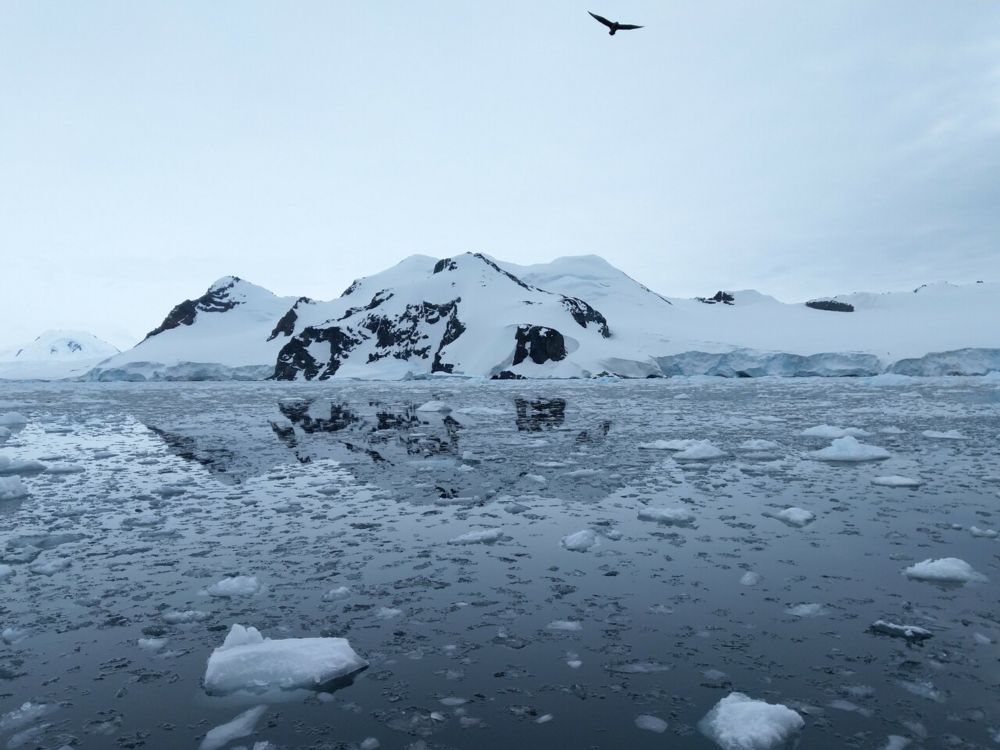
Unveiling the Hidden World of Antarctic Marine Viruses
communities.springernature.com
October 25, 2024 at 8:18 AM
We found new #Crassvirales clades on #Antarctica (prospective families): @goncalopiedade.bsky.social's new paper on the viruses in Antarctic waters is out! Check out the manuscript (www.nature.com/articles/s41...) and Gonçalo's "Behind the Paper": communities.springernature.com/posts/unveil...