



🗣️ (RP please) The #Microbes4Climate trans-national access call, including access to #plant #phenotyping infrastructure is now open, deadline 08.03.2026.
more information below:
microbes4climate.eu/tna/
and
www.fz-juelich.de/de/ibg/ibg-2...
#PlantMicrobeInteraction #PMI 🧪🌾🦠🔬
more information below:
microbes4climate.eu/tna/
and
www.fz-juelich.de/de/ibg/ibg-2...
#PlantMicrobeInteraction #PMI 🧪🌾🦠🔬

TNA - Microbes4Climate
Transnational Access (TNA) facilitates access to cutting-edge Research Infrastructures (RIs), which provide services, and resources across multiple countries.
microbes4climate.eu
December 15, 2025 at 4:19 PM
🗣️ (RP please) The #Microbes4Climate trans-national access call, including access to #plant #phenotyping infrastructure is now open, deadline 08.03.2026.
more information below:
microbes4climate.eu/tna/
and
www.fz-juelich.de/de/ibg/ibg-2...
#PlantMicrobeInteraction #PMI 🧪🌾🦠🔬
more information below:
microbes4climate.eu/tna/
and
www.fz-juelich.de/de/ibg/ibg-2...
#PlantMicrobeInteraction #PMI 🧪🌾🦠🔬

Bartje at Aarhus University for a seminar and PhD defense
#PlantMicrobeInteraction
#BartjeAroundTheWorld
#PlantMicrobeInteraction
#BartjeAroundTheWorld

December 11, 2025 at 10:35 AM
Bartje at Aarhus University for a seminar and PhD defense
#PlantMicrobeInteraction
#BartjeAroundTheWorld
#PlantMicrobeInteraction
#BartjeAroundTheWorld

New Review published in @phytopathology.bsky.social from the lab of Dr. Subhadeep Chatterjee. This review discusses in detail about the mechanisms Xanthomonas follows in order to increase it's pathogenicity.
Read more: apsjournals.apsnet.org/doi/epdf/10....
#xanthomonas #plantmicrobeinteraction
Read more: apsjournals.apsnet.org/doi/epdf/10....
#xanthomonas #plantmicrobeinteraction

October 9, 2025 at 12:40 PM
New Review published in @phytopathology.bsky.social from the lab of Dr. Subhadeep Chatterjee. This review discusses in detail about the mechanisms Xanthomonas follows in order to increase it's pathogenicity.
Read more: apsjournals.apsnet.org/doi/epdf/10....
#xanthomonas #plantmicrobeinteraction
Read more: apsjournals.apsnet.org/doi/epdf/10....
#xanthomonas #plantmicrobeinteraction

Crown rot in wheat: pathogen biology, host responses, and management strategies
Lefan Pu, Qiaojun Jin ... Zhensheng Kang, Jun Guo
link.springer.com/article/10.1...
#wheat #bioticstress #PlantMicrobeInteraction
Lefan Pu, Qiaojun Jin ... Zhensheng Kang, Jun Guo
link.springer.com/article/10.1...
#wheat #bioticstress #PlantMicrobeInteraction

Crown rot in wheat: pathogen biology, host responses, and management strategies - Stress Biology
Crown rot (CR), caused by Fusarium pseudograminearum and related species, is a soil-borne disease threatening global wheat (Triticum aestivum) production, with yield losses exceeding 50% under severe infections. The rapid spread of CR in China, driven by straw retention policies and warming climates, highlights the need for interdisciplinary solutions. This review systematically integrates advances in CR research and addresses pathogen biology, host resistance, and sustainable management. Research on pathogen biology has clarified the distribution of major Fusarium species, the infection process, toxin profiles, mating types, and virulence factors. Host resistance to CR is quantitatively controlled, and through quantitative trait locus (QTL) mapping and omics-based approaches, several genes encoding transcription factors, receptor-like kinases and enzymes, signaling pathways and secondary metabolites involved in resistance have been identified. Advances in control strategies, including chemical and biological methods, as well as the application of nanotechnology, have shown promising results. The review also highlights future research directions, such as investigating the molecular mechanisms of pathogen-host interactions, identifying effectors and susceptibility genes for CR in wheat, and integrating multi-omics studies with high-resolution genetic maps to pinpoint CR resistance genes. These efforts are crucial for improving our understanding of the disease and developing effective management strategies.
link.springer.com
October 4, 2025 at 5:37 PM
Crown rot in wheat: pathogen biology, host responses, and management strategies
Lefan Pu, Qiaojun Jin ... Zhensheng Kang, Jun Guo
link.springer.com/article/10.1...
#wheat #bioticstress #PlantMicrobeInteraction
Lefan Pu, Qiaojun Jin ... Zhensheng Kang, Jun Guo
link.springer.com/article/10.1...
#wheat #bioticstress #PlantMicrobeInteraction

Off to Cologne for #ISMPMI2025 🌿🦠
I'll be presenting a poster on how #Enterobacter sp. #SA187 supports plant growth under low #nitrogen via #ethylene signalling and nitrate transporters
If you're around, let's connect and chat about science (or life!) 👩🔬🌱
Preview below 👇
#PlantMicrobeInteraction
I'll be presenting a poster on how #Enterobacter sp. #SA187 supports plant growth under low #nitrogen via #ethylene signalling and nitrate transporters
If you're around, let's connect and chat about science (or life!) 👩🔬🌱
Preview below 👇
#PlantMicrobeInteraction

July 12, 2025 at 1:23 PM
Off to Cologne for #ISMPMI2025 🌿🦠
I'll be presenting a poster on how #Enterobacter sp. #SA187 supports plant growth under low #nitrogen via #ethylene signalling and nitrate transporters
If you're around, let's connect and chat about science (or life!) 👩🔬🌱
Preview below 👇
#PlantMicrobeInteraction
I'll be presenting a poster on how #Enterobacter sp. #SA187 supports plant growth under low #nitrogen via #ethylene signalling and nitrate transporters
If you're around, let's connect and chat about science (or life!) 👩🔬🌱
Preview below 👇
#PlantMicrobeInteraction
Awesome stuff. Congrats to all!
I loved the #PlantMicrobeInteraction video.
Before you ask: yes I am biased 🤷 youtu.be/nhZEDbWqfAU?...
🧪 #Pseudomonas #Arabidosis
#PlantSci #ScientificCommunication
#DanceYourPhD
I loved the #PlantMicrobeInteraction video.
Before you ask: yes I am biased 🤷 youtu.be/nhZEDbWqfAU?...
🧪 #Pseudomonas #Arabidosis
#PlantSci #ScientificCommunication
#DanceYourPhD
May 6, 2025 at 7:31 PM
Awesome stuff. Congrats to all!
I loved the #PlantMicrobeInteraction video.
Before you ask: yes I am biased 🤷 youtu.be/nhZEDbWqfAU?...
🧪 #Pseudomonas #Arabidosis
#PlantSci #ScientificCommunication
#DanceYourPhD
I loved the #PlantMicrobeInteraction video.
Before you ask: yes I am biased 🤷 youtu.be/nhZEDbWqfAU?...
🧪 #Pseudomonas #Arabidosis
#PlantSci #ScientificCommunication
#DanceYourPhD
Hey 🧪 folks,
Julia Frunzke (IBG1) and I have an open #PhD position
"Establishment of #Phage-#Biocontrol Strategies for #Pathogen Control in Agriculturally Relevant #Plants"👇 @fz-juelich.de
Position open until filled. #PlantSciJobs #PlantScience www.fz-juelich.de/de/karriere/...
Re-post pls.
Julia Frunzke (IBG1) and I have an open #PhD position
"Establishment of #Phage-#Biocontrol Strategies for #Pathogen Control in Agriculturally Relevant #Plants"👇 @fz-juelich.de
Position open until filled. #PlantSciJobs #PlantScience www.fz-juelich.de/de/karriere/...
Re-post pls.
PhD Position - Establishment of Phage-Biocontrol Strategies for Pathogen Control in Agriculturally Relevant Plants
As a leading research institution for plant sciences and microbial biotechnology the Institute of Bio- and Geosciences (IBG) at the Forschungszentrum Jülich focuses on molecular and applied bioscience...
www.fz-juelich.de
December 4, 2024 at 3:16 PM

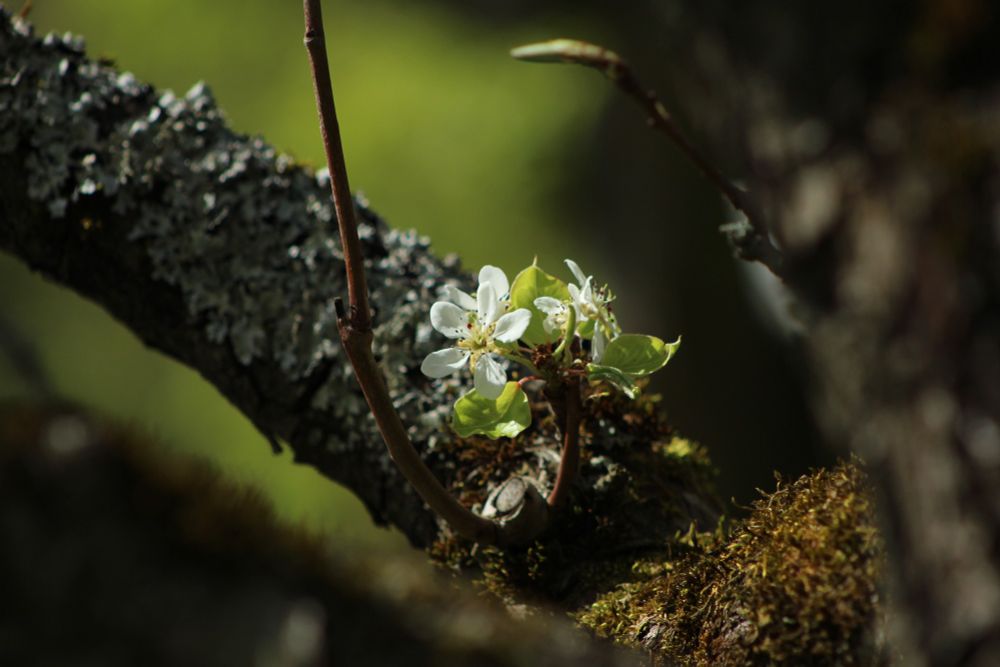
now on BlueSky!
#phd
#science
#plantscience
#plantimmunity
#plantmicrobeinteraction
#photography
#naturephotography
#phd
#science
#plantscience
#plantimmunity
#plantmicrobeinteraction
#photography
#naturephotography
November 19, 2024 at 9:23 AM
See our bioRxiv preprint by Jiyu Xie on Bacillus-Trichoderma interaction and the importance of biofilm matrix, understanding BFI towards plant growth promotion - work done at Nanjing Agricultural University and #LeidenBiology
#MicrobiomeEcology #PlantMicrobeInteraction #biofilm
#MicrobiomeEcology #PlantMicrobeInteraction #biofilm

Bridging the Gap: biofilm-mediated establishment of Bacillus velezensis on Trichoderma guizhouense mycelia https://www.biorxiv.org/content/10.1101/2024.06.06.597722v1

Bridging the Gap: biofilm-mediated establishment of Bacillus velezensis on Trichoderma guizhouense mycelia https://www.biorxiv.org/content/10.1101/2024.06.06.597722v1
Bacterial-fungal interactions (BFIs) are important in ecosystem dynamics, especially within the soil
www.biorxiv.org
June 7, 2024 at 7:13 AM
See our bioRxiv preprint by Jiyu Xie on Bacillus-Trichoderma interaction and the importance of biofilm matrix, understanding BFI towards plant growth promotion - work done at Nanjing Agricultural University and #LeidenBiology
#MicrobiomeEcology #PlantMicrobeInteraction #biofilm
#MicrobiomeEcology #PlantMicrobeInteraction #biofilm

April 12, 2024 at 11:44 AM