Christian R Voolstra
banner
reefgenomics.bsky.social
Christian R Voolstra
@reefgenomics.bsky.social

Dedicated Marine Scientist, Reef Genomicist, Computer/Musiq/Travel lover, Dad of 3, Professor of Genetics of Adaptation in Aquatic Systems, President International Coral Reef Society (ICRS), Scientific Coordinator Tara Pacific Expedition .. more

Environmental science 52%
Geography 16%
What happened during the third global bleaching event and what does it mean for coral reefs worldwide?
👉 Discover more in today’s featured article: www.nature.com/articles/s41...
📩 Do you have a paper you’d like us to highlight? Contact us.

How do coral reefs record climate change? And what can they tell us about the future? New bite size video from the DFG SPP 2299 discussing research, future directions, and the big questions shaping the next phase. Check it out:
▶️ www.youtube.com/watch?v=PUQU... @climatereefs.bsky.social
SPP 2299 Research & Future Directions
YouTube video by Tropical Climate Variability & Coral Reefs
youtu.be

Tara Coral expedition to the Coral Triangle .. it's on! www.uni-konstanz.de/en/universit... @taraoceans-science.bsky.social
Expedition to the Coral Triangle
www.uni-konstanz.de

the Tara research vessel has left Lorient and is on its way to the coral triangle; official press conference was last week in Paris, see below & here: fondationtaraocean.org/en/expeditio...
Just wrapped up the 2nd edition of the CBASS workshop in the Maldives! 🌍
A full week of hands-on work assessing coral thermotolerance amid climate change. 🌡🪸

Huge thanks to @reefgenomics.bsky.social our MaRHE team and all participants.
More updates soon — see you in the next edition! 💙

new work: UniCor metric->wonder what bacteria associate w/ a variable of interest (sal, temp, stress etc pp)? doi.org/10.1093/isme...
- identifies UNIquely CORrelated eNtities (“UNICORNs”) linked to a variable of interest
- hierarchy-aware propagation to select features across taxonomic levels
UniCor and UniCorP: a novel metric and hierarchical feature selection algorithm for microbial community analysis
Abstract. The rapid advancement of technologies and methods in the life sciences has significantly increased the availability of big data, presenting new c
doi.org
The #TMHMS25 has just wrapped up!
It’s been four amazing days of stimulating discussions and sharing our science in a wonderfully relaxed and supportive atmosphere.
There was a truly genuine sense of community among all participants, which I really cherish.

Cheers, to the next one! 🌊

really great, advancing study. Congrats and fingers crossed for publication :) !
Chris Voolstra @reefgenomics.bsky.social kicking off the 2nd day of the #SPP2299 "Meeting & Status Seminar 2025" with a Perspective Lecture on "The future of reefs and reefs of the future"

new work: fascinating study demonstrating rapid viral activation & subsequent rapid antiviral innate immunity response by cnidarians under heat stress .. response conserved across symbiotic/non-symbiotic hexacorallia -> link to bleaching!? onlinelibrary.wiley.com/doi/10.1111/... @uni-konstanz.de
We are welcoming applications for a full professorship on Molecular and Evolutionary Zoology at Kiel Univerdity, Northern Germany, with fantastic facilities and infrastructure! @uni-kiel.de @crc1182.bsky.social @transevo.bsky.social www.nature.com/naturecareer...
W 3 professorship in Molecular and Evolutionary Zoology - Kiel, Schleswig-Holstein (DE) job with Christian-Albrechts-Universität zu Kiel | 12844416
Kiel University aims to attract more qualified women to professorship positions. The Institute of Zoology at the Faculty of Mathematics and Natural...
www.nature.com

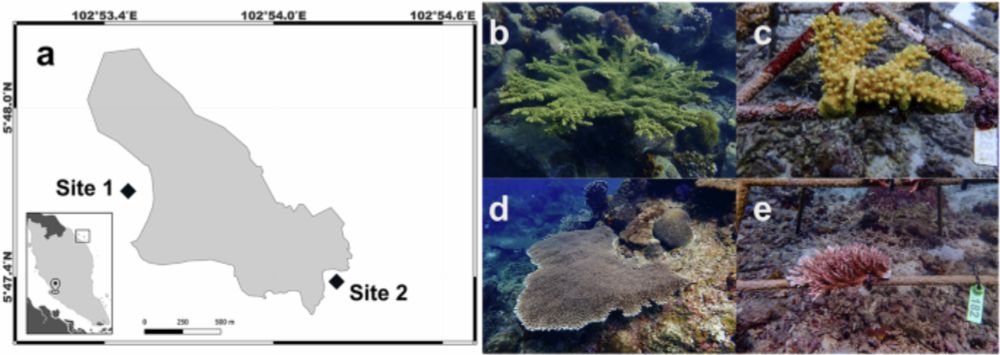
New paper: Do corals keep their thermal tolerance in nurseries? #CBASS assays show A. cytherea lose then recover, while A. florida retain tolerance=>To inform restoration, screening should be conducted prior to nursery propagation www.nature.com/articles/s42... @uni-konstanz.de @coralku.bsky.social
Species-specific retention vs. recovery of coral thermal tolerance following nursery propagation - Communications Biology
Standardized acute thermal assays (CBASS) of Acropora species reveal that nursery-reared corals either retain or recover thermal tolerance over time, suggesting adaptive traits are...
www.nature.com
It's happening! We're finally creating a modern publishing platform that frees scientists to collaboratively publish peer-reviewed research without the gatekeeping.

Follow us for updates as we launch! stacksjournal.org
Stacks Journal | Create better science, together.
Create better science, together. The Stacks puts the focus of publishing where it should be: science and scientists.
stacksjournal.org
🪸 CBASS Workshop – Maldives 🌡️
24 Nov–2 Dec ’25 @ MaRHE Center, Magoodhoo
Hands‑on CBASS experiments, lectures, snorkeling & SCUBA with Prof. Christian Voolstra @reefgenomics.bsky.social
Deadline: 17 Sep ’25 | Limited spots!
🔗 en.unimib.it/news/2nd-edi...
#CBASS #CoralReefConservation #MarineWorkshop
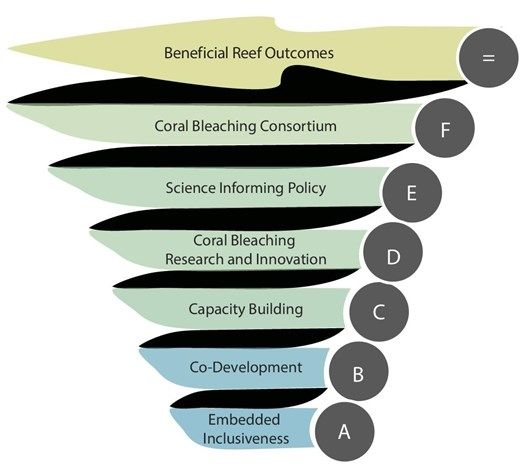
SPP 2299 members @thomasfelis.bsky.social @reefgenomics.bsky.social and Christian Wild contributed to a recent article lead by Andrea Grottoli on the "Future of coral bleaching research" url: academic.oup.com/bioscience/a...
Future of coral bleaching research
Abstract. Coral bleaching is the largest global threat to coral reef ecosystem persistence this century. Advancing our understanding of coral bleaching and
academic.oup.com

Heya. Yes I agree. We currently write a perspective on the importance of a ‘universal Coral health index’ (and what could go into it). But to my knowledge, nothing out there yet.(??)

pumped that CBASSED50 R package now officially released on CRAN cran.rstudio.com/web/packages... ... easy for everyone to install package for R Studio processing! #CBASS #coral #bleaching #ThermalTolerance
CBASSED50: Process CBASS-Derived PAM Data
Tools to process CBASS-derived PAM data efficiently. Minimal requirements are PAM-based photosynthetic efficiency data (or data from any other continuous variable that changes with temperature, e.g. r...
cran.rstudio.com

How would that affect the issue at general? Are you suggesting that researchers look for a shortcut to amp their pub record? The portrayed case goes against all research ethics. Of course, fixing one issue doesn’t fix all issues, if that is your larger point.

pretty amazing how much money publishers make, how they pay little to zero to their reviewers/editors , and how they do not invest better in ensuring fair, transparent, and quality peer-review .. paying your reviewers/editors, entails pathway to identity check: www.science.org/content/arti...
‘It felt very icky’: This scientist’s name was used to write fake peer reviews
Elsevier retracts dozens of journal articles that were published based on “fictitious” reviews
www.science.org

And so it begins #OOSC let’s make it count and kick into decisive action!

new work: "Spatially restricted coral bleaching"-> why do corals (start to) bleach in one place but not another? what implications does it hold if bleaching susceptibility differs across a colony surface? read on: www.nature.com/articles/s42... thanks to coauthors! @uni-konstanz.de @icrs.bsky.social
Spatially restricted coral bleaching as an ecological manifestation of within-colony heterogeneity - Communications Biology
This perspective highlights spatially restricted coral bleaching as an underexplored ecological phenomenon that offers critical insight into within-colony heterogeneity.
www.nature.com
Our new work in Environmental Microbiology on Symbiodiniaceae diversity between reef habitats and across the coral holobiont. Sediment, seawater, and turf algae-associated communities were distinct while the coral mucus and tissue showed nearly identical ITS2 type profiles.

tinyurl.com/mr2hasb5
Resolving Symbiodiniaceae Diversity Across Coral Microhabitats and Reef Niches
We characterised the Symbiodiniaceae ITS2-based diversity across a tropical coral reef to quantify the connectivity between seawater, turf algae, sediment, coral tissue and coral mucus communities. A...
tinyurl.com

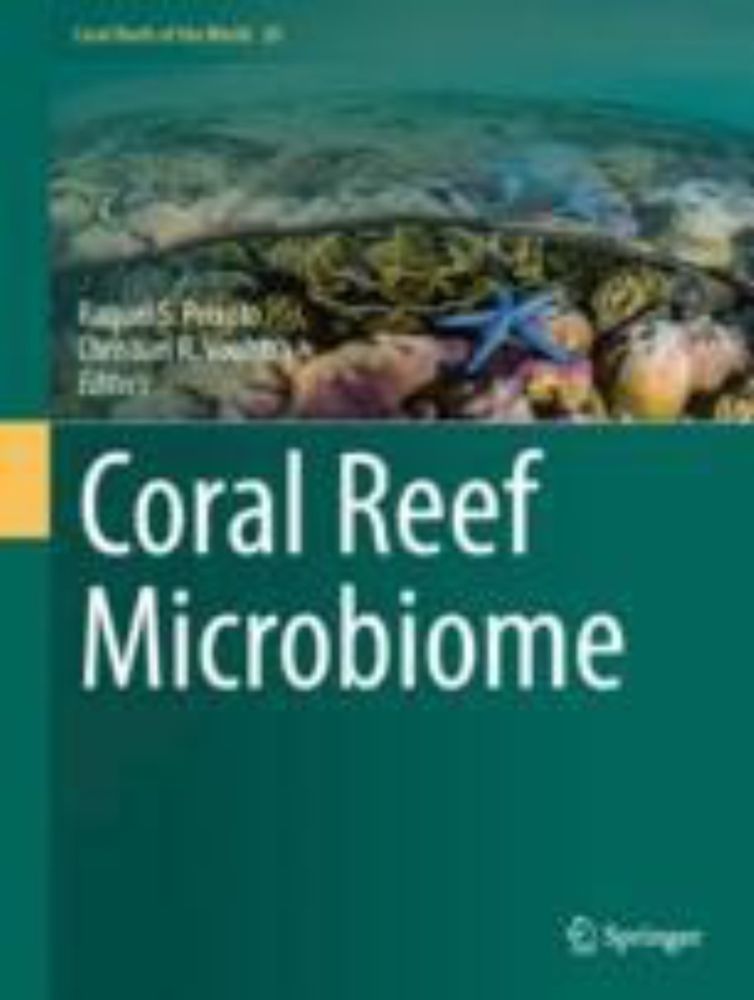
OUT NOW 'coral reef microbiome' by Springer Nature link.springer.com/book/10.1007... .. some 2.5 years in the making, jam packed: check out Ch.16 on Assisted Restoration as the sum of approaches required to deliver effective ecological restoration! Many thanks to all contributors @uni-konstanz.de
Coral Reef Microbiome
This book focuses on Structure, Function and Ecology of the coral microbiome and associated active interventions to conserve and restore coral reefs.
link.springer.com

Don't miss out, October 22-25, 2025: International Symposium – Trends in Marine Host-Microbe Symbioses with an exciting lineup of speakers marinesymbioses.eu/invited-spea...; looking forward to insightful & inspiring discussions; registration: marinesymbioses.eu/register/ @uni-konstanz.de
Invited speakers – Trends in Marine Host-Microbe Symbioses Symposium
marinesymbioses.eu

putting effort shows :D
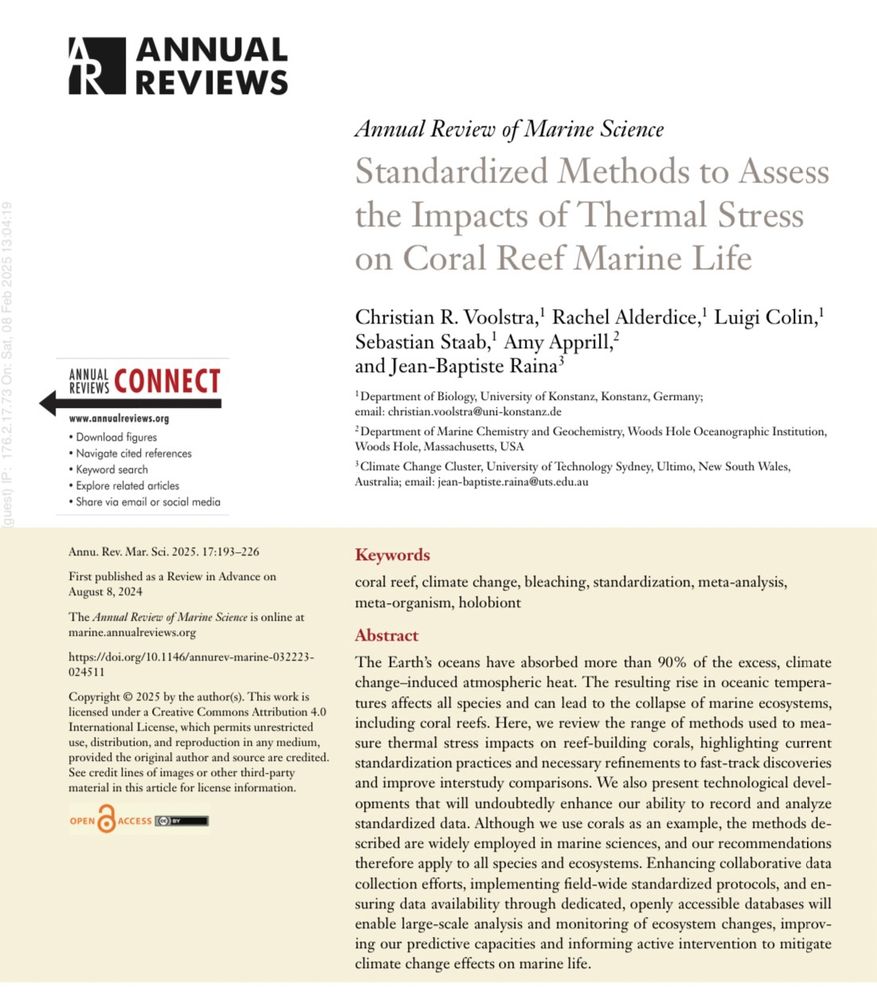
Interested in current & upcoming #standardization practices to accelerate discoveries of #heatstress impacts on #marine life?

Review paper @annualreviews.bsky.social
—> shorturl.at/kVuh9

@reefgenomics.bsky.social @amyapprill.bsky.social @uni-konstanz.de

new work: deep dive into microbiome differences of coral exhibiting thermally resilient & susceptible phenotypes, long time coming, great team effort @unikonstanz.bsky.social www.science.org/doi/10.1126/... #coral #bleaching #microbiome
Inherent differential microbial assemblages and functions associated with corals exhibiting different thermal phenotypes
Key multidomain microbial members of thermal resistant corals represent putative avenues for conservation strategies.
www.science.org
Big exciting news! The next Cnidarian Model Systems Meeting, better known as Cnidofest, will be held at the Marine Biological Laboratory from September 23-27, 2026. Mark your calendars!!! After two land-locked meetings, we are returning to an ocean view!!! 🌊🪸 @mblscience.bsky.social

new ms, to all shark lovers out there: distinct bacterial niche habitats within the ‘microbial landscape’ of black-tip reef sharks @unikonstanz.bsky.social kudos to @cpogoreutz.bsky.social & team link.springer.com/article/10.1...
Microenvironments of black-tip reef sharks (Carcharhinus melanopterus) provide niche habitats for distinct bacterial communities - Coral Reefs
Animal holobionts constitute diverse yet interconnected landscapes of microenvironments that harbor specific bacterial communities with distinct functions. An increasing body of literature suggests a ...
link.springer.com