



Aaron Griffing
@aaronhgriffing.bsky.social
biologist | postdoc | evo devo | morphology | genomes | geckos | loud music & hot sauce enthusiast | he/him
https://aarongriffing.weebly.com/
#GeckoEvoDevo
https://aarongriffing.weebly.com/
#GeckoEvoDevo
Pinned

New paper out in @devdynamics.bsky.social on lizard lung development!
Project co-led w/ Kaleb Hill and also w/ @tonygamble.bsky.social @shylonatasha.bsky.social @aussiebiologist.bsky.social @bezbez.bsky.social @celestemnelson.bsky.social
anatomypubs.onlinelibrary.wiley.com/doi/10.1002/...
Project co-led w/ Kaleb Hill and also w/ @tonygamble.bsky.social @shylonatasha.bsky.social @aussiebiologist.bsky.social @bezbez.bsky.social @celestemnelson.bsky.social
anatomypubs.onlinelibrary.wiley.com/doi/10.1002/...
Reposted by Aaron Griffing

Reposted by Aaron Griffing
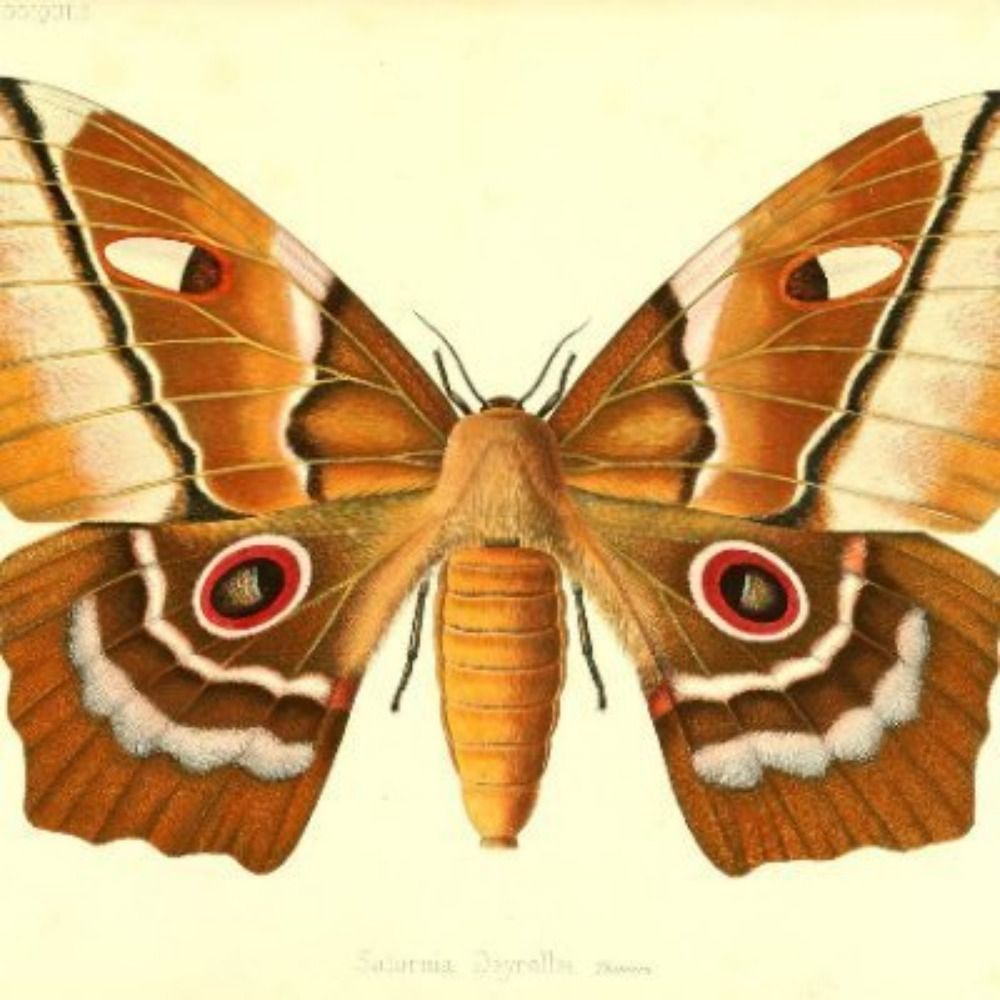
🐉 The naturalists' miscellany: .
London: Printed for Nodder co, 1789.. Smaller cousin of fire-breathing dragons? Flying Dragon has folds of skin that it uses 2 glide through the air #bhlib
[Source]
London: Printed for Nodder co, 1789.. Smaller cousin of fire-breathing dragons? Flying Dragon has folds of skin that it uses 2 glide through the air #bhlib
[Source]

February 16, 2026 at 11:23 PM
🐉 The naturalists' miscellany: .
London: Printed for Nodder co, 1789.. Smaller cousin of fire-breathing dragons? Flying Dragon has folds of skin that it uses 2 glide through the air #bhlib
[Source]
London: Printed for Nodder co, 1789.. Smaller cousin of fire-breathing dragons? Flying Dragon has folds of skin that it uses 2 glide through the air #bhlib
[Source]
Reposted by Aaron Griffing
To a first approximation, all Australian vertebrates are lizards. 🦎
But not just any lizards, Sphenomorphine skinks!
With more than 280 species they are hyper variable. Now, Janne Torkkola has pulled together the biggest phylogeny of the group to date. Read for free:
doi.org/10.1016/j.ym...
1/4
But not just any lizards, Sphenomorphine skinks!
With more than 280 species they are hyper variable. Now, Janne Torkkola has pulled together the biggest phylogeny of the group to date. Read for free:
doi.org/10.1016/j.ym...
1/4


February 17, 2026 at 12:57 AM
To a first approximation, all Australian vertebrates are lizards. 🦎
But not just any lizards, Sphenomorphine skinks!
With more than 280 species they are hyper variable. Now, Janne Torkkola has pulled together the biggest phylogeny of the group to date. Read for free:
doi.org/10.1016/j.ym...
1/4
But not just any lizards, Sphenomorphine skinks!
With more than 280 species they are hyper variable. Now, Janne Torkkola has pulled together the biggest phylogeny of the group to date. Read for free:
doi.org/10.1016/j.ym...
1/4
Reposted by Aaron Griffing
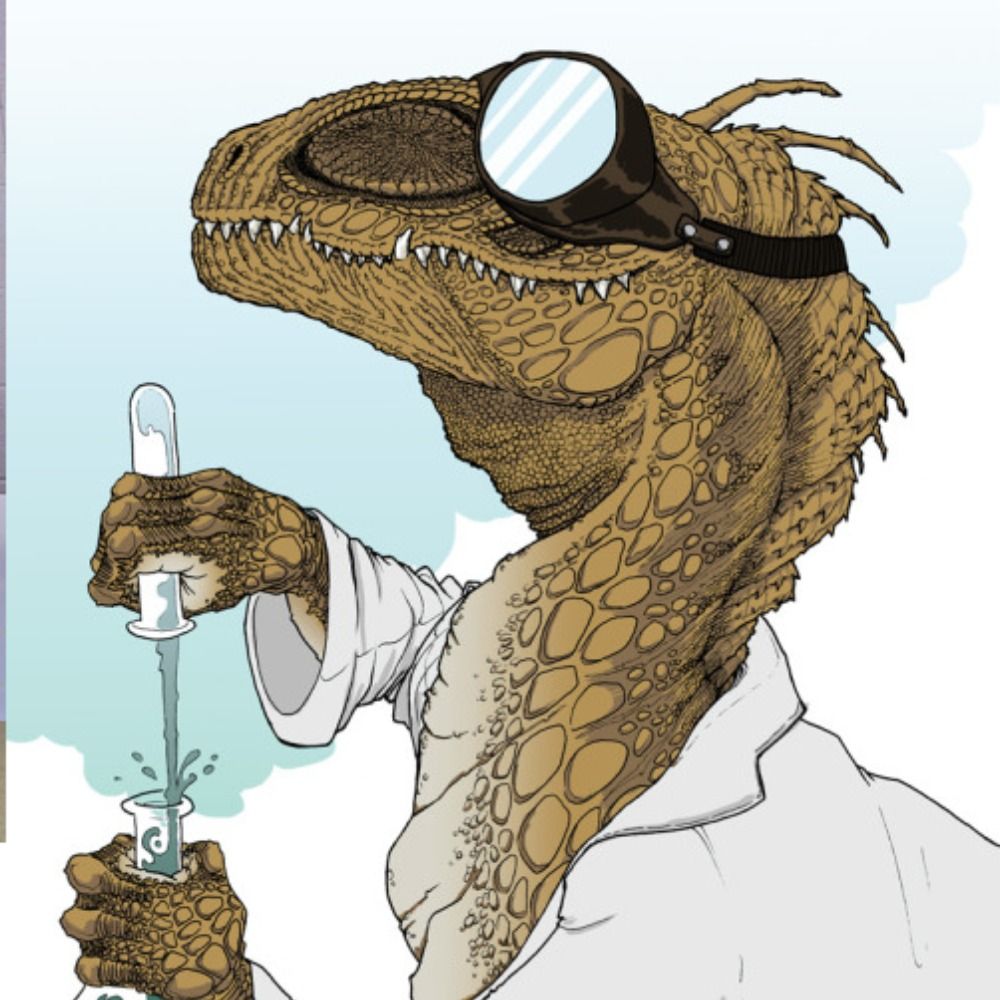
These ultra-fine structures shown at 30X magnification are the reason why geckos can adhere to most surfaces, using Van der Waals force.
The power of hairy lizard toes!
(🔬: Power & Syred, SciencePhotoLibrary)
The power of hairy lizard toes!
(🔬: Power & Syred, SciencePhotoLibrary)

February 6, 2026 at 5:14 PM
These ultra-fine structures shown at 30X magnification are the reason why geckos can adhere to most surfaces, using Van der Waals force.
The power of hairy lizard toes!
(🔬: Power & Syred, SciencePhotoLibrary)
The power of hairy lizard toes!
(🔬: Power & Syred, SciencePhotoLibrary)
Reposted by Aaron Griffing
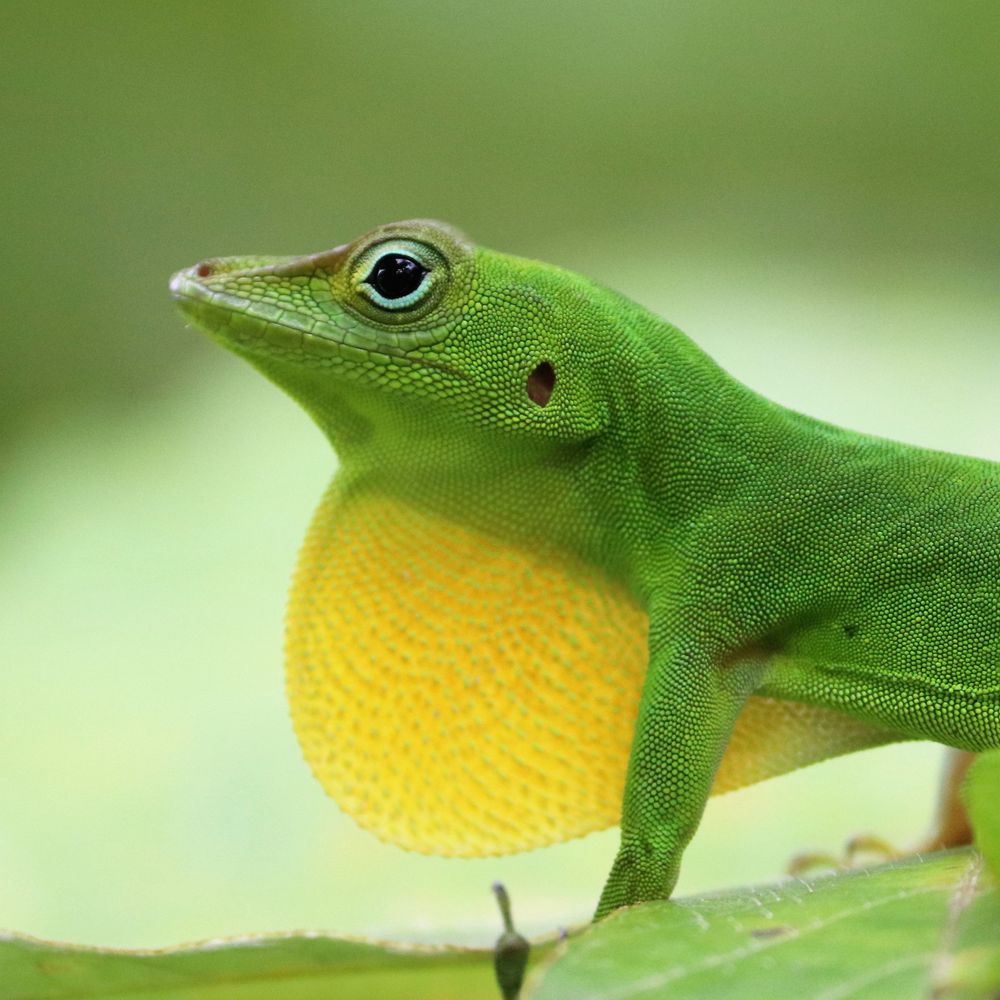
From Tiny Spines to Sticky Toes: What Cyrtodactylus Geckos Can Tell Us about the Evolution of Stickiness in Lizards
Like anoles, geckos are famous for their adhesive toepads, enabling astonishing climbing abilities. Since adhesive toepads evolved independently in geckos and anoles, these two…
Like anoles, geckos are famous for their adhesive toepads, enabling astonishing climbing abilities. Since adhesive toepads evolved independently in geckos and anoles, these two…
From Tiny Spines to Sticky Toes: What Cyrtodactylus Geckos Can Tell Us about the Evolution of Stickiness in Lizards
Like anoles, geckos are famous for their adhesive toepads, enabling astonishing climbing abilities. Since adhesive toepads evolved independently in geckos and anoles, these two rather distantly related lizard clades have become the poster-children of convergent evolution in climbing. But, astonishingly, how such a complex system actually evolves has until recently garnered little attention. And while anoles have long been celebrated for their sticky pads, the literature tends to treat the spectacular adhesive system in a binary fashion as either being present (full pads) or absent (pad‑less) in geckos– despite the fact that earlier research already indicated that this might not be the case.
www.anoleannals.org
February 3, 2026 at 3:46 PM
From Tiny Spines to Sticky Toes: What Cyrtodactylus Geckos Can Tell Us about the Evolution of Stickiness in Lizards
Like anoles, geckos are famous for their adhesive toepads, enabling astonishing climbing abilities. Since adhesive toepads evolved independently in geckos and anoles, these two…
Like anoles, geckos are famous for their adhesive toepads, enabling astonishing climbing abilities. Since adhesive toepads evolved independently in geckos and anoles, these two…
Reposted by Aaron Griffing

Also this month, Šulcová et al., studied how teeth attach to jaws across vertebrates. In veiled chameleons, firmly ankylosed teeth formed via a transient cell type at the tooth–bone interface showing both osteoblast- and odontoblast-like features. The authors call these theorised cells ankyloblasts

February 3, 2026 at 12:06 PM
Also this month, Šulcová et al., studied how teeth attach to jaws across vertebrates. In veiled chameleons, firmly ankylosed teeth formed via a transient cell type at the tooth–bone interface showing both osteoblast- and odontoblast-like features. The authors call these theorised cells ankyloblasts

Reposted by Aaron Griffing

Cricket embryo for #FluorescenceFriday !
(macroH2A in magenta, neurons in yellow and F-Actin in cyan)
(macroH2A in magenta, neurons in yellow and F-Actin in cyan)

January 16, 2026 at 4:52 PM
Cricket embryo for #FluorescenceFriday !
(macroH2A in magenta, neurons in yellow and F-Actin in cyan)
(macroH2A in magenta, neurons in yellow and F-Actin in cyan)
Reposted by Aaron Griffing

Excited that our study on oogenesis and germinal bed morphology in the brown anole is published! Find it here:
anatomypubs.onlinelibrary.wiley.com/doi/full/10....
@stowersinstitute.bsky.social @mdandersn.bsk.social @oxfordwomenshealth.bsky.social @cambiochem.bsky.social @ox.ac.uk @cam.ac.uk
anatomypubs.onlinelibrary.wiley.com/doi/full/10....
@stowersinstitute.bsky.social @mdandersn.bsk.social @oxfordwomenshealth.bsky.social @cambiochem.bsky.social @ox.ac.uk @cam.ac.uk

Oogenesis and germinal bed morphology of the brown anole (A. sagrei)
Background The brown anole is a model species of the genus Anolis, a squamate (encompassing lizards and snakes) group widely studied in evolutionary, behavioral, and developmental biology. Full geno...
anatomypubs.onlinelibrary.wiley.com
January 16, 2026 at 9:00 PM
Excited that our study on oogenesis and germinal bed morphology in the brown anole is published! Find it here:
anatomypubs.onlinelibrary.wiley.com/doi/full/10....
@stowersinstitute.bsky.social @mdandersn.bsk.social @oxfordwomenshealth.bsky.social @cambiochem.bsky.social @ox.ac.uk @cam.ac.uk
anatomypubs.onlinelibrary.wiley.com/doi/full/10....
@stowersinstitute.bsky.social @mdandersn.bsk.social @oxfordwomenshealth.bsky.social @cambiochem.bsky.social @ox.ac.uk @cam.ac.uk
Reposted by Aaron Griffing
Updated preprint available describing our method to identify sex chromosomes from a diploid genome, but better, doi.org/10.1101/2025...

Sex chromosome identification and genome curation from a single individual with SCINKD
In most animal species, the sex determining pathway is typically initiated by the presence/absence of a primary genetic cue at a critical point during development. This primary genetic cue is often lo...
doi.org
January 12, 2026 at 3:46 PM
Updated preprint available describing our method to identify sex chromosomes from a diploid genome, but better, doi.org/10.1101/2025...
Reposted by Aaron Griffing

08-Jan: Born on this day in 1823, the man who independently of Darwin came up with the idea of natural selection, Alfred Russel Wallace. Here’s a post I wrote about Darwin’s and Wallace’s friendship…
friendsofdarwin.com/articles/dar...
#HistSci
friendsofdarwin.com/articles/dar...
#HistSci

Modesty and candour: the Darwin-Wallace friendship
To mark the 200th anniversary of Wallace’s birth, an article exploring the friendship between Charles Darwin and Alfred Russel Wallace.
friendsofdarwin.com
January 8, 2026 at 6:34 PM
08-Jan: Born on this day in 1823, the man who independently of Darwin came up with the idea of natural selection, Alfred Russel Wallace. Here’s a post I wrote about Darwin’s and Wallace’s friendship…
friendsofdarwin.com/articles/dar...
#HistSci
friendsofdarwin.com/articles/dar...
#HistSci
Reposted by Aaron Griffing
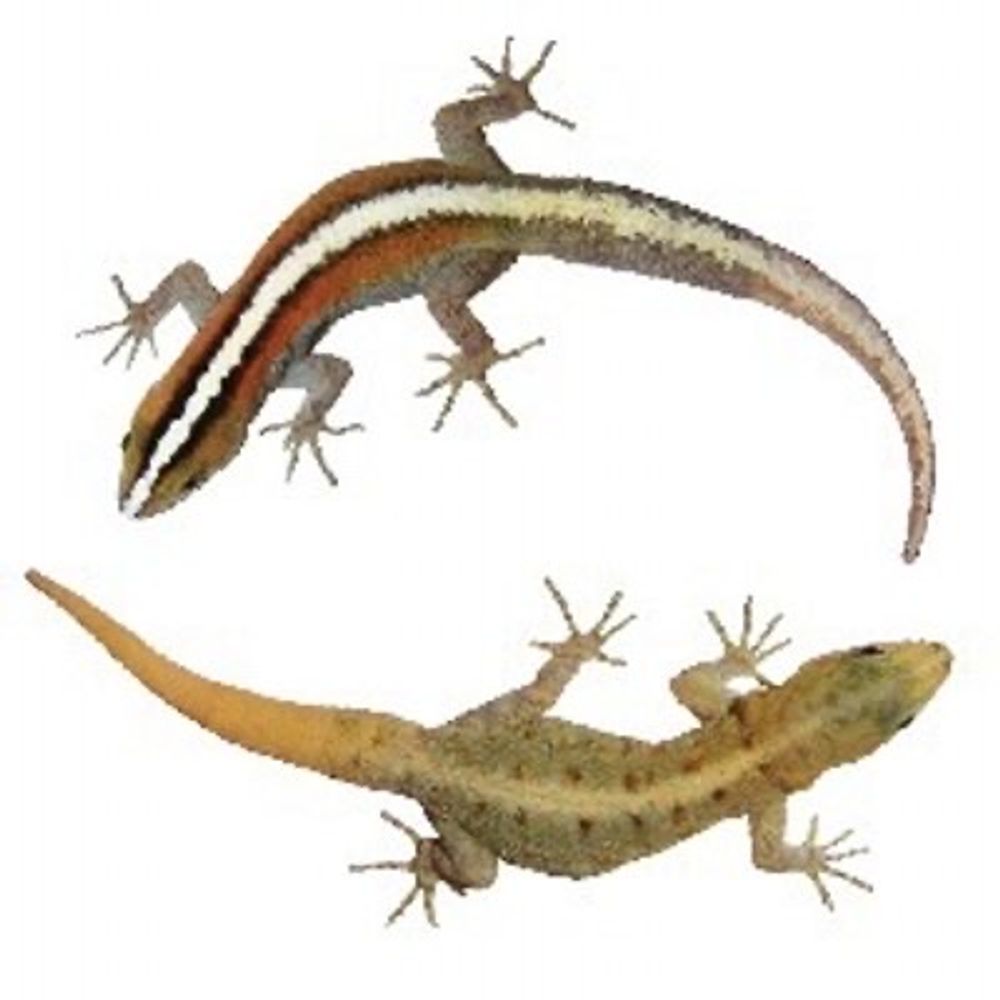
‘tis the season to celebrate the many animal species that reproduce via parthenogenesis - or reproduction from an unfertilized egg. Pictured here are 3 species of all-female, parthenogenetic gecko: Mourning Gecko; Bynoe's gecko; & Indopacific slender gecko
#MerryChristmas #Herpetology 🎄🧪🦎
#MerryChristmas #Herpetology 🎄🧪🦎


December 25, 2025 at 1:46 AM
‘tis the season to celebrate the many animal species that reproduce via parthenogenesis - or reproduction from an unfertilized egg. Pictured here are 3 species of all-female, parthenogenetic gecko: Mourning Gecko; Bynoe's gecko; & Indopacific slender gecko
#MerryChristmas #Herpetology 🎄🧪🦎
#MerryChristmas #Herpetology 🎄🧪🦎
Reposted by Aaron Griffing

New in BMC Genomics! Genome size in anurans (frogs and toads) ranges from 0.5Gb to 10.0Gb of DNA. John Neddermeyer and I teamed with Andrew Rubio and @adamstuckert.bsky.social and found one type of retrotransposon active over the last ~30my is the likely culprit: link.springer.com/article/10.1...

Anuran genome size evolution is driven by relatively recent retrotransposon activity and by life history - BMC Genomics
BMC Genomics - Transposable elements (TEs), often referred to as ‘selfish genetic elements’, hijack their host’s genetic machinery to replicate themselves within the host genome,...
link.springer.com
December 22, 2025 at 8:25 PM
New in BMC Genomics! Genome size in anurans (frogs and toads) ranges from 0.5Gb to 10.0Gb of DNA. John Neddermeyer and I teamed with Andrew Rubio and @adamstuckert.bsky.social and found one type of retrotransposon active over the last ~30my is the likely culprit: link.springer.com/article/10.1...
Reposted by Aaron Griffing

Can't believe my postdoc paper is finally out. Christmas came early this year, holy moly 🎄
Molecular basis for de novo thymus regeneration in a vertebrate, the axolotl | Science Immunology www.science.org/doi/10.1126/...
Molecular basis for de novo thymus regeneration in a vertebrate, the axolotl | Science Immunology www.science.org/doi/10.1126/...

Molecular basis for de novo thymus regeneration in a vertebrate, the axolotl
The molecular, cellular, and functional restoration of the axolotl thymus after de novo regeneration is described.
www.science.org
December 5, 2025 at 9:17 PM
Can't believe my postdoc paper is finally out. Christmas came early this year, holy moly 🎄
Molecular basis for de novo thymus regeneration in a vertebrate, the axolotl | Science Immunology www.science.org/doi/10.1126/...
Molecular basis for de novo thymus regeneration in a vertebrate, the axolotl | Science Immunology www.science.org/doi/10.1126/...
Reposted by Aaron Griffing
True toads (Bufonidae) originated in South America and invaded Africa via the Antarctic in the Cenozoic! (which was temperate/sub-tropical at the time). Super cool.
🐸🐸🐸
royalsocietypublishing.org/rspb/article...
🐸🐸🐸
royalsocietypublishing.org/rspb/article...

Earth history and trait innovation drive the global radiation of modern toads
Abstract. The distributions of species radiations reflect environmental changes driven by both Earth history (geological processes) and the evolution of bi
royalsocietypublishing.org
December 5, 2025 at 1:00 AM
True toads (Bufonidae) originated in South America and invaded Africa via the Antarctic in the Cenozoic! (which was temperate/sub-tropical at the time). Super cool.
🐸🐸🐸
royalsocietypublishing.org/rspb/article...
🐸🐸🐸
royalsocietypublishing.org/rspb/article...
Reposted by Aaron Griffing

Very excited to share that our latest paper is out in Science! We show that the type specimen of Nanotyrannus—an isolated skull—is fully grown, showing that it is not a juvenile Tyrannosaurus rex but a distinct species (1/12)
www.science.org/doi/10.1126/...
www.science.org/doi/10.1126/...
www.science.org
December 4, 2025 at 7:02 PM
Very excited to share that our latest paper is out in Science! We show that the type specimen of Nanotyrannus—an isolated skull—is fully grown, showing that it is not a juvenile Tyrannosaurus rex but a distinct species (1/12)
www.science.org/doi/10.1126/...
www.science.org/doi/10.1126/...
Reposted by Aaron Griffing

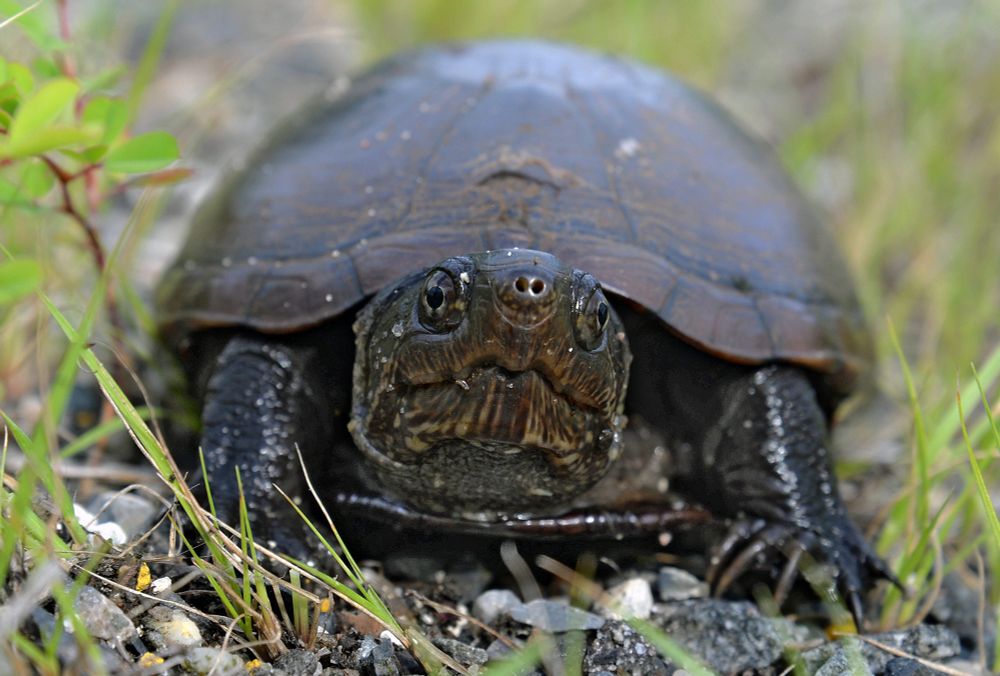
Happy World Wildlife Conservation Day in the #NewJersey #Pinelands! Here's a sampling of the wildlife that can be found in the 1.1-million-acre Pinelands National Reserve. 🐍 🐦 🐸 🌎
📷: Pinelands Commission staff
#wildlife #WildlifeConservationDay
📷: Pinelands Commission staff
#wildlife #WildlifeConservationDay


December 4, 2025 at 4:23 PM
Happy World Wildlife Conservation Day in the #NewJersey #Pinelands! Here's a sampling of the wildlife that can be found in the 1.1-million-acre Pinelands National Reserve. 🐍 🐦 🐸 🌎
📷: Pinelands Commission staff
#wildlife #WildlifeConservationDay
📷: Pinelands Commission staff
#wildlife #WildlifeConservationDay
Reposted by Aaron Griffing

Now out in Evolution @journal-evo.bsky.social
Tetrapod vocal evolution reveals faster rates and higher-pitched sounds for mammals 🐘🦉🐸.
Mammalian hearing likely allowed the rapid diversification of their vocalizations.
Open access here:
doi.org/10.1093/evol...
#bioacoustics #animalcommunication
Tetrapod vocal evolution reveals faster rates and higher-pitched sounds for mammals 🐘🦉🐸.
Mammalian hearing likely allowed the rapid diversification of their vocalizations.
Open access here:
doi.org/10.1093/evol...
#bioacoustics #animalcommunication

Tetrapod vocal evolution reveals faster rates and higher-pitched sounds for mammals
Abstract. Using the voice to produce sound is a widespread form of communication and plays an important role across diverse species and contexts. Variation
doi.org
December 1, 2025 at 3:24 PM
Now out in Evolution @journal-evo.bsky.social
Tetrapod vocal evolution reveals faster rates and higher-pitched sounds for mammals 🐘🦉🐸.
Mammalian hearing likely allowed the rapid diversification of their vocalizations.
Open access here:
doi.org/10.1093/evol...
#bioacoustics #animalcommunication
Tetrapod vocal evolution reveals faster rates and higher-pitched sounds for mammals 🐘🦉🐸.
Mammalian hearing likely allowed the rapid diversification of their vocalizations.
Open access here:
doi.org/10.1093/evol...
#bioacoustics #animalcommunication
Reposted by Aaron Griffing

I'm happy to share that, together with @juvelas.bsky.social and Daniel Vásquez-Restrepo to examine how Andean uplift influenced the evolution of South American squamates as part of the book Andean Herpetofauna: Explorations of Diversity, Ecology and Conservation by @springernature.com (1/3)


November 27, 2025 at 11:24 PM
I'm happy to share that, together with @juvelas.bsky.social and Daniel Vásquez-Restrepo to examine how Andean uplift influenced the evolution of South American squamates as part of the book Andean Herpetofauna: Explorations of Diversity, Ecology and Conservation by @springernature.com (1/3)
Reposted by Aaron Griffing

@tywooldr.bsky.social et al. present assemblies for three bear species — the sun, sloth, and Andean bears — and use a whole-genome alignment of all bear species and other carnivores to reconstruct the evolution of Ursidae.
🔗 doi.org/10.1093/gbe/evaf188
#genome #evolution
🔗 doi.org/10.1093/gbe/evaf188
#genome #evolution

Chromosome-scale Genomes Show Rapid Diversification and Ancient Gene Flow Among Bear Species
Abstract. Reconstructions of evolutionary history can be restricted by a lack of high-quality reference genomes. To date, only four of the eight species of
doi.org
November 20, 2025 at 4:46 PM
@tywooldr.bsky.social et al. present assemblies for three bear species — the sun, sloth, and Andean bears — and use a whole-genome alignment of all bear species and other carnivores to reconstruct the evolution of Ursidae.
🔗 doi.org/10.1093/gbe/evaf188
#genome #evolution
🔗 doi.org/10.1093/gbe/evaf188
#genome #evolution
Reposted by Aaron Griffing
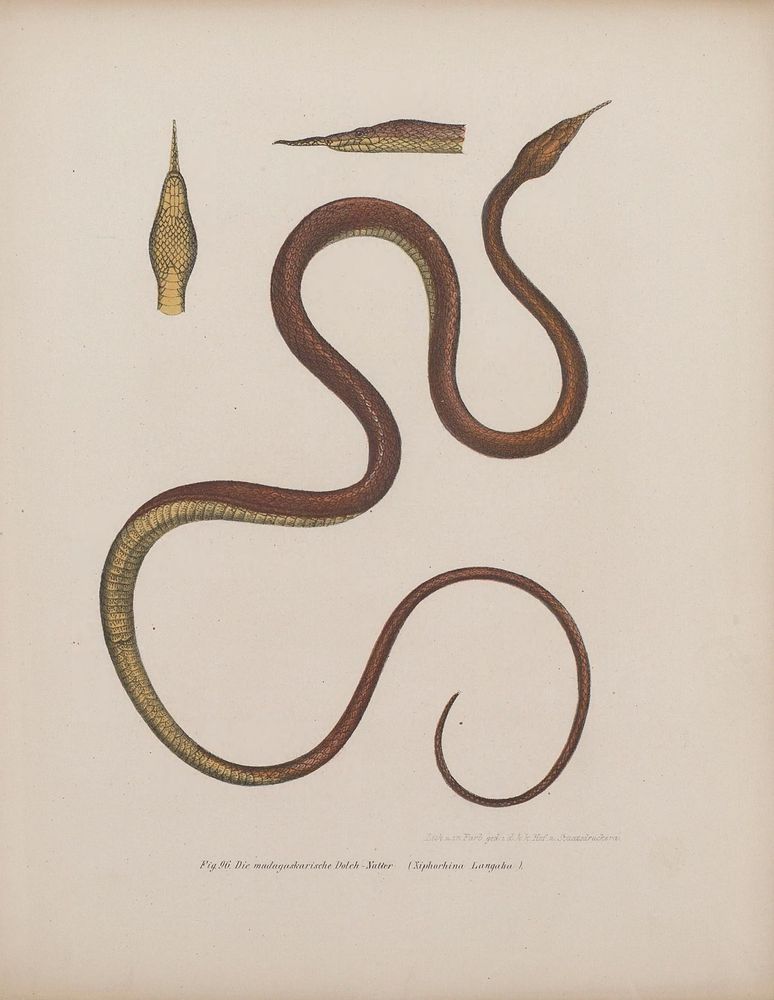
🐸 Bilder-Atlas zur wissenschaftlich-populären Naturgeschichte der Amphibien in ihren sämmtlichen Hauptformen
Wien: Kaiserl. Koenigl. Hof- und Staatsdr., 1864
[Source]
Wien: Kaiserl. Koenigl. Hof- und Staatsdr., 1864
[Source]
November 14, 2025 at 1:23 PM
🐸 Bilder-Atlas zur wissenschaftlich-populären Naturgeschichte der Amphibien in ihren sämmtlichen Hauptformen
Wien: Kaiserl. Koenigl. Hof- und Staatsdr., 1864
[Source]
Wien: Kaiserl. Koenigl. Hof- und Staatsdr., 1864
[Source]
New paper out in @devdynamics.bsky.social on lizard lung development!
Project co-led w/ Kaleb Hill and also w/ @tonygamble.bsky.social @shylonatasha.bsky.social @aussiebiologist.bsky.social @bezbez.bsky.social @celestemnelson.bsky.social
anatomypubs.onlinelibrary.wiley.com/doi/10.1002/...
Project co-led w/ Kaleb Hill and also w/ @tonygamble.bsky.social @shylonatasha.bsky.social @aussiebiologist.bsky.social @bezbez.bsky.social @celestemnelson.bsky.social
anatomypubs.onlinelibrary.wiley.com/doi/10.1002/...
November 14, 2025 at 5:35 PM
New paper out in @devdynamics.bsky.social on lizard lung development!
Project co-led w/ Kaleb Hill and also w/ @tonygamble.bsky.social @shylonatasha.bsky.social @aussiebiologist.bsky.social @bezbez.bsky.social @celestemnelson.bsky.social
anatomypubs.onlinelibrary.wiley.com/doi/10.1002/...
Project co-led w/ Kaleb Hill and also w/ @tonygamble.bsky.social @shylonatasha.bsky.social @aussiebiologist.bsky.social @bezbez.bsky.social @celestemnelson.bsky.social
anatomypubs.onlinelibrary.wiley.com/doi/10.1002/...
New preprint from my postdoc work! Using fluorescent imaging, scRNA-seq, and ATAC-seq of mouse, anole, and chicken embryos, we provide evidence that birds have co-opted vascular smooth muscle to generate the pulmonary smooth muscle in their lungs. More on this later!
www.biorxiv.org/content/10.1...
www.biorxiv.org/content/10.1...

November 14, 2025 at 12:28 AM
New preprint from my postdoc work! Using fluorescent imaging, scRNA-seq, and ATAC-seq of mouse, anole, and chicken embryos, we provide evidence that birds have co-opted vascular smooth muscle to generate the pulmonary smooth muscle in their lungs. More on this later!
www.biorxiv.org/content/10.1...
www.biorxiv.org/content/10.1...
Reposted by Aaron Griffing

Super-proud of former MPhil student Emily Hillan for publishing her dissertation on the evolution of rib skeleton regionalisation in the evolution of snake-like body forms in squamates!
royalsocietypublishing.org/doi/full/10....

November 10, 2024 at 5:28 PM
Super-proud of former MPhil student Emily Hillan for publishing her dissertation on the evolution of rib skeleton regionalisation in the evolution of snake-like body forms in squamates!
royalsocietypublishing.org/doi/full/10....
Reposted by Aaron Griffing

A study finds that chameleons have longer & more coiled optic nerves than other squamates & known tetrapods, providing slack & reduced strain during extensive eye rotation characteristic of chameleon eyes, & providing an excellent historical review of our knowledge.
www.nature.com/articles/s41...
www.nature.com/articles/s41...

November 10, 2025 at 9:52 PM
A study finds that chameleons have longer & more coiled optic nerves than other squamates & known tetrapods, providing slack & reduced strain during extensive eye rotation characteristic of chameleon eyes, & providing an excellent historical review of our knowledge.
www.nature.com/articles/s41...
www.nature.com/articles/s41...