



Antonino Greco
@agreco.bsky.social
Computational Cognitive Scientist 🧠🤖 • NeuroAI, Predictive Coding, RL & Deep Learning, Complex Systems • Postdoc at @siegellab.bsky.social, @unituebingen.bsky.social • Husband & Dad
🎓 https://scholar.google.com/citations?hl=en&user=k5eR8_oAAAAJ
🎓 https://scholar.google.com/citations?hl=en&user=k5eR8_oAAAAJ
Pinned
Antonino Greco
@agreco.bsky.social
· Aug 18

Are top-down feedback connections enough for robust vision?
We found ConvRNN with top-down feedback exhibiting OOD robustness only when trained with dropout, revealing a dual mechanism for robust sensory coding
with @marco-d.bsky.social, Karl Friston, Giovanni Pezzulo & @siegellab.bsky.social
🧵👇
We found ConvRNN with top-down feedback exhibiting OOD robustness only when trained with dropout, revealing a dual mechanism for robust sensory coding
with @marco-d.bsky.social, Karl Friston, Giovanni Pezzulo & @siegellab.bsky.social
🧵👇
Reposted by Antonino Greco

Have you registered yet? 👀
@agreco.bsky.social will unpack how predictive processing shapes vision in brains & machines this Wednesday at 4pm CET🧠🤖
Don’t miss it!!
Sign up 👉 www.crowdcast.io/c/loops-semi...
@agreco.bsky.social will unpack how predictive processing shapes vision in brains & machines this Wednesday at 4pm CET🧠🤖
Don’t miss it!!
Sign up 👉 www.crowdcast.io/c/loops-semi...
December 8, 2025 at 10:31 AM
Have you registered yet? 👀
@agreco.bsky.social will unpack how predictive processing shapes vision in brains & machines this Wednesday at 4pm CET🧠🤖
Don’t miss it!!
Sign up 👉 www.crowdcast.io/c/loops-semi...
@agreco.bsky.social will unpack how predictive processing shapes vision in brains & machines this Wednesday at 4pm CET🧠🤖
Don’t miss it!!
Sign up 👉 www.crowdcast.io/c/loops-semi...
Thrilled to be a speaker for the LOOPs Webinar! I’ll discuss predictive processing in brains 🧠 and machines 🤖
It's on Dec 10th 🗓️, 4pm CET ⏱️, live on crowdcast! (Link 👇)
Looking forward to the discussion!
It's on Dec 10th 🗓️, 4pm CET ⏱️, live on crowdcast! (Link 👇)
Looking forward to the discussion!
📣Join our last 2025 edition of the LOOPs Webinar 🧠➰ This month @agreco.bsky.social will explore how predictive processing shapes vision in both brains and AI - what models like PredNet reveal (and miss), and how new recurrent architectures combine feedback and variability for more robust perception.

December 3, 2025 at 9:54 AM
Thrilled to be a speaker for the LOOPs Webinar! I’ll discuss predictive processing in brains 🧠 and machines 🤖
It's on Dec 10th 🗓️, 4pm CET ⏱️, live on crowdcast! (Link 👇)
Looking forward to the discussion!
It's on Dec 10th 🗓️, 4pm CET ⏱️, live on crowdcast! (Link 👇)
Looking forward to the discussion!
Reposted by Antonino Greco

More press on our recent Behavioral and Brain Sciences article:
#philsci #cogsky #CognitiveNeuroscience
@phaueis.bsky.social
aktuell.uni-bielefeld.de/2025/11/24/t...
#philsci #cogsky #CognitiveNeuroscience
@phaueis.bsky.social
aktuell.uni-bielefeld.de/2025/11/24/t...

Thinking Takes Energy
A new study shows how our brain metabolism sets the limits of thinking. Researchers explain why cognitive models remain incomplete without considering biological resources.
aktuell.uni-bielefeld.de
December 1, 2025 at 11:33 PM
More press on our recent Behavioral and Brain Sciences article:
#philsci #cogsky #CognitiveNeuroscience
@phaueis.bsky.social
aktuell.uni-bielefeld.de/2025/11/24/t...
#philsci #cogsky #CognitiveNeuroscience
@phaueis.bsky.social
aktuell.uni-bielefeld.de/2025/11/24/t...
So many theory papers get dismissed because they don’t explain existing data, even when they’re quietly removing obstacles and opening entire new research paths.
What’s wild is that reviewers are still making this exact mistake today, maybe even more than before.
What’s wild is that reviewers are still making this exact mistake today, maybe even more than before.

How I contributed to rejecting one of my favorite papers of all times, Yes, I teach it to students daily, and refer to it in lots of papers. Sorry. open.substack.com/pub/kording/...

How I contributed to rejecting one of my favorite papers of all time
I believe we should talk about the mistakes we make.
open.substack.com
December 2, 2025 at 8:33 AM
So many theory papers get dismissed because they don’t explain existing data, even when they’re quietly removing obstacles and opening entire new research paths.
What’s wild is that reviewers are still making this exact mistake today, maybe even more than before.
What’s wild is that reviewers are still making this exact mistake today, maybe even more than before.
Reposted by Antonino Greco

Our new paper is out in Nature Communications! nature.com/articles/s41...
We combined psychophysics, 7T fMRI, and computational modeling of vision with placebo, 5mg, and 10mg psilocybin, in the same group of participants, to clarify the computational mechanisms of psychedelics. 🧵
We combined psychophysics, 7T fMRI, and computational modeling of vision with placebo, 5mg, and 10mg psilocybin, in the same group of participants, to clarify the computational mechanisms of psychedelics. 🧵

November 23, 2025 at 10:26 PM
Our new paper is out in Nature Communications! nature.com/articles/s41...
We combined psychophysics, 7T fMRI, and computational modeling of vision with placebo, 5mg, and 10mg psilocybin, in the same group of participants, to clarify the computational mechanisms of psychedelics. 🧵
We combined psychophysics, 7T fMRI, and computational modeling of vision with placebo, 5mg, and 10mg psilocybin, in the same group of participants, to clarify the computational mechanisms of psychedelics. 🧵
Reposted by Antonino Greco

Another nail in the coffin for PCA?
- doesn’t linearize, distorting similarity metrics
- is biased by temporal jitter across epochs
- may miss important dimensions for transient amplification
If you think there is a state space, use a state space model!
- doesn’t linearize, distorting similarity metrics
- is biased by temporal jitter across epochs
- may miss important dimensions for transient amplification
If you think there is a state space, use a state space model!

“Our findings challenge the conventional focus on low-dimensional coding subspaces as a sufficient framework for understanding neural computations, demonstrating that dimensions previously considered task-irrelevant and accounting for little variance can have a critical role in driving behavior.”

Neural dynamics outside task-coding dimensions drive decision trajectories through transient amplification
Most behaviors involve neural dynamics in high-dimensional activity spaces. A common approach is to extract dimensions that capture task-related variability, such as those separating stimuli or choice...
www.biorxiv.org
November 23, 2025 at 3:16 PM
Another nail in the coffin for PCA?
- doesn’t linearize, distorting similarity metrics
- is biased by temporal jitter across epochs
- may miss important dimensions for transient amplification
If you think there is a state space, use a state space model!
- doesn’t linearize, distorting similarity metrics
- is biased by temporal jitter across epochs
- may miss important dimensions for transient amplification
If you think there is a state space, use a state space model!
Reposted by Antonino Greco

And the next step? Full voxel-level modeling.
Recent numerical advances cracked the scalability barrier. Voxel-level hierarchical modeling is now feasible, revealing just how punishing traditional multiple-comparison adjustments really are.
arxiv.org/abs/2511.12825
Recent numerical advances cracked the scalability barrier. Voxel-level hierarchical modeling is now feasible, revealing just how punishing traditional multiple-comparison adjustments really are.
arxiv.org/abs/2511.12825

SIMBA: Scalable Image Modeling using a Bayesian Approach, A Consistent Framework for Including Spatial Dependencies in fMRI Studies
Bayesian spatial modeling provides a flexible framework for whole-brain fMRI analysis by explicitly incorporating spatial dependencies, overcoming the limitations of traditional massive univariate app...
arxiv.org
November 18, 2025 at 10:13 PM
And the next step? Full voxel-level modeling.
Recent numerical advances cracked the scalability barrier. Voxel-level hierarchical modeling is now feasible, revealing just how punishing traditional multiple-comparison adjustments really are.
arxiv.org/abs/2511.12825
Recent numerical advances cracked the scalability barrier. Voxel-level hierarchical modeling is now feasible, revealing just how punishing traditional multiple-comparison adjustments really are.
arxiv.org/abs/2511.12825
This looks interesting for statistical modeling in neuroimaging!
"FDR-based corrections [...] may be overly conservative, discarding biologically meaningful effects"
👇👇
"FDR-based corrections [...] may be overly conservative, discarding biologically meaningful effects"
👇👇
And the next step? Full voxel-level modeling.
Recent numerical advances cracked the scalability barrier. Voxel-level hierarchical modeling is now feasible, revealing just how punishing traditional multiple-comparison adjustments really are.
arxiv.org/abs/2511.12825
Recent numerical advances cracked the scalability barrier. Voxel-level hierarchical modeling is now feasible, revealing just how punishing traditional multiple-comparison adjustments really are.
arxiv.org/abs/2511.12825
SIMBA: Scalable Image Modeling using a Bayesian Approach, A Consistent Framework for Including Spatial Dependencies in fMRI Studies
Bayesian spatial modeling provides a flexible framework for whole-brain fMRI analysis by explicitly incorporating spatial dependencies, overcoming the limitations of traditional massive univariate app...
arxiv.org
November 21, 2025 at 9:52 AM
This looks interesting for statistical modeling in neuroimaging!
"FDR-based corrections [...] may be overly conservative, discarding biologically meaningful effects"
👇👇
"FDR-based corrections [...] may be overly conservative, discarding biologically meaningful effects"
👇👇
Reposted by Antonino Greco
Ooooooh. Super interesting. This will be a game changer. It's not often I'm excited to update modeling pipelines...
This makes me think back to this beautiful and underappreciated paper by @talyarkoni.com @jake-westfall.bsky.social and @nichols.bsky.social
wellcomeopenresearch.org/articles/1-2...
This makes me think back to this beautiful and underappreciated paper by @talyarkoni.com @jake-westfall.bsky.social and @nichols.bsky.social
wellcomeopenresearch.org/articles/1-2...
November 18, 2025 at 10:44 PM
Ooooooh. Super interesting. This will be a game changer. It's not often I'm excited to update modeling pipelines...
This makes me think back to this beautiful and underappreciated paper by @talyarkoni.com @jake-westfall.bsky.social and @nichols.bsky.social
wellcomeopenresearch.org/articles/1-2...
This makes me think back to this beautiful and underappreciated paper by @talyarkoni.com @jake-westfall.bsky.social and @nichols.bsky.social
wellcomeopenresearch.org/articles/1-2...
Reposted by Antonino Greco
Is the “standard workflow” holding back fMRI analysis?
Mass-univariate analysis is still the bread-and-butter: intuitive, fast… and chronically overfitted. Add harsh multiple-comparison penalties, and we patch the workflow with statistical band-aids. No wonder the stringency debates never die.
Mass-univariate analysis is still the bread-and-butter: intuitive, fast… and chronically overfitted. Add harsh multiple-comparison penalties, and we patch the workflow with statistical band-aids. No wonder the stringency debates never die.
November 18, 2025 at 10:13 PM
Is the “standard workflow” holding back fMRI analysis?
Mass-univariate analysis is still the bread-and-butter: intuitive, fast… and chronically overfitted. Add harsh multiple-comparison penalties, and we patch the workflow with statistical band-aids. No wonder the stringency debates never die.
Mass-univariate analysis is still the bread-and-butter: intuitive, fast… and chronically overfitted. Add harsh multiple-comparison penalties, and we patch the workflow with statistical band-aids. No wonder the stringency debates never die.
Reposted by Antonino Greco

Proud to share our lab’s first paper! Itamar’s work highlights an implicit but impactful tension between maximizing fit to behavioral data and staying sensitive to meaningful differences between neural network models.

Excited to share my first paper: Model–Behavior Alignment under Flexible Evaluation: When the Best-Fitting Model Isn’t the Right One (NeurIPS 2025). link below.
November 20, 2025 at 2:07 PM
Proud to share our lab’s first paper! Itamar’s work highlights an implicit but impactful tension between maximizing fit to behavioral data and staying sensitive to meaningful differences between neural network models.
Reposted by Antonino Greco
Excited to announce our book “Neuroevolution: Harnessing Creativity in AI Agent Design” by Sebastian Risi, Yujin Tang, Risto Miikkulainen, and myself. We explore decades of work on evolving intelligent agents and shows how neuroevolution can drive creativity in deep learning, RL, LLMs and AI Agents!
November 20, 2025 at 7:22 AM
Excited to announce our book “Neuroevolution: Harnessing Creativity in AI Agent Design” by Sebastian Risi, Yujin Tang, Risto Miikkulainen, and myself. We explore decades of work on evolving intelligent agents and shows how neuroevolution can drive creativity in deep learning, RL, LLMs and AI Agents!
Reposted by Antonino Greco

We went back to the drawing board to think about what information is available to the visual system upon which it could build scene representations.
The outcome: a self-supervised training objective based on active vision that beats the SOTA on NSD representational alignment. 👇
The outcome: a self-supervised training objective based on active vision that beats the SOTA on NSD representational alignment. 👇
🚨New Preprint!
How can we model natural scene representations in visual cortex? A solution is in active vision: predict the features of the next glimpse! arxiv.org/abs/2511.12715
+ @adriendoerig.bsky.social , @alexanderkroner.bsky.social , @carmenamme.bsky.social , @timkietzmann.bsky.social
🧵 1/14
How can we model natural scene representations in visual cortex? A solution is in active vision: predict the features of the next glimpse! arxiv.org/abs/2511.12715
+ @adriendoerig.bsky.social , @alexanderkroner.bsky.social , @carmenamme.bsky.social , @timkietzmann.bsky.social
🧵 1/14

Predicting upcoming visual features during eye movements yields scene representations aligned with human visual cortex
Scenes are complex, yet structured collections of parts, including objects and surfaces, that exhibit spatial and semantic relations to one another. An effective visual system therefore needs unified ...
arxiv.org
November 18, 2025 at 2:14 PM
We went back to the drawing board to think about what information is available to the visual system upon which it could build scene representations.
The outcome: a self-supervised training objective based on active vision that beats the SOTA on NSD representational alignment. 👇
The outcome: a self-supervised training objective based on active vision that beats the SOTA on NSD representational alignment. 👇
Reposted by Antonino Greco

🚨New Preprint!
How can we model natural scene representations in visual cortex? A solution is in active vision: predict the features of the next glimpse! arxiv.org/abs/2511.12715
+ @adriendoerig.bsky.social , @alexanderkroner.bsky.social , @carmenamme.bsky.social , @timkietzmann.bsky.social
🧵 1/14
How can we model natural scene representations in visual cortex? A solution is in active vision: predict the features of the next glimpse! arxiv.org/abs/2511.12715
+ @adriendoerig.bsky.social , @alexanderkroner.bsky.social , @carmenamme.bsky.social , @timkietzmann.bsky.social
🧵 1/14
Predicting upcoming visual features during eye movements yields scene representations aligned with human visual cortex
Scenes are complex, yet structured collections of parts, including objects and surfaces, that exhibit spatial and semantic relations to one another. An effective visual system therefore needs unified ...
arxiv.org
November 18, 2025 at 12:37 PM
🚨New Preprint!
How can we model natural scene representations in visual cortex? A solution is in active vision: predict the features of the next glimpse! arxiv.org/abs/2511.12715
+ @adriendoerig.bsky.social , @alexanderkroner.bsky.social , @carmenamme.bsky.social , @timkietzmann.bsky.social
🧵 1/14
How can we model natural scene representations in visual cortex? A solution is in active vision: predict the features of the next glimpse! arxiv.org/abs/2511.12715
+ @adriendoerig.bsky.social , @alexanderkroner.bsky.social , @carmenamme.bsky.social , @timkietzmann.bsky.social
🧵 1/14
Reposted by Antonino Greco
My paper is out!
Computational modeling of error patterns during reward-based learning show evidence that habit learning (value free!) supplements working memory in 7 human data sets.
rdcu.be/eQjLN
Computational modeling of error patterns during reward-based learning show evidence that habit learning (value free!) supplements working memory in 7 human data sets.
rdcu.be/eQjLN

A habit and working memory model as an alternative account of human reward-based learning
Nature Human Behaviour - In this study, Collins proposes an alternative dual-process (working memory and habit) model of reinforcement learning in humans.
rdcu.be
November 17, 2025 at 5:18 PM
My paper is out!
Computational modeling of error patterns during reward-based learning show evidence that habit learning (value free!) supplements working memory in 7 human data sets.
rdcu.be/eQjLN
Computational modeling of error patterns during reward-based learning show evidence that habit learning (value free!) supplements working memory in 7 human data sets.
rdcu.be/eQjLN
Reposted by Antonino Greco

New work from the lab published in @cp-neuron.bsky.social by @jonasterlau.bsky.social and Jan Martini. We describe that trial-by-trial variability indexes recurrent connectivity across the cortical hierarchy, which supports reliable and flexible coding www.cell.com/neuron/abstr... (1/4)

Structure in noise: Recurrent connectivity shapes neural variability to balance perceptual and cognitive demands in the human brain
Does neural variability reflect random noise or a feature that benefits adaptive behavior?
Using intracranial recordings in humans, Terlau et al. demonstrate that neural variability
results from the r...
www.cell.com
November 10, 2025 at 5:06 PM
New work from the lab published in @cp-neuron.bsky.social by @jonasterlau.bsky.social and Jan Martini. We describe that trial-by-trial variability indexes recurrent connectivity across the cortical hierarchy, which supports reliable and flexible coding www.cell.com/neuron/abstr... (1/4)
Reposted by Antonino Greco
What aspects of human knowledge do vision models like CLIP fail to capture, and how can we improve them? We suggest models miss key global organization; aligning them makes them more robust. Check out LukasMuttenthaler's work, finally out (in Nature!?) www.nature.com/articles/s41... + our blog! 1/3

Aligning machine and human visual representations across abstraction levels - Nature
Aligning foundation models with human judgments enables them to more accurately approximate human behaviour and uncertainty across various levels of visual abstraction, while additionally improving th...
www.nature.com
November 12, 2025 at 4:50 PM
What aspects of human knowledge do vision models like CLIP fail to capture, and how can we improve them? We suggest models miss key global organization; aligning them makes them more robust. Check out LukasMuttenthaler's work, finally out (in Nature!?) www.nature.com/articles/s41... + our blog! 1/3
Reposted by Antonino Greco

Noise ceilings are really useful: You can estimate the reliability of your data and get an index of how well your model can possibly perform given the noise in the data.
But, contrary to what you may think, noise ceilings do not provide an absolute index of data quality.
Let's dive into why. 🧵
But, contrary to what you may think, noise ceilings do not provide an absolute index of data quality.
Let's dive into why. 🧵
November 7, 2025 at 2:58 PM
Noise ceilings are really useful: You can estimate the reliability of your data and get an index of how well your model can possibly perform given the noise in the data.
But, contrary to what you may think, noise ceilings do not provide an absolute index of data quality.
Let's dive into why. 🧵
But, contrary to what you may think, noise ceilings do not provide an absolute index of data quality.
Let's dive into why. 🧵
Reposted by Antonino Greco

My reviewing style has changed over time. Rather than litigate every little thing, and pushing my own ideas, I focus only on 2 things:
(1) Are the claims interesting/important?
(2) Does the evidence support the claims?
Most of my reviews these days are short and focused.
(1) Are the claims interesting/important?
(2) Does the evidence support the claims?
Most of my reviews these days are short and focused.
November 8, 2025 at 11:22 AM
My reviewing style has changed over time. Rather than litigate every little thing, and pushing my own ideas, I focus only on 2 things:
(1) Are the claims interesting/important?
(2) Does the evidence support the claims?
Most of my reviews these days are short and focused.
(1) Are the claims interesting/important?
(2) Does the evidence support the claims?
Most of my reviews these days are short and focused.
Reposted by Antonino Greco

Watson was a racist who, "near the end of his life, faced condemnation and professional censure for offensive remarks, including saying Black people are less intelligent than white people"

James Watson, co-discoverer of the double-helix shape of DNA, has died at age 97
Scientist James Watson, who shared a Nobel prize for helping discover the double-helix shape of the DNA molecule, has died. He was 97.
apnews.com
November 7, 2025 at 8:07 PM
Watson was a racist who, "near the end of his life, faced condemnation and professional censure for offensive remarks, including saying Black people are less intelligent than white people"
Reposted by Antonino Greco

New preprint led by @pablooyarzo.bsky.social together with @kohitij.bsky.social, Diego Vidaurre & Radek Cichy.
Using EEG + fMRI, we show that when humans recognize images that feedforward CNNs fail on, the brain recruits cortex-wide recurrent resources.
www.biorxiv.org/content/10.1... (1/n)
Using EEG + fMRI, we show that when humans recognize images that feedforward CNNs fail on, the brain recruits cortex-wide recurrent resources.
www.biorxiv.org/content/10.1... (1/n)
www.biorxiv.org
November 7, 2025 at 9:39 AM
New preprint led by @pablooyarzo.bsky.social together with @kohitij.bsky.social, Diego Vidaurre & Radek Cichy.
Using EEG + fMRI, we show that when humans recognize images that feedforward CNNs fail on, the brain recruits cortex-wide recurrent resources.
www.biorxiv.org/content/10.1... (1/n)
Using EEG + fMRI, we show that when humans recognize images that feedforward CNNs fail on, the brain recruits cortex-wide recurrent resources.
www.biorxiv.org/content/10.1... (1/n)
Reposted by Antonino Greco
Introducing CorText: a framework that fuses brain data directly into a large language model, allowing for interactive neural readout using natural language.
tl;dr: you can now chat with a brain scan 🧠💬
1/n
tl;dr: you can now chat with a brain scan 🧠💬
1/n

November 3, 2025 at 3:17 PM
Introducing CorText: a framework that fuses brain data directly into a large language model, allowing for interactive neural readout using natural language.
tl;dr: you can now chat with a brain scan 🧠💬
1/n
tl;dr: you can now chat with a brain scan 🧠💬
1/n
Reposted by Antonino Greco

How does the brain find its way in realistic environments? 🧠 Using deep RL and neural data, we show that hippocampal-like networks support navigation, learning, and generalisation in partially observable environments—mirroring real animal behaviour. Now out:
www.nature.com/articles/s41...
#neuroAI
www.nature.com/articles/s41...
#neuroAI

Hippocampus supports multi-task reinforcement learning under partial observability - Nature Communications
Neural mechanisms underlying reinforcement learning in naturalistic environments are not fully understood. Here authors show that reinforcement learning (RL) agents with hippocampal-like recurrence, u...
www.nature.com
November 3, 2025 at 10:20 AM
How does the brain find its way in realistic environments? 🧠 Using deep RL and neural data, we show that hippocampal-like networks support navigation, learning, and generalisation in partially observable environments—mirroring real animal behaviour. Now out:
www.nature.com/articles/s41...
#neuroAI
www.nature.com/articles/s41...
#neuroAI
Reposted by Antonino Greco
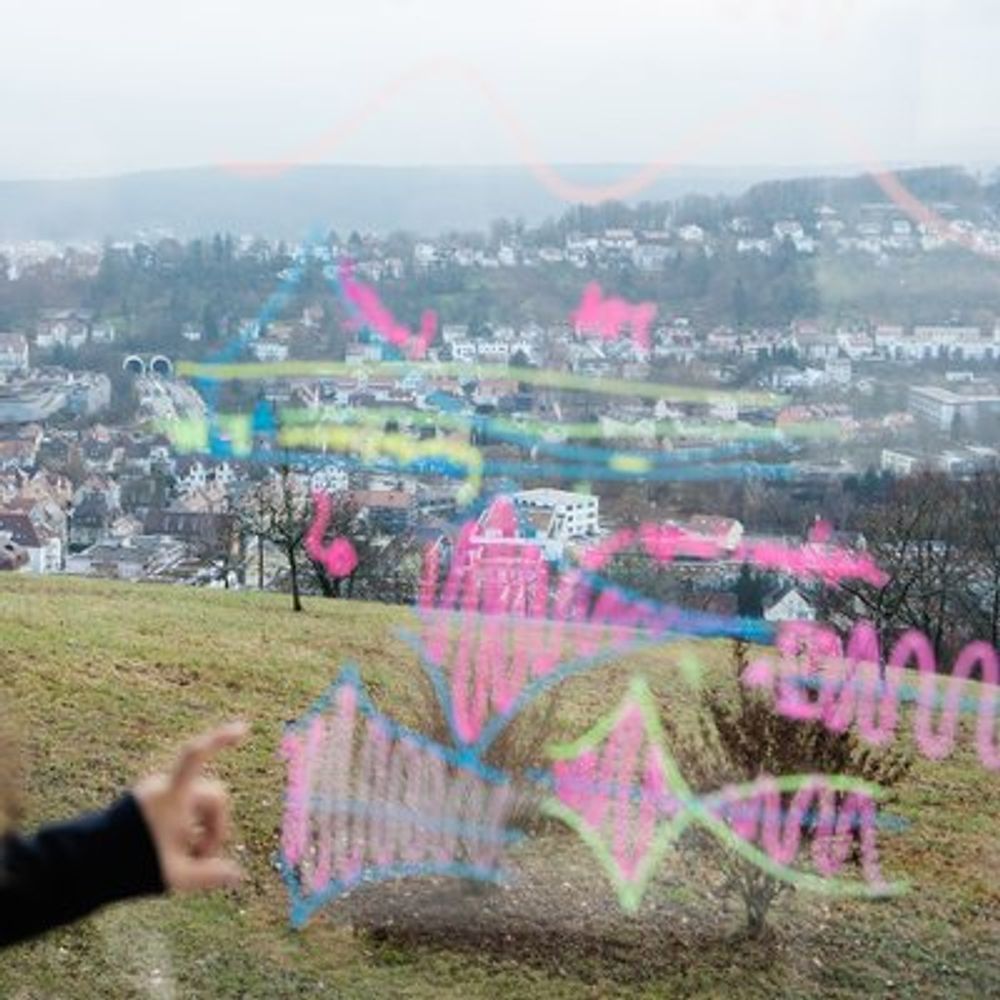
🚨 Check out our new preprint 🚨
A novel artifact-robust framework to investigate online effects of transcranial current stimulation (tCS).
Further, we test this approach in an MEG study 🧲🧠 and find neural interaction between tCS and flickering visual stimulation.
www.biorxiv.org/content/10.1...
A novel artifact-robust framework to investigate online effects of transcranial current stimulation (tCS).
Further, we test this approach in an MEG study 🧲🧠 and find neural interaction between tCS and flickering visual stimulation.
www.biorxiv.org/content/10.1...

An artifact-robust framework for measuring tCS effects during stimulation
Objective: Transcranial current stimulation (tCS) is a promising technique to non-invasively modulate human brain activity. However, stimulation artifacts in EEG and MEG recordings severely hinder the...
www.biorxiv.org
November 3, 2025 at 11:04 AM
🚨 Check out our new preprint 🚨
A novel artifact-robust framework to investigate online effects of transcranial current stimulation (tCS).
Further, we test this approach in an MEG study 🧲🧠 and find neural interaction between tCS and flickering visual stimulation.
www.biorxiv.org/content/10.1...
A novel artifact-robust framework to investigate online effects of transcranial current stimulation (tCS).
Further, we test this approach in an MEG study 🧲🧠 and find neural interaction between tCS and flickering visual stimulation.
www.biorxiv.org/content/10.1...
The real problem isn’t p-values, it’s the epistemology behind them.
Science shouldn’t depend on arbitrary thresholds that change with context.
Knowledge should accumulate, not collapse into yes/no verdicts.
Turning continuous evidence into discrete “significance” decisions is information loss
Science shouldn’t depend on arbitrary thresholds that change with context.
Knowledge should accumulate, not collapse into yes/no verdicts.
Turning continuous evidence into discrete “significance” decisions is information loss

There still seems to be a lot of confusion about significance testing in psych. No, p-values *don’t* become useless at large N. This flawed point also used to be framed as "too much power". But power isn't the problem – it's 1) unbalanced error rates and 2) the (lack of a) SESOI. 1/ >
November 2, 2025 at 8:54 AM
The real problem isn’t p-values, it’s the epistemology behind them.
Science shouldn’t depend on arbitrary thresholds that change with context.
Knowledge should accumulate, not collapse into yes/no verdicts.
Turning continuous evidence into discrete “significance” decisions is information loss
Science shouldn’t depend on arbitrary thresholds that change with context.
Knowledge should accumulate, not collapse into yes/no verdicts.
Turning continuous evidence into discrete “significance” decisions is information loss