




berkeleyMCB
@berkeleymcb.bsky.social
Molecular & Cell Biology (MCB) Department at UC Berkeley | curiosity driven basic research, education, training and a commitment to public service. 🧪🐻
mcb.berkeley.edu/
mcb.berkeley.edu/
Congratulations to MCB's Dan Portnoy on receiving the 2025 Excellence in Advising Outstanding Faculty Advisor award from Berkeley’s Council on Advising and Student Services! 🎉👏
mcb.berkeley.edu/news-and-eve...
mcb.berkeley.edu/news-and-eve...

January 14, 2026 at 8:51 PM
Congratulations to MCB's Dan Portnoy on receiving the 2025 Excellence in Advising Outstanding Faculty Advisor award from Berkeley’s Council on Advising and Student Services! 🎉👏
mcb.berkeley.edu/news-and-eve...
mcb.berkeley.edu/news-and-eve...
Reposted by berkeleyMCB

New in Science Magazine Science Advances from the Doudna Lab, Rubin Lab and Cress Lab —Identification of proteins influencing #CRISPR-associated #transposases for enhanced #GenomeEditing. Read here: https://ow.ly/U0s450XS82n

January 5, 2026 at 7:23 PM
New in Science Magazine Science Advances from the Doudna Lab, Rubin Lab and Cress Lab —Identification of proteins influencing #CRISPR-associated #transposases for enhanced #GenomeEditing. Read here: https://ow.ly/U0s450XS82n
Reposted by berkeleyMCB

New preprint 👉Doudna x Bryant x Jacobsen x Savage collaboration!
Work led by @zehanzhou.bsky.social, I. Saffarian-Deemyad, @honglue.bsky.social, T. Weiss
We dissect how stepwise DNA unwinding gates TnpB genome editing, revealing how unwound DNA states enhance cleavage
www.biorxiv.org/content/10.6...
Work led by @zehanzhou.bsky.social, I. Saffarian-Deemyad, @honglue.bsky.social, T. Weiss
We dissect how stepwise DNA unwinding gates TnpB genome editing, revealing how unwound DNA states enhance cleavage
www.biorxiv.org/content/10.6...

Stepwise DNA unwinding gates TnpB genome-editing activity
TnpB is a compact RNA-guided endonuclease and evolutionary ancestor of CRISPR-Cas12 that offers a promising platform for genome engineering. However, the genome-editing activity of TnpBs remains limit...
www.biorxiv.org
January 10, 2026 at 5:16 PM
New preprint 👉Doudna x Bryant x Jacobsen x Savage collaboration!
Work led by @zehanzhou.bsky.social, I. Saffarian-Deemyad, @honglue.bsky.social, T. Weiss
We dissect how stepwise DNA unwinding gates TnpB genome editing, revealing how unwound DNA states enhance cleavage
www.biorxiv.org/content/10.6...
Work led by @zehanzhou.bsky.social, I. Saffarian-Deemyad, @honglue.bsky.social, T. Weiss
We dissect how stepwise DNA unwinding gates TnpB genome editing, revealing how unwound DNA states enhance cleavage
www.biorxiv.org/content/10.6...
Reposted by berkeleyMCB
Check out the latest episode of Rewriting the Code, featuring Jennifer Doudna and #SickleCell patient pioneer Victoria Gray who was cured with a #CRISPR-based treatment in a groundbreaking clinical trial: https://ow.ly/t6FY50XVNO7

January 13, 2026 at 4:10 PM
Check out the latest episode of Rewriting the Code, featuring Jennifer Doudna and #SickleCell patient pioneer Victoria Gray who was cured with a #CRISPR-based treatment in a groundbreaking clinical trial: https://ow.ly/t6FY50XVNO7
Reposted by berkeleyMCB
A new review from the Doudna Lab lab on tissue-targeted in vivo delivery of gene editors: https://www.nature.com/articles/s41587-025-02945-w
#CRISPR #delivery
#CRISPR #delivery

January 13, 2026 at 8:20 PM
A new review from the Doudna Lab lab on tissue-targeted in vivo delivery of gene editors: https://www.nature.com/articles/s41587-025-02945-w
#CRISPR #delivery
#CRISPR #delivery
Congratulations to MCB postdoc Joseph Lobel (Ingolia Lab) on receiving the 2026 RNA Society Scaringe Young Scientist Award! 👏🎉 @rnasociety.bsky.social @nickingolia.bsky.social
mcb.berkeley.edu/news-and-eve...
mcb.berkeley.edu/news-and-eve...

January 6, 2026 at 10:13 PM
Congratulations to MCB postdoc Joseph Lobel (Ingolia Lab) on receiving the 2026 RNA Society Scaringe Young Scientist Award! 👏🎉 @rnasociety.bsky.social @nickingolia.bsky.social
mcb.berkeley.edu/news-and-eve...
mcb.berkeley.edu/news-and-eve...
Reposted by berkeleyMCB

One of our own has contributed to a newly approved medicine. The MTI at @ucberkeleyofficial.bsky.social congratulates the Cytokinetics team and our Executive Director, Dr. Julia Schaletzky, on FDA approval of aficamten for #HCM, available starting mid-January.
#BerkeleyHealth #GoBears #patientsfirst
#BerkeleyHealth #GoBears #patientsfirst
December 23, 2025 at 6:12 PM
One of our own has contributed to a newly approved medicine. The MTI at @ucberkeleyofficial.bsky.social congratulates the Cytokinetics team and our Executive Director, Dr. Julia Schaletzky, on FDA approval of aficamten for #HCM, available starting mid-January.
#BerkeleyHealth #GoBears #patientsfirst
#BerkeleyHealth #GoBears #patientsfirst
Reposted by berkeleyMCB
The world of genome editing is moving at a fast pace, and the IGI is right in the middle of the action. Here’s a look back at some of our most exciting news stories you don't want to miss from 2025. Read here: https://ow.ly/Z1n650XJXGS
#CRISPR
#CRISPR

December 29, 2025 at 4:05 PM
The world of genome editing is moving at a fast pace, and the IGI is right in the middle of the action. Here’s a look back at some of our most exciting news stories you don't want to miss from 2025. Read here: https://ow.ly/Z1n650XJXGS
#CRISPR
#CRISPR
Celebrating Matt Welch’s @mattwelchlab.bsky.social Legacy as MBoC Editor-in-Chief: Innovations and Impact www.ascb.org/society-news...

Celebrating Matt Welch’s Legacy as MBoC Editor-in-Chief: Innovations and Impact - ASCB
As Matt Welch concludes his tenure as Editor-in-Chief of Molecular Biology of the Cell (MBoC), we reflect on his impactful leadership and the journal’s evolution during his time at the helm. In this Q...
www.ascb.org
January 2, 2026 at 4:57 PM
Celebrating Matt Welch’s @mattwelchlab.bsky.social Legacy as MBoC Editor-in-Chief: Innovations and Impact www.ascb.org/society-news...
Reposted by berkeleyMCB
🎺New paper alert🎺 Out now in Nature Chemical Biology from IGI's Jennifer Doudna (Doudna Lab) and collaborators: Temporal photoproximity labeling of ligand-activated EGFR neighborhoods using MultiMap
Read here: https://ow.ly/izGo50XAkog
Read here: https://ow.ly/izGo50XAkog

Temporal photoproximity labeling of ligand-activated EGFR neighborhoods using MultiMap - Nature Chemical Biology
A multiscale photoproximity labeling proteomics workflow captures dynamic neighborhoods of extracellular and intracellular epidermal growth factor (EGF) receptor interactomes during early, middle and late signaling upon activation by EGF.
ow.ly
December 16, 2025 at 4:00 PM
🎺New paper alert🎺 Out now in Nature Chemical Biology from IGI's Jennifer Doudna (Doudna Lab) and collaborators: Temporal photoproximity labeling of ligand-activated EGFR neighborhoods using MultiMap
Read here: https://ow.ly/izGo50XAkog
Read here: https://ow.ly/izGo50XAkog
Reposted by berkeleyMCB
@mti-ucb.bsky.social, we are thrilled that our Executive Director, Dr. Julia Schaletzky, is highlighted in @ucberkeleyofficial.bsky.social’s Top Stories of 2025 for her work advancing campus viewpoint diversity. Read here to learn more: news.berkeley.edu/2025/12/15/n...

Nobel wins, psychedelic lilies and a mission to Mars: UC Berkeley's top stories of 2025 - Berkeley News
A look at some of the campus's biggest stories chronicled by UC Berkeley News.
news.berkeley.edu
December 17, 2025 at 3:52 AM
@mti-ucb.bsky.social, we are thrilled that our Executive Director, Dr. Julia Schaletzky, is highlighted in @ucberkeleyofficial.bsky.social’s Top Stories of 2025 for her work advancing campus viewpoint diversity. Read here to learn more: news.berkeley.edu/2025/12/15/n...
Reposted by berkeleyMCB
Research in Filipa Rijo-Ferrera’s lab at #UCBerkeley shows both #parasites and their #mosquito hosts share #circadian rhythms that time biting and transmissibility. Targeting these internal clocks may offer a new path to reducing #malaria and other mosquito-borne illnesses.
bit.ly/4q3El9s
bit.ly/4q3El9s

Research on the circadian rhythm of mosquitos seeks new ways to fight parasitic diseases
Researchers are uncovering new ways to understand how malaria parasites and their mosquito carriers keep track of time.
publichealth.berkeley.edu
December 11, 2025 at 9:48 PM
Research in Filipa Rijo-Ferrera’s lab at #UCBerkeley shows both #parasites and their #mosquito hosts share #circadian rhythms that time biting and transmissibility. Targeting these internal clocks may offer a new path to reducing #malaria and other mosquito-borne illnesses.
bit.ly/4q3El9s
bit.ly/4q3El9s
Reposted by berkeleyMCB
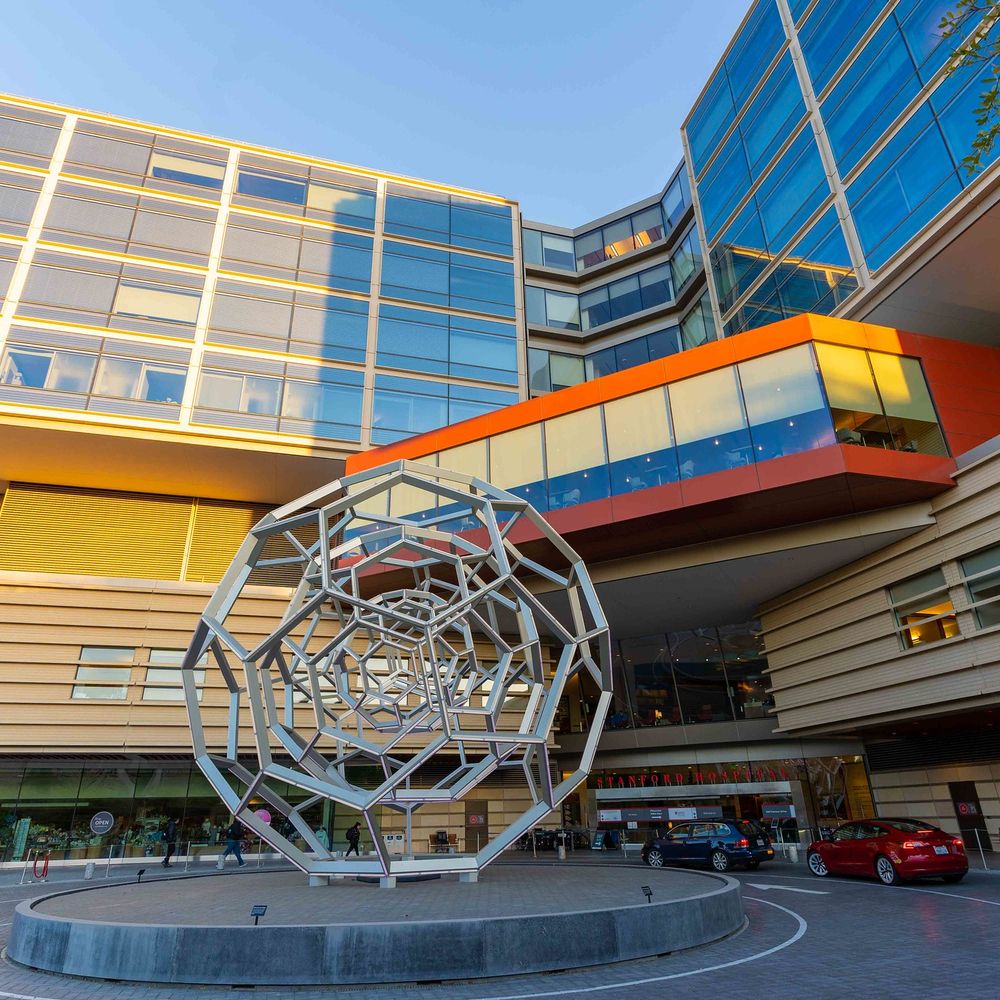
ICYMI: #CRISPR co-inventor Jennifer Doudna joins @euanashley.bsky.social on Episode 3 of The Future of Medicine for a deep, wide-ranging conversation about how #GeneEditing is reshaping the landscape of modern medicine. Watch on our YouTube or stream here: https://bit.ly/43LGRZv
December 18, 2025 at 9:08 PM
ICYMI: #CRISPR co-inventor Jennifer Doudna joins @euanashley.bsky.social on Episode 3 of The Future of Medicine for a deep, wide-ranging conversation about how #GeneEditing is reshaping the landscape of modern medicine. Watch on our YouTube or stream here: https://bit.ly/43LGRZv
Reposted by berkeleyMCB
⚡️Mitochondria make ATP, the energy that powers life. But in neurons, with axons up to a meter long, how do these tiny power plants stay functional in the right places? We went looking. 1/n www.biorxiv.org/content/10.6...

Self-renewal of neuronal mitochondria through asymmetric division
Mitochondrial ATP production is essential for life. Mitochondrial function depends on the spatio-temporal coordination of nuclear and mitochondrial genome expression, yet how this coordination occurs ...
www.biorxiv.org
December 18, 2025 at 8:36 PM
⚡️Mitochondria make ATP, the energy that powers life. But in neurons, with axons up to a meter long, how do these tiny power plants stay functional in the right places? We went looking. 1/n www.biorxiv.org/content/10.6...
Reposted by berkeleyMCB

Addition Therapeutics, a spinout of QB3-Berkeley affiliate Kathleen Collins' lab, has emerged from stealth with $100M in funding from SR One, the Gates Foundation, and more. Its PRINT platform uses retrotransposon machinery to deliver precise gene therapy.
www.fiercebiotech.com/biotech/addi...
www.fiercebiotech.com/biotech/addi...

Addition Tx does the math and emerges from stealth with $100M, biotech vets on exec team
University of California spinout Addition Therapeutics has uncloaked, revealing “breakthrough” PRINT technology it hopes will fuel a new wave of genetic medicine. | University of California spinout Ad...
www.fiercebiotech.com
December 19, 2025 at 9:29 PM
Addition Therapeutics, a spinout of QB3-Berkeley affiliate Kathleen Collins' lab, has emerged from stealth with $100M in funding from SR One, the Gates Foundation, and more. Its PRINT platform uses retrotransposon machinery to deliver precise gene therapy.
www.fiercebiotech.com/biotech/addi...
www.fiercebiotech.com/biotech/addi...
Happy Holidays from MCB! 2025 has been a year marked by exciting discoveries, shared successes, and the remarkable resilience and dedication of our community. We hope you enjoy our year-end video highlighting some of our 2025 memories together.
vimeo.com/1147759879?f...
vimeo.com/1147759879?f...

2025 | Happy Holidays from berkeleyMCB!
This is "2025 | Happy Holidays from berkeleyMCB!" by berkeleyMCB on Vimeo, the home for high quality videos and the people who love them.
vimeo.com
December 19, 2025 at 8:58 PM
Happy Holidays from MCB! 2025 has been a year marked by exciting discoveries, shared successes, and the remarkable resilience and dedication of our community. We hope you enjoy our year-end video highlighting some of our 2025 memories together.
vimeo.com/1147759879?f...
vimeo.com/1147759879?f...
Congrats to MCB's James Olzmann! 🎉👏 @olzmannlab.bsky.social
Eight Rausser College faculty were recently named among the world’s most influential researchers, according to a new report from analytics firm @clarivateag.bsky.social. Learn more about the methodology and see who made the list: nature.berkeley.edu/news/rausser...

December 15, 2025 at 11:09 PM
Congrats to MCB's James Olzmann! 🎉👏 @olzmannlab.bsky.social
Reposted by berkeleyMCB
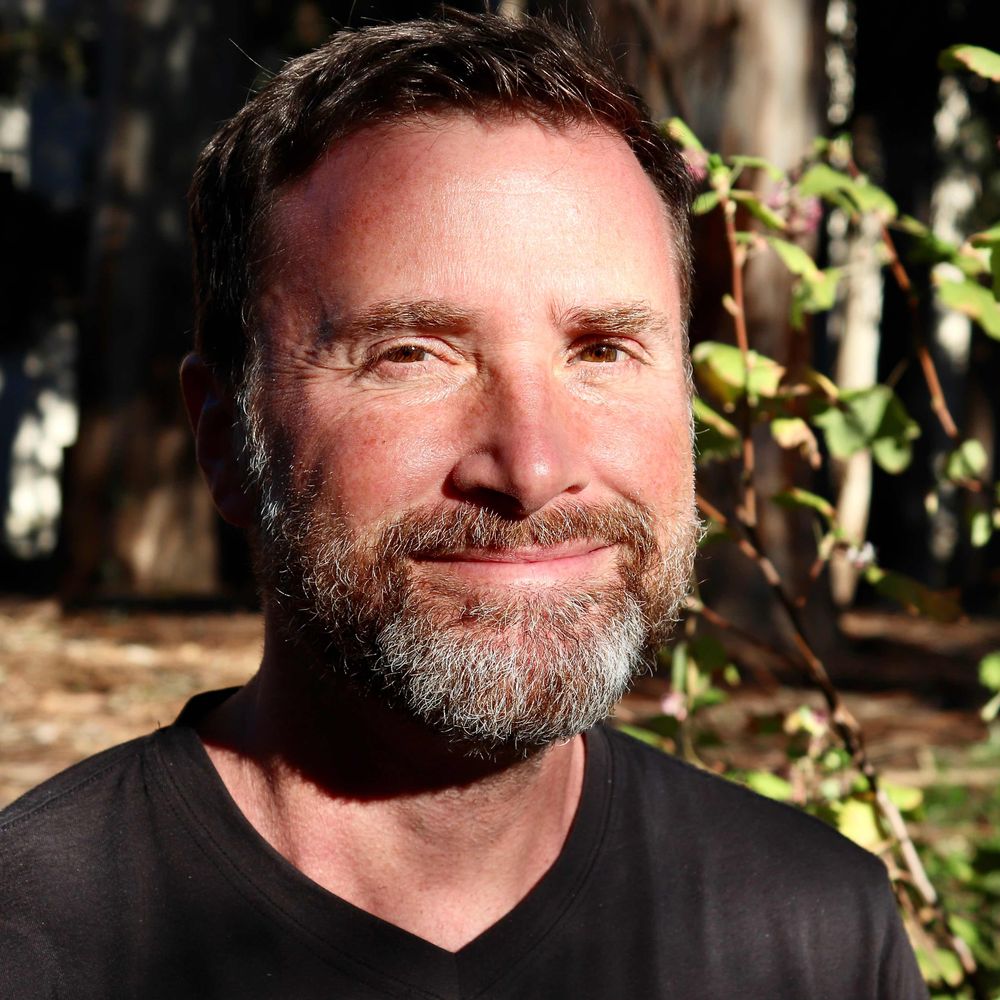
My wonderful lab members at our holiday party. I was quite nostalgic about celebrating together this year. But my misty eyes quickly dried when someone, who shall not be named, would not let me keep banana-grams during the White Elephant gift exchange!

December 13, 2025 at 4:15 PM
My wonderful lab members at our holiday party. I was quite nostalgic about celebrating together this year. But my misty eyes quickly dried when someone, who shall not be named, would not let me keep banana-grams during the White Elephant gift exchange!
Reposted by berkeleyMCB

Excited to highlight our latest bioRxiv led by grad student Zoe Duong and Qian Shao. We report a chemistry-centric, chemoproteomics-enabled strategy to discover non-degradative molecular glues for transcriptional rewiring.
🔗 www.biorxiv.org/content/10.6...

Discovery of Non-Degradative Covalent Molecular Glues for Transcriptional Reprogramming
Transcriptional reprogramming through induced proximity has emerged as a powerful strategy for modulating the expression of oncogenic and tumor-suppressive genes. Inspired by transcriptional reprogram...
www.biorxiv.org
December 14, 2025 at 7:36 PM
Excited to highlight our latest bioRxiv led by grad student Zoe Duong and Qian Shao. We report a chemistry-centric, chemoproteomics-enabled strategy to discover non-degradative molecular glues for transcriptional rewiring.
🔗 www.biorxiv.org/content/10.6...
Reposted by berkeleyMCB
The first-ever personalized CRISPR medicine, genomics meets AI + automation, editing gut microbes for health + climate applications, field trials for climate-resistant crops — 2025 has been an exciting year for the IGI! Learn about these + more in our annual Impact Report: https://ow.ly/h2OA50XIAVV

December 15, 2025 at 4:10 PM
The first-ever personalized CRISPR medicine, genomics meets AI + automation, editing gut microbes for health + climate applications, field trials for climate-resistant crops — 2025 has been an exciting year for the IGI! Learn about these + more in our annual Impact Report: https://ow.ly/h2OA50XIAVV
Reposted by berkeleyMCB
New from IGI's @marsonlab.bsky.social and @juliacarnevale.bsky.social, with co-authors @jenniferdoudna.bsky.social, @j-eyquem.bsky.social, James Nuñez!
Good news keeps coming! Excited to share our latest preprint expanding myeloid cell editing capabilities: Virus-like particles enable targeted gene engineering and pooled CRISPR screening in primary human myeloid cells, led by Hyuncheol Jung and Pascal Devant joint with @juliacarnevale.bsky.social
December 15, 2025 at 5:56 PM
New from IGI's @marsonlab.bsky.social and @juliacarnevale.bsky.social, with co-authors @jenniferdoudna.bsky.social, @j-eyquem.bsky.social, James Nuñez!
Reposted by berkeleyMCB
*First preprint from our lab* !!!!!
How does the brain learn to anchor its internal sense of direction to the outside world? 🧭
led by Mark Plitt @markplitt.bsky.social & Dan Turner-Evans, w/ Vivek Jayaraman:
“Octopamine instructs head direction plasticity” www.biorxiv.org/content/10.6...
Thread ⬇️
How does the brain learn to anchor its internal sense of direction to the outside world? 🧭
led by Mark Plitt @markplitt.bsky.social & Dan Turner-Evans, w/ Vivek Jayaraman:
“Octopamine instructs head direction plasticity” www.biorxiv.org/content/10.6...
Thread ⬇️

December 15, 2025 at 6:26 PM
*First preprint from our lab* !!!!!
How does the brain learn to anchor its internal sense of direction to the outside world? 🧭
led by Mark Plitt @markplitt.bsky.social & Dan Turner-Evans, w/ Vivek Jayaraman:
“Octopamine instructs head direction plasticity” www.biorxiv.org/content/10.6...
Thread ⬇️
How does the brain learn to anchor its internal sense of direction to the outside world? 🧭
led by Mark Plitt @markplitt.bsky.social & Dan Turner-Evans, w/ Vivek Jayaraman:
“Octopamine instructs head direction plasticity” www.biorxiv.org/content/10.6...
Thread ⬇️
Portnoy Lab microbiologists brought hands-on science to a local elementary school by creating a Microbe Circuit—sparking curiosity and inspiring future scientists. 🧪🦠
mcb.berkeley.edu/news-and-eve...
mcb.berkeley.edu/news-and-eve...

December 15, 2025 at 4:28 PM
Portnoy Lab microbiologists brought hands-on science to a local elementary school by creating a Microbe Circuit—sparking curiosity and inspiring future scientists. 🧪🦠
mcb.berkeley.edu/news-and-eve...
mcb.berkeley.edu/news-and-eve...
Reposted by berkeleyMCB
Happy to see our News & Views is out! We highlight two landmark papers demonstrating the potential for therapeutic targeting of FSP1 and #ferroptosis in in vivo cancer models. Beautiful work from @ubellackerlab.bsky.social, Thales Papagiannakopoulos, and colleagues. 🥳
www.nature.com/articles/s41...
www.nature.com/articles/s41...

In vivo models bring FSP1 inhibitors to life - Nature Cell Biology
FSP1 is a key suppressor of lipid peroxidation and ferroptosis, yet it is largely dispensable in standard cell culture models. Two new studies now show that FSP1 becomes essential for tumour growth in...
www.nature.com
December 12, 2025 at 4:15 PM
Happy to see our News & Views is out! We highlight two landmark papers demonstrating the potential for therapeutic targeting of FSP1 and #ferroptosis in in vivo cancer models. Beautiful work from @ubellackerlab.bsky.social, Thales Papagiannakopoulos, and colleagues. 🥳
www.nature.com/articles/s41...
www.nature.com/articles/s41...
Reposted by berkeleyMCB
Which came first — the comb jelly or the sponge? The battle over the root of the animal tree of life rages on, with the latest research from QB3-Berkeley's Nicole King coming down on the side of the sponge. Read more from the UC Berkeley news team: news.berkeley.edu/2025/11/19/d...

Did the first animal look like a sponge or a comb jelly? The debate continues. - Berkeley News
Two years ago, a novel analysis by UC Berkeley researchers pointed to comb jellies as the root of the animal tree of life. Another Berkeley group now says it’s sponges.
news.berkeley.edu
December 4, 2025 at 11:30 PM
Which came first — the comb jelly or the sponge? The battle over the root of the animal tree of life rages on, with the latest research from QB3-Berkeley's Nicole King coming down on the side of the sponge. Read more from the UC Berkeley news team: news.berkeley.edu/2025/11/19/d...