



Brian
@brianpaulmarcum.bsky.social
Reposted by Brian
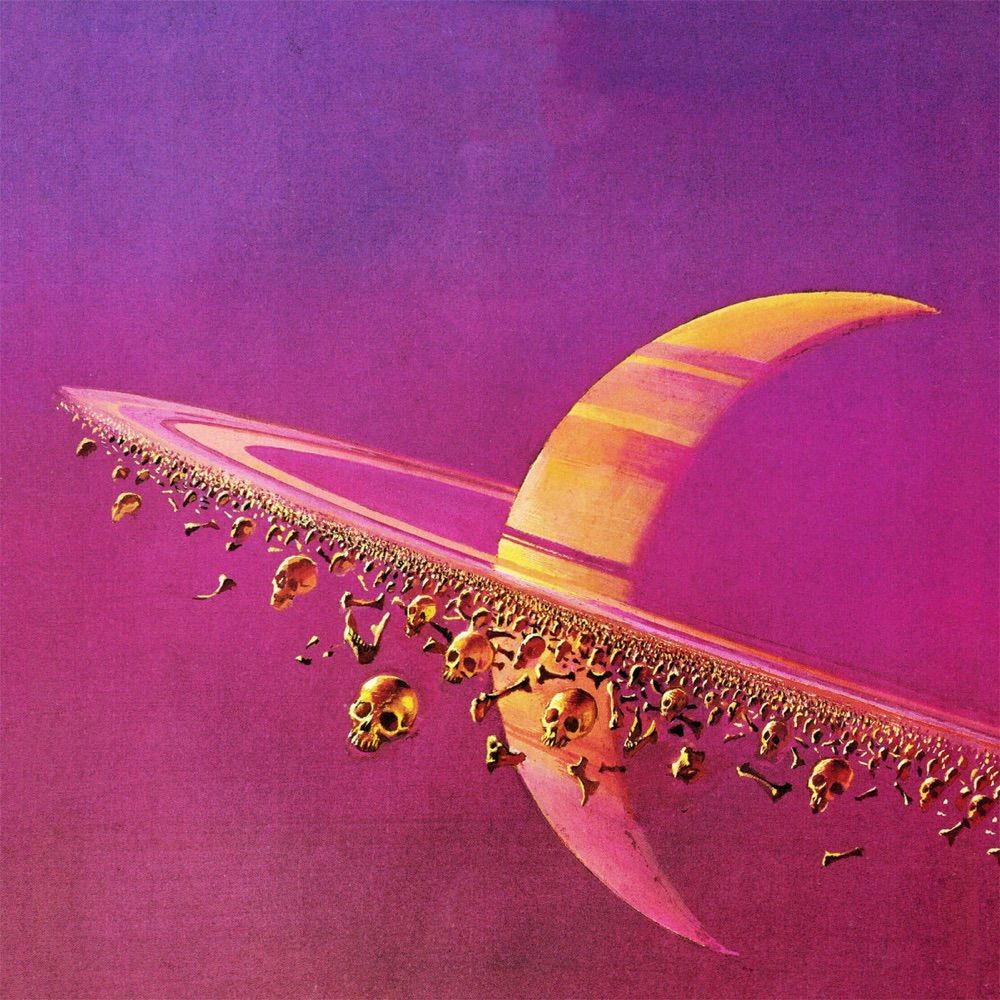
‘Visit’ by Kikuo Hayashi from Future Life magazine Sept 1981

December 16, 2025 at 11:31 PM
‘Visit’ by Kikuo Hayashi from Future Life magazine Sept 1981
Reposted by Brian

Disclosure Day | Official Teaser
YouTube video by Universal Pictures
youtu.be
December 16, 2025 at 8:43 PM
Reposted by Brian

#PPOD: When the Sun, Moon, and Earth align just right, moonlight meets the mist at the base of a great waterfall. The result is a moonbow: a rainbow born not of daylight, but of reflected lunar light. Credit: @joshduryphotomedia.bsky.social 🧪 🔭 📷

December 16, 2025 at 4:00 PM
#PPOD: When the Sun, Moon, and Earth align just right, moonlight meets the mist at the base of a great waterfall. The result is a moonbow: a rainbow born not of daylight, but of reflected lunar light. Credit: @joshduryphotomedia.bsky.social 🧪 🔭 📷
Reposted by Brian
This world needs an intervention.
Art by Martin Hoffman for The Visitors (Clifford D Simak, 1980)
Art by Martin Hoffman for The Visitors (Clifford D Simak, 1980)

December 16, 2025 at 8:17 AM
This world needs an intervention.
Art by Martin Hoffman for The Visitors (Clifford D Simak, 1980)
Art by Martin Hoffman for The Visitors (Clifford D Simak, 1980)
Reposted by Brian

December 16, 2025 at 8:00 AM
Reposted by Brian
#PPOD: These polar dunes on Mars show both carbon dioxide frost (the white colored areas) along with darker material that’s been exposed due to sublimation, and is blown by the wind to form these dark spots. Credit: NASA/JPL/University of Arizona 🧪 🔭

December 15, 2025 at 8:10 PM
#PPOD: These polar dunes on Mars show both carbon dioxide frost (the white colored areas) along with darker material that’s been exposed due to sublimation, and is blown by the wind to form these dark spots. Credit: NASA/JPL/University of Arizona 🧪 🔭
Reposted by Brian
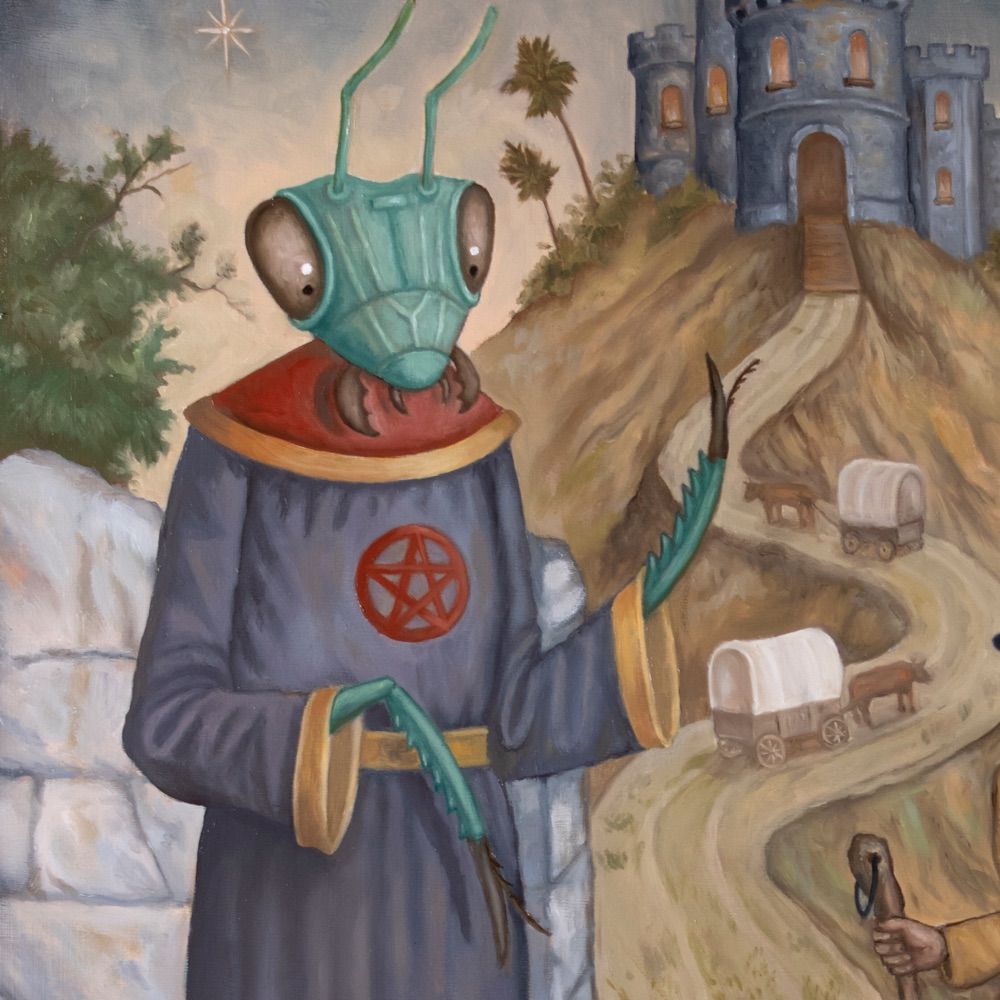
✨👽✨ #flashback: “On the Trail” 36x24 Oil on Panel 2025. This was the ninth and final painting in my series, “On the Trail,” which tells the story of a group of pioneers headed west to follow the gold rush, only to be spirited away to a new world by nonhuman entities.
#scifiart #narrativeart
#scifiart #narrativeart


December 14, 2025 at 3:45 PM
✨👽✨ #flashback: “On the Trail” 36x24 Oil on Panel 2025. This was the ninth and final painting in my series, “On the Trail,” which tells the story of a group of pioneers headed west to follow the gold rush, only to be spirited away to a new world by nonhuman entities.
#scifiart #narrativeart
#scifiart #narrativeart
Reposted by Brian
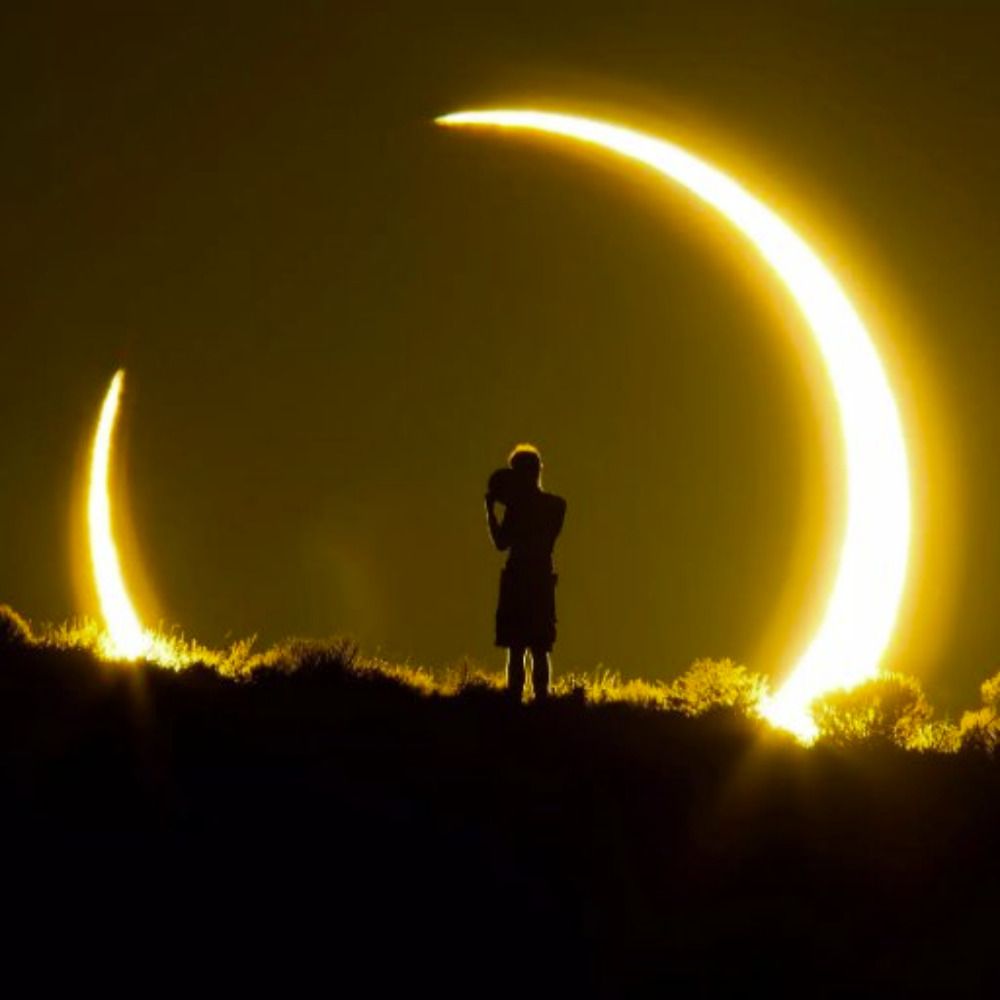
This is what a rocket launch looks like from space.
December 13, 2025 at 10:11 PM
This is what a rocket launch looks like from space.
Reposted by Brian
Art by Steve R Dodd ‘Portals and Skyships’ (2025, acrylics on canvas board)

December 12, 2025 at 10:56 PM
Art by Steve R Dodd ‘Portals and Skyships’ (2025, acrylics on canvas board)
Reposted by Brian
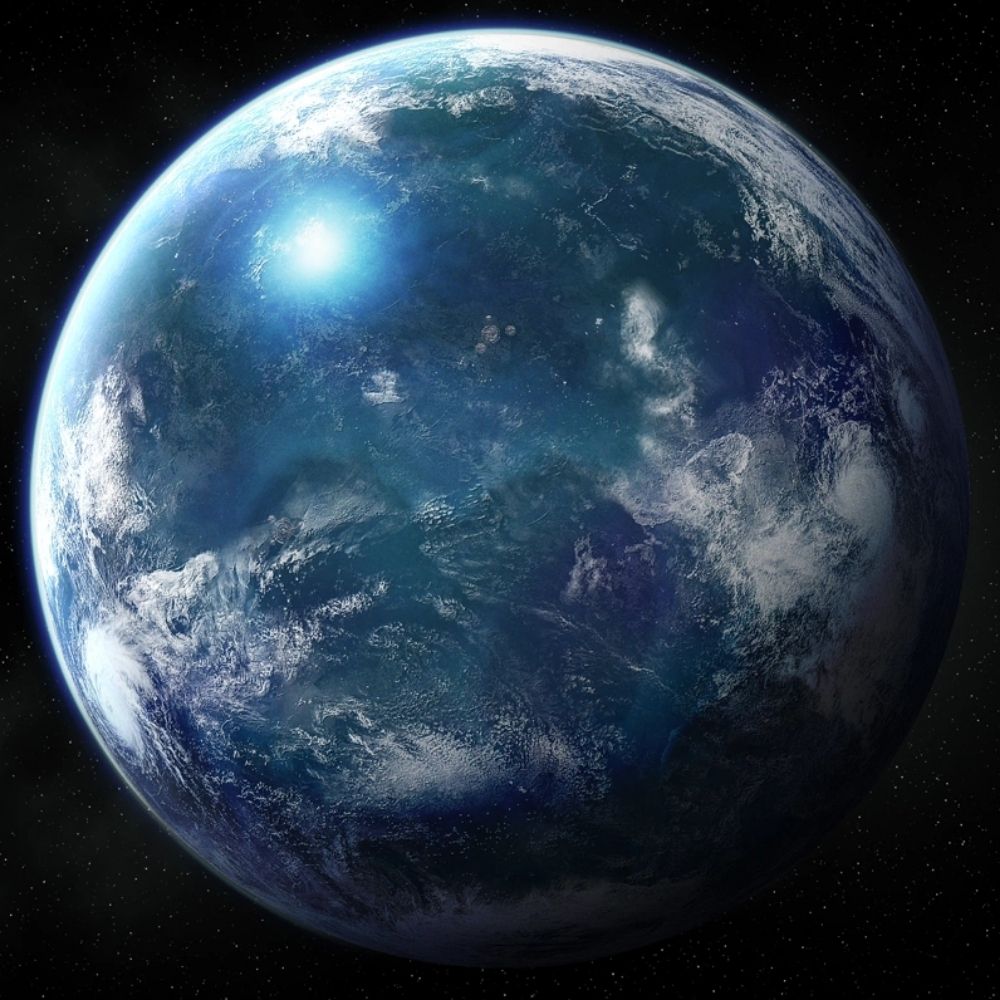
Top: Sunset on Mars (Curiosity rover, April 2015)
Bottom: Sunset on LV-426 (Alien, 1979)
Bottom: Sunset on LV-426 (Alien, 1979)

December 12, 2025 at 2:20 AM
Top: Sunset on Mars (Curiosity rover, April 2015)
Bottom: Sunset on LV-426 (Alien, 1979)
Bottom: Sunset on LV-426 (Alien, 1979)
Reposted by Brian
Future cities by John Harris


December 10, 2025 at 10:08 PM
Future cities by John Harris
Reposted by Brian
Check out this new #JWST image.
It's another stunning view of the deep universe, but in the box at right is a small, red blob.
That's a galaxy in which a supernova was detected in March.
That galaxy is thirteen BILLION lightyears away. It's the oldest supernova found so far.
It's another stunning view of the deep universe, but in the box at right is a small, red blob.
That's a galaxy in which a supernova was detected in March.
That galaxy is thirteen BILLION lightyears away. It's the oldest supernova found so far.

December 9, 2025 at 9:06 PM
Check out this new #JWST image.
It's another stunning view of the deep universe, but in the box at right is a small, red blob.
That's a galaxy in which a supernova was detected in March.
That galaxy is thirteen BILLION lightyears away. It's the oldest supernova found so far.
It's another stunning view of the deep universe, but in the box at right is a small, red blob.
That's a galaxy in which a supernova was detected in March.
That galaxy is thirteen BILLION lightyears away. It's the oldest supernova found so far.
Reposted by Brian
🔥 🐍#FLASHBACK: “Serpent of Scorching” 30x24 Oil On Panel 2024.
✨👽LORE: The immortal Zeta Reticulan possess rubbery metal skin that is laserproof and fireproof.
#alienart #scifiart #popsurrealism #lowbrowart #narrativeart
✨👽LORE: The immortal Zeta Reticulan possess rubbery metal skin that is laserproof and fireproof.
#alienart #scifiart #popsurrealism #lowbrowart #narrativeart


December 7, 2025 at 3:40 PM
🔥 🐍#FLASHBACK: “Serpent of Scorching” 30x24 Oil On Panel 2024.
✨👽LORE: The immortal Zeta Reticulan possess rubbery metal skin that is laserproof and fireproof.
#alienart #scifiart #popsurrealism #lowbrowart #narrativeart
✨👽LORE: The immortal Zeta Reticulan possess rubbery metal skin that is laserproof and fireproof.
#alienart #scifiart #popsurrealism #lowbrowart #narrativeart
Reposted by Brian
Stunning footage from earlier today, when the new Kilauea eruption covered the USGS Webcam 3, which is situated in the Halemaʻumaʻu crater near the southern rim of the much larger Kilauea caldera.
This *isn't* what the people of Pompeii saw.
But it's not very far off.
This *isn't* what the people of Pompeii saw.
But it's not very far off.
December 7, 2025 at 1:37 AM
Stunning footage from earlier today, when the new Kilauea eruption covered the USGS Webcam 3, which is situated in the Halemaʻumaʻu crater near the southern rim of the much larger Kilauea caldera.
This *isn't* what the people of Pompeii saw.
But it's not very far off.
This *isn't* what the people of Pompeii saw.
But it's not very far off.
Reposted by Brian


Reposted by Brian

Let's dive into the dusty central region of the Milky Way!
There, a swarm of stars orbits an invisible, supermassive #BlackHole. As we get closer to it, we see these stars, as observed by the VLT (in 2019) and VLTI (mid-2021).
Read more: https://www.eso.org/public/news/eso2119/ 🔭
There, a swarm of stars orbits an invisible, supermassive #BlackHole. As we get closer to it, we see these stars, as observed by the VLT (in 2019) and VLTI (mid-2021).
Read more: https://www.eso.org/public/news/eso2119/ 🔭
December 3, 2025 at 1:05 PM
Let's dive into the dusty central region of the Milky Way!
There, a swarm of stars orbits an invisible, supermassive #BlackHole. As we get closer to it, we see these stars, as observed by the VLT (in 2019) and VLTI (mid-2021).
Read more: https://www.eso.org/public/news/eso2119/ 🔭
There, a swarm of stars orbits an invisible, supermassive #BlackHole. As we get closer to it, we see these stars, as observed by the VLT (in 2019) and VLTI (mid-2021).
Read more: https://www.eso.org/public/news/eso2119/ 🔭
Reposted by Brian


Reposted by Brian
#PPOD: NASA's Perseverance rover captured this view of Deimos, the smaller of Mars' two moons, shining in the sky at 4:27 a.m. local time on March 1, 2025, the 1,433rd Martian day, or sol, of the mission. 🧪 🔭
Credit: NASA/JPL-Caltech
Credit: NASA/JPL-Caltech

December 2, 2025 at 4:04 PM
#PPOD: NASA's Perseverance rover captured this view of Deimos, the smaller of Mars' two moons, shining in the sky at 4:27 a.m. local time on March 1, 2025, the 1,433rd Martian day, or sol, of the mission. 🧪 🔭
Credit: NASA/JPL-Caltech
Credit: NASA/JPL-Caltech
Reposted by Brian
#PPOD: The object captured here by the Hubble Space Telescope is a reflection nebula, identified as GN 04.32.8. Reflection nebulae are clouds of dust in space that don't emit their own light, as other nebulae do. 🧪 🔭
Credit: ESA/Hubble & NASA, G. Duchêne
Credit: ESA/Hubble & NASA, G. Duchêne

December 1, 2025 at 4:01 PM
#PPOD: The object captured here by the Hubble Space Telescope is a reflection nebula, identified as GN 04.32.8. Reflection nebulae are clouds of dust in space that don't emit their own light, as other nebulae do. 🧪 🔭
Credit: ESA/Hubble & NASA, G. Duchêne
Credit: ESA/Hubble & NASA, G. Duchêne

Reposted by Brian
Here's a cool photo of Uranus.

November 29, 2025 at 1:36 AM
Here's a cool photo of Uranus.
Reposted by Brian
Dan Farah doing the round might be doing more than the actual documentary to move the needle.
youtu.be/vqXMsUjoWbk?...
youtu.be/vqXMsUjoWbk?...

Laura Coates/CNN discusses The Age of Disclosure with Director/Producer Dan Farah
YouTube video by The Age Of Disclosure
youtu.be
November 27, 2025 at 12:26 PM
Dan Farah doing the round might be doing more than the actual documentary to move the needle.
youtu.be/vqXMsUjoWbk?...
youtu.be/vqXMsUjoWbk?...
Reposted by Brian
Io beauty shot.
Taken by the Juno spacecraft on 3 February 2024.
The right-hand hemisphere is illuminated by the Sun.
On the left, the night side isn't totally dark because of Jupitershine.
Image credit: NASA/SwRI/MSSS
Taken by the Juno spacecraft on 3 February 2024.
The right-hand hemisphere is illuminated by the Sun.
On the left, the night side isn't totally dark because of Jupitershine.
Image credit: NASA/SwRI/MSSS

November 27, 2025 at 3:54 AM
Io beauty shot.
Taken by the Juno spacecraft on 3 February 2024.
The right-hand hemisphere is illuminated by the Sun.
On the left, the night side isn't totally dark because of Jupitershine.
Image credit: NASA/SwRI/MSSS
Taken by the Juno spacecraft on 3 February 2024.
The right-hand hemisphere is illuminated by the Sun.
On the left, the night side isn't totally dark because of Jupitershine.
Image credit: NASA/SwRI/MSSS
Reposted by Brian
Join us on a trip to the region between the Scorpius and Ophiuchus constellations, home to tens of rogue planets.
Rogue planets do not orbit a star but roam freely. Since they are not illuminated by nearby stars, they are hard to discover.
Read more: https://www.eso.org/public/news/eso2120/ 🔭
Rogue planets do not orbit a star but roam freely. Since they are not illuminated by nearby stars, they are hard to discover.
Read more: https://www.eso.org/public/news/eso2120/ 🔭
November 26, 2025 at 1:04 PM
Join us on a trip to the region between the Scorpius and Ophiuchus constellations, home to tens of rogue planets.
Rogue planets do not orbit a star but roam freely. Since they are not illuminated by nearby stars, they are hard to discover.
Read more: https://www.eso.org/public/news/eso2120/ 🔭
Rogue planets do not orbit a star but roam freely. Since they are not illuminated by nearby stars, they are hard to discover.
Read more: https://www.eso.org/public/news/eso2120/ 🔭