



Corey S. Powell
@coreyspowell.bsky.social
Fascinated by things very big, very small, and beyond the limits of the human senses. Founder of OpenMind: www.openmindmag.org Creator of the Invisible Universe column: https://invisibleuniverse.substack.com/
Pinned
Corey S. Powell
@coreyspowell.bsky.social
· Nov 15
In honor of all the new arrivals, I'm sharing one of my favorite videos.
It shows 24 hours of Earth's rotation, with the camera locked to the sky instead of the ground. We're all hanging out on this spinning rock.
Brilliant work by Bartosz Wojczyński. 🧪
artuniverse.eu/gallery/1907...
It shows 24 hours of Earth's rotation, with the camera locked to the sky instead of the ground. We're all hanging out on this spinning rock.
Brilliant work by Bartosz Wojczyński. 🧪
artuniverse.eu/gallery/1907...
40 years ago today, Voyager 2 became the first (and, so far, only) spacecraft to visit to Uranus, sending back astonishing images of the planet, its thin rings, and its peculiar set of moons. 🧪🔭
www.nasa.gov/history/35-y...
www.nasa.gov/history/35-y...

January 25, 2026 at 6:17 AM
40 years ago today, Voyager 2 became the first (and, so far, only) spacecraft to visit to Uranus, sending back astonishing images of the planet, its thin rings, and its peculiar set of moons. 🧪🔭
www.nasa.gov/history/35-y...
www.nasa.gov/history/35-y...
Comets are cold, but they're full of silicate crystals that form at high temperatures. (This crystal, left, was collected from Comet Wild 2, right.)
Now we know how that works! Newborn stars blow fast, crystalline winds away from their hot inner regions. (1/2) 🧪🔭
science.nasa.gov/missions/web...
Now we know how that works! Newborn stars blow fast, crystalline winds away from their hot inner regions. (1/2) 🧪🔭
science.nasa.gov/missions/web...


January 22, 2026 at 11:11 PM
Comets are cold, but they're full of silicate crystals that form at high temperatures. (This crystal, left, was collected from Comet Wild 2, right.)
Now we know how that works! Newborn stars blow fast, crystalline winds away from their hot inner regions. (1/2) 🧪🔭
science.nasa.gov/missions/web...
Now we know how that works! Newborn stars blow fast, crystalline winds away from their hot inner regions. (1/2) 🧪🔭
science.nasa.gov/missions/web...
Reposted by Corey S. Powell

Just observed a “red rainbow”, a rainbow of atmospherically refracted red/orange light just prior to sunrise.
📸 @stephanieg3.bsky.social
📸 @stephanieg3.bsky.social


January 22, 2026 at 3:13 PM
Just observed a “red rainbow”, a rainbow of atmospherically refracted red/orange light just prior to sunrise.
📸 @stephanieg3.bsky.social
📸 @stephanieg3.bsky.social
A breathtaking look at a dying star. This new image of the Helix Nebula is just in from JWST.
We've never seen this level of detail, as the star's remains stream back out to interstellar space. Our Sun will look something like this 7 billion years from now. 🧪🔭
science.nasa.gov/missions/web...
We've never seen this level of detail, as the star's remains stream back out to interstellar space. Our Sun will look something like this 7 billion years from now. 🧪🔭
science.nasa.gov/missions/web...

January 21, 2026 at 7:51 PM
A breathtaking look at a dying star. This new image of the Helix Nebula is just in from JWST.
We've never seen this level of detail, as the star's remains stream back out to interstellar space. Our Sun will look something like this 7 billion years from now. 🧪🔭
science.nasa.gov/missions/web...
We've never seen this level of detail, as the star's remains stream back out to interstellar space. Our Sun will look something like this 7 billion years from now. 🧪🔭
science.nasa.gov/missions/web...
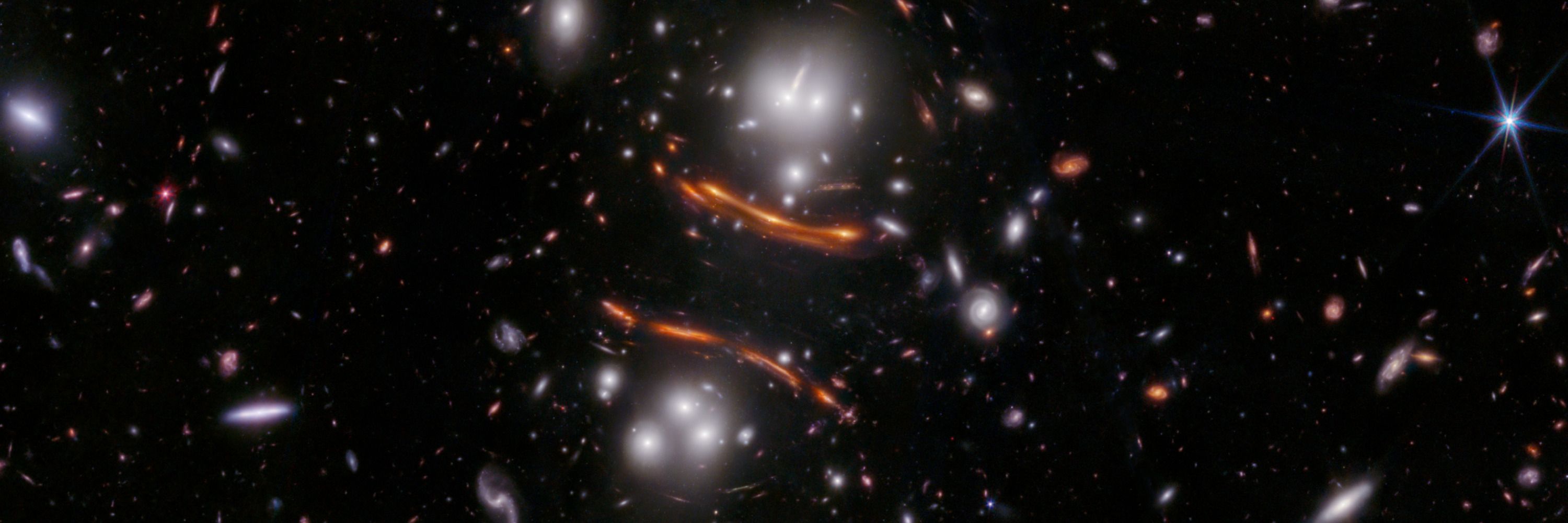
The universe is full of natural magnifying glasses--gravitational lenses--pointed in random directions. This one points toward a galaxy cluster forming in the early universe, 11 billion years ago.
It's a rare peek into how the modern cosmos took shape. 🧪🔭
www.almaobservatory.org/en/press-rel...
It's a rare peek into how the modern cosmos took shape. 🧪🔭
www.almaobservatory.org/en/press-rel...

January 21, 2026 at 3:43 AM
The universe is full of natural magnifying glasses--gravitational lenses--pointed in random directions. This one points toward a galaxy cluster forming in the early universe, 11 billion years ago.
It's a rare peek into how the modern cosmos took shape. 🧪🔭
www.almaobservatory.org/en/press-rel...
It's a rare peek into how the modern cosmos took shape. 🧪🔭
www.almaobservatory.org/en/press-rel...
Reposted by Corey S. Powell

The 18th-century, Scottish, engineer and inventor, James Watt was born 19 January 1736 #histsci #histtech
thonyc.wordpress.com/2015/06/04/a...
thonyc.wordpress.com/2015/06/04/a...

A twelve-year flash of genius
Last week the Observer had an article celebrating the 250th anniversary of James Watt’s invention of the separate condenser steam engine, James Watt and the sabbath stroll that created the industri…
thonyc.wordpress.com
January 19, 2026 at 6:23 AM
The 18th-century, Scottish, engineer and inventor, James Watt was born 19 January 1736 #histsci #histtech
thonyc.wordpress.com/2015/06/04/a...
thonyc.wordpress.com/2015/06/04/a...
A history of unrest, then rest, then even more unrest happening in deep space.
New radio observations show that a supermassive black hole shot out plasma jets at a large fraction of the speed of light, paused for 100 million years, then roared back to life. 🧪🔭
ras.ac.uk/news-and-pre...
New radio observations show that a supermassive black hole shot out plasma jets at a large fraction of the speed of light, paused for 100 million years, then roared back to life. 🧪🔭
ras.ac.uk/news-and-pre...
January 18, 2026 at 9:37 PM
A history of unrest, then rest, then even more unrest happening in deep space.
New radio observations show that a supermassive black hole shot out plasma jets at a large fraction of the speed of light, paused for 100 million years, then roared back to life. 🧪🔭
ras.ac.uk/news-and-pre...
New radio observations show that a supermassive black hole shot out plasma jets at a large fraction of the speed of light, paused for 100 million years, then roared back to life. 🧪🔭
ras.ac.uk/news-and-pre...
Reposted by Corey S. Powell


Artemis II: coming soon to Launch Pad 39B!
(And by soon, I mean possibly as early as 7am EST tomorrow) 🧪🔭
www.nasa.gov/blogs/missio...
(And by soon, I mean possibly as early as 7am EST tomorrow) 🧪🔭
www.nasa.gov/blogs/missio...

January 17, 2026 at 12:41 AM
Artemis II: coming soon to Launch Pad 39B!
(And by soon, I mean possibly as early as 7am EST tomorrow) 🧪🔭
www.nasa.gov/blogs/missio...
(And by soon, I mean possibly as early as 7am EST tomorrow) 🧪🔭
www.nasa.gov/blogs/missio...
Astronomers may have cracked the mystery of the "Little Red Dots": strangely bright but tiny galaxies found in the most distant reaches of the universe.
Giant black holes? Huge bursts of new stars? Neither explanation seemed to make sense. (1/2) 🧪🔭
www.nature.com/articles/d41...
Giant black holes? Huge bursts of new stars? Neither explanation seemed to make sense. (1/2) 🧪🔭
www.nature.com/articles/d41...

January 16, 2026 at 3:04 PM
Astronomers may have cracked the mystery of the "Little Red Dots": strangely bright but tiny galaxies found in the most distant reaches of the universe.
Giant black holes? Huge bursts of new stars? Neither explanation seemed to make sense. (1/2) 🧪🔭
www.nature.com/articles/d41...
Giant black holes? Huge bursts of new stars? Neither explanation seemed to make sense. (1/2) 🧪🔭
www.nature.com/articles/d41...
57 ways of looking at a dying star.
The Alma Observatory tuned in to 57 different molecules pouring out of the star W Hydrae as it spills its guts into space. That material will later get recycled into the next generation of stars and planets.
www.almaobservatory.org/en/press-rel...
The Alma Observatory tuned in to 57 different molecules pouring out of the star W Hydrae as it spills its guts into space. That material will later get recycled into the next generation of stars and planets.
www.almaobservatory.org/en/press-rel...
January 13, 2026 at 5:47 PM
57 ways of looking at a dying star.
The Alma Observatory tuned in to 57 different molecules pouring out of the star W Hydrae as it spills its guts into space. That material will later get recycled into the next generation of stars and planets.
www.almaobservatory.org/en/press-rel...
The Alma Observatory tuned in to 57 different molecules pouring out of the star W Hydrae as it spills its guts into space. That material will later get recycled into the next generation of stars and planets.
www.almaobservatory.org/en/press-rel...
In happier news, it's been a great week for learning strange new things about the universe. A few highlights:
The Rubin Observatory opened its eyes & immediately discovered 1900 asteroids, including the fastest-spinning large asteroid (once every 1.88 minutes!). 🧪🔭
noirlab.edu/public/news/...
The Rubin Observatory opened its eyes & immediately discovered 1900 asteroids, including the fastest-spinning large asteroid (once every 1.88 minutes!). 🧪🔭
noirlab.edu/public/news/...

January 11, 2026 at 12:31 AM
In happier news, it's been a great week for learning strange new things about the universe. A few highlights:
The Rubin Observatory opened its eyes & immediately discovered 1900 asteroids, including the fastest-spinning large asteroid (once every 1.88 minutes!). 🧪🔭
noirlab.edu/public/news/...
The Rubin Observatory opened its eyes & immediately discovered 1900 asteroids, including the fastest-spinning large asteroid (once every 1.88 minutes!). 🧪🔭
noirlab.edu/public/news/...
This delicate, alien-looking entity is an actual life form, sharing the planet with us, living right off the coast of Mexico.

The world feels rough right now
So please enjoy this shrimp, filmed off Cozumel, Mexico. It may be a larval reef shrimp, but we don’t know what species or how long it lives or what it eats. The world is still full of wonder and beauty and mystery.
🎥 @pedrovalenciam scuba diver on Insta
So please enjoy this shrimp, filmed off Cozumel, Mexico. It may be a larval reef shrimp, but we don’t know what species or how long it lives or what it eats. The world is still full of wonder and beauty and mystery.
🎥 @pedrovalenciam scuba diver on Insta
January 10, 2026 at 9:41 PM
This delicate, alien-looking entity is an actual life form, sharing the planet with us, living right off the coast of Mexico.
Reposted by Corey S. Powell

New post up, for all the self proclaimed poets & those who proclaim love and beauty - for Renee Good.
“If someone smiles or cries, feels less alone or more enthused, when you read your work out aloud you have made something wonderful.”
thecosmicshamblesnetwork.substack.com/p/the-world-...
“If someone smiles or cries, feels less alone or more enthused, when you read your work out aloud you have made something wonderful.”
thecosmicshamblesnetwork.substack.com/p/the-world-...

The World Has Lost a Poet
Robin Ince
thecosmicshamblesnetwork.substack.com
January 9, 2026 at 4:21 PM
New post up, for all the self proclaimed poets & those who proclaim love and beauty - for Renee Good.
“If someone smiles or cries, feels less alone or more enthused, when you read your work out aloud you have made something wonderful.”
thecosmicshamblesnetwork.substack.com/p/the-world-...
“If someone smiles or cries, feels less alone or more enthused, when you read your work out aloud you have made something wonderful.”
thecosmicshamblesnetwork.substack.com/p/the-world-...
Venezuela is one of the world's top methane emitters, releasing more methane relative to production than any other country. It's a major economic problem as well as an environmental one. 🧪
www.bloomberg.com/news/newslet...
www.bloomberg.com/news/newslet...

January 9, 2026 at 7:10 PM
Venezuela is one of the world's top methane emitters, releasing more methane relative to production than any other country. It's a major economic problem as well as an environmental one. 🧪
www.bloomberg.com/news/newslet...
www.bloomberg.com/news/newslet...
Great news for exploration:
Schmidt Sciences is funding the Lazuli space telescope, bigger than Hubble, that will include a coronagraph to separate the light of a planet from its nearby star. Schmidt is also supporting 3 innovative ground-based astronomy arrays. 🧪🔭
arstechnica.com/space/2026/0...
Schmidt Sciences is funding the Lazuli space telescope, bigger than Hubble, that will include a coronagraph to separate the light of a planet from its nearby star. Schmidt is also supporting 3 innovative ground-based astronomy arrays. 🧪🔭
arstechnica.com/space/2026/0...

January 8, 2026 at 5:14 PM
Great news for exploration:
Schmidt Sciences is funding the Lazuli space telescope, bigger than Hubble, that will include a coronagraph to separate the light of a planet from its nearby star. Schmidt is also supporting 3 innovative ground-based astronomy arrays. 🧪🔭
arstechnica.com/space/2026/0...
Schmidt Sciences is funding the Lazuli space telescope, bigger than Hubble, that will include a coronagraph to separate the light of a planet from its nearby star. Schmidt is also supporting 3 innovative ground-based astronomy arrays. 🧪🔭
arstechnica.com/space/2026/0...
What a beautiful visual depiction of the changing balance between night and day over the course of the year, as seen from the Netherlands.
(A "keogram," derived from the Inuit word for aurora, is a time-series of sky images intended for monitoring auroral activity.) 🧪🔭
(A "keogram," derived from the Inuit word for aurora, is a time-series of sky images intended for monitoring auroral activity.) 🧪🔭
Happy new year! My all sky camera imaged the sky every 15 seconds and this picture shows what happened in the sky in 2025. It shows the length of the night and day with the hourglass shape, the monthly lunar cycle with the diagonal bands, the elevation of the Sun at local noon, and lots of clouds.

January 6, 2026 at 3:18 PM
What a beautiful visual depiction of the changing balance between night and day over the course of the year, as seen from the Netherlands.
(A "keogram," derived from the Inuit word for aurora, is a time-series of sky images intended for monitoring auroral activity.) 🧪🔭
(A "keogram," derived from the Inuit word for aurora, is a time-series of sky images intended for monitoring auroral activity.) 🧪🔭
The universe is still full of surprises! This is Cloud-9, a starless blob held together by dark matter--a "failed galaxy."
Astronomers have long speculated that such hidden objects formed the building blocks of bright galaxies like our own. Now we've found one. 🧪🔭
esahubble.org/news/heic2601/
Astronomers have long speculated that such hidden objects formed the building blocks of bright galaxies like our own. Now we've found one. 🧪🔭
esahubble.org/news/heic2601/

January 5, 2026 at 11:25 PM
The universe is still full of surprises! This is Cloud-9, a starless blob held together by dark matter--a "failed galaxy."
Astronomers have long speculated that such hidden objects formed the building blocks of bright galaxies like our own. Now we've found one. 🧪🔭
esahubble.org/news/heic2601/
Astronomers have long speculated that such hidden objects formed the building blocks of bright galaxies like our own. Now we've found one. 🧪🔭
esahubble.org/news/heic2601/
In an earlier era of international conflict, 67 years ago this week, the USSR launched the first spacecraft to venture beyond Earth orbit.
Luna 1 missed the Moon and went into solar orbit. Soviet authorities promptly renamed it "Artificial Planet 1." 🔭🧪
www.orbitalfocus.uk/Diaries/Luna...
Luna 1 missed the Moon and went into solar orbit. Soviet authorities promptly renamed it "Artificial Planet 1." 🔭🧪
www.orbitalfocus.uk/Diaries/Luna...

January 5, 2026 at 10:55 PM
In an earlier era of international conflict, 67 years ago this week, the USSR launched the first spacecraft to venture beyond Earth orbit.
Luna 1 missed the Moon and went into solar orbit. Soviet authorities promptly renamed it "Artificial Planet 1." 🔭🧪
www.orbitalfocus.uk/Diaries/Luna...
Luna 1 missed the Moon and went into solar orbit. Soviet authorities promptly renamed it "Artificial Planet 1." 🔭🧪
www.orbitalfocus.uk/Diaries/Luna...
Astronomers have spotted a supermassive black hole fleeing its home galaxy at 900+ kilometers per second, heading off alone into intergalactic space.
I feel you, friend. 🧪🔭
www.sciencealert.com/jwst-confirm...
I feel you, friend. 🧪🔭
www.sciencealert.com/jwst-confirm...

January 4, 2026 at 7:29 PM
Astronomers have spotted a supermassive black hole fleeing its home galaxy at 900+ kilometers per second, heading off alone into intergalactic space.
I feel you, friend. 🧪🔭
www.sciencealert.com/jwst-confirm...
I feel you, friend. 🧪🔭
www.sciencealert.com/jwst-confirm...
NASA's SPHEREx has completed its first multispectral map of the infrared sky.
It sees the sky in 102 infrared "colors," which lets it do things like this: One image highlights mature stars; the other focuses on carbon soot & gas clouds where new stars form. 🧪🔭
www.jpl.nasa.gov/images/pia26...
It sees the sky in 102 infrared "colors," which lets it do things like this: One image highlights mature stars; the other focuses on carbon soot & gas clouds where new stars form. 🧪🔭
www.jpl.nasa.gov/images/pia26...
January 2, 2026 at 11:59 PM
NASA's SPHEREx has completed its first multispectral map of the infrared sky.
It sees the sky in 102 infrared "colors," which lets it do things like this: One image highlights mature stars; the other focuses on carbon soot & gas clouds where new stars form. 🧪🔭
www.jpl.nasa.gov/images/pia26...
It sees the sky in 102 infrared "colors," which lets it do things like this: One image highlights mature stars; the other focuses on carbon soot & gas clouds where new stars form. 🧪🔭
www.jpl.nasa.gov/images/pia26...
Highly recommend. Earth shining in the sky...from Mars!
Open up this picture fully.
Then look at the surface of Mars.
Then look up to the top right.
Spot Mars' moon Phobos high in the sky.
Then notice the bright spot beside Phobos.
That's Earth.
Then look at the surface of Mars.
Then look up to the top right.
Spot Mars' moon Phobos high in the sky.
Then notice the bright spot beside Phobos.
That's Earth.

December 31, 2025 at 1:26 AM
Highly recommend. Earth shining in the sky...from Mars!
One of my favorite space images from 2025:
Forming stars overflow with infalling gas, some of which shoots back out as powerful jets. Here we see a series of eruptions, visible as a set of round shocks. These are the sharp birth cries of a new star. 🧪🔭
public.nrao.edu/news/nsf-vla...
Forming stars overflow with infalling gas, some of which shoots back out as powerful jets. Here we see a series of eruptions, visible as a set of round shocks. These are the sharp birth cries of a new star. 🧪🔭
public.nrao.edu/news/nsf-vla...

December 31, 2025 at 1:18 AM
One of my favorite space images from 2025:
Forming stars overflow with infalling gas, some of which shoots back out as powerful jets. Here we see a series of eruptions, visible as a set of round shocks. These are the sharp birth cries of a new star. 🧪🔭
public.nrao.edu/news/nsf-vla...
Forming stars overflow with infalling gas, some of which shoots back out as powerful jets. Here we see a series of eruptions, visible as a set of round shocks. These are the sharp birth cries of a new star. 🧪🔭
public.nrao.edu/news/nsf-vla...
It's happening! ESA & JAXA are teaming up to visit Apophis, the 400-meter (1300-foot) asteroid that will skim close by Earth in April, 2029.
The RAMSES mission will study this potentially hazardous object & watch how Earth's gravity reshapes it as it passes. 🧪🔭
cosmos.isas.jaxa.jp/look-up-esa-...
The RAMSES mission will study this potentially hazardous object & watch how Earth's gravity reshapes it as it passes. 🧪🔭
cosmos.isas.jaxa.jp/look-up-esa-...

December 29, 2025 at 6:55 PM
It's happening! ESA & JAXA are teaming up to visit Apophis, the 400-meter (1300-foot) asteroid that will skim close by Earth in April, 2029.
The RAMSES mission will study this potentially hazardous object & watch how Earth's gravity reshapes it as it passes. 🧪🔭
cosmos.isas.jaxa.jp/look-up-esa-...
The RAMSES mission will study this potentially hazardous object & watch how Earth's gravity reshapes it as it passes. 🧪🔭
cosmos.isas.jaxa.jp/look-up-esa-...
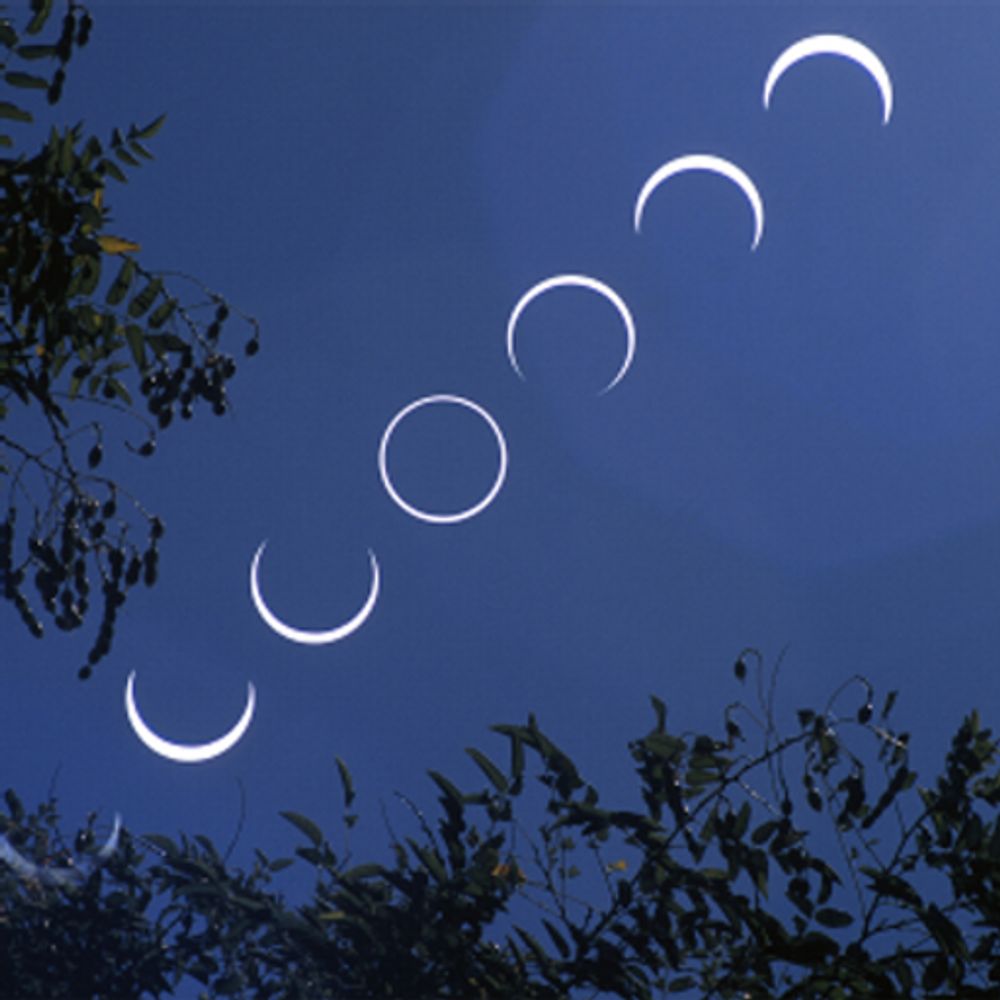
Eclipse preview for 2026.
Two lunar eclipses are on the way, along with a partial solar eclipse for much of Europe & North America.
And if you really like solar eclipses, you might want to relocate to Spain for the next couple years. 🧪🔭
Two lunar eclipses are on the way, along with a partial solar eclipse for much of Europe & North America.
And if you really like solar eclipses, you might want to relocate to Spain for the next couple years. 🧪🔭

2026 is a great year for eclipses. The 1st eclipse season starts with a remote annular solar eclipse on February 17th, spanning the Antarctic.
December 28, 2025 at 4:00 PM
Eclipse preview for 2026.
Two lunar eclipses are on the way, along with a partial solar eclipse for much of Europe & North America.
And if you really like solar eclipses, you might want to relocate to Spain for the next couple years. 🧪🔭
Two lunar eclipses are on the way, along with a partial solar eclipse for much of Europe & North America.
And if you really like solar eclipses, you might want to relocate to Spain for the next couple years. 🧪🔭