




Derek den Ouden, Paleosoricidologist
@denoudenderek.bsky.social
Evo Bio PhD student @ASU. Paleo MS @ETSU, Bio+Geo BS @IowaStateU. Trying to tame shrews, enjoyer of all Cenozoic oddballs. He/him, views mine.
Pinned


New profile, so here’s an intro post! I’m a paleontology student trying to figure out what fossil shrews were eating. It turns out the fossil record of shrews is full of oddballs, so I’m looking at their modern diversity to inform what fossil forms might have been doing. Shrew related antics ensue!
Reposted by Derek den Ouden, Paleosoricidologist

![Comic. [2x2 chart. Top left quadrant: seem like dinosaurs x are dinosaurs. Silhouettes of dinosaurs stegosaurus, triceratops, tyrannosaurus, velociraptor, and long-neck dinosaur. Top right quadrant: seem like dinosaurs x are not dinosaurs. Silhouettes of mosasaur, quetzalcoatlus, dimetrodon, plesiosaur, and pteranodon. Bottom left quadrant: don’t seem like dinosaurs x are dinosaurs. Silhouettes of penguin, egret, ostrich, pigeon, falcon. Bottom right: don’t seem like dinosaurs x are not dinosaurs. Silhouettes of squirrel, stapler, plant, person, and bicycle.]](https://cdn.bsky.app/img/feed_thumbnail/plain/did:plc:cz73r7iyiqn26upot4jtjdhk/bafkreihcxd5wcrrf5nxz3g4riglsrccbucmdns6kxrtmtj6gjgwqibp3fi@jpeg)
February 9, 2026 at 9:10 PM
Reposted by Derek den Ouden, Paleosoricidologist

Remarkable. Report of a Brazilian spiny-rayed fish dating to the Barremian stage of the Early Cretaceous, preceding the oldest known acanthomorphs by ~20 million years. Gondwanacanthus extends the roots of one of today's most prominent vertebrate radiations: onlinelibrary.wiley.com/doi/10.1002/...

February 10, 2026 at 2:48 PM
Remarkable. Report of a Brazilian spiny-rayed fish dating to the Barremian stage of the Early Cretaceous, preceding the oldest known acanthomorphs by ~20 million years. Gondwanacanthus extends the roots of one of today's most prominent vertebrate radiations: onlinelibrary.wiley.com/doi/10.1002/...
Reposted by Derek den Ouden, Paleosoricidologist

The idea that humans sit atop an evolutionary hierarchy dates back to 1866, when a scientist drew the first tree of life with "Man" at the top.
This inaccurate view still shapes how we think of the animal world, despite decades of genomic evidence proving evolution has no hierarchy.
buff.ly/dpXwi1r
This inaccurate view still shapes how we think of the animal world, despite decades of genomic evidence proving evolution has no hierarchy.
buff.ly/dpXwi1r

No animal alive today is ‘primitive’ – why are so many still labeled that way?
All species alive today, from chimpanzees to bacteria, are cousins that each have equally long lineages, rather than ancestors or descendants of one another.
theconversation.com
February 10, 2026 at 9:06 AM
The idea that humans sit atop an evolutionary hierarchy dates back to 1866, when a scientist drew the first tree of life with "Man" at the top.
This inaccurate view still shapes how we think of the animal world, despite decades of genomic evidence proving evolution has no hierarchy.
buff.ly/dpXwi1r
This inaccurate view still shapes how we think of the animal world, despite decades of genomic evidence proving evolution has no hierarchy.
buff.ly/dpXwi1r
Reposted by Derek den Ouden, Paleosoricidologist
Threadfins look like you plucked an early ray finned fish from the Permian or Triassic and brought it to the modern day
Close enough, welcome back Pteronisculus
Close enough, welcome back Pteronisculus


February 5, 2026 at 3:31 PM
Threadfins look like you plucked an early ray finned fish from the Permian or Triassic and brought it to the modern day
Close enough, welcome back Pteronisculus
Close enough, welcome back Pteronisculus
Reposted by Derek den Ouden, Paleosoricidologist
The bulky herbivore, Barylambda faberi, a pantodont from the Paleocene. #FossilFriday ⚒️🧪

February 6, 2026 at 12:55 PM
The bulky herbivore, Barylambda faberi, a pantodont from the Paleocene. #FossilFriday ⚒️🧪
Reposted by Derek den Ouden, Paleosoricidologist

here's a better link, not sure what happened with the one above www.nature.com/articles/s41...

Cellular-level preservation of cutaneous spikes in an Early Cretaceous iguanodontian dinosaur - Nature Ecology & Evolution
A juvenile iguanodontian from the Lower Cretaceous of China preserves both spikes and scales in its skin that are different from integumentary structures in either non-avian dinosaurs or extant squama...
www.nature.com
February 6, 2026 at 10:44 AM
here's a better link, not sure what happened with the one above www.nature.com/articles/s41...
Reposted by Derek den Ouden, Paleosoricidologist
a very warm welcome to haolong dongi, a fascinating hadrosauroid from the early cretaceous yixian formation described by huang et al. 🎉 the near-complete holotype preserves highly unique integumentary structures unknown in other dinosaurs
www.nature.com/articles/s41
(art by fabio manucci)
www.nature.com/articles/s41
(art by fabio manucci)

February 6, 2026 at 10:10 AM
a very warm welcome to haolong dongi, a fascinating hadrosauroid from the early cretaceous yixian formation described by huang et al. 🎉 the near-complete holotype preserves highly unique integumentary structures unknown in other dinosaurs
www.nature.com/articles/s41
(art by fabio manucci)
www.nature.com/articles/s41
(art by fabio manucci)
Threadfins look like you plucked an early ray finned fish from the Permian or Triassic and brought it to the modern day
Close enough, welcome back Pteronisculus
Close enough, welcome back Pteronisculus
February 5, 2026 at 3:31 PM
Threadfins look like you plucked an early ray finned fish from the Permian or Triassic and brought it to the modern day
Close enough, welcome back Pteronisculus
Close enough, welcome back Pteronisculus
Reposted by Derek den Ouden, Paleosoricidologist

Terror birds (Phorusrhacidae) ruled South America for ~40 Ma, but their growth was a mystery. New hindlimb osteohistology shows rapid, uninterrupted growth, heavy remodeling & cursorial stress in Oligocene Andrewsornis & Physornis.
Dreyer et al.: anatomypubs.onlinelibrary.wiley.com/doi/10.1002/...
Dreyer et al.: anatomypubs.onlinelibrary.wiley.com/doi/10.1002/...

January 27, 2026 at 12:00 PM
Terror birds (Phorusrhacidae) ruled South America for ~40 Ma, but their growth was a mystery. New hindlimb osteohistology shows rapid, uninterrupted growth, heavy remodeling & cursorial stress in Oligocene Andrewsornis & Physornis.
Dreyer et al.: anatomypubs.onlinelibrary.wiley.com/doi/10.1002/...
Dreyer et al.: anatomypubs.onlinelibrary.wiley.com/doi/10.1002/...
Reposted by Derek den Ouden, Paleosoricidologist
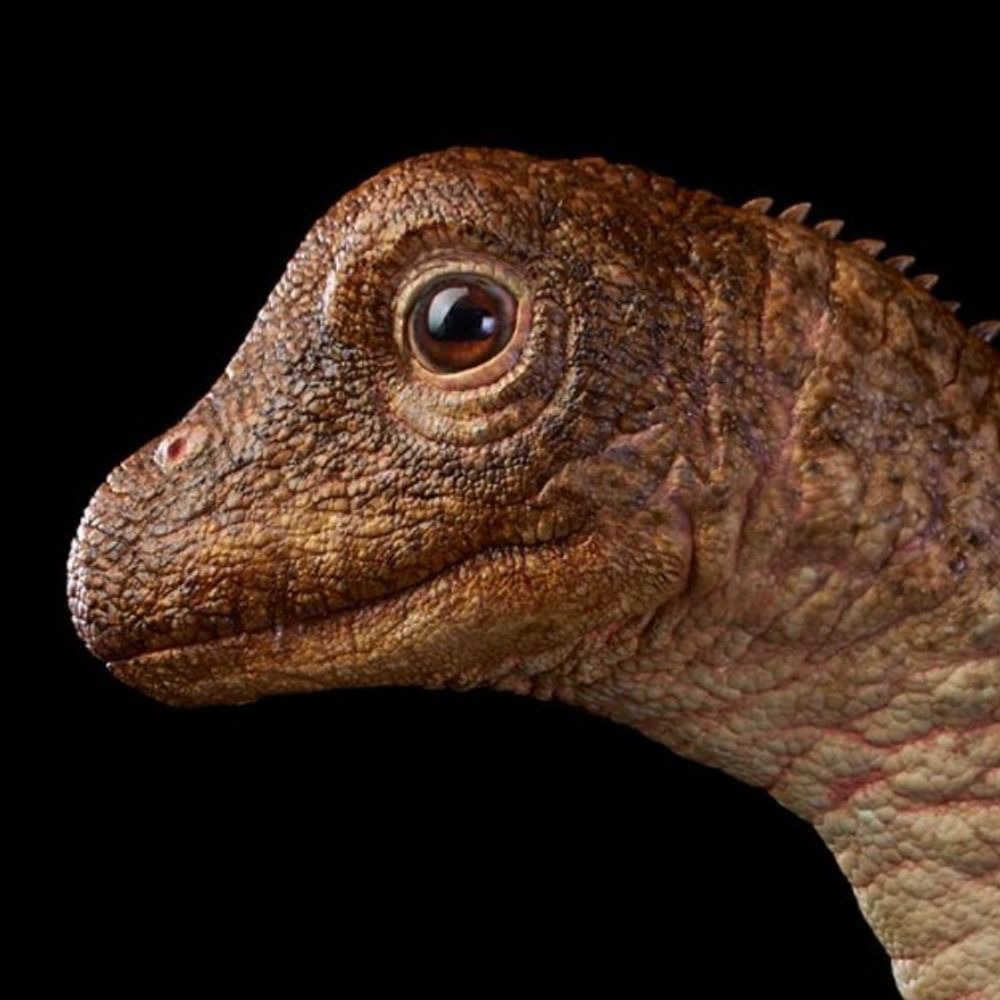
Mongolian Titan 🦕

January 25, 2026 at 9:48 PM
Mongolian Titan 🦕
Reposted by Derek den Ouden, Paleosoricidologist

Reposted by Derek den Ouden, Paleosoricidologist


January 25, 2026 at 7:36 PM
Reposted by Derek den Ouden, Paleosoricidologist

The Art and Science of #PrehistoricPlanetIceAge ... a new discussion from @skeletoncrewpaleo.bsky.social on YouTube, featuring me and Framestore's Russ and Dorothy youtu.be/IVu9Mfc38Es?...

The Art and Science of Prehistoric Planet: Ice Age
YouTube video by Skeleton Crew
youtu.be
January 25, 2026 at 11:34 AM
The Art and Science of #PrehistoricPlanetIceAge ... a new discussion from @skeletoncrewpaleo.bsky.social on YouTube, featuring me and Framestore's Russ and Dorothy youtu.be/IVu9Mfc38Es?...
Reposted by Derek den Ouden, Paleosoricidologist

Glass is an important aspect of specimen storage in most major natural history collections 🫙
By observing specimens housed in the Smithsonian National Museum of Natural History, this study outlines the impact of glass deterioration on their preservation:
doi.org/10.3897/nhcm.3.173156
By observing specimens housed in the Smithsonian National Museum of Natural History, this study outlines the impact of glass deterioration on their preservation:
doi.org/10.3897/nhcm.3.173156

January 23, 2026 at 11:36 AM
Glass is an important aspect of specimen storage in most major natural history collections 🫙
By observing specimens housed in the Smithsonian National Museum of Natural History, this study outlines the impact of glass deterioration on their preservation:
doi.org/10.3897/nhcm.3.173156
By observing specimens housed in the Smithsonian National Museum of Natural History, this study outlines the impact of glass deterioration on their preservation:
doi.org/10.3897/nhcm.3.173156
Reposted by Derek den Ouden, Paleosoricidologist

As a paleontologist, I'm not usually invested in any particular outcome of research, except to learn new things. However, I was saddened by the results of this one. Great work by Alex, but it doesn't look good for bison in the lower 48 over the next 75 years. www.frontiersin.org/journals/eco...

Frontiers | Significant northwest shift in suitable climate expected for North American bison by the year 2100
IntroductionMany species are shifting their geographic ranges in response to changing climate, and identifying climate impacts on future species distribution...
www.frontiersin.org
January 20, 2026 at 4:10 PM
As a paleontologist, I'm not usually invested in any particular outcome of research, except to learn new things. However, I was saddened by the results of this one. Great work by Alex, but it doesn't look good for bison in the lower 48 over the next 75 years. www.frontiersin.org/journals/eco...
Reposted by Derek den Ouden, Paleosoricidologist
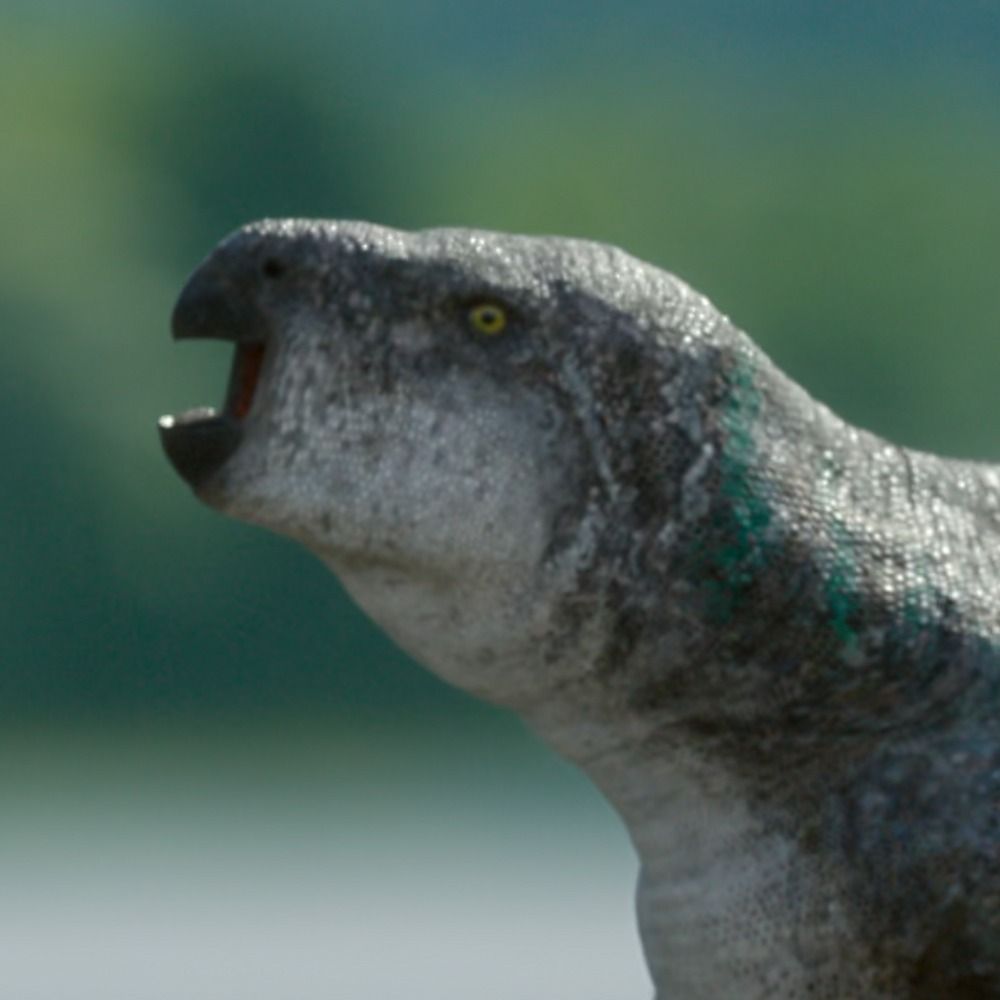
🔴BREAKING NEWS:
NEW #SurvivingEarth FOOTAGE FEATURING BABY ISCHIGUALASTIA RELEASED!
NEW #SurvivingEarth FOOTAGE FEATURING BABY ISCHIGUALASTIA RELEASED!

January 18, 2026 at 1:24 PM
🔴BREAKING NEWS:
NEW #SurvivingEarth FOOTAGE FEATURING BABY ISCHIGUALASTIA RELEASED!
NEW #SurvivingEarth FOOTAGE FEATURING BABY ISCHIGUALASTIA RELEASED!
Reposted by Derek den Ouden, Paleosoricidologist
Author disagrees with blog article. Posts entire review of a manuscript, 7 pages long and over 11000 words, in the blog comments. Don't believe me? Go see comments at... tetzoo.com/blog/2026/1/...

The Continuing Debate on Dinosaur Cognition — Tetrapod Zoology
The dinosaur cognition debate continues…
tetzoo.com
January 13, 2026 at 11:53 PM
Author disagrees with blog article. Posts entire review of a manuscript, 7 pages long and over 11000 words, in the blog comments. Don't believe me? Go see comments at... tetzoo.com/blog/2026/1/...
Reposted by Derek den Ouden, Paleosoricidologist

January 13, 2026 at 5:13 PM
Reposted by Derek den Ouden, Paleosoricidologist
Consoravis further reinforces how connected European and North American avifaunas were during the early Eocene, and adds additional data to help clarify the origins of passerines

January 13, 2026 at 5:13 PM
Consoravis further reinforces how connected European and North American avifaunas were during the early Eocene, and adds additional data to help clarify the origins of passerines
Reposted by Derek den Ouden, Paleosoricidologist

January 11, 2026 at 5:58 PM
Reposted by Derek den Ouden, Paleosoricidologist
The Western Association of Vertebrate Paleontology conference is coming up on February 14, hosted at the Alf Museum in Claremont, California. Abstract deadline is January 19. Lots of details at the updated conference website - www.wavp.us
Western Association of Vertebrate Paleontology
www.wavp.us
January 9, 2026 at 5:15 PM
The Western Association of Vertebrate Paleontology conference is coming up on February 14, hosted at the Alf Museum in Claremont, California. Abstract deadline is January 19. Lots of details at the updated conference website - www.wavp.us
Reposted by Derek den Ouden, Paleosoricidologist
Happy New Years🎉🎉
Hard to believe it's already our third annual Cenozoic Rewind. Lots of very cool stuff this past year, let’s get into it!
#Cenozoicrewind2025 Meet Dimartina pristina!
Hard to believe it's already our third annual Cenozoic Rewind. Lots of very cool stuff this past year, let’s get into it!
#Cenozoicrewind2025 Meet Dimartina pristina!

January 1, 2026 at 8:05 PM
Happy New Years🎉🎉
Hard to believe it's already our third annual Cenozoic Rewind. Lots of very cool stuff this past year, let’s get into it!
#Cenozoicrewind2025 Meet Dimartina pristina!
Hard to believe it's already our third annual Cenozoic Rewind. Lots of very cool stuff this past year, let’s get into it!
#Cenozoicrewind2025 Meet Dimartina pristina!
Arctisorex polaris, ~3.5 million years ago:

December 23, 2025 at 7:56 PM
Arctisorex polaris, ~3.5 million years ago:
Reposted by Derek den Ouden, Paleosoricidologist
Reposted by Derek den Ouden, Paleosoricidologist
These critters all lived in the first six million years of the Cenozoic and each one was, in its time, the biggest mammal that had ever existed.
It took some work to balance the intended message, desired visual impact, and tech limitations, but I think the latest version of this display works well.
It took some work to balance the intended message, desired visual impact, and tech limitations, but I think the latest version of this display works well.

December 23, 2025 at 3:27 PM
These critters all lived in the first six million years of the Cenozoic and each one was, in its time, the biggest mammal that had ever existed.
It took some work to balance the intended message, desired visual impact, and tech limitations, but I think the latest version of this display works well.
It took some work to balance the intended message, desired visual impact, and tech limitations, but I think the latest version of this display works well.