


Catherine Dulac
@dulaclab.bsky.social
Identifying the neural basis of innate social behaviors using molecular and genetic tools @Harvard @HHMINEWS
Pinned
Catherine Dulac
@dulaclab.bsky.social
· Dec 9
www.biorxiv.org
I am thrilled to share our latest work led by @zurisullivan.bsky.social in collaboration with @moffittlab.bsky.social ! We find that the brain encodes distinct, pathogen-specific sickness states across behavior, physiology, neural activity, and gene expression 1/6
www.biorxiv.org/content/10.6...
www.biorxiv.org/content/10.6...
Reposted by Catherine Dulac
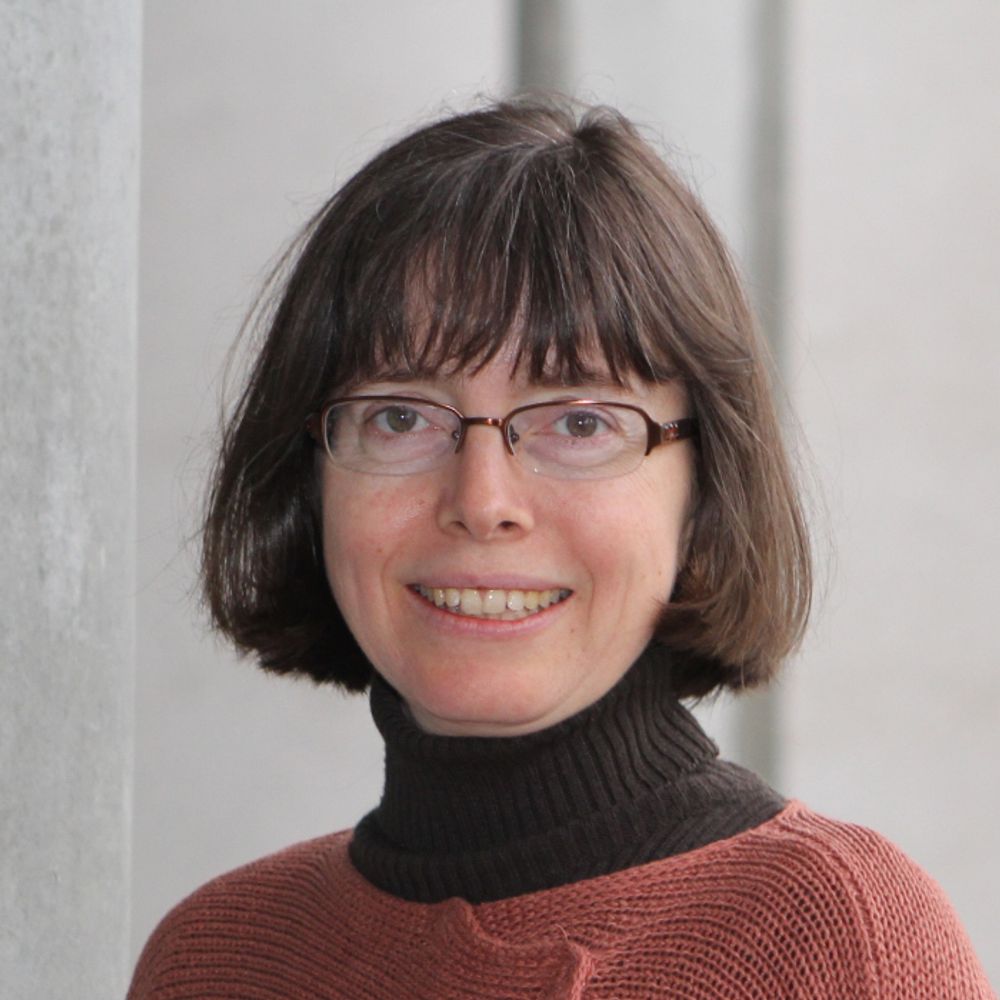
It is an incredible honour to receive this prize. I thank all members of my lab over the years, and my wonderful colleagues and collaborators, who have joined, inspired and supported me on this exciting journey. ❤️ Biozentrum is a fantastic place to do science!

Prof. Fiona Doetsch has been awarded the 2026 Louis-Jeantet Prize for Medicine!
Her discoveries reveal how neural stem cells support lifelong brain plasticity and repair. 🧠
Read more: www.biozentrum.unibas.ch/news/detail/...
Her discoveries reveal how neural stem cells support lifelong brain plasticity and repair. 🧠
Read more: www.biozentrum.unibas.ch/news/detail/...

January 15, 2026 at 7:28 PM
It is an incredible honour to receive this prize. I thank all members of my lab over the years, and my wonderful colleagues and collaborators, who have joined, inspired and supported me on this exciting journey. ❤️ Biozentrum is a fantastic place to do science!
Reposted by Catherine Dulac
Excited to share @rbrianroome.bsky.social ‘s beautiful paper on development of the dorsal horn of the mouse spinal cord @science.org
This is how the anatomical organization and cell types that process pain, touch, body position and more are laid down.
www.science.org/doi/10.1126/...
This is how the anatomical organization and cell types that process pain, touch, body position and more are laid down.
www.science.org/doi/10.1126/...

Ontogeny of the spinal cord dorsal horn
The dorsal horn of the mammalian spinal cord is organized into laminae where each layer is populated by different neuron types, has distinctive circuit connections, and plays specialized roles in beha...
www.science.org
January 8, 2026 at 7:59 PM
Excited to share @rbrianroome.bsky.social ‘s beautiful paper on development of the dorsal horn of the mouse spinal cord @science.org
This is how the anatomical organization and cell types that process pain, touch, body position and more are laid down.
www.science.org/doi/10.1126/...
This is how the anatomical organization and cell types that process pain, touch, body position and more are laid down.
www.science.org/doi/10.1126/...
Reposted by Catherine Dulac

Thrilled to start my lab at the @whiteheadinstitute.bsky.social @mit.edu and to join such a special community of creative and inspiring colleagues. The Sullivan Lab asks (1) how and (2) why infections make us sick, bridging immunology and neuroscience to understand host defense at the organism scale

“I want everyone in my lab to be exposed to many ways of thinking about biology,” says Whitehead Institute’s newest Member, immunologist Zuri Sullivan. “Creative science often comes from making connections across systems, and Whitehead is uniquely well-suited for that.”
shorturl.at/EFsmh
shorturl.at/EFsmh

January 6, 2026 at 2:08 PM
Thrilled to start my lab at the @whiteheadinstitute.bsky.social @mit.edu and to join such a special community of creative and inspiring colleagues. The Sullivan Lab asks (1) how and (2) why infections make us sick, bridging immunology and neuroscience to understand host defense at the organism scale
Ascona meetings on neural circuits are amazing conferences in a beautiful setting in Switzerland spanning all scales from genetics and micro-circuit cracking to high level cognition. Check asconacircuits.org for the 2026 program and register soon, as it typically reaches capacity very quickly 🧠🧪
January 5, 2026 at 12:23 PM
Ascona meetings on neural circuits are amazing conferences in a beautiful setting in Switzerland spanning all scales from genetics and micro-circuit cracking to high level cognition. Check asconacircuits.org for the 2026 program and register soon, as it typically reaches capacity very quickly 🧠🧪
Just finished my first book of the year: a sober, courageous, yet emotional, eye-opening and haunting narrative by an Ukrainian writer, father and staunch pacifist who enlisted the day his country was invaded. A must read for anyone concerned by current world affairs...

January 3, 2026 at 6:05 PM
Just finished my first book of the year: a sober, courageous, yet emotional, eye-opening and haunting narrative by an Ukrainian writer, father and staunch pacifist who enlisted the day his country was invaded. A must read for anyone concerned by current world affairs...
Reposted by Catherine Dulac
Way back in 1999, Kenji Doya sketched a big picture theory of the brain:
1️⃣The cerebellum is specialized for supervised learning
2️⃣The basal ganglia are for reinforcement learning
3️⃣The cerebral cortex is for unsupervised learning
How does this hold up in 2026? www.sciencedirect.com/science/arti...
1️⃣The cerebellum is specialized for supervised learning
2️⃣The basal ganglia are for reinforcement learning
3️⃣The cerebral cortex is for unsupervised learning
How does this hold up in 2026? www.sciencedirect.com/science/arti...

January 1, 2026 at 3:36 PM
Way back in 1999, Kenji Doya sketched a big picture theory of the brain:
1️⃣The cerebellum is specialized for supervised learning
2️⃣The basal ganglia are for reinforcement learning
3️⃣The cerebral cortex is for unsupervised learning
How does this hold up in 2026? www.sciencedirect.com/science/arti...
1️⃣The cerebellum is specialized for supervised learning
2️⃣The basal ganglia are for reinforcement learning
3️⃣The cerebral cortex is for unsupervised learning
How does this hold up in 2026? www.sciencedirect.com/science/arti...
Reposted by Catherine Dulac

Smarter Microscopes, Faster Maps: Lichtman Lab’s “SmartEM” Brings AI to Connectomics 🧠 🧪🧬 #AcademicSky #higherEd
www.mcb.harvard.edu/department/n... @yaronmr.bsky.social @harvard.edu @harvardbrainsci.bsky.social @natmethods.nature.com @rachellegaudet.bsky.social @thermofishersci.bsky.social
www.mcb.harvard.edu/department/n... @yaronmr.bsky.social @harvard.edu @harvardbrainsci.bsky.social @natmethods.nature.com @rachellegaudet.bsky.social @thermofishersci.bsky.social

Smarter Microscopes, Faster Maps: Lichtman Lab’s “SmartEM” Brings AI to Connectomics - Harvard University - Department of Molecular & Cellular Biology
A new paper in Nature Methods (PDF) from the labs of MCB’s Jeff Lichtman and Aravinthan Samuel, of the department of physics and Center for Brain Science, introduces […]
www.mcb.harvard.edu
December 31, 2025 at 7:00 PM
Smarter Microscopes, Faster Maps: Lichtman Lab’s “SmartEM” Brings AI to Connectomics 🧠 🧪🧬 #AcademicSky #higherEd
www.mcb.harvard.edu/department/n... @yaronmr.bsky.social @harvard.edu @harvardbrainsci.bsky.social @natmethods.nature.com @rachellegaudet.bsky.social @thermofishersci.bsky.social
www.mcb.harvard.edu/department/n... @yaronmr.bsky.social @harvard.edu @harvardbrainsci.bsky.social @natmethods.nature.com @rachellegaudet.bsky.social @thermofishersci.bsky.social
Reposted by Catherine Dulac
Harvard College Senior Fajr Khan Named 2025 Pakistan Rhodes Scholar #AcademicSky #higherEd
www.mcb.harvard.edu/department/n... @naoshigeuchida.bsky.social @rachellegaudet.bsky.social @harvard.edu @ox.ac.uk
www.mcb.harvard.edu/department/n... @naoshigeuchida.bsky.social @rachellegaudet.bsky.social @harvard.edu @ox.ac.uk

Harvard College Senior Fajr Khan Named 2025 Pakistan Rhodes Scholar - Harvard University - Department of Molecular & Cellular Biology
Harvard College senior Fajr Khan, a neuroscience concentrator whose work spans maternal mental health, child psychology, and the biological foundations of psychiatric illness, has been selected as a [...
www.mcb.harvard.edu
December 22, 2025 at 7:00 PM
Harvard College Senior Fajr Khan Named 2025 Pakistan Rhodes Scholar #AcademicSky #higherEd
www.mcb.harvard.edu/department/n... @naoshigeuchida.bsky.social @rachellegaudet.bsky.social @harvard.edu @ox.ac.uk
www.mcb.harvard.edu/department/n... @naoshigeuchida.bsky.social @rachellegaudet.bsky.social @harvard.edu @ox.ac.uk
Reposted by Catherine Dulac
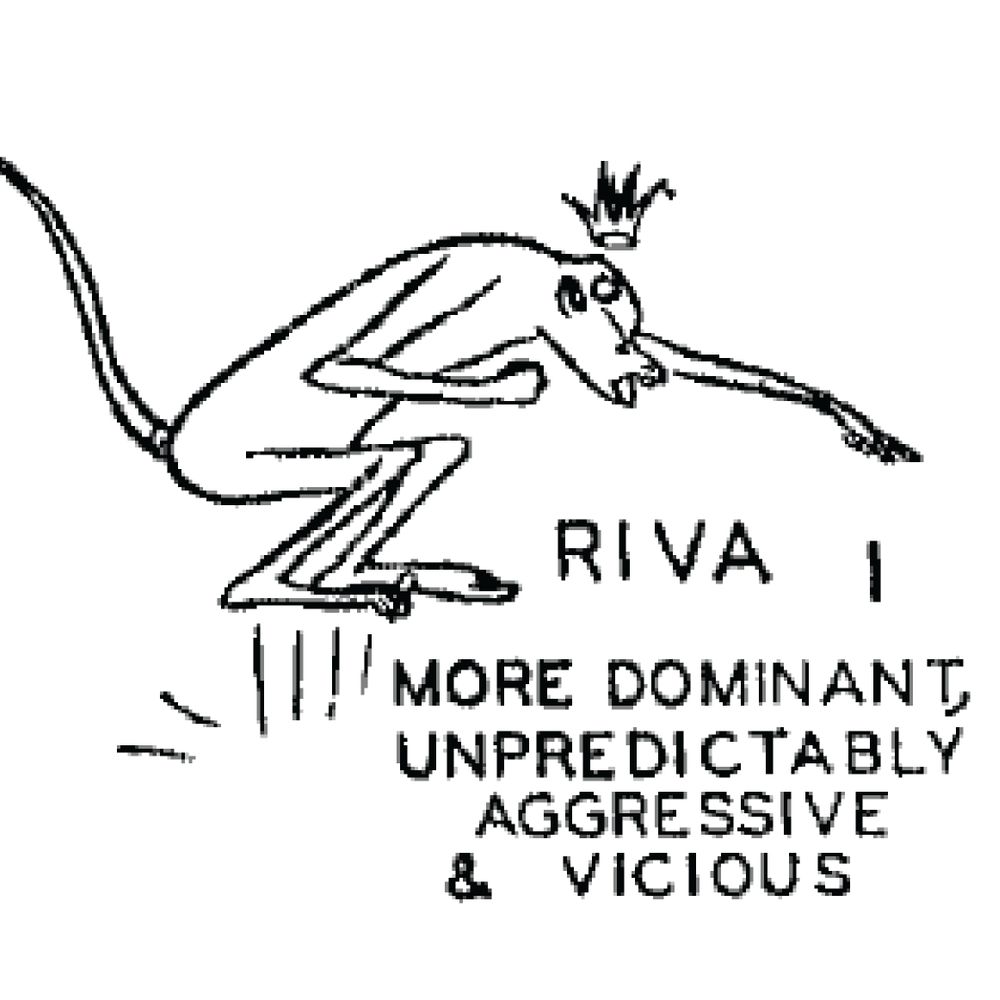
Want to track the dynamics of estrogen in the brain across long periods of time? New paper as part of very fun collab with team UCLA Ed Van Veen and Steph Correa! We use a specialized optical reporter and show that this is possible and actually very easy! www.biorxiv.org/content/10.6...
www.biorxiv.org
December 16, 2025 at 8:52 PM
Want to track the dynamics of estrogen in the brain across long periods of time? New paper as part of very fun collab with team UCLA Ed Van Veen and Steph Correa! We use a specialized optical reporter and show that this is possible and actually very easy! www.biorxiv.org/content/10.6...
Reposted by Catherine Dulac
Nancy Kleckner Recognized for Pioneering Work in Chromosome Dynamics 🧪🧬 #AcademicSky #higherEd
www.mcb.harvard.edu/department/n... @rachellegaudet.bsky.social
www.mcb.harvard.edu/department/n... @rachellegaudet.bsky.social

Nancy Kleckner Recognized for Pioneering Work in Chromosome Dynamics - Harvard University - Department of Molecular & Cellular Biology
Nancy Kleckner, the Herchel Smith Professor of Molecular Biology, has been awarded the 2025 Charles E. Helmstetter Prize Lifetime Achievement Award (PDF) in recognition of her groundbreaking research ...
www.mcb.harvard.edu
December 15, 2025 at 10:02 PM
Nancy Kleckner Recognized for Pioneering Work in Chromosome Dynamics 🧪🧬 #AcademicSky #higherEd
www.mcb.harvard.edu/department/n... @rachellegaudet.bsky.social
www.mcb.harvard.edu/department/n... @rachellegaudet.bsky.social
New paper alert!!...🤩 Led by @blogeman.bsky.social, we identify how cell type-specific hormonal responses in the hypothalamus tunes parenting behavior in males and females 🐭🧠🍼. Highlights in thread 👇 1/6
www.biorxiv.org/content/10.6...
www.biorxiv.org/content/10.6...

Cell Type-Specific Hormonal Signaling Configures Hypothalamic Circuits for Parenting
Parenting behavior emerges from hormonally sensitive circuits, but how distinct circuit components are affected by, and contribute to, sex and state dependent changes in infant caregiving remains uncl...
www.biorxiv.org
December 13, 2025 at 2:03 PM
New paper alert!!...🤩 Led by @blogeman.bsky.social, we identify how cell type-specific hormonal responses in the hypothalamus tunes parenting behavior in males and females 🐭🧠🍼. Highlights in thread 👇 1/6
www.biorxiv.org/content/10.6...
www.biorxiv.org/content/10.6...
Reposted by Catherine Dulac
Ancient Plants Used Infrared Radiation to Attract Their Pollinators #research 🧠 🧪🧬 #AcademicSky #higherEd
www.mcb.harvard.edu/department/n... @nbellono.bsky.social @rachellegaudet.bsky.social @harvardoeb.bsky.social @science.org
www.mcb.harvard.edu/department/n... @nbellono.bsky.social @rachellegaudet.bsky.social @harvardoeb.bsky.social @science.org

Ancient Plants Used Infrared Radiation to Attract Their Pollinators - Harvard University - Department of Molecular & Cellular Biology
Long before flowers painted the planet in brilliant colors, some of Earth’s earliest plants were glowing—not with pigment, but with heat. A new study from the lab of […]
www.mcb.harvard.edu
December 11, 2025 at 7:21 PM
Ancient Plants Used Infrared Radiation to Attract Their Pollinators #research 🧠 🧪🧬 #AcademicSky #higherEd
www.mcb.harvard.edu/department/n... @nbellono.bsky.social @rachellegaudet.bsky.social @harvardoeb.bsky.social @science.org
www.mcb.harvard.edu/department/n... @nbellono.bsky.social @rachellegaudet.bsky.social @harvardoeb.bsky.social @science.org
Reposted by Catherine Dulac

I am thrilled to share our latest work led by @zurisullivan.bsky.social in collaboration with @moffittlab.bsky.social ! We find that the brain encodes distinct, pathogen-specific sickness states across behavior, physiology, neural activity, and gene expression 1/6
www.biorxiv.org/content/10.6...
www.biorxiv.org/content/10.6...
www.biorxiv.org
December 9, 2025 at 12:05 PM
I am thrilled to share our latest work led by @zurisullivan.bsky.social in collaboration with @moffittlab.bsky.social ! We find that the brain encodes distinct, pathogen-specific sickness states across behavior, physiology, neural activity, and gene expression 1/6
www.biorxiv.org/content/10.6...
www.biorxiv.org/content/10.6...
Reposted by Catherine Dulac
MCB Scientists Help Reveal Structure of Cancer-Linked DNA Damage in Science Study 🧪 🧬 #AcademicSky #higherEd #research
www.mcb.harvard.edu/department/n... @rachellegaudet.bsky.social @hekstralab.bsky.social
www.mcb.harvard.edu/department/n... @rachellegaudet.bsky.social @hekstralab.bsky.social

MCB Scientists Help Reveal Structure of Cancer-Linked DNA Damage in Science Study - Harvard University - Department of Molecular & Cellular Biology
A long-standing mystery in microbiome research—how a gut-bacterial toxin physically damages human DNA—has finally been solved through a close collaboration led in part by researchers in the Victoria [...
www.mcb.harvard.edu
December 4, 2025 at 7:32 PM
MCB Scientists Help Reveal Structure of Cancer-Linked DNA Damage in Science Study 🧪 🧬 #AcademicSky #higherEd #research
www.mcb.harvard.edu/department/n... @rachellegaudet.bsky.social @hekstralab.bsky.social
www.mcb.harvard.edu/department/n... @rachellegaudet.bsky.social @hekstralab.bsky.social
Reposted by Catherine Dulac
Spotlight: Ashley Johnson Brings a Student-Centered Vision and a Scientist’s Heart to MCB 🧪🧬 #AcademicSky #higherEd
www.mcb.harvard.edu/department/n... @rachellegaudet.bsky.social @dulaclab.bsky.social @rivaselenarivas.bsky.social @hekstralab.bsky.social
www.mcb.harvard.edu/department/n... @rachellegaudet.bsky.social @dulaclab.bsky.social @rivaselenarivas.bsky.social @hekstralab.bsky.social
Spotlight: Ashley Johnson Brings a Student-Centered Vision and a Scientist’s Heart to MCB - Harvard University - Department of Molecular & Cellular Biology
When Ashley Johnson stepped into the role of Interim Program Administrator for the Molecular and Cellular Biology (MCB) and Chemical and Physical Biology (CPB) concentrations this past May, […]
www.mcb.harvard.edu
December 1, 2025 at 5:52 PM
Spotlight: Ashley Johnson Brings a Student-Centered Vision and a Scientist’s Heart to MCB 🧪🧬 #AcademicSky #higherEd
www.mcb.harvard.edu/department/n... @rachellegaudet.bsky.social @dulaclab.bsky.social @rivaselenarivas.bsky.social @hekstralab.bsky.social
www.mcb.harvard.edu/department/n... @rachellegaudet.bsky.social @dulaclab.bsky.social @rivaselenarivas.bsky.social @hekstralab.bsky.social
Reposted by Catherine Dulac
Australia just recorded zero cervical cancer cases in women under 25 for the first time since records began in 1982. The amazing result of HPV vaccination.
November 28, 2025 at 8:44 PM
Australia just recorded zero cervical cancer cases in women under 25 for the first time since records began in 1982. The amazing result of HPV vaccination.
Congratulations to my wonderful colleague Nao Uchida @naoshigeuchida.bsky.social now Jeff C. Tarr Professor! 👏🤩🧠🎉
Naoshige Uchida Named Jeff C.Tarr Professor; Launches New Simons-Funded Autism Research Collaboration 🧠 🧪🧬 #AcademicSky #higherEd
www.mcb.harvard.edu/department/n... @rachellegaudet.bsky.social @naoshigeuchida.bsky.social @neurovenki.bsky.social @dulaclab.bsky.social @harvardbrainsci.bsky.social
www.mcb.harvard.edu/department/n... @rachellegaudet.bsky.social @naoshigeuchida.bsky.social @neurovenki.bsky.social @dulaclab.bsky.social @harvardbrainsci.bsky.social

Naoshige Uchida Named Jeff C.Tarr Professor; Launches New Simons-Funded Autism Research Collaboration - Harvard University - Department of Molecular & Cellular Biology
MCB is pleased to announce that Naoshige (Nao) Uchida, a leading neuroscientist whose work has reshaped our understanding of learning, decision-making, and sensory processing, has been appointed the [...
www.mcb.harvard.edu
November 25, 2025 at 11:45 PM
Congratulations to my wonderful colleague Nao Uchida @naoshigeuchida.bsky.social now Jeff C. Tarr Professor! 👏🤩🧠🎉
Reposted by Catherine Dulac
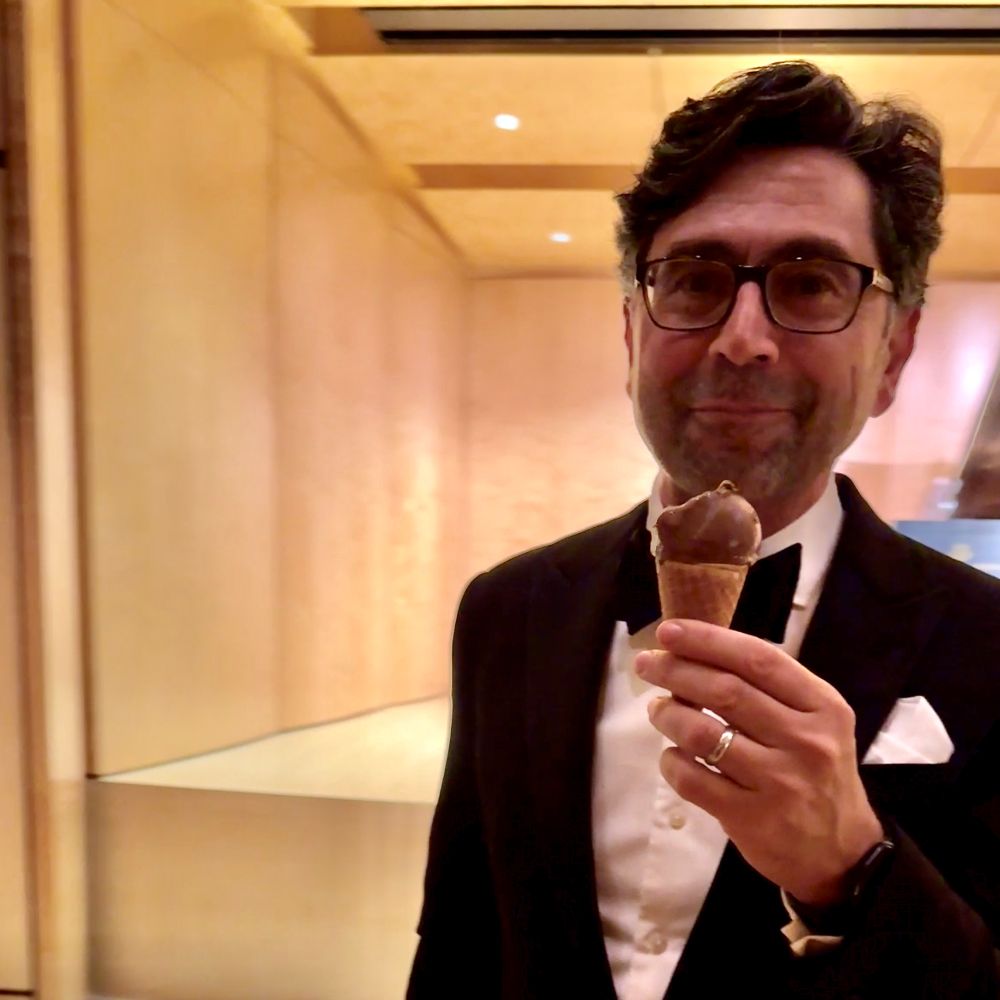
Great story by @carlzimmer.com in @nytimes.com that nicely conveys the excitement for the emerging field of interoception. @dulaclab.bsky.social and others are featured, including my tattoo 😳!
Gift article link: www.nytimes.com/2025/11/25/s...
Gift article link: www.nytimes.com/2025/11/25/s...
November 25, 2025 at 1:42 PM
Great story by @carlzimmer.com in @nytimes.com that nicely conveys the excitement for the emerging field of interoception. @dulaclab.bsky.social and others are featured, including my tattoo 😳!
Gift article link: www.nytimes.com/2025/11/25/s...
Gift article link: www.nytimes.com/2025/11/25/s...
Reposted by Catherine Dulac

Congratulations to all the young stars recognized, but a special shout out to my new colleague, the amazing @sueyeonchung.bsky.social!

In @thetransmitter.bsky.social’s Rising Stars of Neuroscience 2025, we recognize 25 early-career researchers who have made outstanding scientific contributions and demonstrated a commitment to mentoring and community-building in neuroscience.
#neuroskyence #StateOfNeuroscience
bit.ly/4rnFnyQ
#neuroskyence #StateOfNeuroscience
bit.ly/4rnFnyQ
November 24, 2025 at 2:53 PM
Congratulations to all the young stars recognized, but a special shout out to my new colleague, the amazing @sueyeonchung.bsky.social!
Rising junior and senior undergrads: this is a terrific opportunity for a 9 weeks summer internship as a Cech Fellow in an HHMI lab: deadline for applications is December 22!

Calling all rising juniors & seniors: Interested in biological or biomedical research? Applications for our ’26 Summer Undergraduate Research Experience Program are now open! Nine weeks, hands-on research, & mentorship from some of the nation’s top scientists — learn more: bit.ly/CechFellows

Summer Undergraduate Research Experience | HHMI
The Cech Fellows Program is a paid, nine-week summer research experience empowering the next generation of scientific leaders.
bit.ly
November 21, 2025 at 7:18 PM
Rising junior and senior undergrads: this is a terrific opportunity for a 9 weeks summer internship as a Cech Fellow in an HHMI lab: deadline for applications is December 22!
Reposted by Catherine Dulac
Re-upping this - Neuropeeps! We have a TT Job in my wonderful department at Brandeis! First consideration to applications received by Dec 15 (but why wait?)
www.nature.com/naturecareer...
www.nature.com/naturecareer...

Assistant Professor in Biology and Neuroscience Program - Waltham, Massachusetts (US) job with Brandeis University | 12848464
The Department of Biology and the Program in Neuroscience at Brandeis University invite applications for a tenure-track Assistant Professor positio...
www.nature.com
November 20, 2025 at 3:03 PM
Re-upping this - Neuropeeps! We have a TT Job in my wonderful department at Brandeis! First consideration to applications received by Dec 15 (but why wait?)
www.nature.com/naturecareer...
www.nature.com/naturecareer...
Dear friends, colleagues, Harvard community and beyond: this is the season to help individuals and families in need, and the needs this year are very high! Please repost and contribute to this effort with 🥫or 💰 donations 🙏 🙏🙏
@harvardmcb.bsky.social @harvard.edu @harvardbrainsci.bsky.social
@harvardmcb.bsky.social @harvard.edu @harvardbrainsci.bsky.social
MCB Community Task Force Launches Food Drive for the Cambridge Community Center #AcademicSky #higherEd
www.mcb.harvard.edu/department/n... @rachellegaudet.bsky.social @cryptogenomicon.bsky.social @neurovenki.bsky.social @dulaclab.bsky.social @naoshigeuchida.bsky.social @harvard.edu
www.mcb.harvard.edu/department/n... @rachellegaudet.bsky.social @cryptogenomicon.bsky.social @neurovenki.bsky.social @dulaclab.bsky.social @naoshigeuchida.bsky.social @harvard.edu

MCB Community Task Force Launches Food Drive for the Cambridge Community Center - Harvard University - Department of Molecular & Cellular Biology
The MCB Community Task Force (CTF) is pleased to announce a food drive to benefit the Cambridge Community Center (CCC), a local organization dedicated to supporting families through […]
www.mcb.harvard.edu
November 18, 2025 at 2:43 PM
Dear friends, colleagues, Harvard community and beyond: this is the season to help individuals and families in need, and the needs this year are very high! Please repost and contribute to this effort with 🥫or 💰 donations 🙏 🙏🙏
@harvardmcb.bsky.social @harvard.edu @harvardbrainsci.bsky.social
@harvardmcb.bsky.social @harvard.edu @harvardbrainsci.bsky.social
Reposted by Catherine Dulac
Rebecka Sepela Receives L’Oréal USA For Women in Science Fellowship 🧠 🧪🧬 #AcademicSky #higherEd
www.mcb.harvard.edu/department/n...
@nbellono.bsky.social @rachellegaudet.bsky.social @dulaclab.bsky.social @naoshigeuchida.bsky.social @cryptogenomicon.bsky.social @harvardbrainsci.bsky.social
www.mcb.harvard.edu/department/n...
@nbellono.bsky.social @rachellegaudet.bsky.social @dulaclab.bsky.social @naoshigeuchida.bsky.social @cryptogenomicon.bsky.social @harvardbrainsci.bsky.social

Rebecka Sepela Receives L’Oréal USA For Women in Science Fellowship - Harvard University - Department of Molecular & Cellular Biology
MCB postdoctoral fellow Rebecka Sepela has been selected as one of the 2025 L’Oréal USA For Women in Science (FWIS) Fellows, a prestigious honor recognizing early-career scientists whose […]
www.mcb.harvard.edu
November 14, 2025 at 8:21 PM
Rebecka Sepela Receives L’Oréal USA For Women in Science Fellowship 🧠 🧪🧬 #AcademicSky #higherEd
www.mcb.harvard.edu/department/n...
@nbellono.bsky.social @rachellegaudet.bsky.social @dulaclab.bsky.social @naoshigeuchida.bsky.social @cryptogenomicon.bsky.social @harvardbrainsci.bsky.social
www.mcb.harvard.edu/department/n...
@nbellono.bsky.social @rachellegaudet.bsky.social @dulaclab.bsky.social @naoshigeuchida.bsky.social @cryptogenomicon.bsky.social @harvardbrainsci.bsky.social
An remarkable new undergraduate course conceived and taught by our amazing colleague and Dean of Science Jeff Lichtman: "Genuinely Hard Problems" I wish I was an undergrad again!... 🤣🧪🧬🧠
@harvardmcb.bsky.social @harvardbrainsci.bsky.social @harvard.edu
news.harvard.edu/gazette/stor...
@harvardmcb.bsky.social @harvardbrainsci.bsky.social @harvard.edu
news.harvard.edu/gazette/stor...

No one knows the answer, and that’s the point — Harvard Gazette
“Genuinely Hard Problems” pilots novel approach to scientific education.
news.harvard.edu
November 12, 2025 at 12:15 PM
An remarkable new undergraduate course conceived and taught by our amazing colleague and Dean of Science Jeff Lichtman: "Genuinely Hard Problems" I wish I was an undergrad again!... 🤣🧪🧬🧠
@harvardmcb.bsky.social @harvardbrainsci.bsky.social @harvard.edu
news.harvard.edu/gazette/stor...
@harvardmcb.bsky.social @harvardbrainsci.bsky.social @harvard.edu
news.harvard.edu/gazette/stor...