


Dr. Sarah Biddle Leslie (she/they)
@extragalactic.bsky.social
Postdoctoral fellow at Center for Astrophysics | Harvard & Smithsonian | Space Art | Galaxy evolution | Mental health | Australian, disabled cat parent.
Instagram: @Fashionableastronomy
Instagram: @Fashionableastronomy
Happy LGBTQinSTEM Day!! I just ordered a pin for myself and a pin for my trans femme partner who is also called Robin... I hope she never gets sick of my robin themed cards and gifts... Like this card I painted digitally with the robin's egg nebula. 🐡

November 19, 2025 at 4:15 AM
Happy LGBTQinSTEM Day!! I just ordered a pin for myself and a pin for my trans femme partner who is also called Robin... I hope she never gets sick of my robin themed cards and gifts... Like this card I painted digitally with the robin's egg nebula. 🐡
LOVE IT!
November 18, 2025 at 1:14 AM
LOVE IT!
I look forwards to seeing what the Vera C. Rubin observatory will help reveal about the universe.
Here is a timelapse (condensed into 30s) of my artwork from the software I use, Procreate (on ipad). #sciart
Here is a timelapse (condensed into 30s) of my artwork from the software I use, Procreate (on ipad). #sciart
November 18, 2025 at 1:12 AM
I look forwards to seeing what the Vera C. Rubin observatory will help reveal about the universe.
Here is a timelapse (condensed into 30s) of my artwork from the software I use, Procreate (on ipad). #sciart
Here is a timelapse (condensed into 30s) of my artwork from the software I use, Procreate (on ipad). #sciart
In June, @harvardplatestacks.bsky.social held an event celebrating a new U.S. quarter honouring Dr Vera Rubin. Her colleagues and granddaughter shared stories: Vera was not only an amazing scientist, but she was also warm, down-to-earth, loving, curious, and an advocate for women astronomers. (4/5)
November 18, 2025 at 1:12 AM
In June, @harvardplatestacks.bsky.social held an event celebrating a new U.S. quarter honouring Dr Vera Rubin. Her colleagues and granddaughter shared stories: Vera was not only an amazing scientist, but she was also warm, down-to-earth, loving, curious, and an advocate for women astronomers. (4/5)
Dr Vera Rubin changed the way we view the universe. Her meticulous observational work showed that galaxies were rotating faster than expected. Her work convinced scientists that dark matter must exist, and that there’s far more of it than regular matter. 🌌 (3/5)
November 18, 2025 at 1:12 AM
Dr Vera Rubin changed the way we view the universe. Her meticulous observational work showed that galaxies were rotating faster than expected. Her work convinced scientists that dark matter must exist, and that there’s far more of it than regular matter. 🌌 (3/5)
The inspiration image was created in May 2025 and combines 678 separate images, allowing us to see the faintest details. The picture shows the Trifid nebula (top right, blue) and the Lagoon nebula (central, pink). You can read more about them here: rubinobservatory.org/news/rubin-f... (2/5)

Trifid and Lagoon Nebulae | Rubin Observatory
Get a Rubin's-eye view of the Trifid and Lagoon Nebulae
rubinobservatory.org
November 18, 2025 at 1:12 AM
The inspiration image was created in May 2025 and combines 678 separate images, allowing us to see the faintest details. The picture shows the Trifid nebula (top right, blue) and the Lagoon nebula (central, pink). You can read more about them here: rubinobservatory.org/news/rubin-f... (2/5)
New frontiers 🔭🎨
This art was inspired by one of the first images released by the Vera C. Rubin Observatory.
The Rubin Observatory will capture images of the entire sky every few days using the 3200 megapixel LSST camera, allowing astronomers to identify and study targets that move or change. (1/5)
This art was inspired by one of the first images released by the Vera C. Rubin Observatory.
The Rubin Observatory will capture images of the entire sky every few days using the 3200 megapixel LSST camera, allowing astronomers to identify and study targets that move or change. (1/5)

November 18, 2025 at 1:12 AM
New frontiers 🔭🎨
This art was inspired by one of the first images released by the Vera C. Rubin Observatory.
The Rubin Observatory will capture images of the entire sky every few days using the 3200 megapixel LSST camera, allowing astronomers to identify and study targets that move or change. (1/5)
This art was inspired by one of the first images released by the Vera C. Rubin Observatory.
The Rubin Observatory will capture images of the entire sky every few days using the 3200 megapixel LSST camera, allowing astronomers to identify and study targets that move or change. (1/5)
Thank you Jonathan for your decades of work shaping such an amazing program! Very cool to think about/see how many people's lives you've influenced.
32 years of the SAO Astronomy REU summer program
planet4589.org/jcm/pics/int...
planet4589.org/jcm/pics/int...

August 15, 2025 at 4:52 AM
Thank you Jonathan for your decades of work shaping such an amazing program! Very cool to think about/see how many people's lives you've influenced.
Wowowow! That was quick! These look incredible!
June 11, 2025 at 6:45 PM
Wowowow! That was quick! These look incredible!
Reposted by Dr. Sarah Biddle Leslie (she/they)
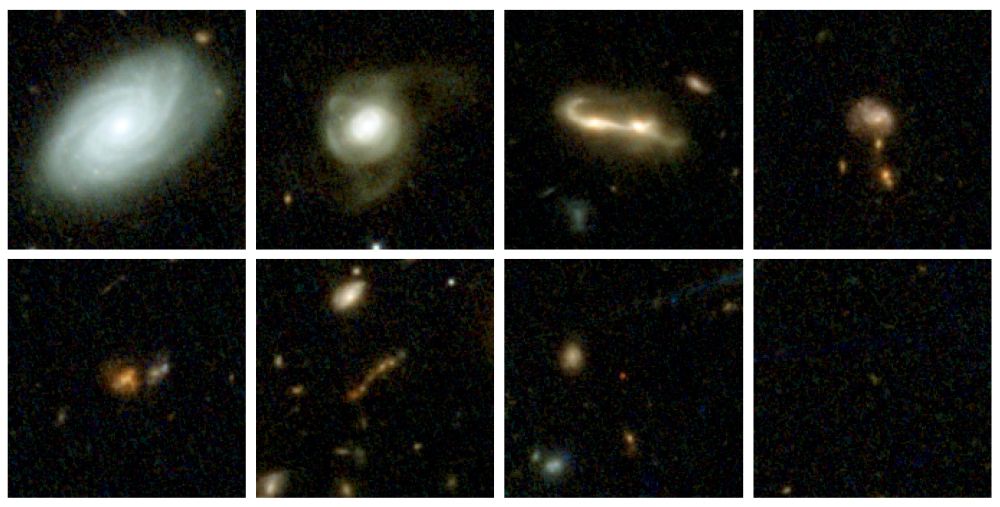
It's finally here! We've just released all of our COSMOS-Web images and catalogs, along with an interactive viewer where you can explore the data! Check it out at: cosmos2025.iap.fr
June 5, 2025 at 3:34 PM
It's finally here! We've just released all of our COSMOS-Web images and catalogs, along with an interactive viewer where you can explore the data! Check it out at: cosmos2025.iap.fr
You can find a list of Christian's publications here: orcid.org/0000-0002-88...
Congratulations, Dr. Groeneveld!
Congratulations, Dr. Groeneveld!
June 5, 2025 at 3:11 PM
You can find a list of Christian's publications here: orcid.org/0000-0002-88...
Congratulations, Dr. Groeneveld!
Congratulations, Dr. Groeneveld!
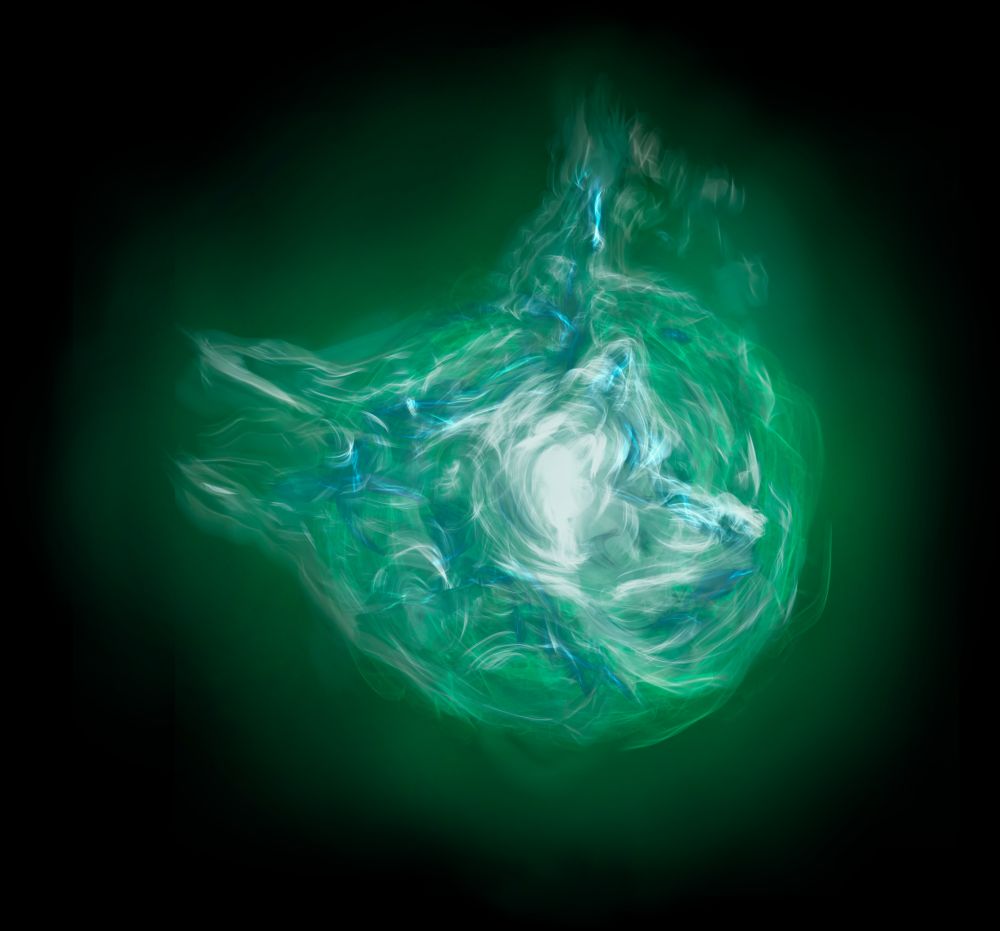
Christian’s research focused on the Perseus galaxy cluster. They confirmed two giant structures: a radio "mini-halo" around the central galaxy, and a much larger "giant radio halo" over a million ly! These halos likely come from turbulence caused by past cosmic mergers, which re-energize particles.
June 5, 2025 at 3:11 PM
Christian’s research focused on the Perseus galaxy cluster. They confirmed two giant structures: a radio "mini-halo" around the central galaxy, and a much larger "giant radio halo" over a million ly! These halos likely come from turbulence caused by past cosmic mergers, which re-energize particles.
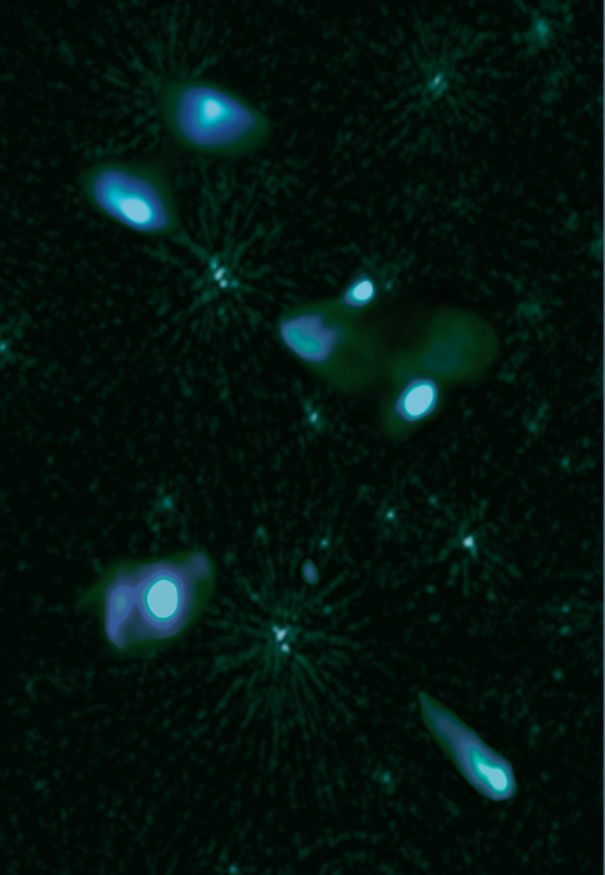
Studying space at such low frequencies is incredibly challenging because the Earth's ionosphere distorts the incoming radio waves. Christian helped develop a new calibration technique that enables higher sensitivity and resolution imaging at these wavelengths.
June 5, 2025 at 3:11 PM
Studying space at such low frequencies is incredibly challenging because the Earth's ionosphere distorts the incoming radio waves. Christian helped develop a new calibration technique that enables higher sensitivity and resolution imaging at these wavelengths.
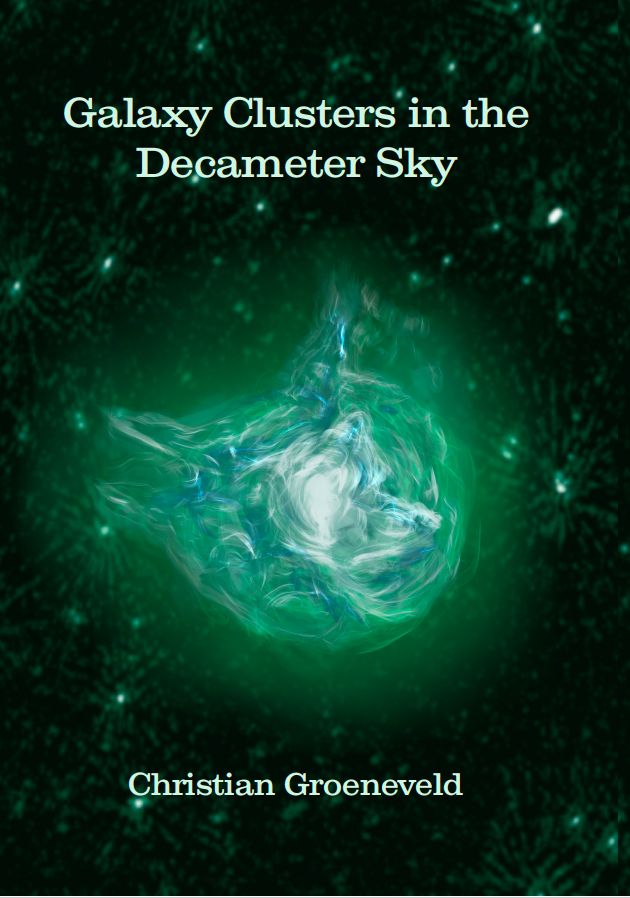
Today, my colleague Christian at Leiden University successfully defended his PhD thesis, "Galaxy Clusters in the Decameter Sky"! In it, he mapped the sky at a relatively unexplored range of radio frequencies—10–30 MHz—using the LOFAR telescope. I had the honour of designing Christian’s thesis cover!
June 5, 2025 at 3:11 PM
Today, my colleague Christian at Leiden University successfully defended his PhD thesis, "Galaxy Clusters in the Decameter Sky"! In it, he mapped the sky at a relatively unexplored range of radio frequencies—10–30 MHz—using the LOFAR telescope. I had the honour of designing Christian’s thesis cover!
These are great! I would put prints of a set up in my office.
May 28, 2025 at 1:27 PM
These are great! I would put prints of a set up in my office.
This is so great 😍😍
May 13, 2025 at 4:41 PM
This is so great 😍😍
My dms aren't working so I sent an email
April 26, 2025 at 4:17 PM
My dms aren't working so I sent an email
(my dms aren't working so I sent an email)
April 26, 2025 at 4:16 PM
(my dms aren't working so I sent an email)
Hi Bunny! What a fabulous idea - it would be an honour to collaborate. I'll DM you.
April 26, 2025 at 2:57 PM
Hi Bunny! What a fabulous idea - it would be an honour to collaborate. I'll DM you.
Aww thanks for the sweet words! I'm so happy you like my art. Yes, please repost with credit :-) 🙏
April 8, 2025 at 12:17 PM
Aww thanks for the sweet words! I'm so happy you like my art. Yes, please repost with credit :-) 🙏
I was asked to give my social media accounts when applying for my work visa last fall.
March 8, 2025 at 2:12 AM
I was asked to give my social media accounts when applying for my work visa last fall.
I hope so too Susan. I think too often scientists try to remain applitical and (are told to) "stick to the science". I try to remember that science is (and has always been) political and we scientists are also (first and foremost) humans.
March 6, 2025 at 3:57 AM
I hope so too Susan. I think too often scientists try to remain applitical and (are told to) "stick to the science". I try to remember that science is (and has always been) political and we scientists are also (first and foremost) humans.
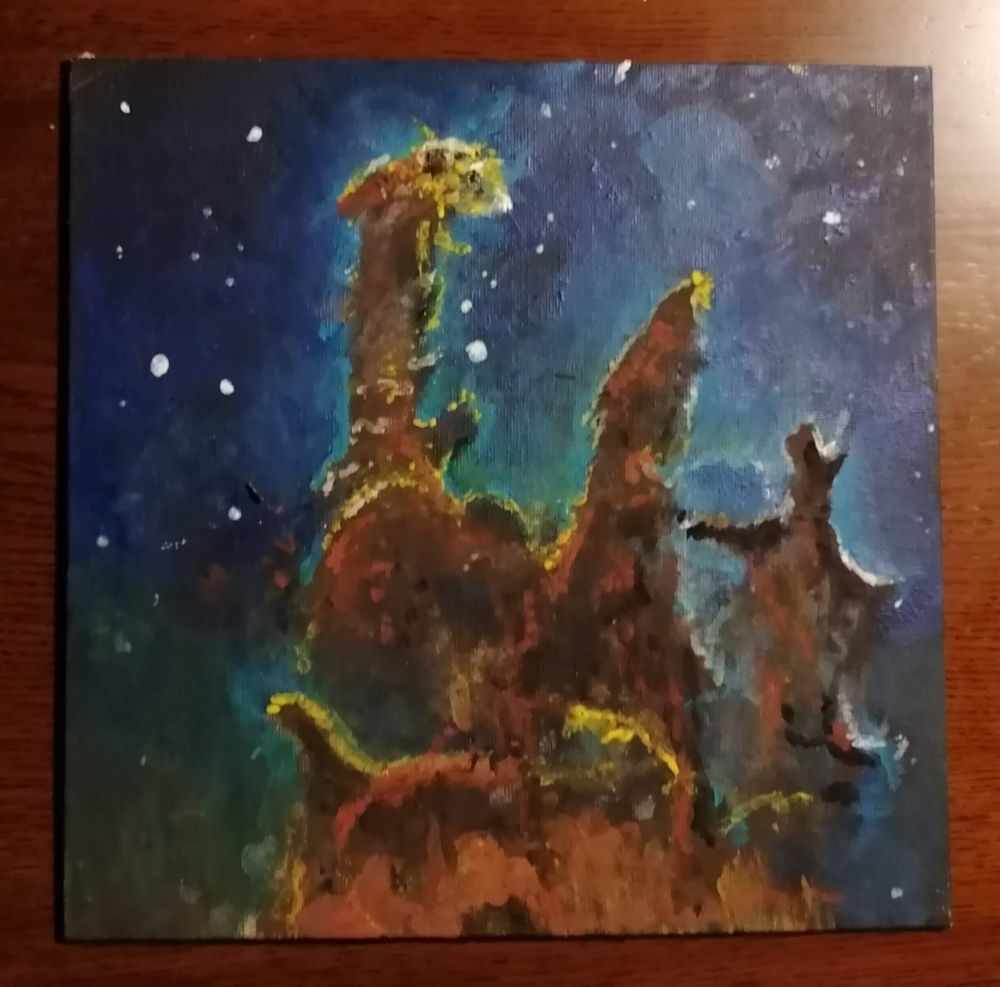
The pillars of creation were first made famous when imaged by the Hubble Space Telescope in 1995 (and again in 2014) in visible light - which I have previously painted. The near-infrared view from JWST helps us peer through more of the dust - revealing many more stars that are forming within.
February 27, 2025 at 2:16 AM
The pillars of creation were first made famous when imaged by the Hubble Space Telescope in 1995 (and again in 2014) in visible light - which I have previously painted. The near-infrared view from JWST helps us peer through more of the dust - revealing many more stars that are forming within.
The pillars of creation were first made famous when imaged by the Hubble Space Telescope in 1995 (and again in 2014) in visible light - which I have previously painted. The near-infrared view from JWST helps us peer through more of the dust - revealing many more stars that are forming within.
February 27, 2025 at 2:16 AM
The pillars of creation were first made famous when imaged by the Hubble Space Telescope in 1995 (and again in 2014) in visible light - which I have previously painted. The near-infrared view from JWST helps us peer through more of the dust - revealing many more stars that are forming within.
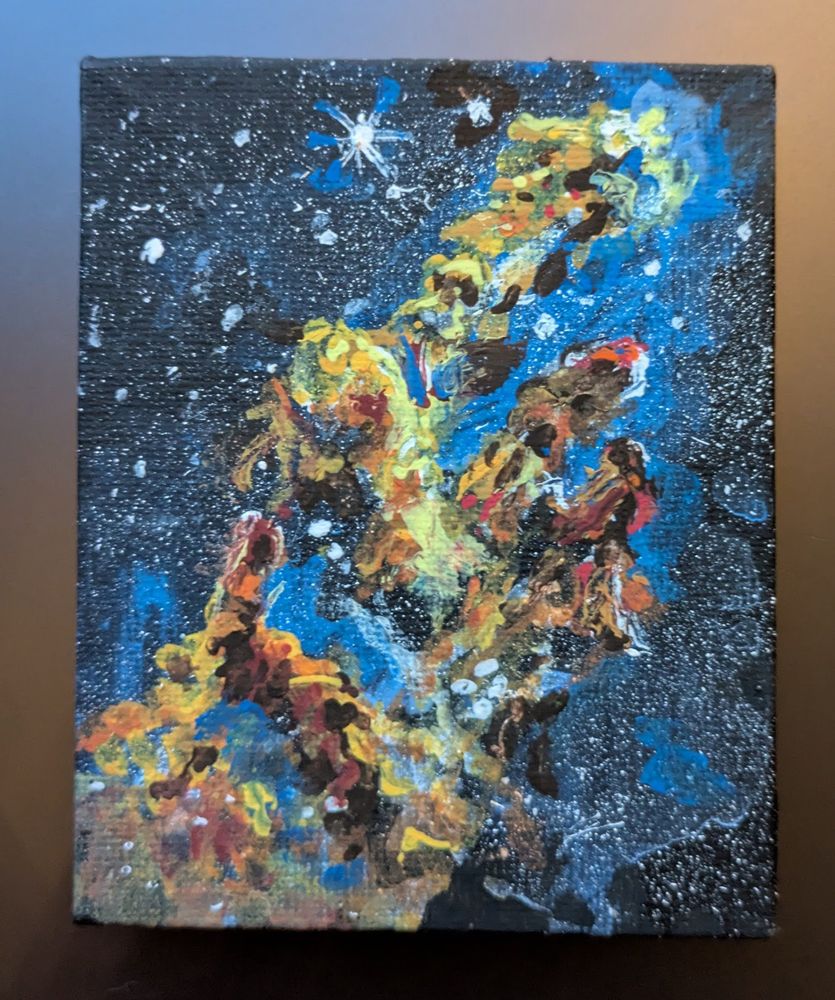
My mini painting of the Pillars of Creation was inspired by the JWST NIRCam image. This region of active star formation lies ~6,500 lyr away. Glowing red lines near the edges of some pillars reveal where stars are ejecting material as they form. 🔭🧪 🎨
February 27, 2025 at 2:16 AM
My mini painting of the Pillars of Creation was inspired by the JWST NIRCam image. This region of active star formation lies ~6,500 lyr away. Glowing red lines near the edges of some pillars reveal where stars are ejecting material as they form. 🔭🧪 🎨