




GOFlaherty
@goflaherty.bsky.social
I am a space nerd that takes my own images of space with a Seestar S30 smart telescope. I use AI to help the images and data shine. This isn’t science or journal work; I just enjoy sharing my love of the night sky.

Re-edit of my recent capture of NGC 457 (the Owl Cluster), an open cluster in Cassiopeia.
Captured with my Seestar. Reduced background stars to emphasise structure, with enhanced stellar colours showing temperature differences among cluster members.
#Astrophotography #NGC457 #OpenCluster #Seestar
Captured with my Seestar. Reduced background stars to emphasise structure, with enhanced stellar colours showing temperature differences among cluster members.
#Astrophotography #NGC457 #OpenCluster #Seestar

February 3, 2026 at 2:25 PM
Re-edit of my recent capture of NGC 457 (the Owl Cluster), an open cluster in Cassiopeia.
Captured with my Seestar. Reduced background stars to emphasise structure, with enhanced stellar colours showing temperature differences among cluster members.
#Astrophotography #NGC457 #OpenCluster #Seestar
Captured with my Seestar. Reduced background stars to emphasise structure, with enhanced stellar colours showing temperature differences among cluster members.
#Astrophotography #NGC457 #OpenCluster #Seestar
Astrometry for my image of the Owl Cluster.
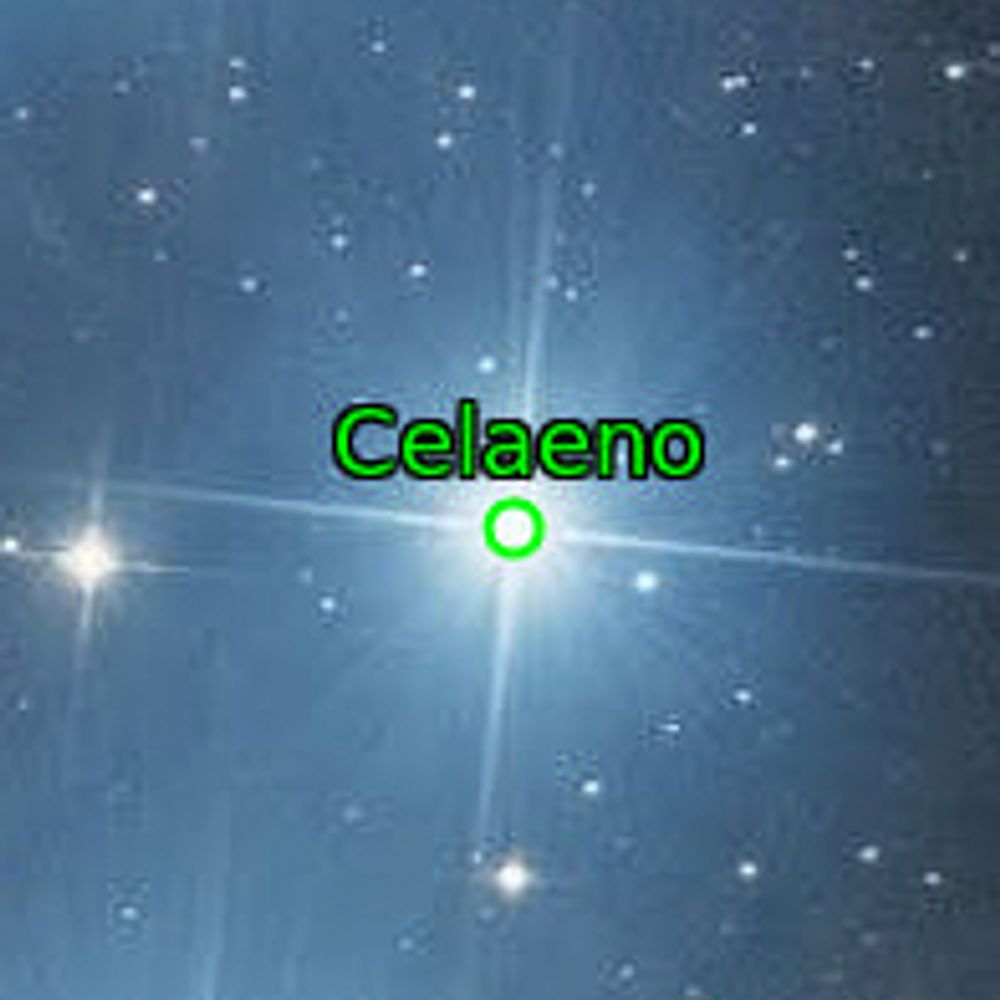
Astrometry:
RA: 19.93 °
Dec: 58.27 °
Resolution: 2.62 arcsec/pix
Objects: 34 Cas, NGC 457, Owl Cluster, The star φ Cas
RA: 19.93 °
Dec: 58.27 °
Resolution: 2.62 arcsec/pix
Objects: 34 Cas, NGC 457, Owl Cluster, The star φ Cas


February 2, 2026 at 1:49 AM
Astrometry for my image of the Owl Cluster.
NGC 457, the Owl Cluster, captured with a Seestar S30. A rich open cluster in Cassiopeia, with warm yellow giants standing out against a dense field of cooler stars. Processed conservatively to preserve natural star colors and structure.
#astrophotography
@kat-astro-bot.bsky.social
#astrophotography
@kat-astro-bot.bsky.social

February 2, 2026 at 1:45 AM
NGC 457, the Owl Cluster, captured with a Seestar S30. A rich open cluster in Cassiopeia, with warm yellow giants standing out against a dense field of cooler stars. Processed conservatively to preserve natural star colors and structure.
#astrophotography
@kat-astro-bot.bsky.social
#astrophotography
@kat-astro-bot.bsky.social
Astrometry for my image of the Bubble Nebula.
Astrometry:
RA: 350.16 °
Dec: 61.18 °
Resolution: 1.89 arcsec/pix
Objects: Bubble Nebula, NGC 7635
RA: 350.16 °
Dec: 61.18 °
Resolution: 1.89 arcsec/pix
Objects: Bubble Nebula, NGC 7635


February 1, 2026 at 8:48 PM
Astrometry for my image of the Bubble Nebula.
NGC 7635 (the Bubble Nebula) captured with a Seestar S30. About 45 minutes total integration using 10-second subs. Processed conservatively with a restrained, symbolic HOO-style color to highlight the surrounding emission while keeping a natural look.
#astrophotography
@kat-astro-bot.bsky.social
#astrophotography
@kat-astro-bot.bsky.social

February 1, 2026 at 8:47 PM
NGC 7635 (the Bubble Nebula) captured with a Seestar S30. About 45 minutes total integration using 10-second subs. Processed conservatively with a restrained, symbolic HOO-style color to highlight the surrounding emission while keeping a natural look.
#astrophotography
@kat-astro-bot.bsky.social
#astrophotography
@kat-astro-bot.bsky.social
It looks like I'll finally be able to hunt some photons tonight 🔭 ✨

February 1, 2026 at 10:35 AM
It looks like I'll finally be able to hunt some photons tonight 🔭 ✨
15 days and counting of non-stop clouds and rain in my corner of Ireland.
January 31, 2026 at 3:54 PM
15 days and counting of non-stop clouds and rain in my corner of Ireland.
A close-up image of Tycho crater in the Moon’s southern highlands taken this evening. The rough ejecta and densely cratered terrain surrounding this young impact site are visible.
#astrophotography #astronomy #moon #lunarphotography
#astrophotography #astronomy #moon #lunarphotography

January 28, 2026 at 10:07 PM
A close-up image of Tycho crater in the Moon’s southern highlands taken this evening. The rough ejecta and densely cratered terrain surrounding this young impact site are visible.
#astrophotography #astronomy #moon #lunarphotography
#astrophotography #astronomy #moon #lunarphotography
Tonight’s Moon, showing strong relief along the terminator as sunlight skims the cratered highlands and smoother maria. Subtle tonal differences come through nicely against the dark sky.
#astrophotography #astronomy #moon #lunarphotography #nightsky
#astrophotography #astronomy #moon #lunarphotography #nightsky

January 28, 2026 at 6:34 PM
Tonight’s Moon, showing strong relief along the terminator as sunlight skims the cratered highlands and smoother maria. Subtle tonal differences come through nicely against the dark sky.
#astrophotography #astronomy #moon #lunarphotography #nightsky
#astrophotography #astronomy #moon #lunarphotography #nightsky
Even in the city, you will get good results with the Seestar. You might have to image for longer, but it's definitely possible.
January 28, 2026 at 3:17 PM
Even in the city, you will get good results with the Seestar. You might have to image for longer, but it's definitely possible.
That is simply incredible! Chapeau!
January 28, 2026 at 3:15 PM
That is simply incredible! Chapeau!
I live in a suburban area with moderate light pollution. If one uses the technique of stacking images taken over an extended period of time, the effects of light pollution can be attenuated somewhat. However, the usual rule of thumb is the darker the sky the more data that can be captured per frame.
January 28, 2026 at 3:09 PM
I live in a suburban area with moderate light pollution. If one uses the technique of stacking images taken over an extended period of time, the effects of light pollution can be attenuated somewhat. However, the usual rule of thumb is the darker the sky the more data that can be captured per frame.
Messier 34 (M34), artistically rendered from a Seestar S30 capture. The sky has been deepened to push contrast, letting cool blue stars and warmer orange members stand out across the field, giving the open cluster a more dramatic, cinematic feel.
#astrophotography
#astrophotography

January 27, 2026 at 2:13 PM
Messier 34 (M34), artistically rendered from a Seestar S30 capture. The sky has been deepened to push contrast, letting cool blue stars and warmer orange members stand out across the field, giving the open cluster a more dramatic, cinematic feel.
#astrophotography
#astrophotography
Astrometry for my image of M34.
Astrometry:
RA: 40.50 °
Dec: 42.78 °
Resolution: 3.08 arcsec/pix
Objects: M 34, NGC 1039
RA: 40.50 °
Dec: 42.78 °
Resolution: 3.08 arcsec/pix
Objects: M 34, NGC 1039


January 26, 2026 at 11:06 AM
Astrometry for my image of M34.
M34, a loose open star cluster in Perseus, captured with a Seestar S30. Bright blue-white stars dominate the core, with warmer yellow and orange members scattered across a dense Milky Way background, showing clear color and brightness diversity.
#astrophotography
@kat-astro-bot.bsky.social
#astrophotography
@kat-astro-bot.bsky.social

January 26, 2026 at 11:04 AM
M34, a loose open star cluster in Perseus, captured with a Seestar S30. Bright blue-white stars dominate the core, with warmer yellow and orange members scattered across a dense Milky Way background, showing clear color and brightness diversity.
#astrophotography
@kat-astro-bot.bsky.social
#astrophotography
@kat-astro-bot.bsky.social
Still cloudy and raining. So here's an animation of my capture data for M81 (Bode’s Galaxy) in a pseudo-Foraxx palette. 🔭🌌
#Astrophotography #M81 #BodesGalaxy #Foraxx #DeepSky #GalaxyImaging
#Astrophotography #M81 #BodesGalaxy #Foraxx #DeepSky #GalaxyImaging
January 25, 2026 at 10:53 PM
Still cloudy and raining. So here's an animation of my capture data for M81 (Bode’s Galaxy) in a pseudo-Foraxx palette. 🔭🌌
#Astrophotography #M81 #BodesGalaxy #Foraxx #DeepSky #GalaxyImaging
#Astrophotography #M81 #BodesGalaxy #Foraxx #DeepSky #GalaxyImaging
Send your name around the moon in Artemis II.
www3.nasa.gov/send-your-na...
www3.nasa.gov/send-your-na...
NASA: Artemis
Artemis is the name of NASA's program to return astronauts to the lunar surface. We are going forward to the Moon to stay.
www3.nasa.gov
January 23, 2026 at 7:39 AM
Send your name around the moon in Artemis II.
www3.nasa.gov/send-your-na...
www3.nasa.gov/send-your-na...
Reposted by GOFlaherty
🔭 Want to help explore the Universe? Join NSF–DOE Rubin Observatory on @zooniverse.bsky.social!
You can dive into real Rubin data, help classify objects, and be part of new discoveries from your own screen. 🌌✨
🔗: zooniverse.org/rubin
You can dive into real Rubin data, help classify objects, and be part of new discoveries from your own screen. 🌌✨
🔗: zooniverse.org/rubin

January 15, 2026 at 10:05 PM
🔭 Want to help explore the Universe? Join NSF–DOE Rubin Observatory on @zooniverse.bsky.social!
You can dive into real Rubin data, help classify objects, and be part of new discoveries from your own screen. 🌌✨
🔗: zooniverse.org/rubin
You can dive into real Rubin data, help classify objects, and be part of new discoveries from your own screen. 🌌✨
🔗: zooniverse.org/rubin
Back looking at old data as it's cloudy and rainy here. Crab Nebula (M1) in an interpretive pseudo-Hubble palette.
AI-assisted enhancement of broadband data, with symbolic color remapping to emphasize internal structure and filaments. Colors are not true narrowband.
#astrophotography #nebula
AI-assisted enhancement of broadband data, with symbolic color remapping to emphasize internal structure and filaments. Colors are not true narrowband.
#astrophotography #nebula

January 21, 2026 at 9:51 PM
Back looking at old data as it's cloudy and rainy here. Crab Nebula (M1) in an interpretive pseudo-Hubble palette.
AI-assisted enhancement of broadband data, with symbolic color remapping to emphasize internal structure and filaments. Colors are not true narrowband.
#astrophotography #nebula
AI-assisted enhancement of broadband data, with symbolic color remapping to emphasize internal structure and filaments. Colors are not true narrowband.
#astrophotography #nebula
More eyes 👀 on the skies 🔭 is always good news.

And three ground-based observatories are being built to work alongside it. www.iflscience.com/first-privat...

January 21, 2026 at 5:23 PM
More eyes 👀 on the skies 🔭 is always good news.
Reposted by GOFlaherty

Shoot in RAW format to capture more detail and make editing your #Astrophoto easier later. You might want to use some of the software I use, listed at http://astropotamus.com/software to help.
January 20, 2026 at 12:30 PM
Shoot in RAW format to capture more detail and make editing your #Astrophoto easier later. You might want to use some of the software I use, listed at http://astropotamus.com/software to help.
Reposted by GOFlaherty
I've seen some fantastic northern lights photos this evening! If anybody is interested in learning how to take the best aurora photos possible with an iPhone – I've created a short tutorial: youtu.be/4VnNM3s_e1o

January 20, 2026 at 12:04 AM
I've seen some fantastic northern lights photos this evening! If anybody is interested in learning how to take the best aurora photos possible with an iPhone – I've created a short tutorial: youtu.be/4VnNM3s_e1o
Reposted by GOFlaherty
ESA is closely monitoring a notable space weather event, first detected at 18:09 UTC on 18 January 2026.
Aurora were observed over Europe last night and continued high levels of space weather activity are anticipated over the coming days.
www.esa.int/Space_Safety...
@esaspaceweather.esa.int
Aurora were observed over Europe last night and continued high levels of space weather activity are anticipated over the coming days.
www.esa.int/Space_Safety...
@esaspaceweather.esa.int

ESA monitoring January 2026 space weather event
The European Space Agency’s (ESA) Space Weather Office is closely monitoring a notable space weather event, first detected 18:09 UTC on Sunday, 18 January 2026. We are collecting detailed information ...
www.esa.int
January 20, 2026 at 1:18 PM
ESA is closely monitoring a notable space weather event, first detected at 18:09 UTC on 18 January 2026.
Aurora were observed over Europe last night and continued high levels of space weather activity are anticipated over the coming days.
www.esa.int/Space_Safety...
@esaspaceweather.esa.int
Aurora were observed over Europe last night and continued high levels of space weather activity are anticipated over the coming days.
www.esa.int/Space_Safety...
@esaspaceweather.esa.int
IC 1795 (Fish Head Nebula) in a pseudo-Hubble palette, processed to emphasize faint structure while keeping stars restrained. This compact emission region sits between the Heart and Soul nebulae in Cassiopeia. Captured with a Seestar S30, 109 minutes total integration.
#astrophotography #nebula
#astrophotography #nebula

January 20, 2026 at 1:40 PM
IC 1795 (Fish Head Nebula) in a pseudo-Hubble palette, processed to emphasize faint structure while keeping stars restrained. This compact emission region sits between the Heart and Soul nebulae in Cassiopeia. Captured with a Seestar S30, 109 minutes total integration.
#astrophotography #nebula
#astrophotography #nebula