



Zach B. Hancock
@hancockzb.bsky.social
Evolutionary biologist, science writer, YouTuber. Assistant Professor at Augusta University. he/him 🏳️🌈
http://www.youtube.com/@talkpopgen
http://www.youtube.com/@talkpopgen
Reposted by Zach B. Hancock


December 9, 2025 at 2:53 AM
Reposted by Zach B. Hancock

Delighted to publish Forum Article by @nicolasgaltier.bsky.social et al:
"Journals run by learned societies or universities have more ethical policies while being cheaper and similarly cited"
doi.org/10.1093/jeb/...
Thank you for choosing JEB - we encourage the support of #societyjournals
"Journals run by learned societies or universities have more ethical policies while being cheaper and similarly cited"
doi.org/10.1093/jeb/...
Thank you for choosing JEB - we encourage the support of #societyjournals

Time to publish responsibly: DAFNEE, a database of academia-friendly journals in ecology and evolutionary biology
Abstract. The current economics of scientific publishing reveal a profound imbalance: academia pays prices far exceeding the actual costs of publication. R
doi.org
December 9, 2025 at 10:16 AM
Delighted to publish Forum Article by @nicolasgaltier.bsky.social et al:
"Journals run by learned societies or universities have more ethical policies while being cheaper and similarly cited"
doi.org/10.1093/jeb/...
Thank you for choosing JEB - we encourage the support of #societyjournals
"Journals run by learned societies or universities have more ethical policies while being cheaper and similarly cited"
doi.org/10.1093/jeb/...
Thank you for choosing JEB - we encourage the support of #societyjournals
Reposted by Zach B. Hancock

On scientific "style" for @undark.org:
"[Style] is a positive feature of science that facilitates different routes to solving problems.....We can embrace differences in our approaches while still promoting rigor and clarity."
undark.org/2025/12/04/o...
"[Style] is a positive feature of science that facilitates different routes to solving problems.....We can embrace differences in our approaches while still promoting rigor and clarity."
undark.org/2025/12/04/o...

Science Needs to Embrace the Idea of Style
How do individual scientists approach their work? These stylistic differences can influence the process of discovery.
undark.org
December 4, 2025 at 5:54 PM
On scientific "style" for @undark.org:
"[Style] is a positive feature of science that facilitates different routes to solving problems.....We can embrace differences in our approaches while still promoting rigor and clarity."
undark.org/2025/12/04/o...
"[Style] is a positive feature of science that facilitates different routes to solving problems.....We can embrace differences in our approaches while still promoting rigor and clarity."
undark.org/2025/12/04/o...
me after this semester ends

A raccoon entered a liquor store in Virginia and drank his fill: rum, moonshine, even peanut butter whiskey. Then it passed out on the floor of the bathroom.
Don’t worry — he’s OK. trib.al/R3wXGbV
Don’t worry — he’s OK. trib.al/R3wXGbV
December 4, 2025 at 5:15 PM
me after this semester ends
Reposted by Zach B. Hancock

Check out our cover article by @timjanicke.bsky.social and colleagues about the role of sexual selection in animal speciation. academic.oup.com/evlett/artic.... The beautiful illustration is by Katharina Bóth.

December 4, 2025 at 4:04 PM
Check out our cover article by @timjanicke.bsky.social and colleagues about the role of sexual selection in animal speciation. academic.oup.com/evlett/artic.... The beautiful illustration is by Katharina Bóth.
Reposted by Zach B. Hancock
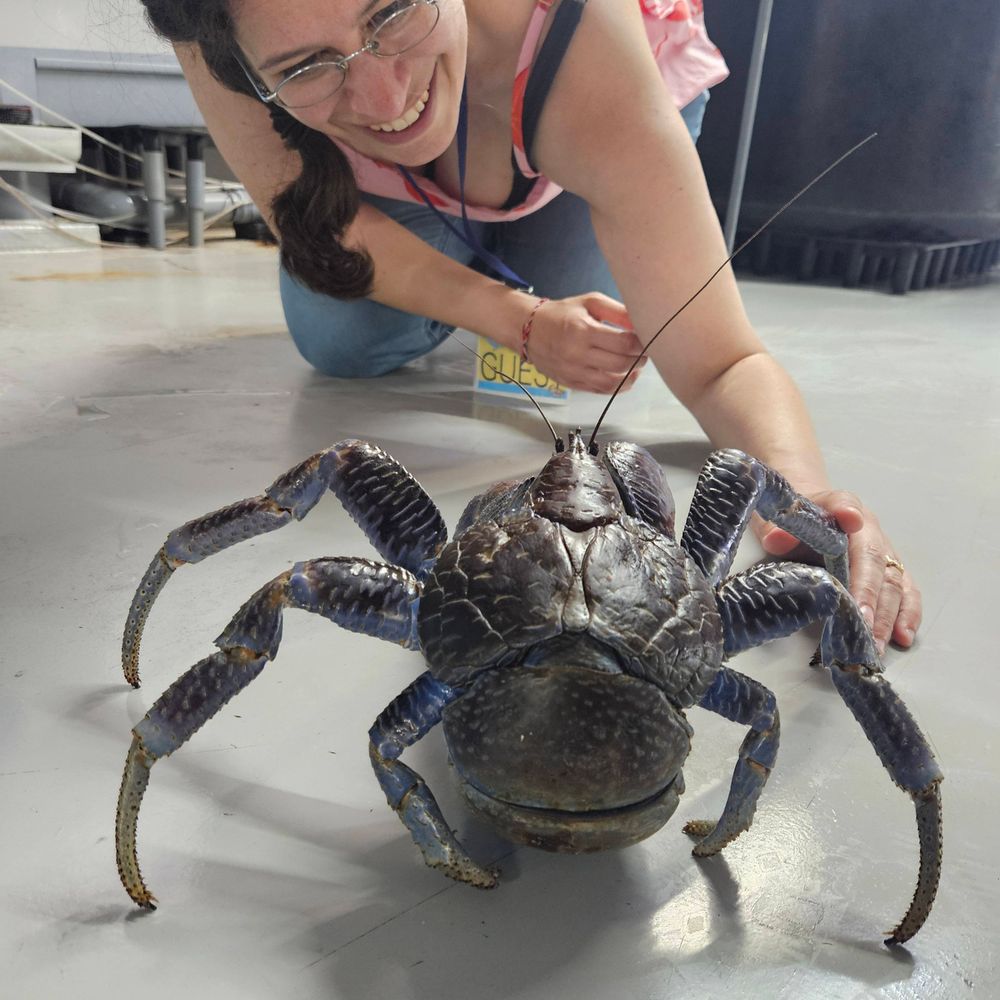
Today is the first of 25 days of #Crustmas! Post as many crustaceans as possible! (not just crabs) 🦑🧪
This year I'm less personally inclined towards "crabs are the ultimate form", and my piece below explains why.
PS all posts will be right here on the crab feed 🦀
bsky.app/profile/did:...
This year I'm less personally inclined towards "crabs are the ultimate form", and my piece below explains why.
PS all posts will be right here on the crab feed 🦀
bsky.app/profile/did:...
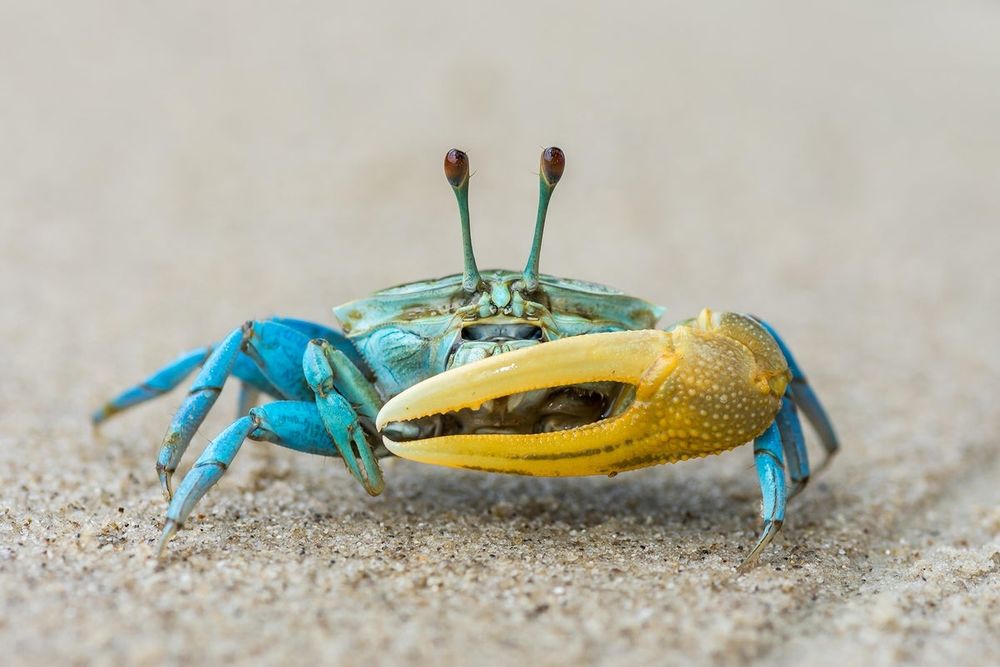
Crab Memes Amplify Mistaken Ideas about Evolution
Memes about repeated evolution of crabs have been co-opted to joke about technology and “ultimate forms.” They’re hilarious, but they oversimplify natural variation, giving bad arguments a scientific ...
www.scientificamerican.com
December 1, 2025 at 12:29 PM
Today is the first of 25 days of #Crustmas! Post as many crustaceans as possible! (not just crabs) 🦑🧪
This year I'm less personally inclined towards "crabs are the ultimate form", and my piece below explains why.
PS all posts will be right here on the crab feed 🦀
bsky.app/profile/did:...
This year I'm less personally inclined towards "crabs are the ultimate form", and my piece below explains why.
PS all posts will be right here on the crab feed 🦀
bsky.app/profile/did:...
Reposted by Zach B. Hancock

How to keep in step when your (protein) partner speeds up…
Here we investigated the adaptive remodeling of a protein-protein interaction surface essential for telomere protection.
Congrats to whole team!
www.science.org/doi/10.1126/...
Here we investigated the adaptive remodeling of a protein-protein interaction surface essential for telomere protection.
Congrats to whole team!
www.science.org/doi/10.1126/...

Rapid compensatory evolution within a multiprotein complex preserves telomere integrity
Intragenomic conflict with selfish genetic elements spurs adaptive changes in subunits of essential multiprotein complexes. Whether and how these adaptive changes disrupt interactions within such comp...
www.science.org
November 28, 2025 at 5:22 PM
How to keep in step when your (protein) partner speeds up…
Here we investigated the adaptive remodeling of a protein-protein interaction surface essential for telomere protection.
Congrats to whole team!
www.science.org/doi/10.1126/...
Here we investigated the adaptive remodeling of a protein-protein interaction surface essential for telomere protection.
Congrats to whole team!
www.science.org/doi/10.1126/...
Reposted by Zach B. Hancock
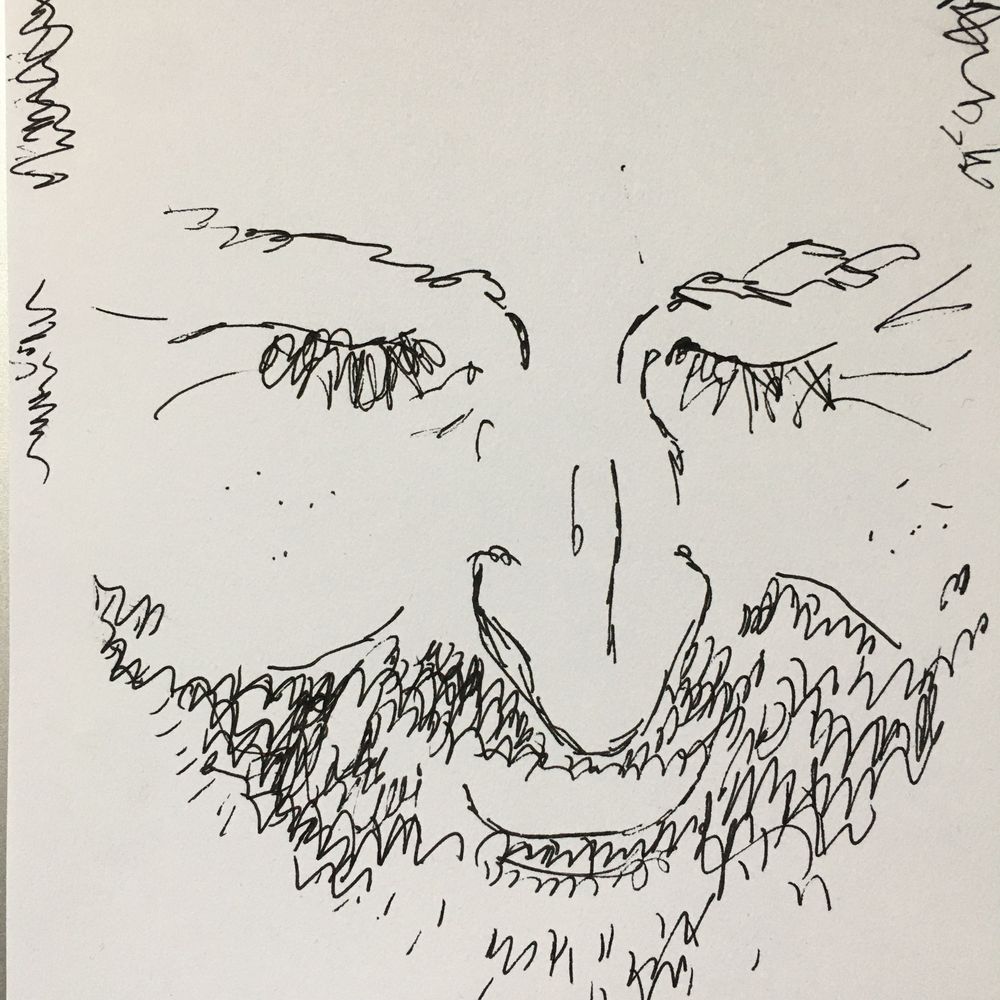
Check out this nice Digest in @journal-evo.bsky.social by Pedram Samani about our EM study of sperm cell gigantism! digest = doi.org/10.1093/evol... original study = doi.org/10.1093/evol...

Digest: Subcellular reallocation and the evolution of anisogamy in nematodes
Abstract. Why has sperm gigantism evolved, and how do subcellular allocations scale with size? Schalkowski & Cutter (2025) addressed these questions wi
doi.org
November 25, 2025 at 3:02 PM
Check out this nice Digest in @journal-evo.bsky.social by Pedram Samani about our EM study of sperm cell gigantism! digest = doi.org/10.1093/evol... original study = doi.org/10.1093/evol...
Reposted by Zach B. Hancock

The last work of my PhD is finally out: www.pnas.org/doi/10.1073/...! This work is about accurately estimating branch length in the Ancestral Recombination Graph (ARG), which is achieved by a really simple framework with minimal assumptions. (1/n)
PNAS
Proceedings of the National Academy of Sciences (PNAS), a peer reviewed journal of the National Academy of Sciences (NAS) - an authoritative source of high-impact, original research that broadly spans...
www.pnas.org
November 25, 2025 at 8:27 PM
The last work of my PhD is finally out: www.pnas.org/doi/10.1073/...! This work is about accurately estimating branch length in the Ancestral Recombination Graph (ARG), which is achieved by a really simple framework with minimal assumptions. (1/n)
Reposted by Zach B. Hancock

Fujiwara et al. performed WGS and RNAseq of the termite Zootermopsis nevadensis, finding that gene duplications contributed to eusociality, and that lineage-specific Doublesex-related expression underlies caste diversification pathways.
🔗 doi.org/10.1093/molbev/msaf284
#evobio #molbio #eusociality
🔗 doi.org/10.1093/molbev/msaf284
#evobio #molbio #eusociality

November 25, 2025 at 1:46 PM
Fujiwara et al. performed WGS and RNAseq of the termite Zootermopsis nevadensis, finding that gene duplications contributed to eusociality, and that lineage-specific Doublesex-related expression underlies caste diversification pathways.
🔗 doi.org/10.1093/molbev/msaf284
#evobio #molbio #eusociality
🔗 doi.org/10.1093/molbev/msaf284
#evobio #molbio #eusociality
Reposted by Zach B. Hancock

I wrote a little bit about the "missing heritability" question and several recent studies that have brought it to a close. A short 🧵

The missing heritability question is now (mostly) answered
Not with a bang but with a whimper
theinfinitesimal.substack.com
November 21, 2025 at 10:34 PM
I wrote a little bit about the "missing heritability" question and several recent studies that have brought it to a close. A short 🧵
Reposted by Zach B. Hancock
Very cool paper in Nature! I will probably cover it on the Avian Hybrids blog in due time (even though it concerns mammals).
An ancient recombination desert is a speciation supergene in placental mammals
www.nature.com/articles/s41...
An ancient recombination desert is a speciation supergene in placental mammals
www.nature.com/articles/s41...

An ancient recombination desert is a speciation supergene in placental mammals - Nature
Deep learning methods identified a large and evolutionarily conserved X-linked low recombination region in placental mammals that serves as both a barrier to gene flow in hybridizing lineages and an a...
www.nature.com
November 19, 2025 at 2:27 PM
Very cool paper in Nature! I will probably cover it on the Avian Hybrids blog in due time (even though it concerns mammals).
An ancient recombination desert is a speciation supergene in placental mammals
www.nature.com/articles/s41...
An ancient recombination desert is a speciation supergene in placental mammals
www.nature.com/articles/s41...
Reposted by Zach B. Hancock
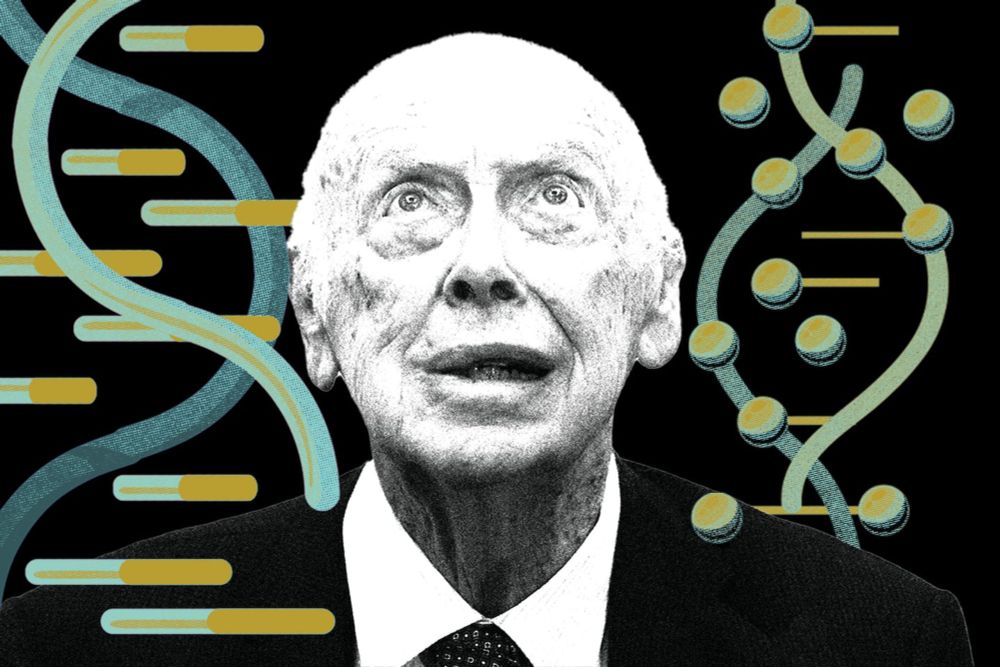
"What James Watson got wrong about DNA"
By the great Sohini Ramachandran (@sramach.bsky.social) and your boy for The Boston Globe (@bostonglobe.com).
www.bostonglobe.com/2025/11/14/o...
By the great Sohini Ramachandran (@sramach.bsky.social) and your boy for The Boston Globe (@bostonglobe.com).
www.bostonglobe.com/2025/11/14/o...
What James Watson got wrong about DNA - The Boston Globe
The science he helped pioneer consistently undermines his view that genes determine everything about us.
www.bostonglobe.com
November 14, 2025 at 4:50 PM
"What James Watson got wrong about DNA"
By the great Sohini Ramachandran (@sramach.bsky.social) and your boy for The Boston Globe (@bostonglobe.com).
www.bostonglobe.com/2025/11/14/o...
By the great Sohini Ramachandran (@sramach.bsky.social) and your boy for The Boston Globe (@bostonglobe.com).
www.bostonglobe.com/2025/11/14/o...
Reposted by Zach B. Hancock

🚨 New paper alert 🚨
Our research, published today in Science, reveals remarkable concordance between human and dog genomes through time, highlighting how deeply intertwined our evolutionary histories have been over the past 11,000 years.
🔗 Read the full paper here: www.science.org/doi/10.1126/...
Our research, published today in Science, reveals remarkable concordance between human and dog genomes through time, highlighting how deeply intertwined our evolutionary histories have been over the past 11,000 years.
🔗 Read the full paper here: www.science.org/doi/10.1126/...

Genomic evidence for the Holocene codispersal of dogs and humans across Eastern Eurasia
As the first domestic species, dogs likely dispersed with different cultural groups during the Late Pleistocene and Holocene. To test this hypothesis, we analyzed 73 ancient dog genomes, including 17 ...
www.science.org
November 13, 2025 at 10:48 PM
🚨 New paper alert 🚨
Our research, published today in Science, reveals remarkable concordance between human and dog genomes through time, highlighting how deeply intertwined our evolutionary histories have been over the past 11,000 years.
🔗 Read the full paper here: www.science.org/doi/10.1126/...
Our research, published today in Science, reveals remarkable concordance between human and dog genomes through time, highlighting how deeply intertwined our evolutionary histories have been over the past 11,000 years.
🔗 Read the full paper here: www.science.org/doi/10.1126/...
Reposted by Zach B. Hancock
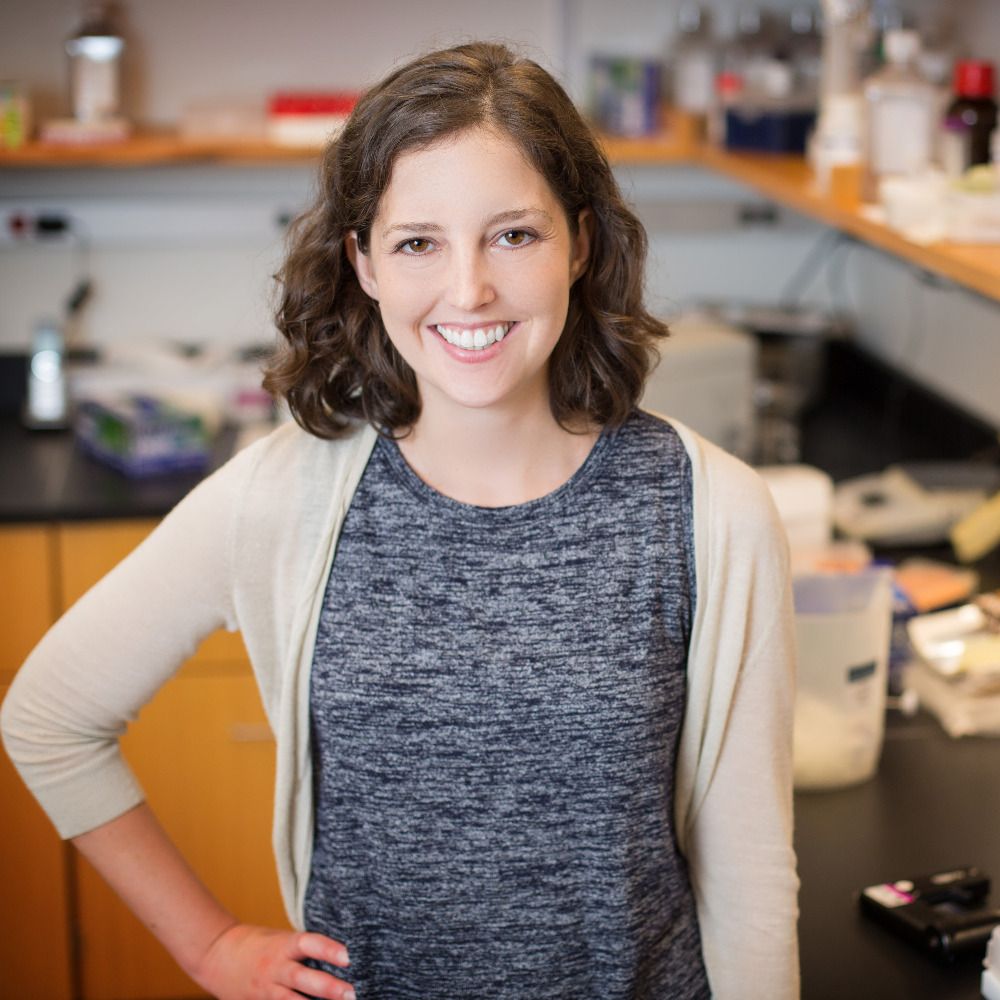
I am so excited to share new work on a TE insertion that regulates iridescence in swordtails, led by fantastic grad student @nadiahaghani.bsky.social and with help from many coauthors! In a time that has been so difficult to navigate, this & other projects have kept my spirits up: shorturl.at/NE65A

Insertion of an invading retrovirus regulates a novel color trait in swordtail fish
For over a century, evolutionary biologists have been motivated to understand the mechanisms through which organisms adapt to their environments. Coloration and pigmentation are remarkably variable wi...
shorturl.at
November 12, 2025 at 8:34 PM
I am so excited to share new work on a TE insertion that regulates iridescence in swordtails, led by fantastic grad student @nadiahaghani.bsky.social and with help from many coauthors! In a time that has been so difficult to navigate, this & other projects have kept my spirits up: shorturl.at/NE65A
Reposted by Zach B. Hancock

New work led by members of the @rokaslab.bsky.social! ☺️ 1,154 yeast genomes in the Saccharomycotina subphylum were surveyed for their relationship between reduced gene repertoires broadly associated with genome stability functions and elevated evolutionary rates.🧬
academic.oup.com/mbe/advance-...
academic.oup.com/mbe/advance-...

Stable hypermutators revealed by the genomic landscape of genes involved in genome stability among yeast species
Abstract. Mutator phenotypes are short-lived due to the rapid accumulation of deleterious mutations. Yet, recent observations reveal that certain fungi can
academic.oup.com
November 11, 2025 at 4:51 PM
New work led by members of the @rokaslab.bsky.social! ☺️ 1,154 yeast genomes in the Saccharomycotina subphylum were surveyed for their relationship between reduced gene repertoires broadly associated with genome stability functions and elevated evolutionary rates.🧬
academic.oup.com/mbe/advance-...
academic.oup.com/mbe/advance-...
Reposted by Zach B. Hancock

Now in Evolution: academic.oup.com/evolut/artic...
This paper started when @3rdreviewer.bsky.social, Mike, and I had a lunch at which there was a lot of, "What do you mean when you say X?" Fun to spend time thinking about when terms get too muddy, and great work by Drew to pull it all together!
This paper started when @3rdreviewer.bsky.social, Mike, and I had a lunch at which there was a lot of, "What do you mean when you say X?" Fun to spend time thinking about when terms get too muddy, and great work by Drew to pull it all together!
November 4, 2025 at 6:06 PM
Now in Evolution: academic.oup.com/evolut/artic...
This paper started when @3rdreviewer.bsky.social, Mike, and I had a lunch at which there was a lot of, "What do you mean when you say X?" Fun to spend time thinking about when terms get too muddy, and great work by Drew to pull it all together!
This paper started when @3rdreviewer.bsky.social, Mike, and I had a lunch at which there was a lot of, "What do you mean when you say X?" Fun to spend time thinking about when terms get too muddy, and great work by Drew to pull it all together!
Reposted by Zach B. Hancock

The November cover of Genome Biology and Evolution features @raularayadonoso.bsky.social @kenrokusumi.bsky.social @anthonygeneva.bsky.social et al., who studied how structural rearrangements and selection promote phenotypic evolution in Anolis.
🔗 doi.org/10.1093/gbe/evaf196
#genome #evolution
🔗 doi.org/10.1093/gbe/evaf196
#genome #evolution

October 31, 2025 at 11:48 AM
The November cover of Genome Biology and Evolution features @raularayadonoso.bsky.social @kenrokusumi.bsky.social @anthonygeneva.bsky.social et al., who studied how structural rearrangements and selection promote phenotypic evolution in Anolis.
🔗 doi.org/10.1093/gbe/evaf196
#genome #evolution
🔗 doi.org/10.1093/gbe/evaf196
#genome #evolution
Reposted by Zach B. Hancock
Chatbots — LLMs — do not know facts and are not designed to be able to accurately answer factual questions. They are designed to find and mimic patterns of words, probabilistically. When they’re “right” it’s because correct things are often written down, so those patterns are frequent. That’s all.
June 19, 2025 at 11:21 AM
Chatbots — LLMs — do not know facts and are not designed to be able to accurately answer factual questions. They are designed to find and mimic patterns of words, probabilistically. When they’re “right” it’s because correct things are often written down, so those patterns are frequent. That’s all.
Reposted by Zach B. Hancock
Wei et al. present chromosome-scale genomes for three ecologically divergent ferns, demonstrating how regulated genomic dynamism enables adaptive diversification while sustaining morphological conservatism.
🔗 doi.org/10.1093/molbev/msaf247
#evobio #molbio #PlantSky
🔗 doi.org/10.1093/molbev/msaf247
#evobio #molbio #PlantSky

Resolving the Stasis-Dynamism Paradox: Genome Evolution in Tree Ferns
Abstract. The paradox of evolutionary stasis and dynamism—how morphologically static lineages persist through deep geological periods despite environmental
doi.org
October 27, 2025 at 11:20 AM
Wei et al. present chromosome-scale genomes for three ecologically divergent ferns, demonstrating how regulated genomic dynamism enables adaptive diversification while sustaining morphological conservatism.
🔗 doi.org/10.1093/molbev/msaf247
#evobio #molbio #PlantSky
🔗 doi.org/10.1093/molbev/msaf247
#evobio #molbio #PlantSky
Reposted by Zach B. Hancock

One of the most exciting works of my career, years in the making. We used high-throughput precision genome editing to test the fitness effects of thousands of natural variants. Our findings challenge the long-held assumption that common variants are inconsequential.
www.biorxiv.org/content/10.1...
www.biorxiv.org/content/10.1...

Massively parallel interrogation of the fitness of natural variants in ancient signaling pathways reveals pervasive local adaptation
The nature of standing genetic variation remains a central debate in population genetics, with differing perspectives on whether common variants are almost always neutral as suggested by neutral and n...
www.biorxiv.org
October 22, 2025 at 5:46 PM
One of the most exciting works of my career, years in the making. We used high-throughput precision genome editing to test the fitness effects of thousands of natural variants. Our findings challenge the long-held assumption that common variants are inconsequential.
www.biorxiv.org/content/10.1...
www.biorxiv.org/content/10.1...
Reposted by Zach B. Hancock

Genome maintenance by telomerase is a fundamental process in nearly all eukaryotes. But where does it come from?
Today, we report the discovery of telomerase homologs in a family of antiviral reverse transcriptases, revealing an unexpected evolutionary origin in bacteria.
doi.org/10.1101/2025...
Today, we report the discovery of telomerase homologs in a family of antiviral reverse transcriptases, revealing an unexpected evolutionary origin in bacteria.
doi.org/10.1101/2025...

October 17, 2025 at 12:47 PM
Genome maintenance by telomerase is a fundamental process in nearly all eukaryotes. But where does it come from?
Today, we report the discovery of telomerase homologs in a family of antiviral reverse transcriptases, revealing an unexpected evolutionary origin in bacteria.
doi.org/10.1101/2025...
Today, we report the discovery of telomerase homologs in a family of antiviral reverse transcriptases, revealing an unexpected evolutionary origin in bacteria.
doi.org/10.1101/2025...
Reposted by Zach B. Hancock
Reading @jrossibarra.bsky.social 's new pre-print for JC (www.biorxiv.org/content/10.1... ) and @gpreising.bsky.social noticed the hidden maize message in the corn illustration on each page!
Genome-wide selection on transposable elements in maize
While most evolutionary research has focused on single nucleotide polymorphisms (SNPs), transposable elements (TEs) represent a major but understudied source of mutations that can influence organismal...
www.biorxiv.org
October 16, 2025 at 7:14 PM
Reading @jrossibarra.bsky.social 's new pre-print for JC (www.biorxiv.org/content/10.1... ) and @gpreising.bsky.social noticed the hidden maize message in the corn illustration on each page!
Reposted by Zach B. Hancock

Very excited to see the final version of our kingdom-scale fungal genome defense manuscript out in @plosbiology.org !
This work has been a major project of @tbadet.bsky.social during his time in our lab.
We hope to stimulate much more exciting work on fungal TEs.
journals.plos.org/plosbiology/...
This work has been a major project of @tbadet.bsky.social during his time in our lab.
We hope to stimulate much more exciting work on fungal TEs.
journals.plos.org/plosbiology/...
October 16, 2025 at 8:46 AM
Very excited to see the final version of our kingdom-scale fungal genome defense manuscript out in @plosbiology.org !
This work has been a major project of @tbadet.bsky.social during his time in our lab.
We hope to stimulate much more exciting work on fungal TEs.
journals.plos.org/plosbiology/...
This work has been a major project of @tbadet.bsky.social during his time in our lab.
We hope to stimulate much more exciting work on fungal TEs.
journals.plos.org/plosbiology/...
Reposted by Zach B. Hancock

Congratulations to @jeffgroh.bsky.social on the publication of his paper on an ancient balanced polymorphisms controlling heterodichogamy in two genera of wingnuts. The paper shows the putative turnover & reversal of dominance of a mating type polymorphism
www.sciencedirect.com/science/arti...
www.sciencedirect.com/science/arti...

Distinct haplotypes and reversed dominance at a single-gene balanced polymorphism controlling heterodichogamy in two genera of wingnuts
In the angiosperm mating system of heterodichogamy, two hermaphroditic morphs temporally alternate between male and female flowering phases, promoting…
www.sciencedirect.com
October 16, 2025 at 3:42 PM
Congratulations to @jeffgroh.bsky.social on the publication of his paper on an ancient balanced polymorphisms controlling heterodichogamy in two genera of wingnuts. The paper shows the putative turnover & reversal of dominance of a mating type polymorphism
www.sciencedirect.com/science/arti...
www.sciencedirect.com/science/arti...