




John Hawks
@johnhawks.net
Paleoanthropologist | Chair and Professor of Anthropology, University of Wisconsin–Madison 🧪🏺💀https://www.johnhawks.net
“Of the 5786 depictions identified across 113 European Palaeolithic caves, only 0.07% featured plants. Animals and abstract symbols appeared more frequently, 53.7% and 43.3% respectively.”
We look at the past not only through our own biases but through earlier peoples', too
doi.org/10.1002/ppp3...
We look at the past not only through our own biases but through earlier peoples', too
doi.org/10.1002/ppp3...

Absence of botanical European Palaeolithic cave art: What can it tell us about plant awareness disparity?
Cave art has been an integral part of human history, providing a glimpse into the lives and cultures of our ancestors. Prehistoric botanical art is an important medium that can help us to redefine ou...
doi.org
January 11, 2026 at 8:40 PM
“Of the 5786 depictions identified across 113 European Palaeolithic caves, only 0.07% featured plants. Animals and abstract symbols appeared more frequently, 53.7% and 43.3% respectively.”
We look at the past not only through our own biases but through earlier peoples', too
doi.org/10.1002/ppp3...
We look at the past not only through our own biases but through earlier peoples', too
doi.org/10.1002/ppp3...
Pemmican has a long shelf life in leather pouches or bladders. It's when quantities get too large for a group to carry away that some more permanent storage becomes necessary. Fat's energy density makes it among the most portable.
Regarding grain storage, I agree!
Regarding grain storage, I agree!
January 11, 2026 at 7:36 PM
Pemmican has a long shelf life in leather pouches or bladders. It's when quantities get too large for a group to carry away that some more permanent storage becomes necessary. Fat's energy density makes it among the most portable.
Regarding grain storage, I agree!
Regarding grain storage, I agree!
All hominins were cultural species. Cultural learning has always been part of their evolved strategies of adaptation to their environments. Culture isn’t last; culture is first.
www.johnhawks.net/p/how-archae...
www.johnhawks.net/p/how-archae...

How archaeologists are missing Pleistocene cultures
I propose a “Culture First” way of looking at ancient remains, instead of the “Culture Last” assumption so pervasive in the field.
www.johnhawks.net
January 11, 2026 at 6:20 PM
All hominins were cultural species. Cultural learning has always been part of their evolved strategies of adaptation to their environments. Culture isn’t last; culture is first.
www.johnhawks.net/p/how-archae...
www.johnhawks.net/p/how-archae...
Thinking about distant water crossings today as I’m reviewing recent work on the habitation of Sulawesi. So many people today habitually underestimate the abilities of early humans.
www.johnhawks.net/p/how-capabl...
www.johnhawks.net/p/how-capabl...

How capable were early human ancestors of crossing open water?
In past populations we should keep in mind the exceptional ability of humans to adapt to new circumstances.
www.johnhawks.net
January 10, 2026 at 5:48 PM
Thinking about distant water crossings today as I’m reviewing recent work on the habitation of Sulawesi. So many people today habitually underestimate the abilities of early humans.
www.johnhawks.net/p/how-capabl...
www.johnhawks.net/p/how-capabl...
Always great to be able to share a perspective on newly described fossil hominins, especially when they may illuminate a critical time in our evolutionary story.
www.johnhawks.net/p/fossils-fr...
www.johnhawks.net/p/fossils-fr...

Fossils from the Grotte à Hominidés, Morocco, and crossroads of human evolution
Jaws, teeth, and a hyena-chewed femur may be close to the common ancestor of Neanderthals, Denisovans, and modern people.
www.johnhawks.net
January 9, 2026 at 2:34 PM
Always great to be able to share a perspective on newly described fossil hominins, especially when they may illuminate a critical time in our evolutionary story.
www.johnhawks.net/p/fossils-fr...
www.johnhawks.net/p/fossils-fr...
Follow Daily Life of an Explorer, they post occasional updates of work at 105. www.facebook.com/dailylifeofa...

Daily Life of an Explorer
September 24th marks South Africa’s national Heritage Day. One day in the year in which we celebrate the country’s diversity of cultures,traditions and history.
A part of that heritage is the...
www.facebook.com
January 7, 2026 at 12:11 AM
Follow Daily Life of an Explorer, they post occasional updates of work at 105. www.facebook.com/dailylifeofa...
This is a fascinating concept that provides a way to follow commentary on preprints and subsequent citation, and with the protocol it can stretch across services and databases.
1. My new preprint has its own bluesky account. Why? The problems facing social media & scientific publishing are similar: both are dominated by powerful oligopolies. The @atproto.com tech underlying bluesky that aims to solve the social media prob might also help solve the scientific pub prob 🧪 🧵

1. Preprint: Menopause averted a midlife energetic crisis with help from older children and parents: A simulation study. zenodo.org/records/1814...
Menopause is rare, known to occur only in humans and toothed whales: 🧵
Menopause is rare, known to occur only in humans and toothed whales: 🧵
January 6, 2026 at 11:15 PM
This is a fascinating concept that provides a way to follow commentary on preprints and subsequent citation, and with the protocol it can stretch across services and databases.
New in @nytimes.com on how some research on human origins and genetics are being cut from federal science programs. @carlzimmer.com interviews Brenna Henn, who has done much to illuminate the genetic variation and history of southern African peoples.
www.nytimes.com/2026/01/02/s...
www.nytimes.com/2026/01/02/s...

She Wanted to Improve Genetic Medicine
www.nytimes.com
January 5, 2026 at 8:41 PM
New in @nytimes.com on how some research on human origins and genetics are being cut from federal science programs. @carlzimmer.com interviews Brenna Henn, who has done much to illuminate the genetic variation and history of southern African peoples.
www.nytimes.com/2026/01/02/s...
www.nytimes.com/2026/01/02/s...
Unlikely to be sufficient calculus on a child of this age
January 4, 2026 at 9:56 PM
Unlikely to be sufficient calculus on a child of this age
This @nytimes.com article on Neanderthal discoveries poses a surprisingly candid set of observations from João Zilhão, including a strong statement about their status as Homo sapiens. I agree completely with this. Neanderthals were not a different species from us.
www.nytimes.com/2026/01/03/s...
www.nytimes.com/2026/01/03/s...

The Year in Neanderthals
www.nytimes.com
January 4, 2026 at 9:36 PM
This @nytimes.com article on Neanderthal discoveries poses a surprisingly candid set of observations from João Zilhão, including a strong statement about their status as Homo sapiens. I agree completely with this. Neanderthals were not a different species from us.
www.nytimes.com/2026/01/03/s...
www.nytimes.com/2026/01/03/s...
Ushbulak, Kazakhstan, is a stratified open-air site with archaeological finds dating to between 42,000 and 36,000 years ago. Blades and blade cores from the site resemble similar-age initial Upper Paleolithic sites in the Altai and Mongolia.
Photo: Mikhail Shunkov and coworkers
Photo: Mikhail Shunkov and coworkers

January 2, 2026 at 2:37 PM
Ushbulak, Kazakhstan, is a stratified open-air site with archaeological finds dating to between 42,000 and 36,000 years ago. Blades and blade cores from the site resemble similar-age initial Upper Paleolithic sites in the Altai and Mongolia.
Photo: Mikhail Shunkov and coworkers
Photo: Mikhail Shunkov and coworkers
Reposted by John Hawks
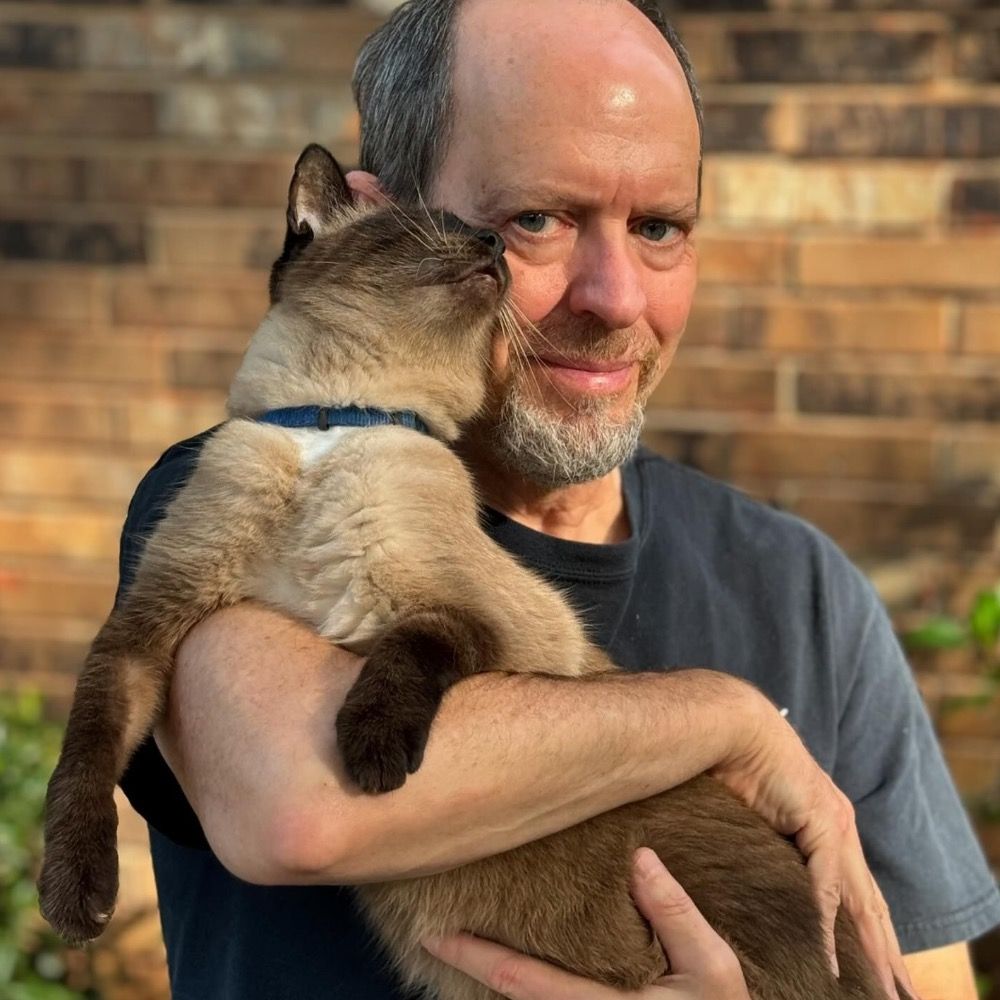
A few ammonites may have (briefly) survived the horrific environmental effects of the end-Cretaceous meteorite impact! Exciting new study of ammonites above & below the K-Pg boundary in Denmark. 🧪🪨⚒️
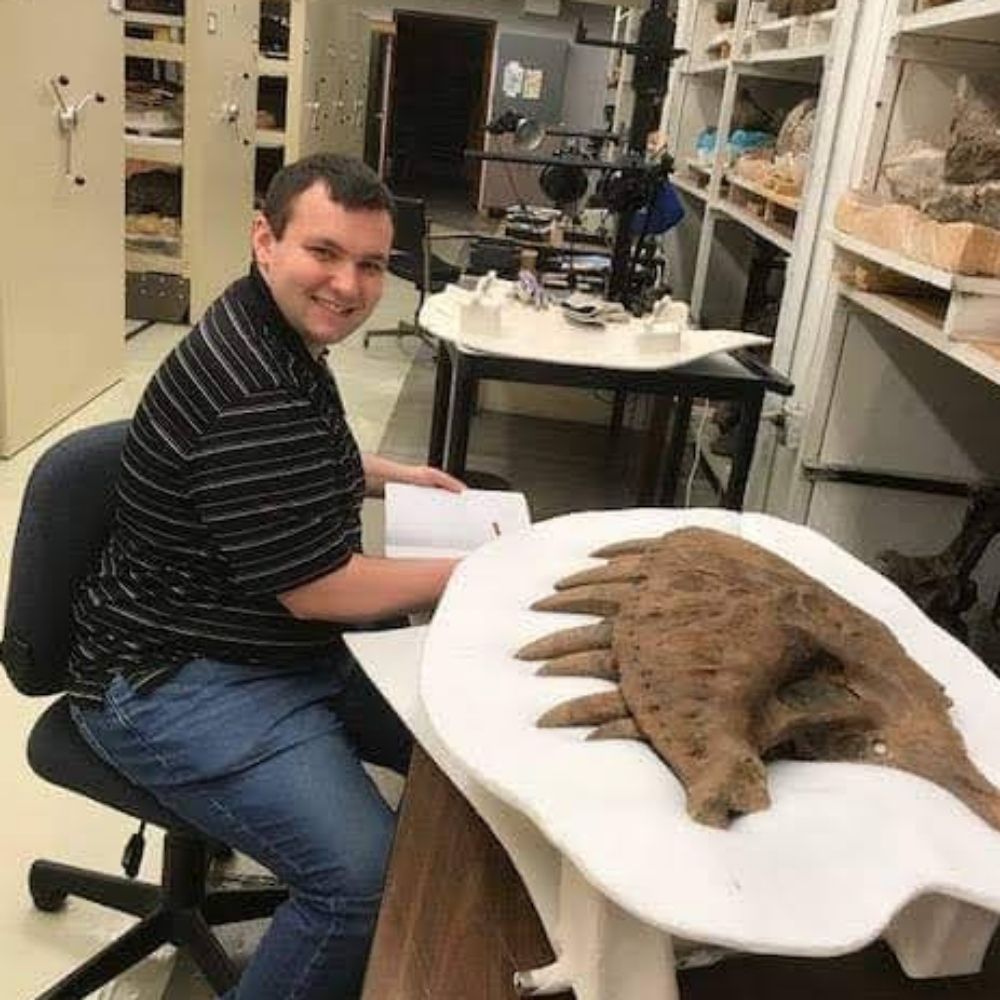
The last bombshell paleontology discovery of a year of bombshell discoveries: Ammonites survived the K-PG extinction! www.nature.com/articles/s41...

Ammonite survival across the Cretaceous–Paleogene boundary confirmed by new data from Denmark - Scientific Reports
We provide a reassessment of the hypothesis of ammonite survival across the Cretaceous–Paleogene (Maastrichtian–Danian) boundary, based on new data from the lower Danian Cerithium Limestone Member at ...
www.nature.com
January 1, 2026 at 4:14 PM
A few ammonites may have (briefly) survived the horrific environmental effects of the end-Cretaceous meteorite impact! Exciting new study of ammonites above & below the K-Pg boundary in Denmark. 🧪🪨⚒️
In the areas with Mississippian culture, very extensive cultivation and management
December 31, 2025 at 12:04 AM
In the areas with Mississippian culture, very extensive cultivation and management
Much of the appeal of LIDAR in this application is the ability to see through vegetation—ground-truthing as you're walking the landscape is often more easily done with photography
December 30, 2025 at 9:21 PM
Much of the appeal of LIDAR in this application is the ability to see through vegetation—ground-truthing as you're walking the landscape is often more easily done with photography
This is a neat new study using LIDAR to document pre-colonization raised agricultural beds along the Menominee River that separates Wisconsin from Michigan, north of Green Bay.
“massive field systems like these were much more common than previously recognized”
www.science.org/doi/10.1126/...
“massive field systems like these were much more common than previously recognized”
www.science.org/doi/10.1126/...

December 30, 2025 at 9:12 PM
This is a neat new study using LIDAR to document pre-colonization raised agricultural beds along the Menominee River that separates Wisconsin from Michigan, north of Green Bay.
“massive field systems like these were much more common than previously recognized”
www.science.org/doi/10.1126/...
“massive field systems like these were much more common than previously recognized”
www.science.org/doi/10.1126/...
In writing about the new discovery of a tooth of an archaic human from Gua Danang, Sarawak, I reviewed what is known about the “Deep Skull” from nearby Gua Niah: one of the earliest-known modern people in island Southeast Asia, adapted to island rainforest life.
www.johnhawks.net/p/a-possible...
www.johnhawks.net/p/a-possible...

December 29, 2025 at 5:29 PM
In writing about the new discovery of a tooth of an archaic human from Gua Danang, Sarawak, I reviewed what is known about the “Deep Skull” from nearby Gua Niah: one of the earliest-known modern people in island Southeast Asia, adapted to island rainforest life.
www.johnhawks.net/p/a-possible...
www.johnhawks.net/p/a-possible...
Memories among traditional peoples reach far back indeed, farther than most have given credit
December 28, 2025 at 9:35 PM
Memories among traditional peoples reach far back indeed, farther than most have given credit
Within a cave used by bird nest traders, archaeologists uncover a single tooth from an ancient group: the first evidence from an extinct hominin on the world’s third largest island. What group lived there in the millennia before modern people arrived?
www.johnhawks.net/p/a-possible...
www.johnhawks.net/p/a-possible...

A possible archaic human from Borneo
The find of a single tooth from Gua Danang may be the first evidence of the archaic inhabitants of the island.
www.johnhawks.net
December 28, 2025 at 9:27 PM
Within a cave used by bird nest traders, archaeologists uncover a single tooth from an ancient group: the first evidence from an extinct hominin on the world’s third largest island. What group lived there in the millennia before modern people arrived?
www.johnhawks.net/p/a-possible...
www.johnhawks.net/p/a-possible...
This year new archaeological finds on Sulawesi for the first time established that human relatives were in the islands of Wallacea before one million years ago. I can't wait to find out more about what they may have been like.
www.johnhawks.net/p/hominins-v...
www.johnhawks.net/p/hominins-v...
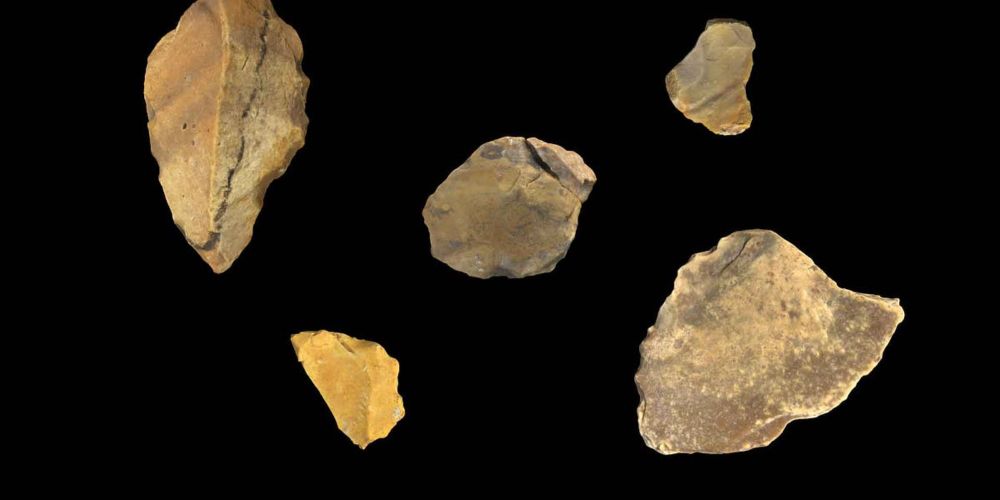
Hominins voyaged to Sulawesi before one million years ago
New report of stone artifacts from Calio place human relatives in Wallacea more broadly and earlier than anyone knew.
www.johnhawks.net
December 28, 2025 at 4:27 PM
This year new archaeological finds on Sulawesi for the first time established that human relatives were in the islands of Wallacea before one million years ago. I can't wait to find out more about what they may have been like.
www.johnhawks.net/p/hominins-v...
www.johnhawks.net/p/hominins-v...
Con Moong Cave, Vietnam, has evidence of ash, burials, and shell middens from the terminal Pleistocene. Even earlier—by 42,000 years ago—people used the cave, alternating with periods when bats were present and humans absent, evidenced by sediment geochemistry.
Photo: Thanh Hoa Newspaper
Photo: Thanh Hoa Newspaper

December 24, 2025 at 4:09 PM
Con Moong Cave, Vietnam, has evidence of ash, burials, and shell middens from the terminal Pleistocene. Even earlier—by 42,000 years ago—people used the cave, alternating with periods when bats were present and humans absent, evidenced by sediment geochemistry.
Photo: Thanh Hoa Newspaper
Photo: Thanh Hoa Newspaper
One hundred and one years ago today, a young Australian anatomist worked with knitting needles to chip the hard rock from the face of a 3-million-year-old child. Together they placed human ancestry in Africa, as Charles Darwin had predicted fifty years before.
www.johnhawks.net/p/the-circum...
www.johnhawks.net/p/the-circum...

The circumstances of the Taung discovery
The textbook story of the fossil leaves out a wider context in which scientists interpreted the first evidence of Australopithecus.
www.johnhawks.net
December 23, 2025 at 2:12 PM
One hundred and one years ago today, a young Australian anatomist worked with knitting needles to chip the hard rock from the face of a 3-million-year-old child. Together they placed human ancestry in Africa, as Charles Darwin had predicted fifty years before.
www.johnhawks.net/p/the-circum...
www.johnhawks.net/p/the-circum...
The solstice has always mattered, more to our ancient ancestors than to most of us today. I always wonder when I am under dark skies what wisdom they had that we may have forgotten.
www.johnhawks.net/p/when-did-o...
www.johnhawks.net/p/when-did-o...

When did our ancestors start looking up to the stars?
Changes in the sky have been important to peoples throughout the world. That connection may go back much further than our species.
www.johnhawks.net
December 21, 2025 at 2:23 PM
The solstice has always mattered, more to our ancient ancestors than to most of us today. I always wonder when I am under dark skies what wisdom they had that we may have forgotten.
www.johnhawks.net/p/when-did-o...
www.johnhawks.net/p/when-did-o...
The Yarımburgaz cave complex is around 22 km west of Istanbul, in the Thracian part of Turkey. An upper cave is the location of a Byzantine church, while a lower chamber has much older Middle Pleistocene record of choppers, modified flake tools, and remains of cave bears.
Photo: CeeGee (Wikipedia)
Photo: CeeGee (Wikipedia)

December 20, 2025 at 6:21 PM
The Yarımburgaz cave complex is around 22 km west of Istanbul, in the Thracian part of Turkey. An upper cave is the location of a Byzantine church, while a lower chamber has much older Middle Pleistocene record of choppers, modified flake tools, and remains of cave bears.
Photo: CeeGee (Wikipedia)
Photo: CeeGee (Wikipedia)
Reposted by John Hawks

This is a good time to talk about the TRUE genetics revolution brought in by sequencing the human genome:
The genetic underpinning of traits is not simple, will never be simple. Complex gene-gene interactions are the rule, not the exception 🧵
www.nature.com/articles/d41...
The genetic underpinning of traits is not simple, will never be simple. Complex gene-gene interactions are the rule, not the exception 🧵
www.nature.com/articles/d41...

Biobanks reveal genetic complexity in human evolution
Tiny genetic variations between humans, Neanderthals and Denisovans might not be all they were cracked up to be.
www.nature.com
December 19, 2025 at 5:29 PM
This is a good time to talk about the TRUE genetics revolution brought in by sequencing the human genome:
The genetic underpinning of traits is not simple, will never be simple. Complex gene-gene interactions are the rule, not the exception 🧵
www.nature.com/articles/d41...
The genetic underpinning of traits is not simple, will never be simple. Complex gene-gene interactions are the rule, not the exception 🧵
www.nature.com/articles/d41...